

My Eyelashes are Railings From Which I Climb to See

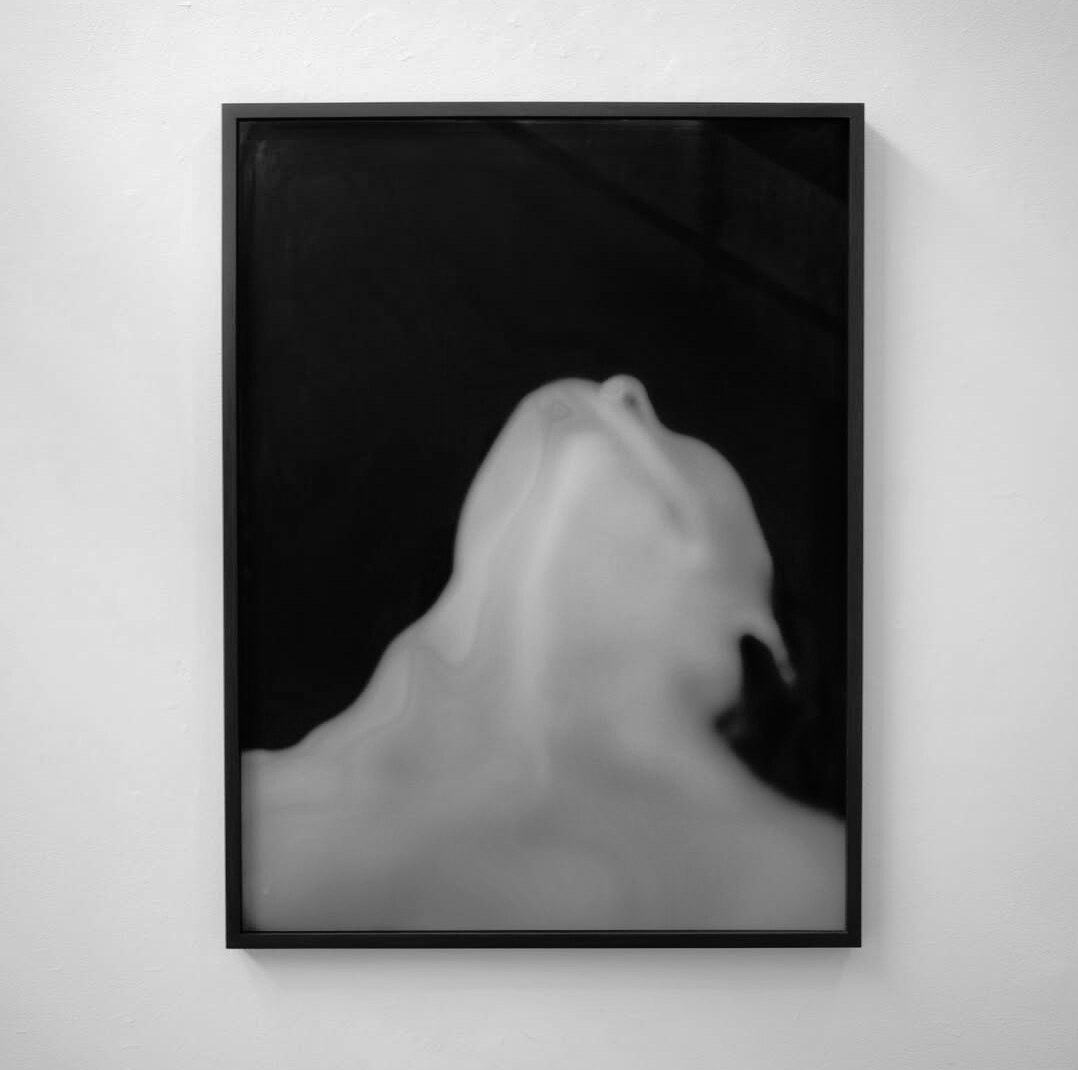

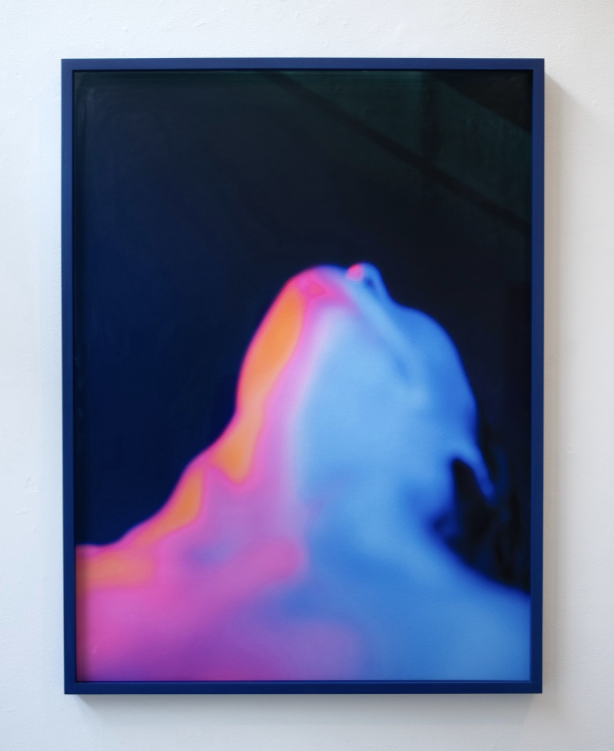
Tis’ the season for relationships. For the month of February, Counter Collective presented Seeing Desire, an exhibition of portrait photography featuring eight different artists—Elinor Carucci, Mara Catalan, Marisa Chafetz, Hannah Edelman, Ashley McLean, Martha Naranjo Sandoval, Sophie Joseph Schwartz, and Ana Vallejo—at All Street Gallery in New York. Curator Victoria Campa was smart with her one-month hit show of photographs, ones that I hope we’ve all lived. The positions are not foreign: Carucci biting her lover’s face in Bite #2 (I stop to give #3 to my lover in the next room), Edelman’s sheet and elderly expression of Ecstasy (last night), Catalan’s blurry entertaining in Entangled (this morning), and Sandoval’s sun (the window). Yes, we all can take a picture. And yes, we all could have been there. Aren’t we lucky?
I wish I could write this in a world where A.I. didn’t yet exist, and the globalized world wasn’t functioning under its control. It’s true, images have become an act of warfare, and it is through images that we perceive these actual and real wars, genocides, bombings, cruelty, and pain. I refuse to become numb, as hard as it is to feel.
Images can also be an act of love, which these artists and this show proves, like retracing good memories in the scrapbooks from my childhood. Because outside of our institutions, we are all human beings. To know one is to know the other. Desire is a well that is never full or empty. It is a threading to the individual that sustains the universal. So, is this a lack or an abundance? To desire is to be alive. The image reconstitutes itself for as long as it is seen, so long as we allow it. Put people back into the picture. Like a conversation never ends, connections continue.
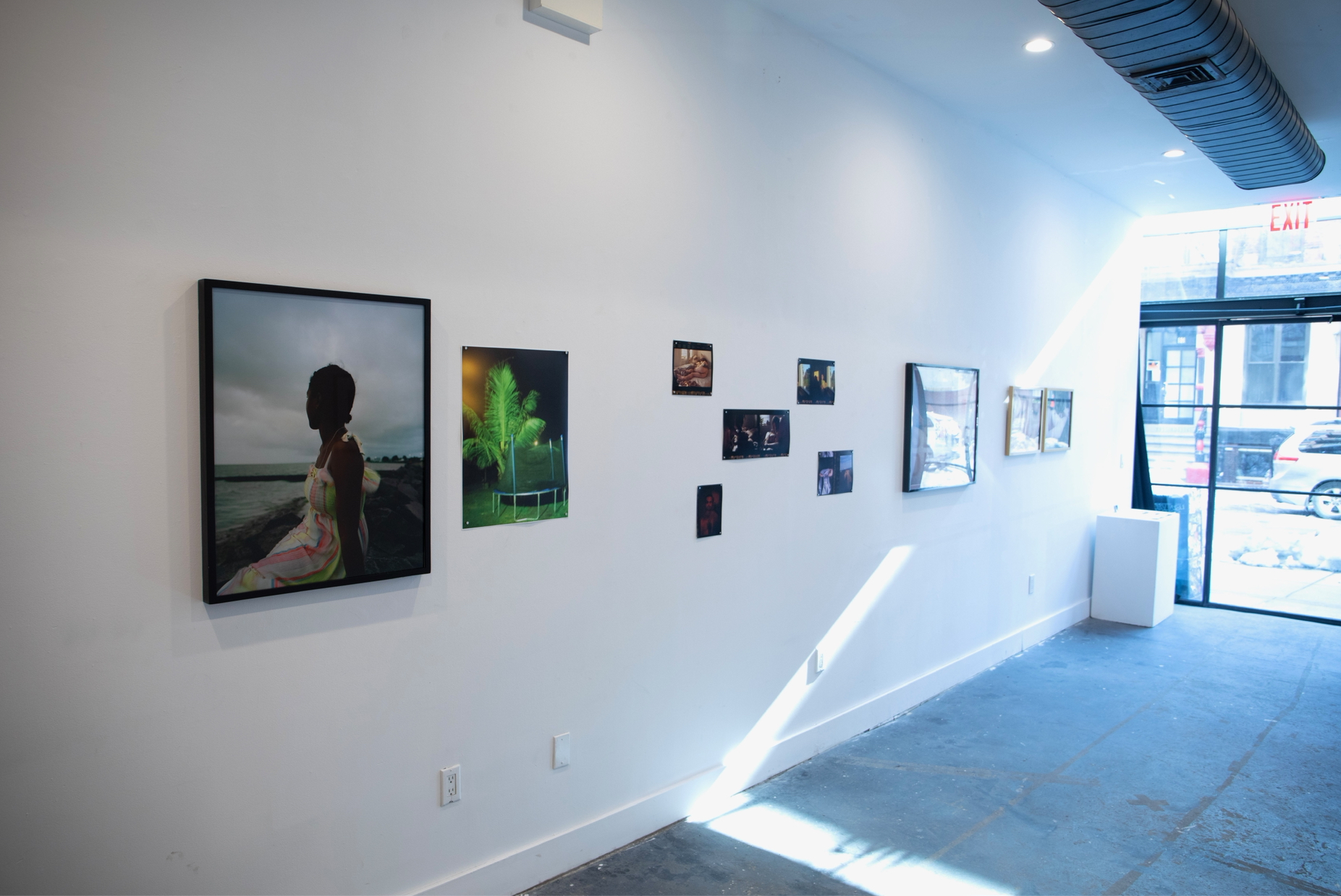
Hosting three different events, which continually fostered experiences in the space between the viewers and the viewed, Campa believes in art as a living entity, that it is to be engaged with and rekindled, sustaining the fire. Each event was a part of the curation, another piece, being in the space, unfolding. This is a part of why I couldn’t write about the exhibition until it closed. Experience was conducted, like alchemy, and each instance birthed a new eminence of the referent, another life, because a stream is never still, and another perspective is another viewpoint. My eyelashes are railings from which I climb to see.
Let us abolish the images, let us save immediate Desire.
—Roland Barthes
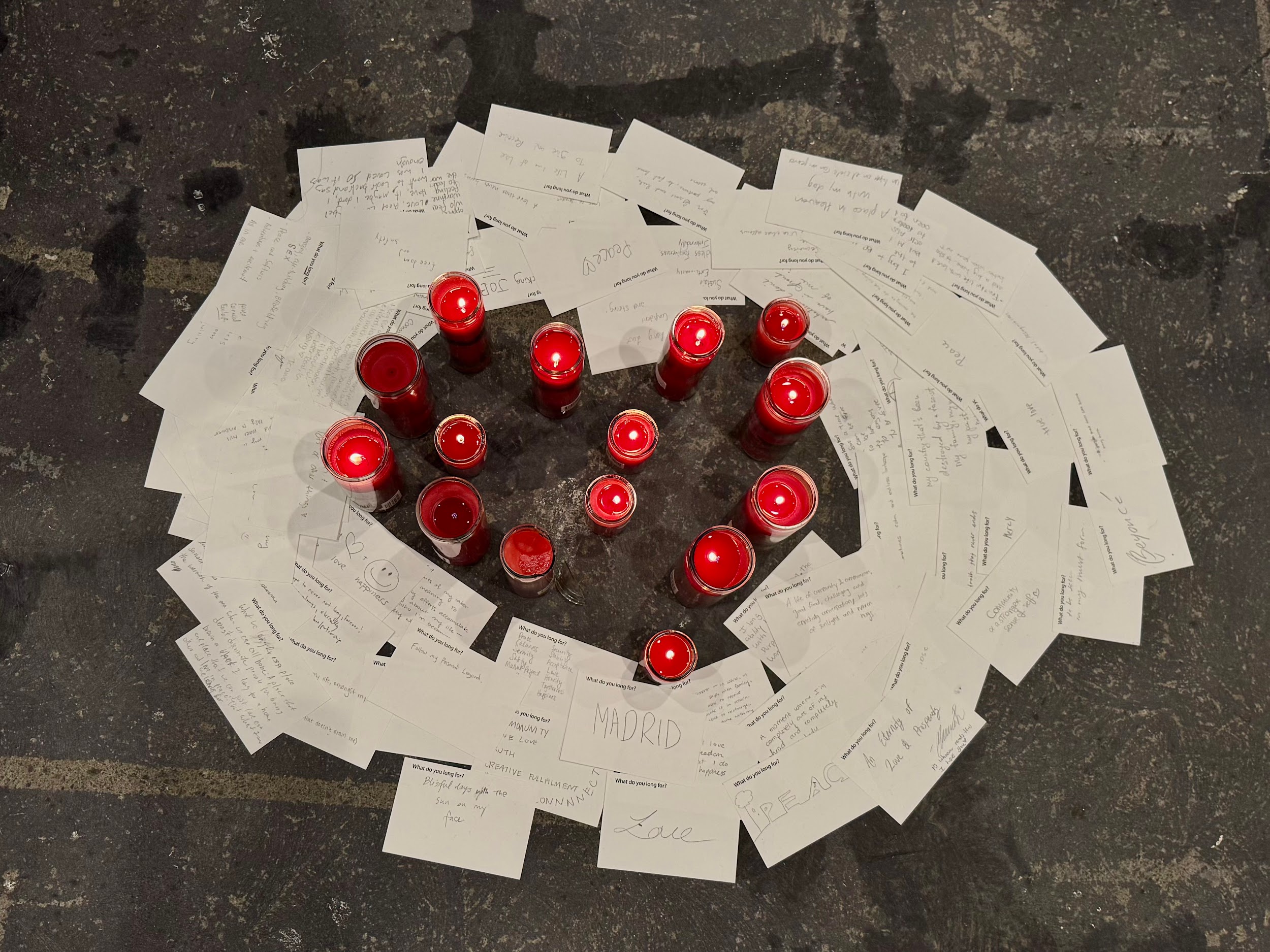
On Valentine’s Day, artist Ana Vallejo released a book she’d published, All These Feelings, which was celebrated after a thematic “Unveiling Ceremony,” where a small group read the many anonymous submissions to the question, “what do you long for?” aloud, and answered more prompts, like “what are you afraid of?” The former was a part of Vallejo’s installation on the opening night and onwards. My friend Tony writes basic human survival, and I write whatever isn’t in front of me, so I guess it really is all perception, this pervasive sense of lack. There are lots of mentions of “home,” “peace,” “love,” and “a fucking job,” too. Relatable.
Similarly structured, the closing ceremony commenced with a talk between three of the artists, Vallejo, Sophie Joseph Schwartz, and Marisa Chafetz, moderated by Campa. It’s always interesting to hear the maker on the making. Speech adds so much value. Words ring like bells, each illuminating. For example, Vallejo thinks in concepts, which is communicated in her pieces, emphasizing anonymity, as she explains. These bodies do not have to be identified to fulfill the expression of the feeling or idea she attempts to convey. They act as broad as color. Her book project functions like this, too: a collection of confessions-as-survey-questions on attachment styles. I cringe at how much I relate to some of the open statements, feelings mainstream for a reason.
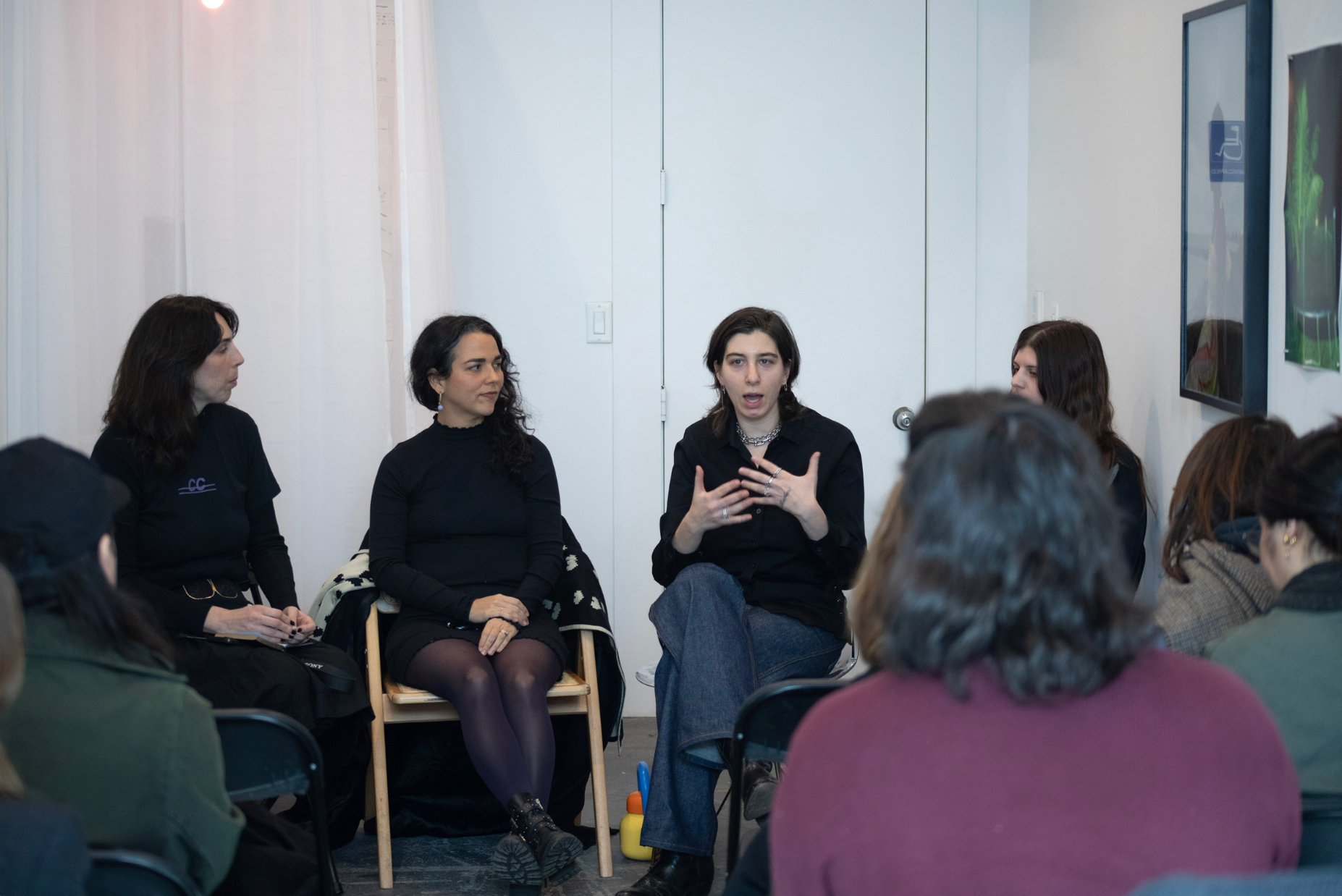
I was pleased when Schwartz and Chafetz denied my leading question. I asked what it’s like to make sets, to direct portraits like a still life, and position the body as if an object. I compare in the name of a paralyzed reality embedded in photography (embalmed, really, an influence of Roland Barthes and his construction on the look, the pose, and the death: “that-has-been”). They deny this vehemently, like an accusation. Because the work in Seeing Desire does not look from subject to object. This work is between subject and subject, human to human. There is a cultural and psychoanalytic obsession with lack. It’s all very capitalistic and patriarchal. Freud called scopophilia the pleasure of looking, when what is viewed turns into an object. Lacan later developed the gaze, and this split between seer and seen, between self and other.
It is a reciprocal intimacy, an incitement of vulnerability, that elicits the moment in which these images are taken. It is not until this point of mutual recognition between the photographer and the person photographed that the photograph is taken. Eyes see each other. Desire is captured. This initial presence allows for its reproduction. The success of a work counts on its ability to recur, proving it was there in the first place.
Despite my earlier talk about bodies, I am drawn most to Ashley McLean’s Untitled (Between Reverie and Memory) I, because it felt like the set of one of my dreams, where familiarity warps in a blended perception. I see myself in photographs as a young girl, doing a split in the air on the trampoline of my backyard in New Jersey, and another, smiling shirtless under palm trees in Mexico. My eyes are all innocence. Sometimes all it takes is a split second to go back—in the blink of an eye, or a shutter of a lens. So while a photograph may be still, eyelashes flutter like wings, and in that way, the object is alive, sustained by our desire, both satisfied and sustained, a driving force that cannot be stopped, and why should it? Does it have to die? No. Not necessarily. Experience ripens, and just as material is never created nor destroyed, it is reborn.
The alternative is the thrill that comes from leaving the past behind without rejecting it, transcending outworn or oppressive forms, or daring to break with normal pleasurable expectations in order to convince a new language of desire.
—Laura Mulvey
Counter Collective embodies its name, opening the lexicon into different perspectives, identities that go against the grain of “the canon,” of the way things are, of what-has-been. This reclaiming of images may be what will beat the dangers of their proliferation, as we allow their sublimation without shame. So, what does the work make you think? Try to reach out and touch it if you so desire. Make it yours, too. After all, a way of seeing can change what is seen.
Curated by Victoria Campa, Counter Collective presented Seeing Desire, featuring Elinor Carucci, Maria Catalan, Marisa Chafetz, Hannah Edelman, Ashley McLean, Martha Naranjo Sandoval, Sophie Joseph Schwartz, and Ana Vallejo at All Street Gallery in New York through February 28, 2026.
You Might Also Like
For ‘Unveiled Desires,’ Eva Oh Brings Surrealist Art and Sex Work Into One Room
What's Your Reaction?
