
Building New York City: The 21-Year Journey of Joe Macken

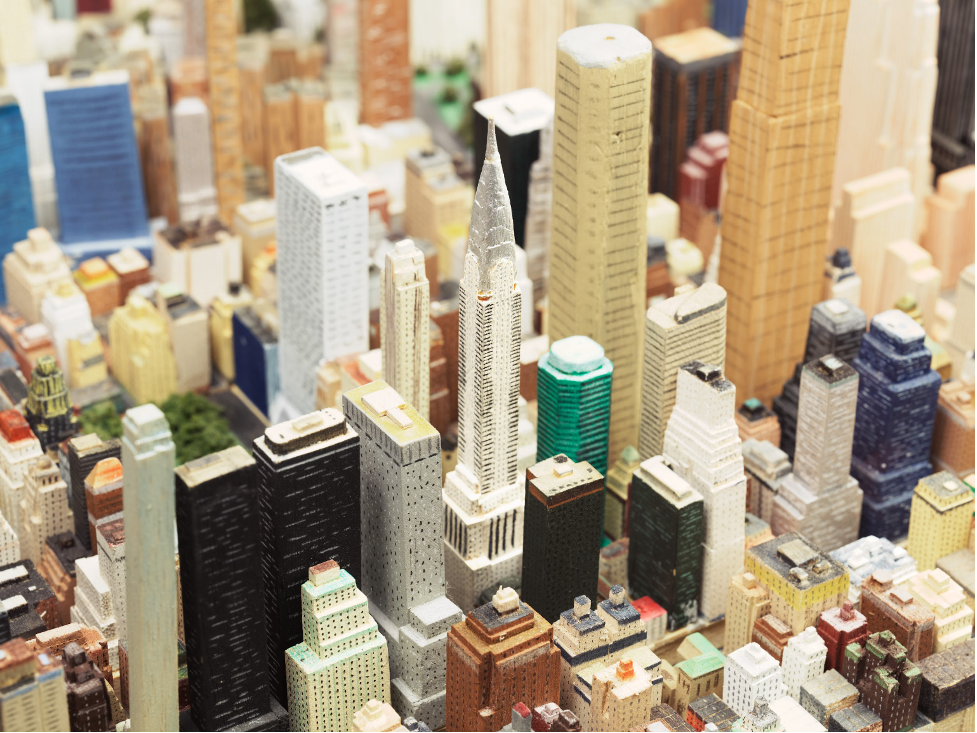

For 21 years, Joe Macken built New York City by hand. You can call it an obsession. You can call it talent. One thing is certain: he had a lot of fun. Joe Macken smiles. In between playing with paper, cardboard, and found materials to construct his vast miniature metropolis, Macken drove a truck to make a living.
What began as pure play slowly transformed into something extraordinary. “It was always fun and games,” he recalls. “Then I realized it had become something. I kept finding ways to store it at home — until it became too big. That’s when I rented a storage unit.” His hand hovers over the sprawling cityscape now on view at the Museum of the City of New York on Fifth Avenue and 103rd Street, as if he’s still shaping it.
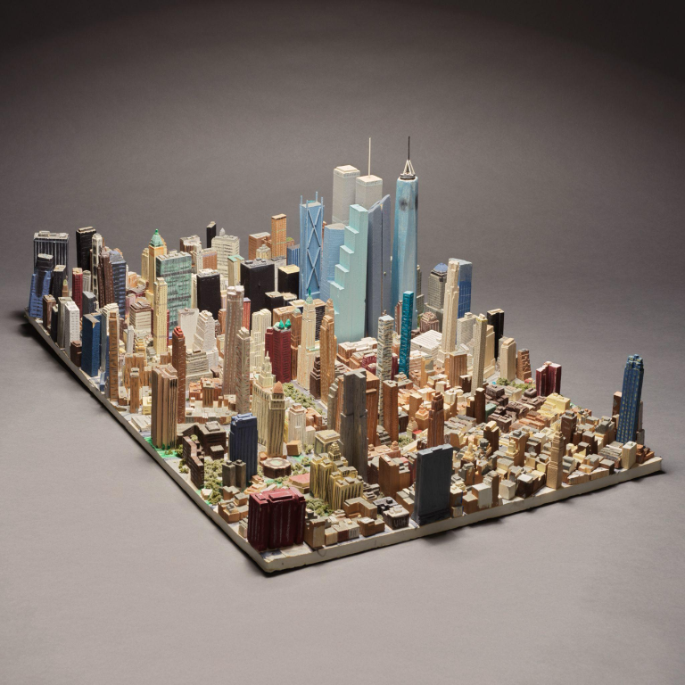
Born in Queens and now a resident of Clifton Park, New York, Macken began his modeling with the Comcast Building at 30 Rockefeller Plaza. From there, he expanded outward, eventually including the entire skyline and all five boroughs, each rendered with personal care and attention. Thinking back to when his pieces grew into neighborhoods, I asked Macken what he thought he would do with the model eventually. “I really didn’t think to do anything,” he admits. “I didn’t have a goal or a plan. It was my kids who were curious and excited. One day, they offered to post it on social media. It became instantly famous — and here we are, on display at the museum.”
The handmade model measures 50 by 27 feet and is composed of 320 distinct sections. Look closely, and you might even find your own neighborhood tucked within its tiny streets. Whether it resembles the past or the present depends on where you look. After all, New York neighborhoods are constantly evolving. Take SoHo, for example. In the 1960s and ’70s, artists transformed former sweatshops into loft studios, creating a global model for live/work spaces. After 2000, many community characteristics shifted as rents became more expensive, although the streets looked similar, as most of the buildings remained protected as landmarks, people were priced out and others moved in, with different needs, and other businesses opened up to cater to them. The neighborhood was no longer as accessible or catering to artists.
Gentrification is not just about buildings — it is about people, memory, and belonging. CITYarts is currently working on a book documenting SoHo Artists History Walk, our public art project, which, through posters and brochures, fostered awareness around the artists who lived and worked in the neighborhood. The book will further preserve knowledge surrounding the SoHo’s vital legacy as New York’s epicenter for avant-garde art.
In New York, we constantly feel the wave of gentrification. A struggling community gradually transforms into a wealthier one. New facades replace old storefronts. Rents rise. The character shifts.
Is it good or bad?
The answer is not simple. There are clear benefits: safer streets, renovated buildings, new businesses, increased city revenue, and investment in infrastructure. Long-neglected areas often receive long-overdue attention. But there are also serious costs. Longtime residents and small businesses are pushed out. Cultural identity erodes. The very artists and working-class families who made a neighborhood vibrant can no longer afford to stay. Macken’s model becomes more than architecture. It quietly documents this tension: growth and loss existing side by side.
When I asked Macken what happens when buildings disappear in real life, he paused.
“In many cases, I added or changed the building, infused with diversity and density. But with the Twin Towers, I couldn’t destroy them. So they are there, standing tall in the new neighborhood.”
Several companies and individuals sponsored the exhibition. Amazon’s head of community engagement shared: “Amazon is thrilled to support this exhibition at the Museum of the City of New York so that New Yorkers and visitors from around the world can experience Joe Macken’s incredible 21-year labor of love that brought this stunning architectural model to life.”
In Macken’s city, memory and present-day reality coexist.
And what happens when the exhibition ends?
He smiles again.
“I honestly don’t know. All I wanted to do was pay tribute to the city that inspires me daily and that I love deeply.”
In a city defined by ambition and reinvention, Macken built something different:
not just buildings, but devotion — piece by piece.
He Built This City: Joe Macken’s Model is on view at the Museum of the City of New York, 1220 Fifth Avenue, New York, NY 10029, with no end date determined.
You Might Also Like
MoMA PS1 Presents ‘The Gatherers’ to the City Handling Its Shit
What's Your Reaction?