
Maison Enclave Rejuvenates Ballet Through Confrontation

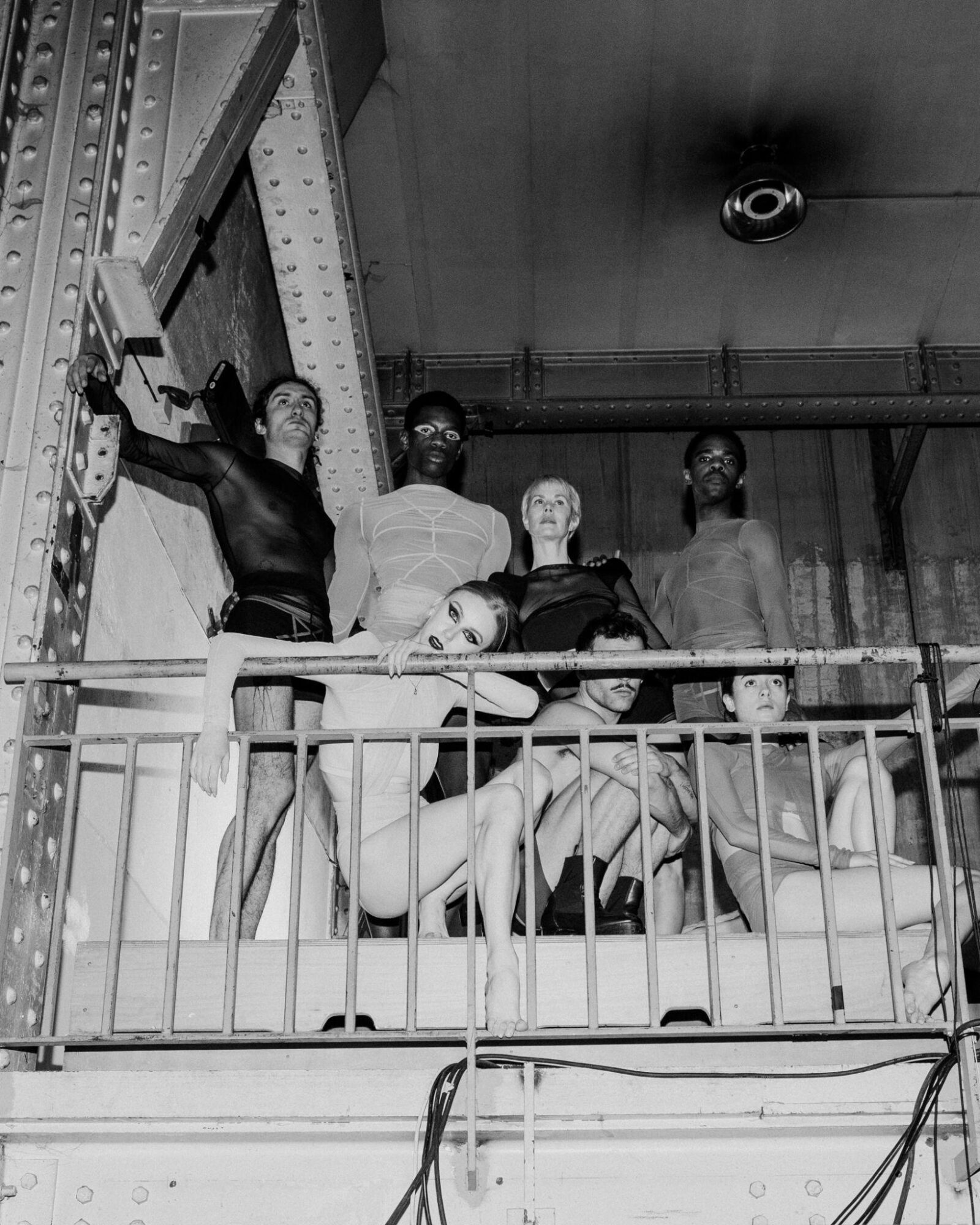

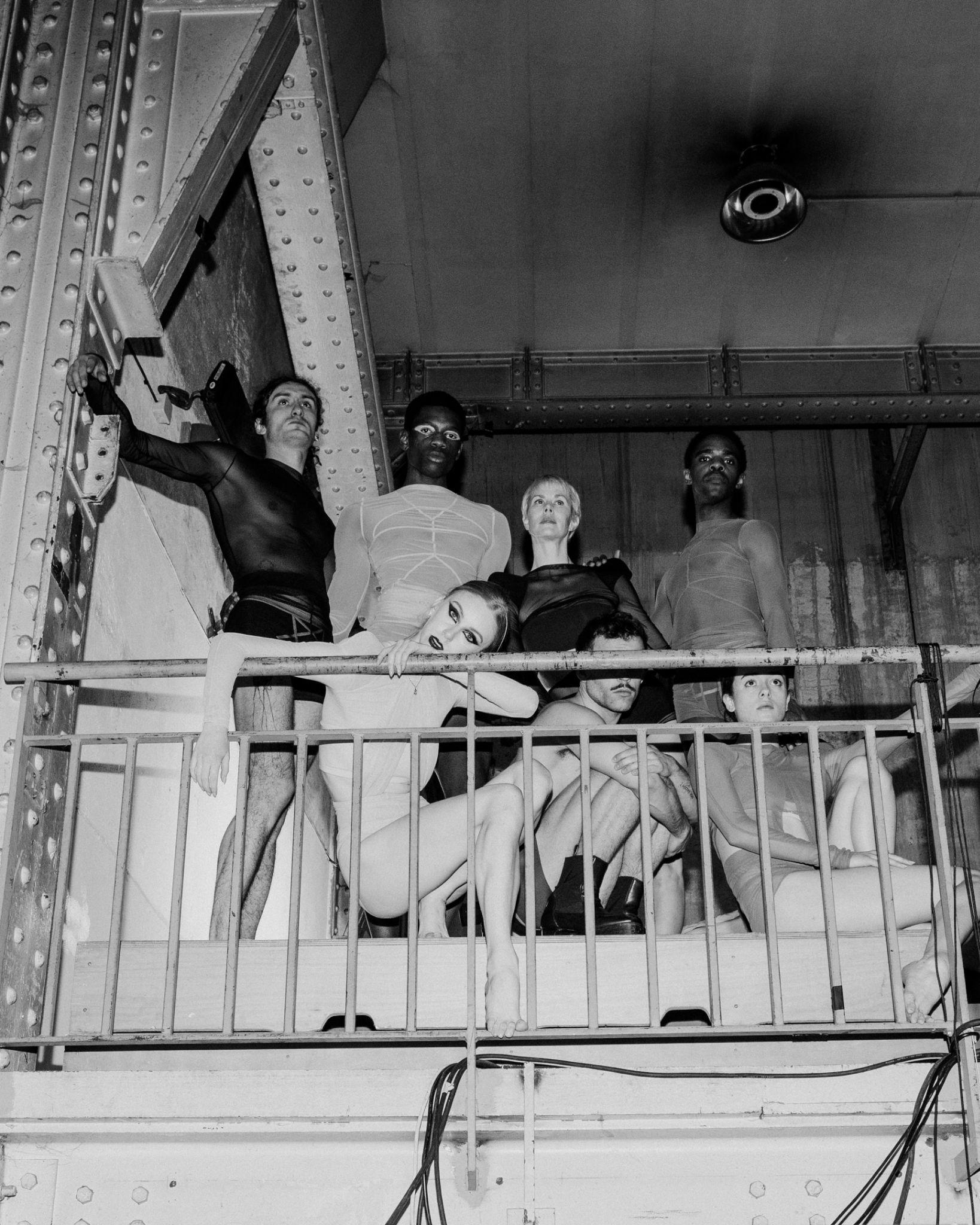
Held at Consulat Voltaire, a former power station built to fuel the Parisian subway in the early 20th century, the one-night-only Genesis marks the birth of Audrey Freeman’s immersive performance house Maison Enclave. The choice of maison, house, is pointed. A home is a place to rest but also to grow. In a house, people convene intergenerationally, and in lgbtq+ ball culture, centered on self-expression and dance, participants join houses, functioning as chosen families. The word also nods to Paris’s great fashion houses. The Australian, now Paris-based ballerina, conceived of Maison Enclave, and it appears clearly when watching Genesis that it is a space of encounter between disciplines, a way to rejuvenate ballet by confronting it with parallel outstanding expressions of our time: dance, fashion, music, and contemporary art.
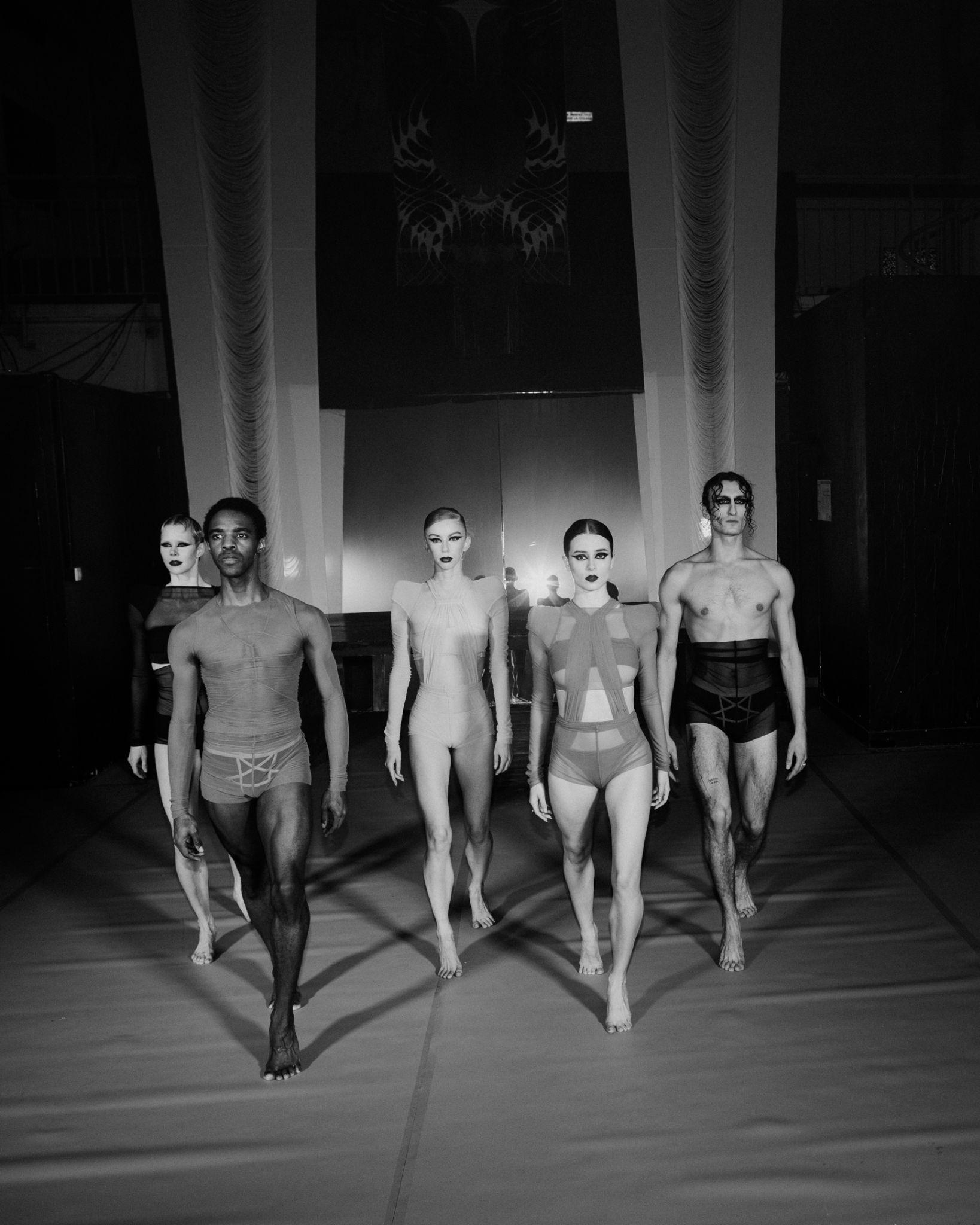
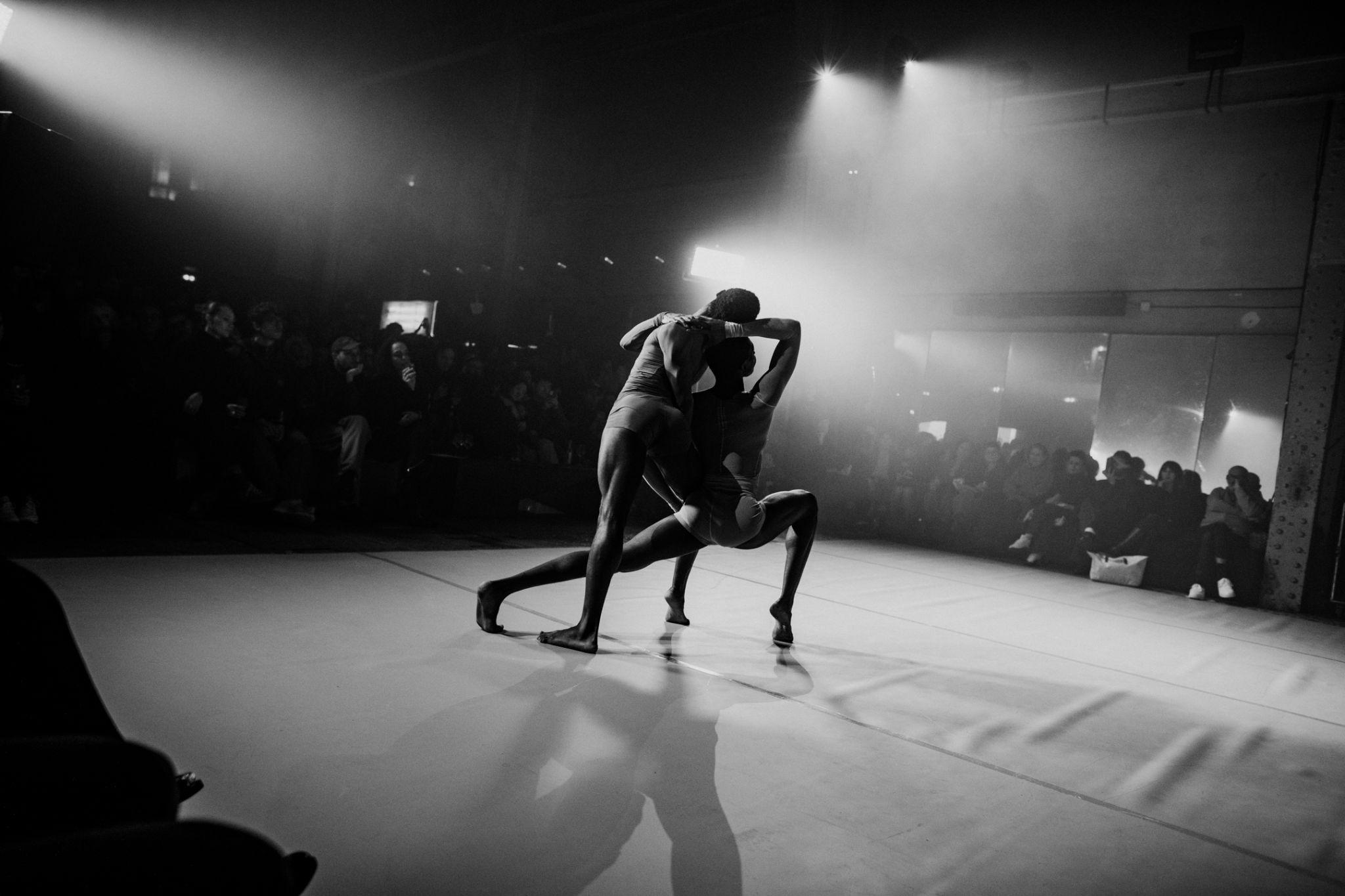
With subtle use of the lights, the set design reshaped the Consulat’s industrial space—high ceiling and steel structure—into an intimate space. Welcomed by a trumpet player, guests were soon projected into the atmosphere of a personal and minimalistic version of a contemporary cabaret led by Freeman and choreographed by Manon Dubourdeaux. Freeman’s first appearance and inaugural solo convey her background in classical ballet. The result of hours of practicing, facing the mirror, and an obsession with mastering technique (also inherited from years of gymnastics at a national level) is an undisputable virtuosity, full and impressive bodily control. Balancing from a graceful pas de deux to energetic moments of collective dancing, bodies start to meet and loosen up, neo-ballet faces contemporary dance, jazz music leaves room to baile funk, hyperpop, and more electronic compositions.
The troupe, prompted by a communicative joy, is dressed in creations designed by Rick Owens, whose minimal, semi-transparent, and supple clothes appear like the ideal garde-robe to exalt the performers’ bodies and their elegant gestures. Rather than centering a narrative plot with characters, Genesis is a story of style and form, staging encounters and hybridizations; it stages a progressive and coherent shift from glorious tradition to modernity, ultimately finding the most appropriate and stimulating way to make them communicate.
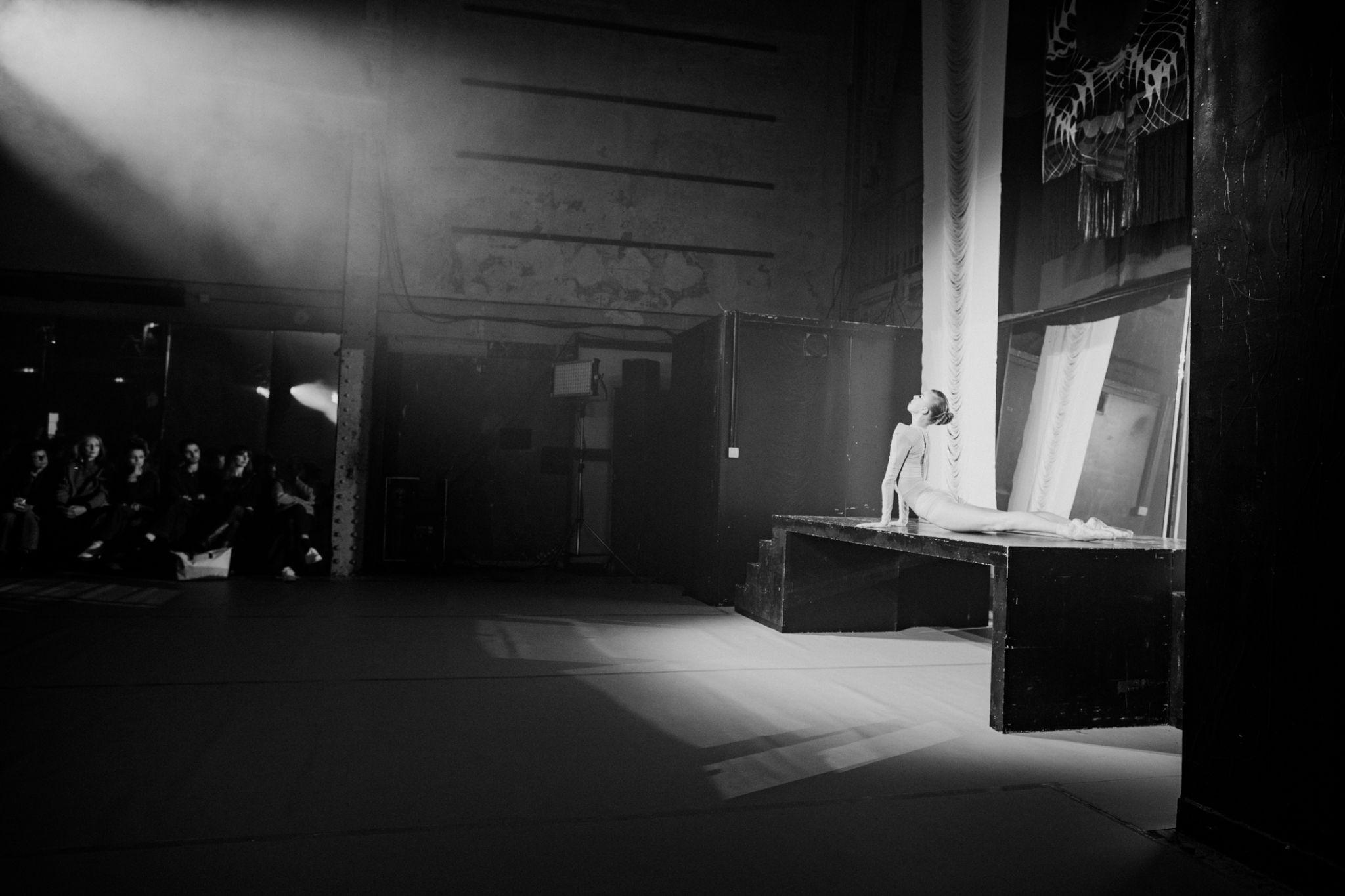
Playing with the architecture of the space and its mezzanine, the show ends with the crowd looking from below at a lascivious man (Valentin Beaufils) dancing alone. Slowly, Freeman and her gang (Carola Puddu, Eric Pinto Cata, Gaëtan Vermeulen, Katharina Diedrich, and Edward Napoleon) join him and pose proudly together. If Genesis is a self-portrait and the story of artistic emancipation, it reminds us that art remains a collective adventure.
After the performance and a moment of conviviality and discussions, a final part of the event extends the show and its desire to magnify the body in motion with a selection of artworks from Galerie Charlot. It is as if the sensual bodies we just watched are now translated into data or entered into the realm of abstraction. On the mezzanine, the small curated show displayed kinetic and science-based works, images, and videos, expanding this celebration of dance through a technological lens. A judicious manner to end the evening and to launch Freeman’s ambitious and promising new house.
Genesis by Maison Enclave took place on the 13th of February 2026 at Consulat Voltaire in Paris.
What's Your Reaction?