With and Against Deep Time Sensibility

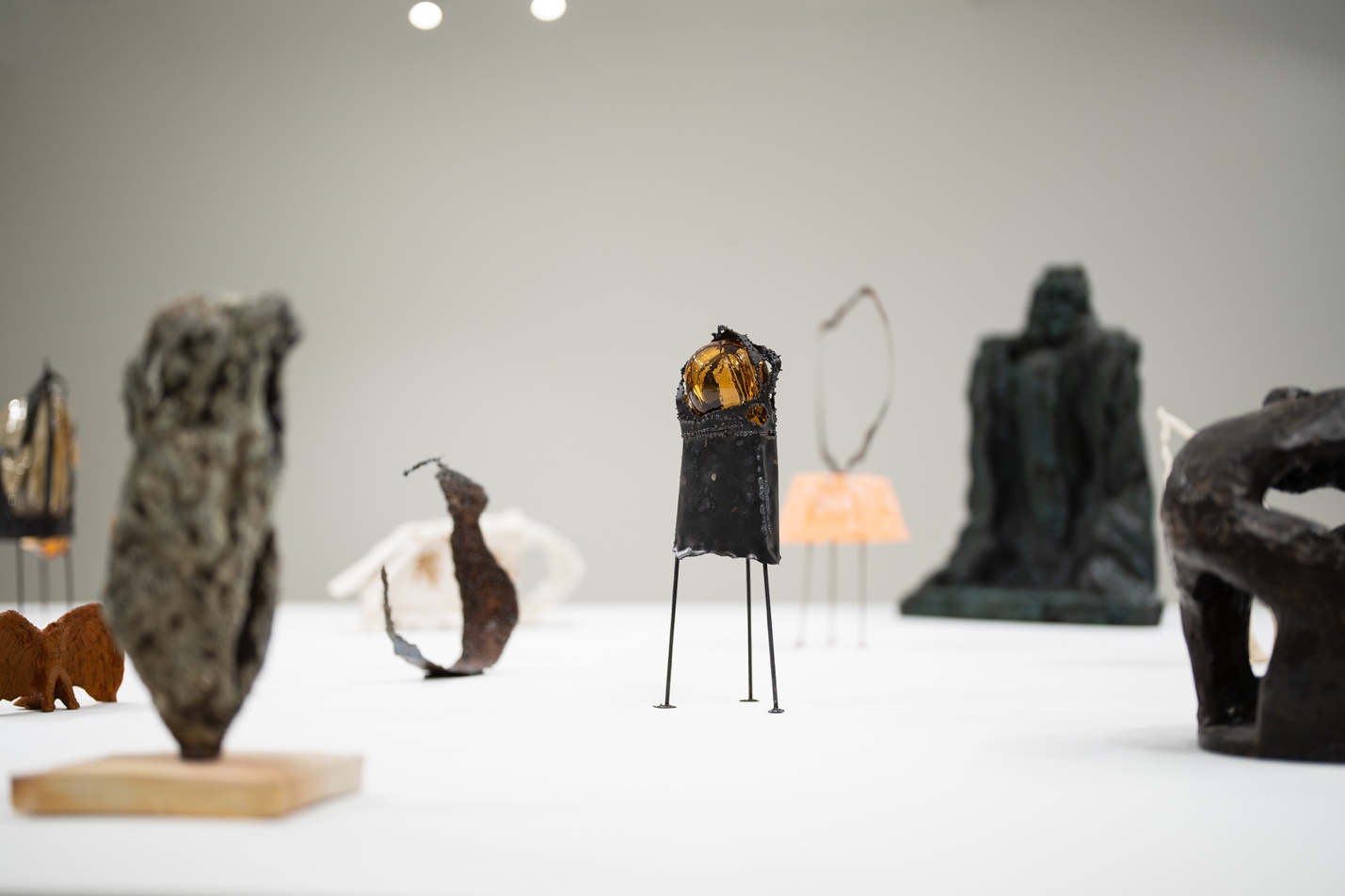

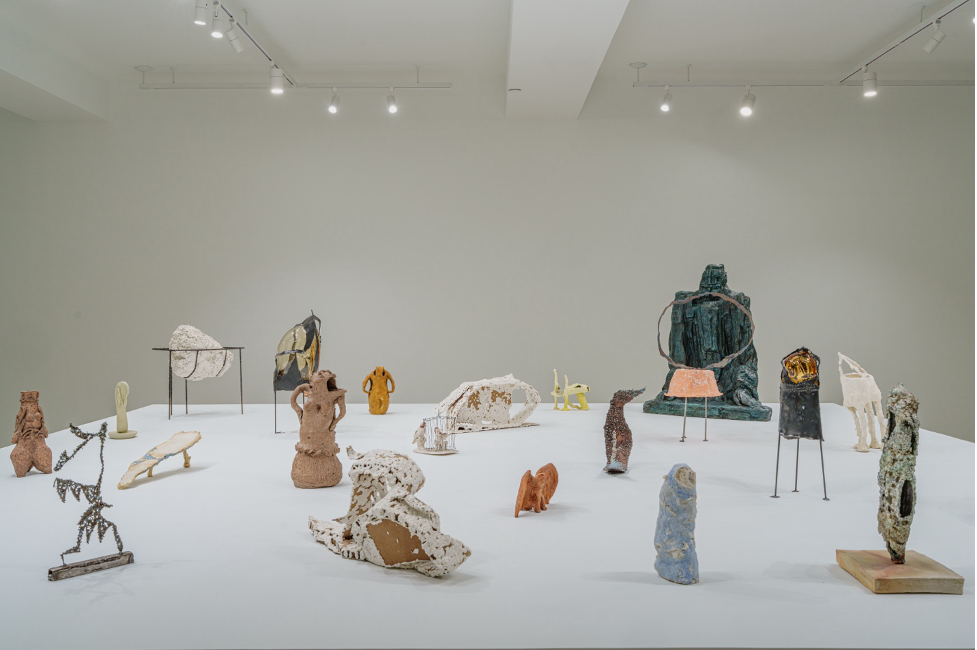
At Liu Shiming Art Gallery, through January 30, 2026, rhythm is staged through a central platform, a low table that reads as a landscape rather than a pedestal. Works gather like an archipelago. Bronzes and clays by Liu Shiming, consisting of figures, animals, boats, and tools, cohabitate with Linnéa Gad’s porous shells, mineral masses, and steel armatures. The arrangement discourages linear comparisons. Instead, meaning travels by proximity and return. The venue’s namesake, Liu Shiming (1926–2010) was a Chinese sculptor who “propelled and echoed the international shifts toward modernism across 20th century China” and the foundation supports scholarship and exhibition-making that fosters dialogue around his practice. Curated by the foundation’s newly appointed gallery director and curator, Maëlle Ebelle, Breath is Everywhere tightly pairs sculptures by Shiming and Gad in a duet about what lives inside matter and how material intelligence can be activated by extended processes and over time.
In refusal of a narrative on genealogy or influence, Ebelle frames the pairing as an exercise in mutuality and resonance treating sculpture as a relay between bodies and materials. Gesture becomes legible as residue, held in seams, cracks, scars, and fingerprints. Gad extends Liu’s logic without mimicking his style, and the subject is the way one form takes on the living rhythm of another. The clearest bridge between the artists is their shared resistance toward airtight finish. Gad, drawn to the porosity of Liu’s sculptures, a sense that life comes from what remains in the material, treats her sculptures’ surfaces as permeable, vulnerable, and less polished sites of contact. For example, Pilasters (2025) is a duo of tall, narrow, white vertical reliefs, textured and pocked like eroded bark or coral. The sense of exposure is repeated in the nearby Glowpress (2024), where amber-toned glass sits openly in steel dotted by overgrowth.
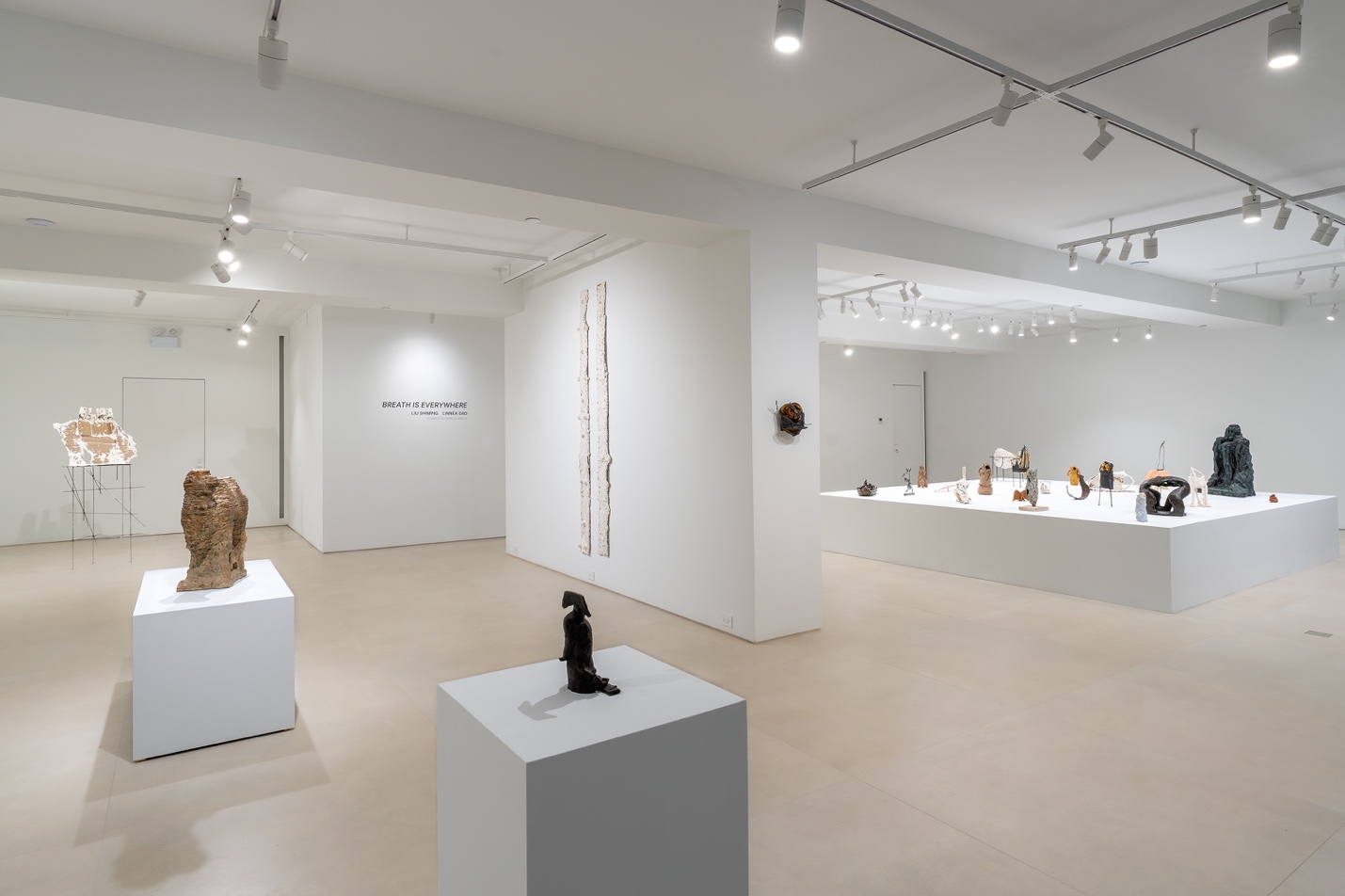
Gad’s thinking runs through geology. She links Liu’s forms to gongshi (scholar’s rocks), perforated stones prized for how water and time collaborate on them. Channeling such aesthetic of abrasion, Gad pays attention to how materials can perform the compression of geological time. Even a suspended slab appears sedimented, as if worn for millennia. Islet ramp (2024), despite its domesticated scale of a shallow canopy or shade on pin legs, still register affectively as a miniature idol or fragments of one.
That affinity for compression also shows up in Gad’s motif of armor. Sun Trap II (2025) treats its glossy amber glass orb inside steel casings as an object of shelter and restraint at once. Such duality feels more pronounced toward spectatorship in Liu’s sculptures, where care and enclosure appear as the same, and the viewer is asked to feel the distance that structure produces. Across Avalokiteśvara Inside the Ear (ca.2005), Guangling San (1987), and Silk Road (1986), Liu hides more figurative elements in his blocky, stratified mass, often housing a hollowed niche or cavities. Literalize interiority
Gad’s softer works push vulnerability into ecology. Bumling (2024) and Balmed (2021), built from lime mortar and oyster shells, read like reef structure or fossils, calcified, accreted, and assembled by many small actions rather than one decisive decision. For Gad, breath is not only the artist’s lingering presence in matter, but the future lives matter might support after authorship fades.
Against this deep-time sensibility, Liu’s sculptures animate myth, labor, and intimacy without insisting on grandiosity and with a folkloric feel. In Boatman on the Yellow River, the workers are rendered lively, co-present with their tool and the world they occupy. Like other Liu sculptures that depict laboring bodies such as Dream to Fly 2 (1982) and Cowherd Riding an Ox (1981), there is no distinction between backdrop and front view. Melting into a singular entity, the sculptures are ridged with dry granular, pinched and lumpy with visible toolmaking trace and handwork.
Breath is Everywhere can slide into a universalizing slogan. But the material specifics push back. Gad is explicit about collaborating with forces that don’t care about intention—fire, ash, molten metal—and about letting representation erode toward near-abstraction. Liu returns to culturally freighted forms, insisting that the living is never purely biological. It is historical, transmitted, and contested.
What emerges, finally, is a shared sculptural ethics of porosity, not only porous surfaces, but also porous categories: figuration dissolving into abstraction; object leaning toward organism; armor doubling as shelter. Breath is exchange. Breath is permeability. Breath is the condition of being affected.
Breath is Everywhere is on view through January 30 at Liu Shiming Art Foundation, 15 E 40th Street, 5FL, New York, NY 10016. Mon-Fri 11AM-5PM.
You Might Also Like
On Governors Island, You Can Look into the Eye of an Oyster
‘Beauty Can Be Immaterial:’ Bianca Abdi-Boragi on Her Sculptures That Investigate Time
What's Your Reaction?