

50 Departments Across the Metropolitan Museum of Art Will Unionize

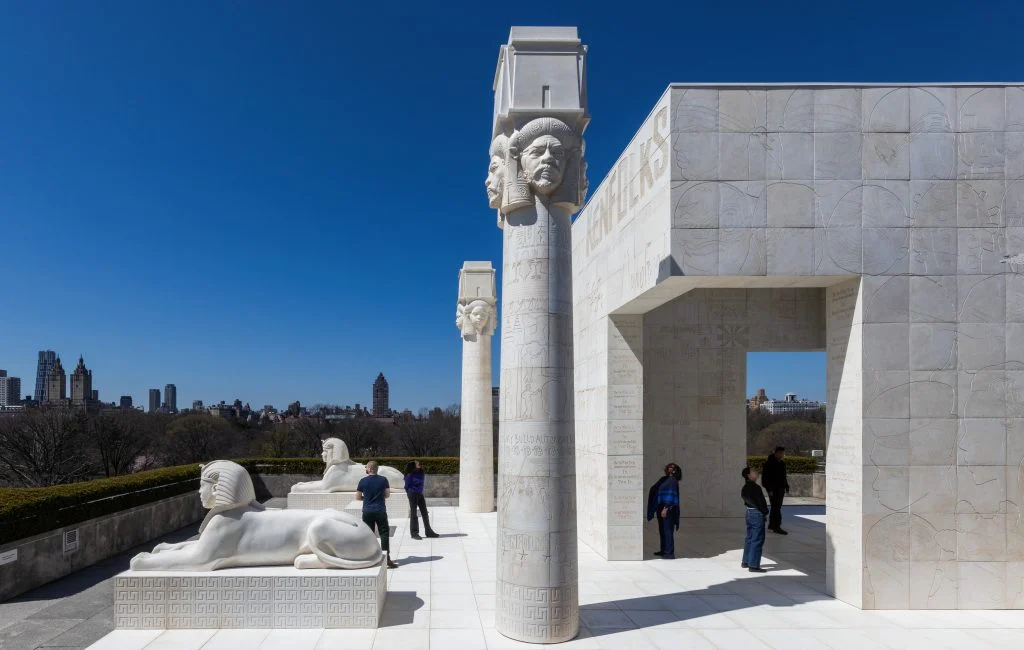

Lauren Halsey, Installation view at the Roof Garden Commission. Photo by Hyla Skopitz. Courtesy of the Metropolitan Museum of Art, New York.
The Metropolitan Museum of Art staff has voted to unionize with UAW Local 2110. ”We won because we were able to convince our colleagues that they don’t have to accept whatever is offered to them, that their experience and hard work have earned them a seat at the table,” said Rebecca Capua, a conservator who has worked at the Museum for sixteen years. The vote was determined by 542 yes votes that constituted the 76% winning margin after, according to a statement issued by UAW Local 2110, some four years of workers organizing.
Before the collective bargaining begins—negotiations between the union and employer surrounding wages, hours, benefits, and working conditions for the first contract—the National Labor Relations Board will certify the election, and workers will sign up as members and elect leadership. The unit that has formed the Met Union is composed of staff across fifty different departments of the museum and includes curators, conservators, librarians, sales specialists, visitor experience coordinators, development officers, archivists, and digital and IT staff. Its exact size is yet to be determined as the museum has contested the eligibility of 100 workers.
“Organizing with my Met colleagues was an incredible, galvanizing experience that I will never forget,” said Alison Clark, a Collections Manager in Asian Art who has worked at the Museum for over twenty years.
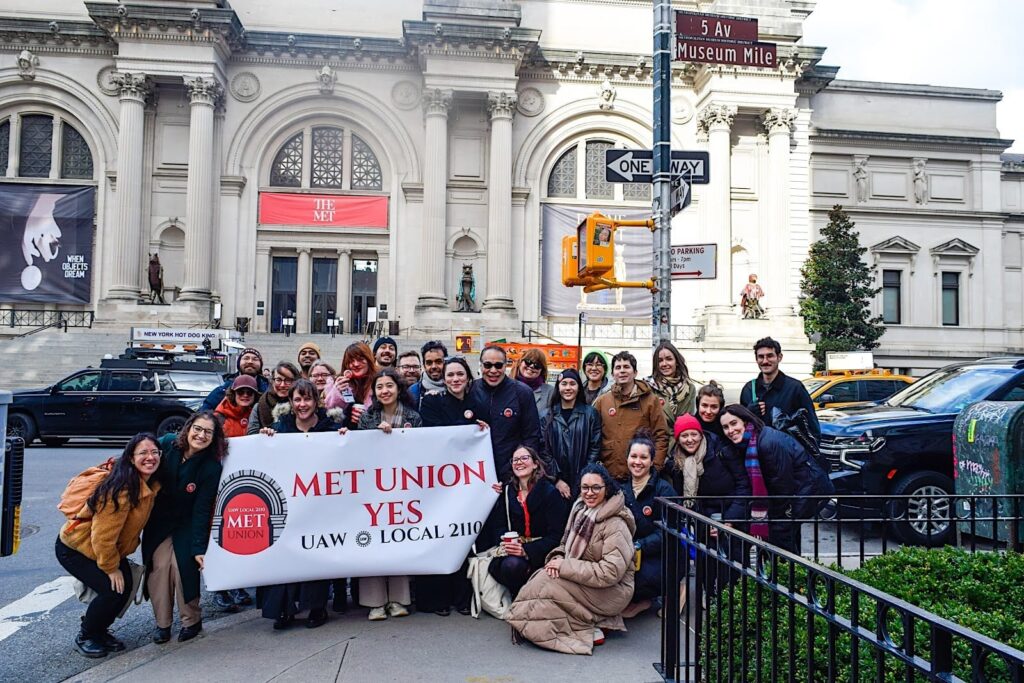
Photograph courtesy of UAW Local 2110.
Union activity has been present at the museum since the 1950s, with DC 37 (District Council 37) Local 1503 representing security guards, maintenance staff, and attendants, while some crew and lighting technicians are represented by IATSE. However, simply joining the union will not immediately make work conditions better—ratifying a contract is key, and these negotiations can be complicated. In 2023, Cultbytes reported on New York’s first museum strike in over twenty-years where the Hispanic Society’s 2110 members also picketed outside of board member Philippe De Montebello’s Upper East Side apartment building. At the Whitney Museum, a ratified first union negotiated deal included a 15 percent increase in non-managerial employee wages with additional increases of 9.5 percent during the contract, which expires in June 2026. The art industry overall is not high-paying; many museum jobs require advanced degrees, attracting staff members with much student debt, and the cost of living in New York keeps on rising—for many, this is an impossible equation.
A museum spokeswoman, Ann Bailis, lauded the Met’s competitive salaries and benefit packages in a statement: “As one of the world’s leading art museums, the Met has long been committed to supporting its exceptional staff with highly competitive salaries and benefit packages that surpass industry standards.” Parental leave and delayed reduction to remote among them. However, an open letter signed by hundreds of museum workers posted to Met Union’s Instagram account explained that without union representation, these decisions could easily be reversed and that workers could “not hold the museum accountable for decisions that affect us,” especially about “protected jobs, secure benefits, and living wages that keep up with inflation.”
Local UAW represents workers at Museum of Modern Art, Guggenheim, Whitney Museum, Jewish Museum, Tenement Museum, New York Historical Society, and the Hispanic Society Museum and Library, among others. “By unionizing, we aren’t just protecting our own jobs—we are building a collective voice to ensure every staff member, now and in the future, gets the respect and protection they deserve,” said Stephanie Post, a Digital Archivist, who has worked at the Met for thirty-one years.
You Might Also Like
U.S. Labor Department Revives Leyendecker’s Queer Vision of Masculinity
Guests Arriving to Brooklyn Museum’s Artists Ball Met by Curator and Staff Protests
What's Your Reaction?
