

In Matrilineal Remembrance

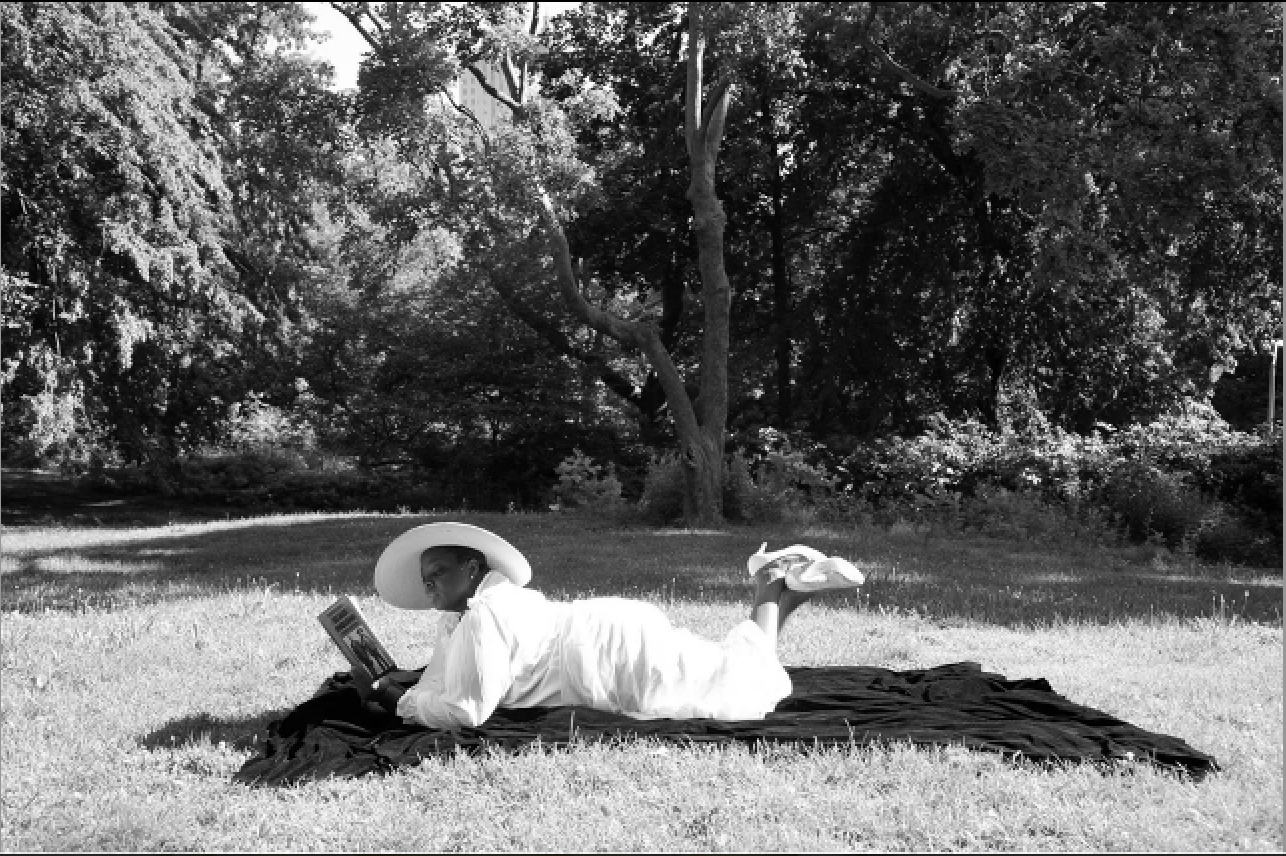

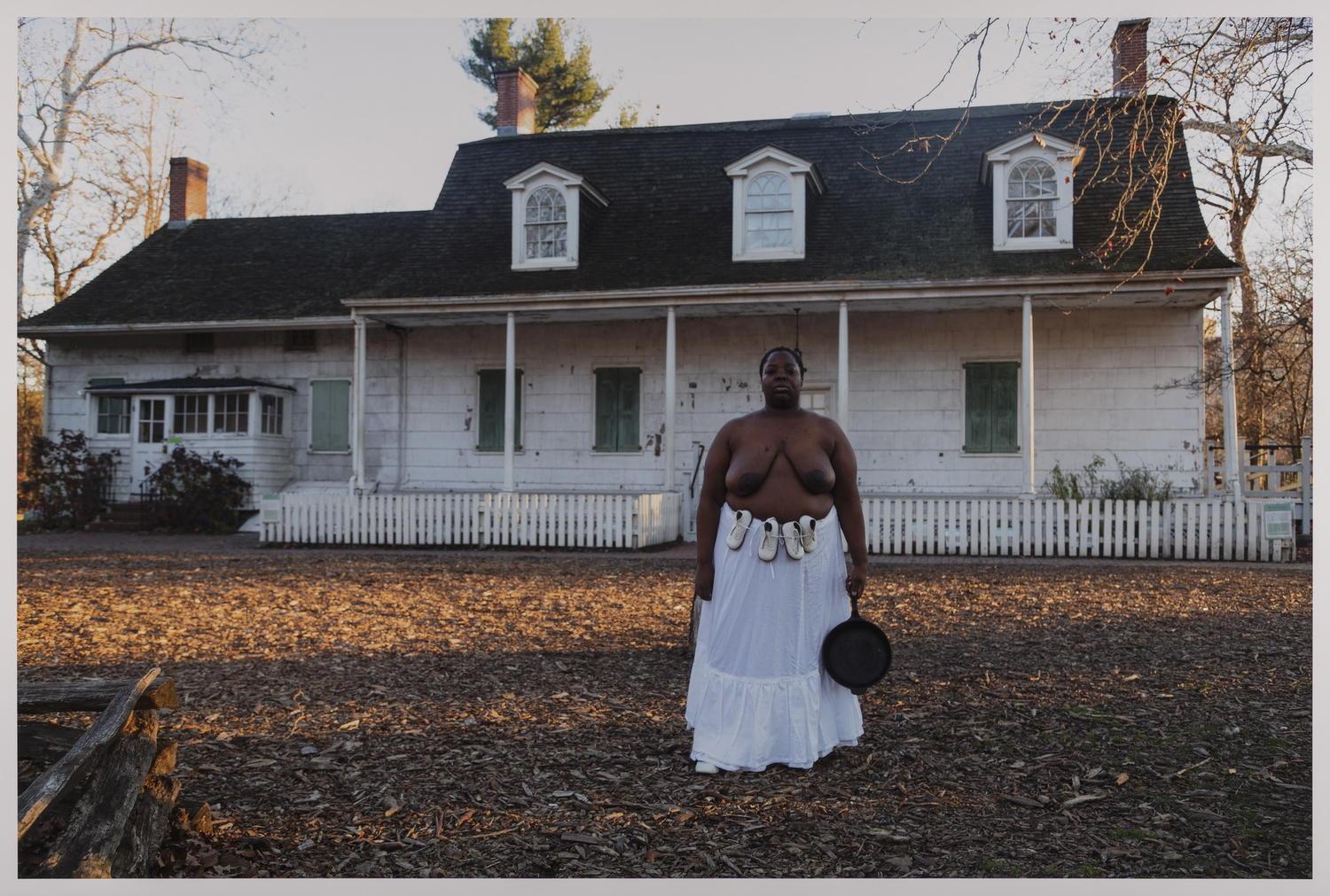
Two solo photography shows at CPW Kingston pair the works of Qiana Mestrich and Nona Faustine. These two American artists, with a thirteen year history of mutual inspiration, collaboration, and deep affinity, met in 2011 at the defunct Bard-ICP MFA program in photography in Manhattan. Faustine and Mestrich grew up in Crown Heights/BedStuy within households led by Buddhist mothers, and both entered the MFA program as mothers raising mixed heritage children. Unfortunately, there’s no indication of the deep connection between these two artists and the strands of creative conversations for which few archives exist—their longstanding friendship and mutual support are invisible in wall texts. Instead, Marina Chao’s curatorial approach was to bind them firmly in a gaze emerging from the motherline.
On March 15 CPW held a panel, Seeing Otherwise: Black Womanhood and the Matrilineal Archive, a conversation with Mestrich and Faustine’s sister Channon Simmons, alongside the co-editors of Black Matrilineage, Photography, and Representation (2023), Lesly Deschler Canossi and Zoraida Lopez-Diago. The panel was a lively discussion of collaborations among mothers for whom art is also central to their personal and professional lives. In remembering Faustine before her passing in 2025, Simmons described how quickly the sisters had to work in public space, often at dawn, while Mestrich traced how mutually inspiring their friendship was. The choice to omit framing Faustine and Mestrich’s friendship within the discursive text feels incomplete, given both exhibitions’ thematic investments in lineage, memory, and family; yet, the absence itself becomes meaningful, echoing the historical erasure of relational and creative networks by and for women of color. Presenting these two exhibitions in tandem offers a subtle cue, inviting viewers to draw connections between the artists’ lived experiences and the work they produced in dialogue with one another.
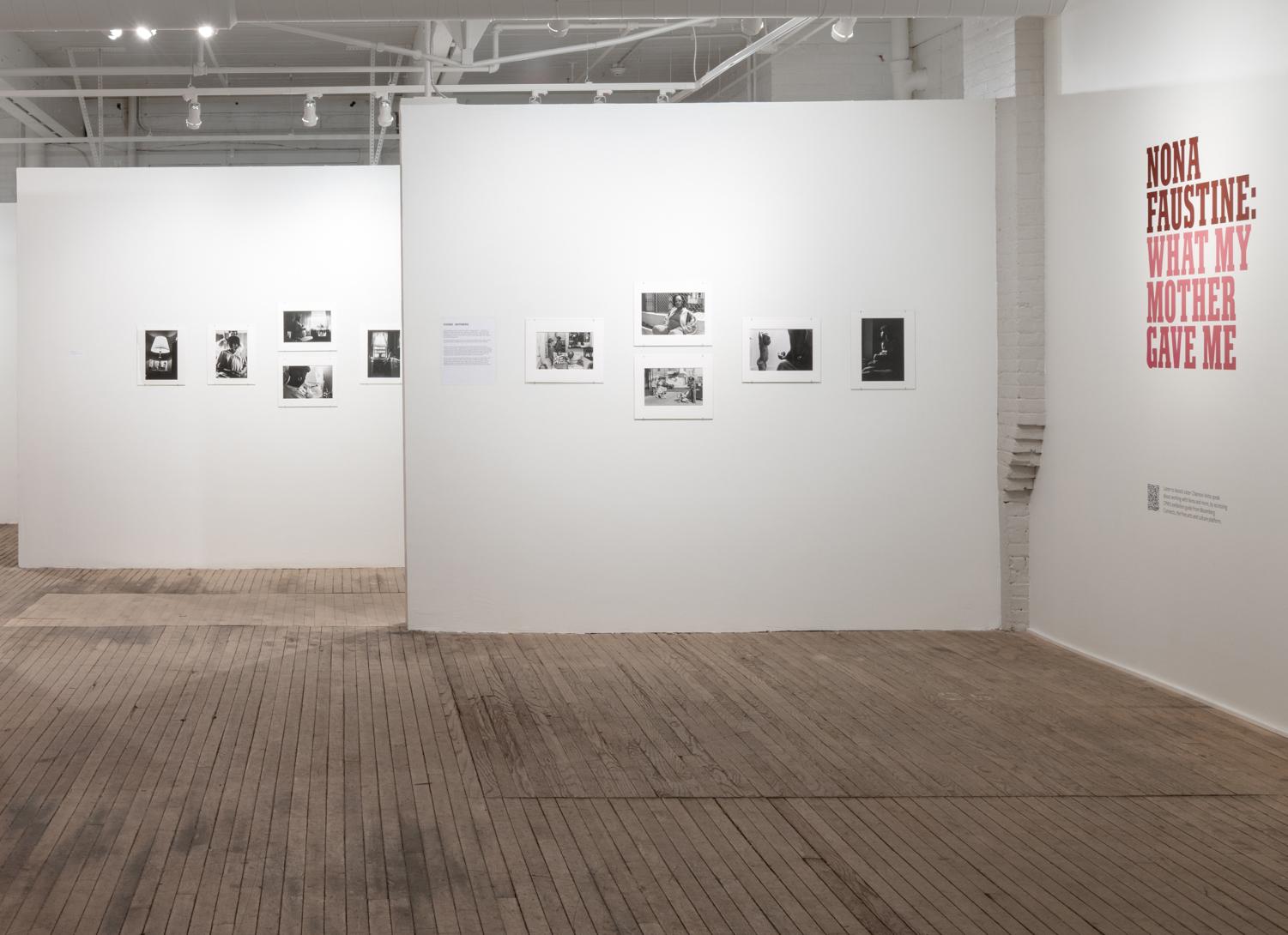
Faustine’s What My Mother Gave Me opens with a portfolio of gelatin silver prints, Young Mothers, 1992-1994, unshown since Faustine’s undergraduate BFA Thesis show at The School of Visual Arts. This series shows Faustine’s early treatment of challenging dominant narratives through photography. One striking photograph is a window-lit seated portrait of Renee holding her small child. In a darkened room, Renee looks out the window pensively while the child faces the camera; light illuminates their profiles. It’s an impeccable print: we see the varying textures of clothing, the mother’s and child’s hair, as well as five crescent moons connecting the two figures. These “moons” reflect light upon five graduated spheres that form Renee’s earring. This umbilical link is a very self-aware composition that reflects Faustine’s engagement with art/history (Baroque pointillés) and representation.
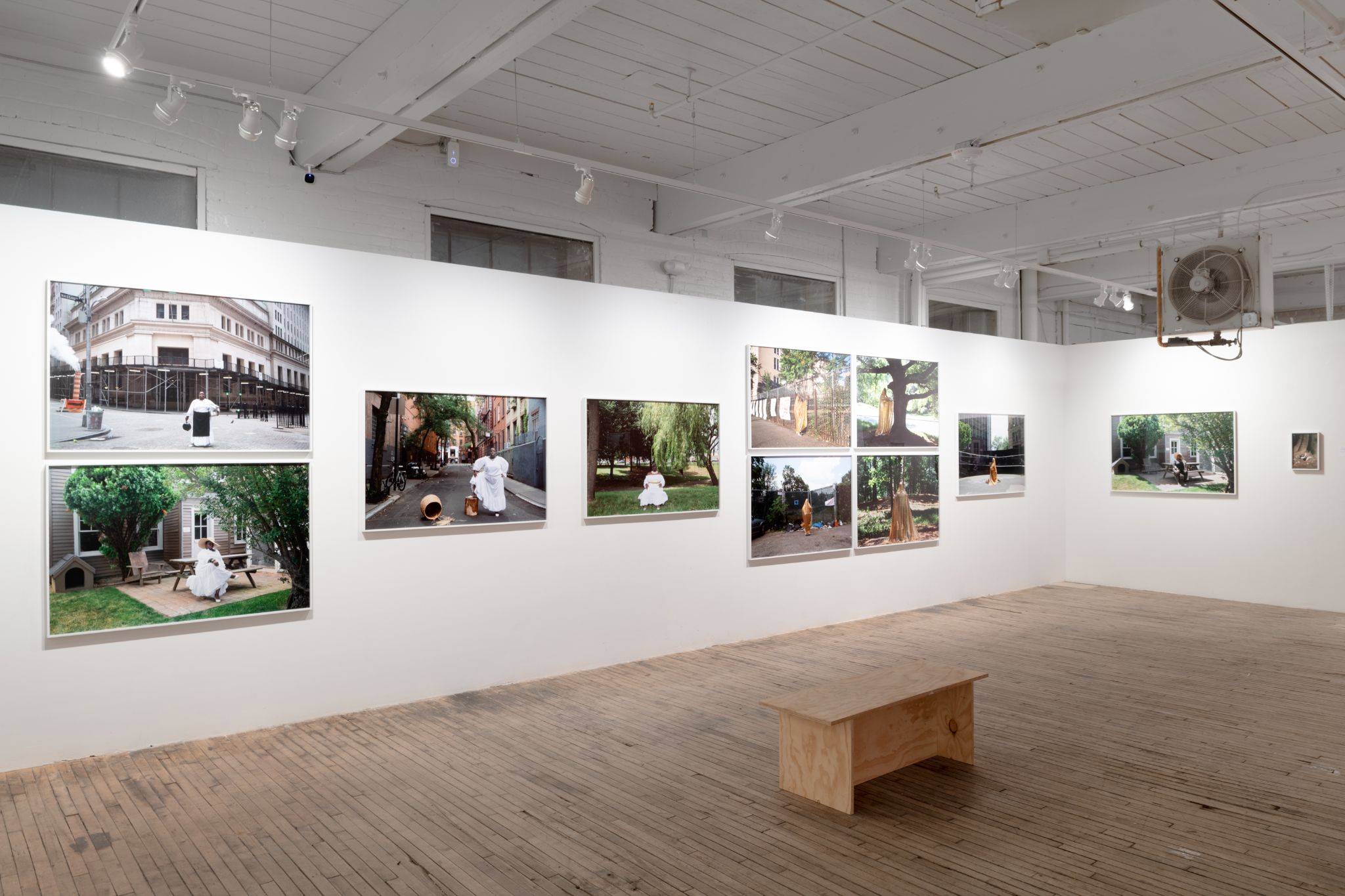
The walls of CPW’s largest exhibition space are filled with prints from Young Mothers and White Shoes but in the middle of this gallery is a free-standing installation of Mitochondria. Painted red, this enclosure brings elements of Faustine’s home into the space, and gathers impressions of home as sanctuary for three generations of working class Black women in Brooklyn. The Two Queens, 2011, carries the sensibilities of Young Mothers into Faustine’s own home: In the foreground Faustine’s mother is seated in a chair while Faustine’s daughter Queen Ming stands and rests her hand on grandmother’s knee. Both are wearing red for the Lunar New Year, the floor is spotlessly gleaming, fresh yellow flowers spring up from a corner shelf. The background frames them in black by a rounded arch separating their white living room from an unlit room behind them. It’s in this installation that Faustine’s mother, sister, and daughter are pictured alongside the photographer, where Mitochondria and Real, Raw, and Ready converge and display the evolution of Faustine’s resolved gaze.
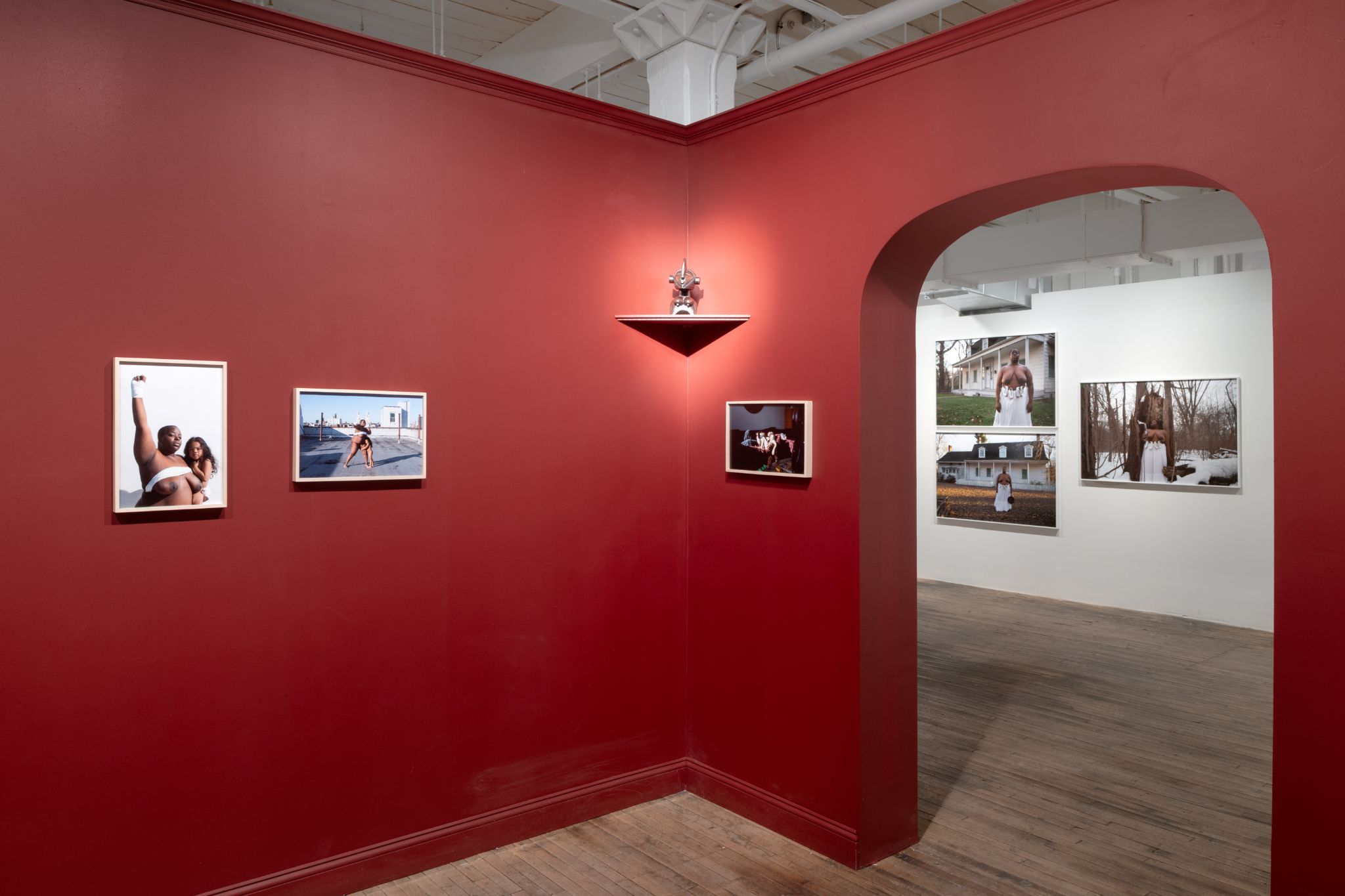
Real, Raw, and Ready is an underrated series within Mitochondria. It’s the series in which Faustine began testing the self-portrait format to communicate her political voice. Faustine’s sister Simmons stood in for tests and later traded spots with Faustine to click the shutter when Faustine decided. As sister, confidant, co-parent, collaborator, assistant, and now archivist and manager of Faustine’s estate, one of Simmons’s most important roles in her sister’s life was that of Muse. In their household Muses never pandered, they were active and collaborative. First seen on Faustine’s Tumblr, Real, Raw, and Ready had social media feminists in a fervor because Faustine’s embodied power spoke to them.
By the time Faustine held her first ever solo exhibition at Smack Mellon in Brooklyn in January 2016, there were online and offline audiences wanting to meet her. In conversation with Maurice Berger for Faustine’s first New York Times piece, Faustine asserts Mitochondria as a series confronting stereotypes imposed on American Black families, especially when Faustine was raising a daughter: “I wanted to give my daughter the same gift my father gave me: a visual diary. As a single mother, I wanted her to see how much she was loved…I felt passionate about showing this because you rarely see these moments in mainstream media or museum or gallery exhibitions. We are like everyone else.”
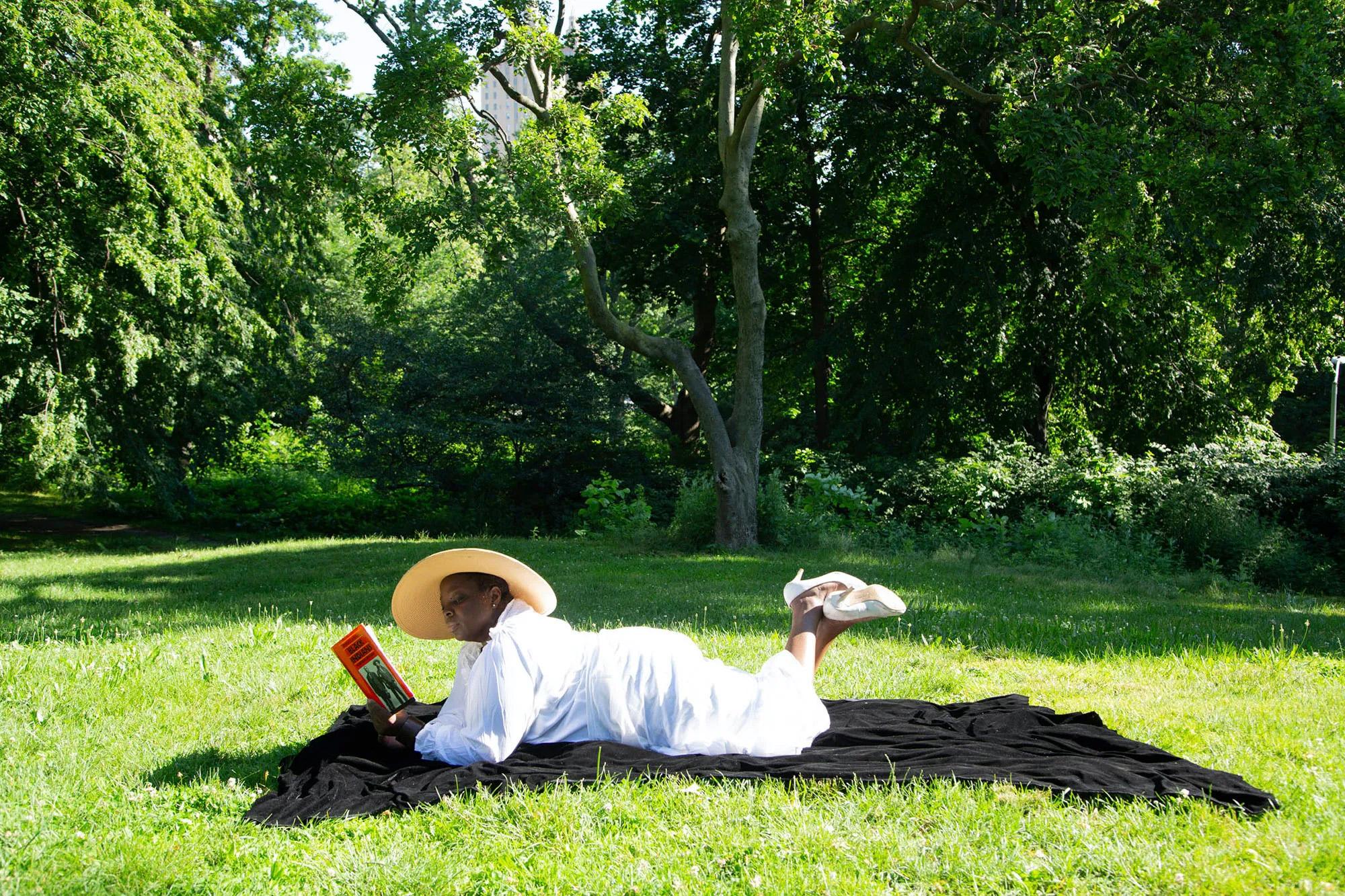
In a video for White Shoes, Faustine’s major solo exhibition at the Brooklyn Museum, Faustine states: “What I’m reclaiming with my work in the White Shoes series is the anonymous men, women, and children who were sacrificed, really, in the building of New York City and of this nation….to ignore that history and contribution is a kind of violence on the soul.” As affirmed in Faustine’s earliest interview with Mestrich in 2014, the historical erasure of enslavement in her home city had long been a focal point: “What does a Black body look like today in the place where they sold human beings 250 years ago?” It’s important to note that Faustine was developing White Shoes (2012-2021) at a time when the erection of Confederate memorials was booming, a fact she was aware of and engaging with.
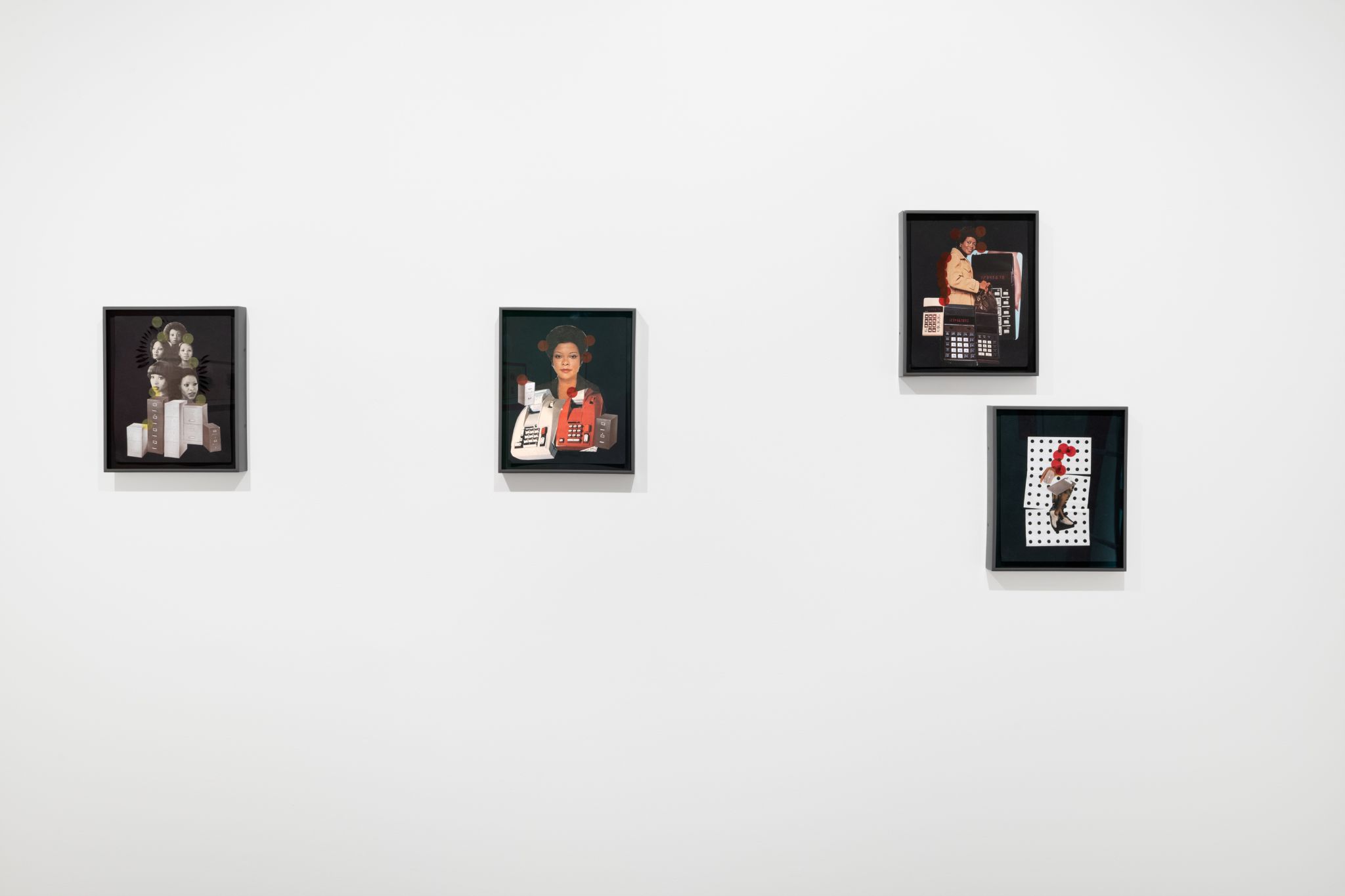
To illuminate what dominant archives fail to uphold, Faustine fuses research with the direct affirmation of her body; while Mestrich applies vernacular imagery with critical readings of mass media representation. Do Not Fold, Spindle or Mutilate is a multi-media installation of Mestrich’s ongoing speculative archive addressing women of color in office and corporate workplaces. The title of the exhibition, and of Mestrich’s new book which was awarded CPW’s 2025 Saltzman prize, is taken from a user warning on the back of computer punch cards. Both book and exhibition feature sculptures and photomontages from The Reinforcements, a series for which Mestrich sourced images from vintage African-American publications to build a visual archive of working women of color from 1964 until the early 2000s.
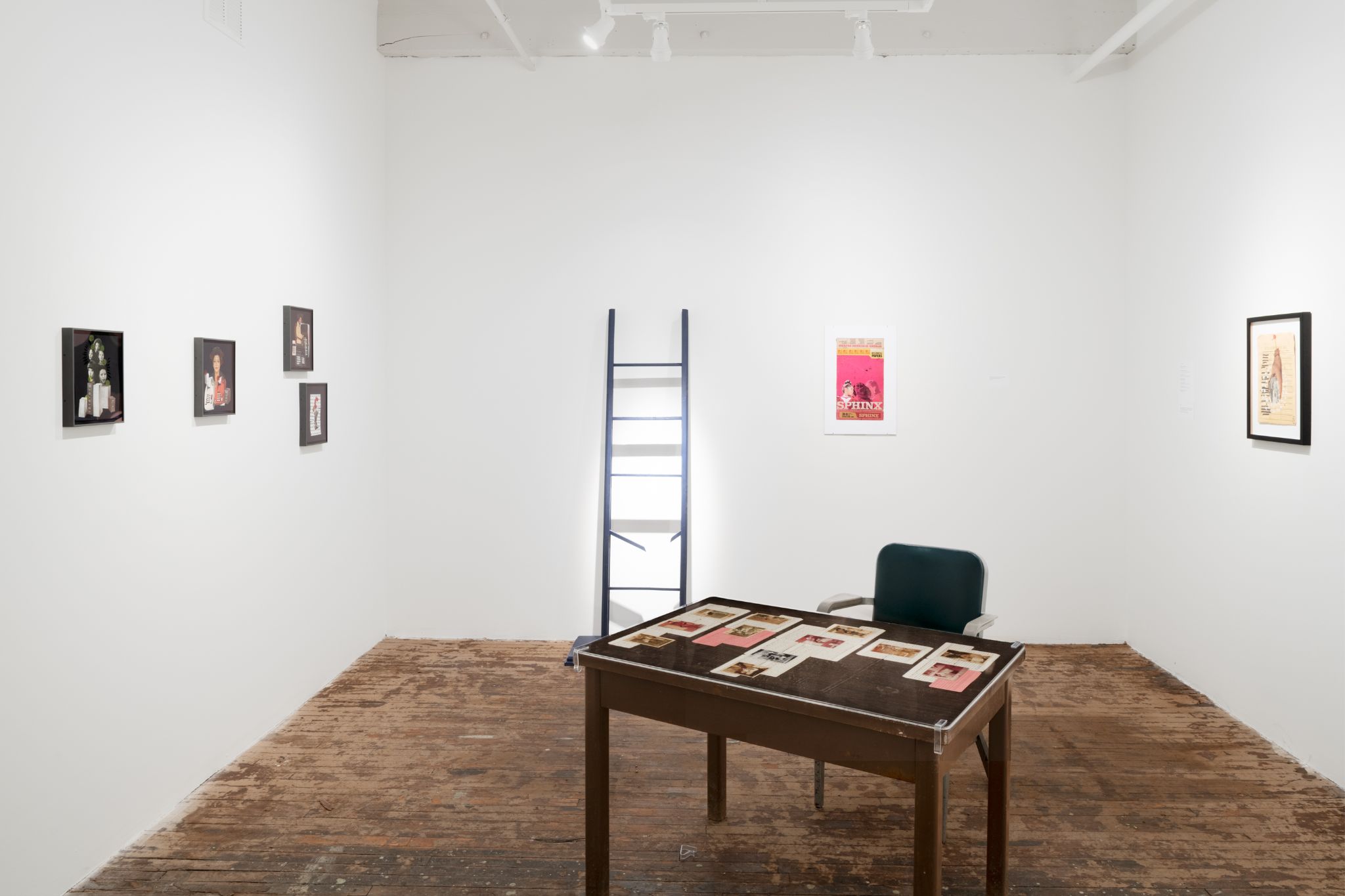
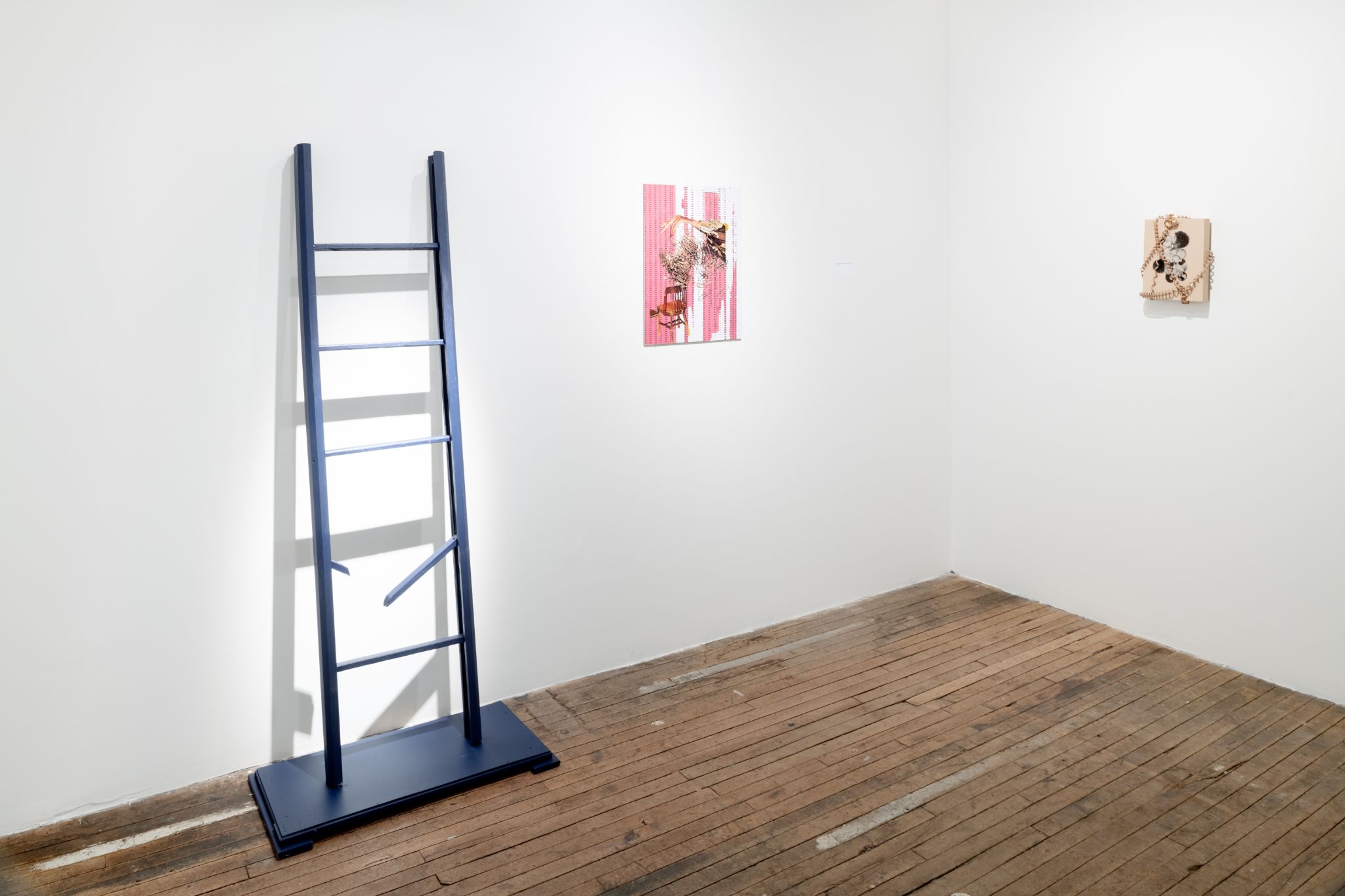
The representational void addressed in Mestrich’s work reflects historical functions of erasure and segregation, rather than economic absence: after civil rights legislation in the mid 1960s forced the American labor market to employ working people of color in the private sector, women of color have often held high numbers of office work, a number that was rising until 2020. Mestrich visualizes this dynamic of market overparticipation without adequate representation through photomontage, two sculptures, and a tabletop installation. This exhibition includes Mestrich’s largest sculpture to date: a 6’ wooden ladder leaning against the wall, one of its blue rungs smashed from above. Mestrich stated the title of this piece, The Broken Rung, 2025, references a 2025 book by McKinsey senior partners Kweilin Ellingrud, Lareina Yee, and María del Mar Martínez, that identifies a lower percentage of advancement into managerial roles than their male counterparts as a critical, early-career obstacle for women that disproportionately affects women of color and is even more pervasive than the glass ceiling.
Pregnant women and working mothers encounter heightened bias in the workplace. Mestrich addresses this phenomenon, where working women who are mothers or caretakers experience an additional disadvantage compared to women who are not mothers, in The Motherhood Penalty, 2025. On a solid pink box of Sphinx vintage business paper, Mestrich added a row of five yellow Intel microprocessor chips and added two magazine cutouts representing a mother and child. Mute between these two figures is a Sphinx. Many white women stop working temporarily or permanently when starting a family, but not as many women of color can afford to do the same, reinforcing bias for them.
Mestrich understands this unspoken weight hovering in the office, and told me that “In my own 20+ year corporate career, I’ve experienced this penalty after having both my children…[working mothers] are judged as being less dependable while visibly pregnant women are considered more emotional, irrational, and less authoritative. Working mothers also face a larger gap in pay.” Simultaneously, employment segregation norms continue informally: in 2025, white women held less service jobs than women of color.
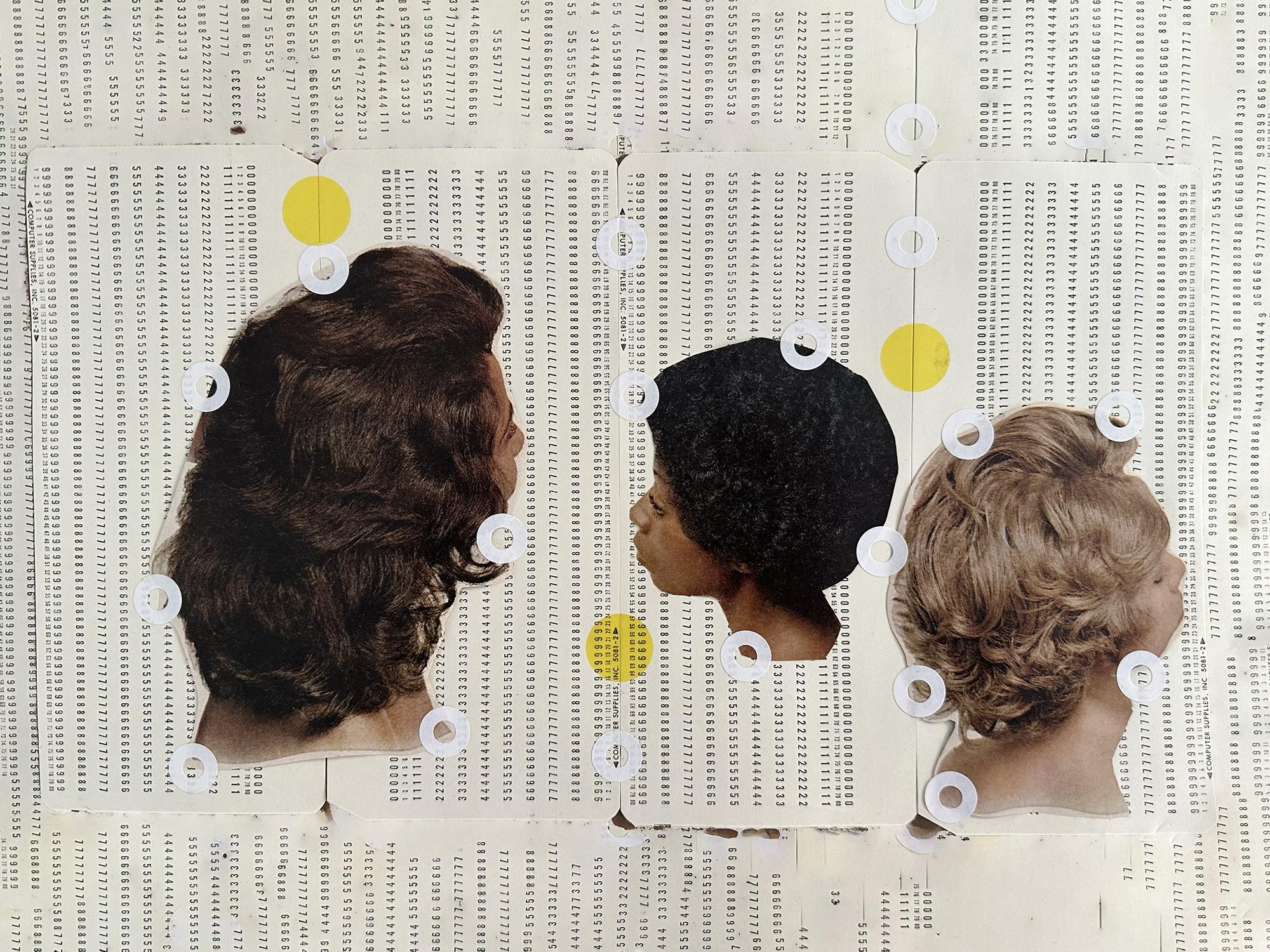
Mestrich’s works visualize how policy affects everyday life, and for Untitled (The Crown Act), 2023, the artist appropriated images from vintage wig advertisements to consider the US bill enacted in 2021 that prohibits employment discrimination based on a person’s hair texture or hairstyle if that style or texture is commonly associated with a particular race or national origin.
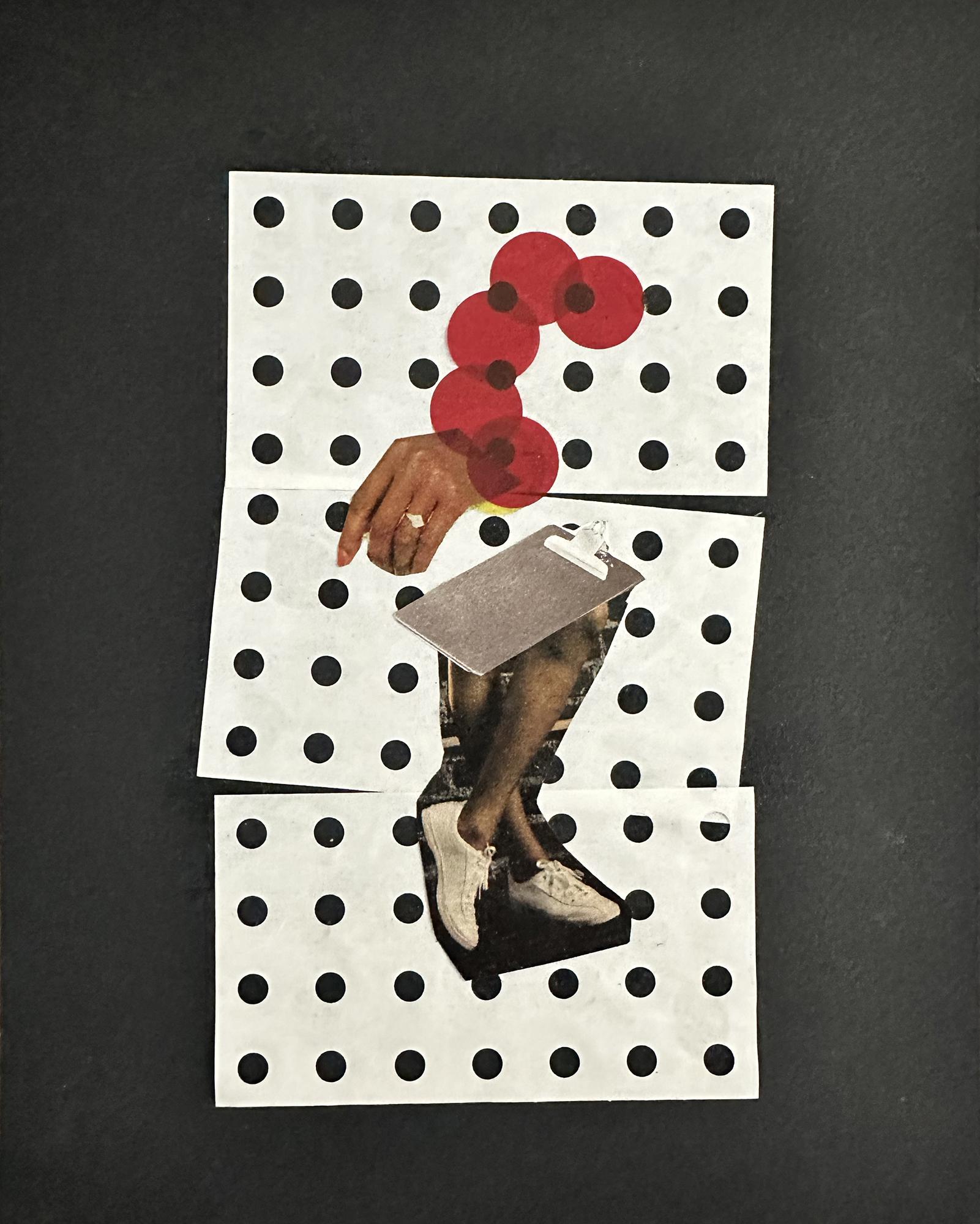
Mestrich’s (Untitled) Ballpark Figure, 2024 features a background of white backing paper of clear reinforcement labels—something Trapper Keeper, Filofax, and Bullet Journal users can probably all agree on because those labels are the modern healers of unbound pages. A large silver clipboard slices this perforated space: slim legs in white tennis shoes on the ground, five overlapping red rings curve in space, leading to a well-manicured hand wearing a diamond ring. “I love that this collage has no face,” Mestrich said during the panel. “I’m using business language…[with] the term ‘ballpark figure’ I’m also playing with the double meaning of the word ‘figure,’ alluding to the woman’s body.” Growing up in the 1980s, she would see women commuting to work on the subway or walking the streets wearing sneakers with their nude stockings. She found this to be a strange fashion choice, but soon realized it was a way for them to comfortably commute to work where they would then change into pumps or heels that were more appropriate for the office.
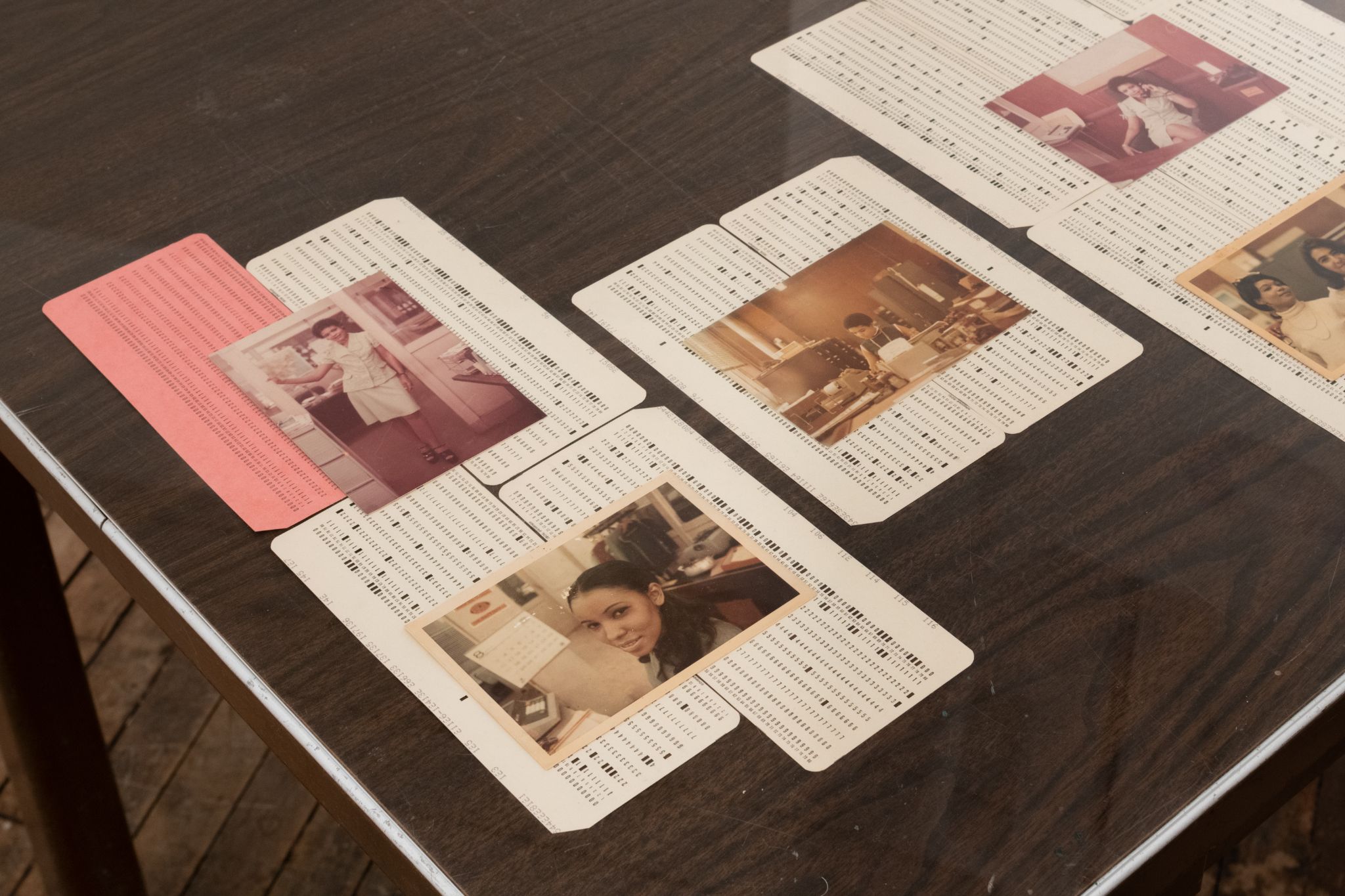
In the tabletop installation Mestrich assembled vernacular images of her mother at work among colleagues, photographs laid out over computer punch cards, as a “way to frame the vernacular photos and…visualize a city landscape, perhaps that of the office buildings of midtown NYC where my mother worked for over 30 years.” Sitting at this table, one sees The Ideal File Clerk, 2023, a photomontage of five faces of perfectly coiffed, stylish, pleasant-looking women who are most likely all overdressed for the tyranny of the vertical file cabinets their heads are resting on. “I liked the idea of using office furniture to act as a plinth, a base that elevates these overlooked figures,” Mestrich said. “There’s an element of beauty and elegance that is found in the photographs of my mother that I wanted to emulate in the collages.”
Yet, to see Mestrich’s photomontages as simply “beautiful” misses the mark. For many office workers, and primarily for women of color, strolling in casually dressed is not an option. Even in times of casual dressing, effort must be made to understand social codes of dress and navigate varying professional levels of authenticity and conformity through presentation. The maintenance of beauty and style has a high cost, a fact too easily dismissed for superficiality when it is actually survival: a 2018 academic study showed that women who wear make-up earn 20% more than women who don’t. Appearance shapes perceptions for hireability and social mobility while being discredited as superficial and yet, its maintenance costs become another ‘penalty’ for those earning less and with less buying power.
In Mestrich’s book, which is sadly not on display in the exhibition but is available at the CPW store, Mestrich assembles her mother’s office photographs from the tabletop installation into a photo essay with excerpts from an interview with her mother about working in a Madison Avenue sales office. A permutation emerges in Mestrich’s work: among photomontages representing multiple layers of silence (printed pictures don’t talk, while models and women aren’t heard) a first-person voice grounds the photographs. Mestrich’s mother describes office days, parties, camaraderie, and the office’s gender differences: with the exception of the boss, “all the guys worked in the warehouse” while the women worked in the office. It’s in book form that a first-person voice from a post-Civil rights time capsule emerges in Mestrich’s show, and the book is a striking arrangement of a labor force given no credit for their economic contributions.
As counter-memory and counter-monument, Faustine and Mestrich’s works affirm how women of color have been significant drivers of American economic growth from 1627 (the earliest site in White Shoes) through the post-civil rights movement of Mestrich’s installation. They have confronted and changed an erasive canon of representational dominance and achieved this individually and in community, through a shared refusal to let their histories disappear. This exhibition is a significant milestone for each artist, an occasion that feels bittersweet, given that this piece will be published just after the one-year anniversary of Faustine’s passing.
Nona Faustine, What My Mother Gave Me; and Qiana Mestrich, Do Not Fold, Spindle or Mutilate are on view until May 10, 2026 at CPW Kingston, NY.
You Might Also Like
New York: “Carrie Mae Weems: Three Decades of Photography” on view at Solomon R. Guggenheim
Two Decades In, C. Finley Talks ‘While You Were Fucking Off’ and Other Paintings