Good News Hiding in Plain Sight at SPRING/BREAK


This year, SPRING/BREAK Art Show, a fair that often gives artists their first art fair presentation, in a sense, “breaking news,” is taking place in news broadcaster CBS News former offices. Located at 555 West 57th Street and exhibiting roughly 120 exhibitors and curator-driven projects the show with its DIY-vibe and affordability to participate offers, similar to the newscycle, much to decipher, discuss, and, at times, ultimately abandon.
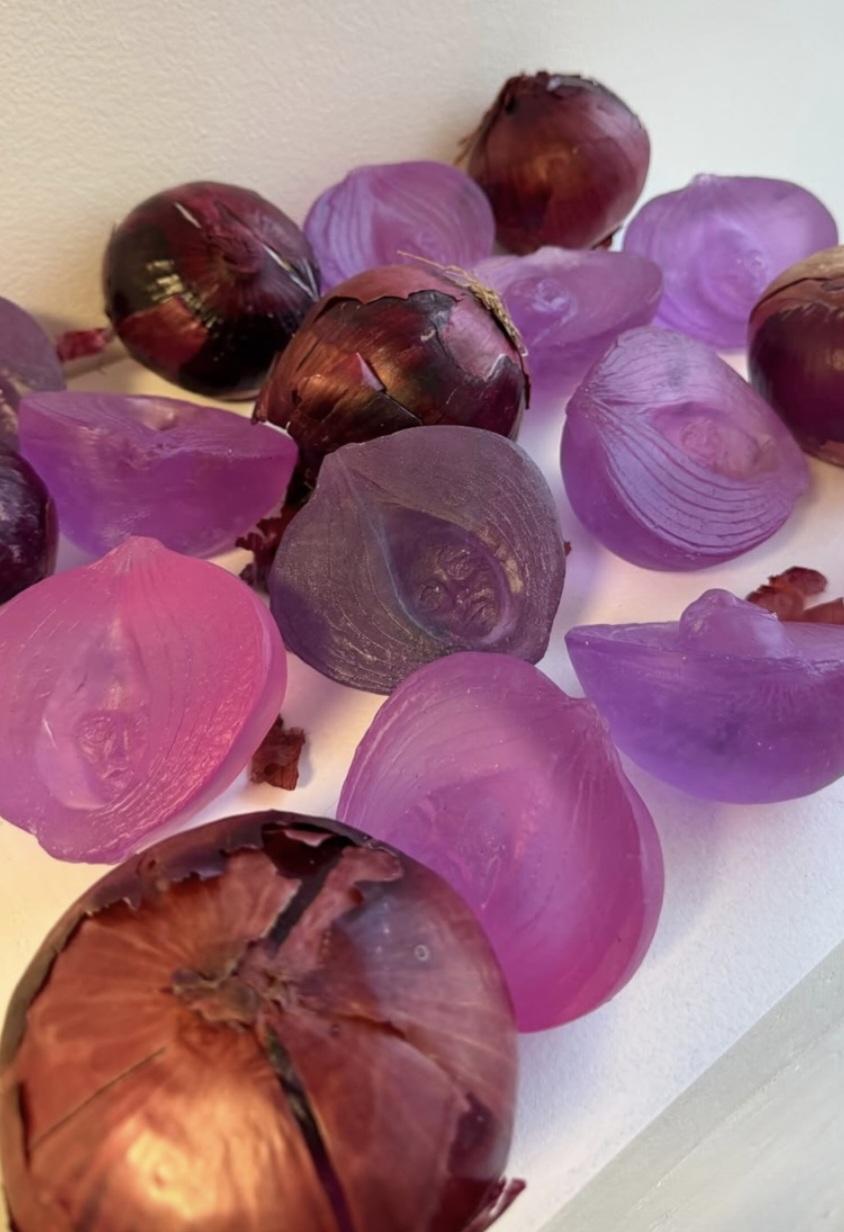
Keeping with the game of hiding and seeking—HIDE N SEEK was this years theme—discovery is often literal at the fair. Sculptor Bianca Abdi Boragi hides faces between layers of translucent purple glass onions that almost glow, mixing the works with real red onions and making you look twice to figure out what is art and what is not. Part French, the artist tapped French curator and director of Liu Shiming Foundation Maëlle Ebelle to curate the showcase which they titled Cache Cache, hide and seek in French. I found Jessica Ambler twice, she curated both Edward Staffanni’s God-Shaped Hole, with its hunting imagery, camouflage, ceramics, and exploration of masculinity and desire, and Derek Olinger in Sugar Coated, a highlighter color explosion filled with classic television imagery. The two showcases could hardly look more different, but both, for their elaborate exhibition design, a staple of the fair, show how much the execution of a booth can shape how we encounter the work. At SPRING/BREAK sometimes booth design detracts from the art on view. Heap marked Charlotte Bravin Lee’s first time exhibiting and curating at SPRING/BREAK, where her careful collage pencil drawings transform personal anxieties surrounding sexuality, florals, and bird phobia into a source of folly. The sentiment in these four booths was that hope can be transferred through the curation of objects.
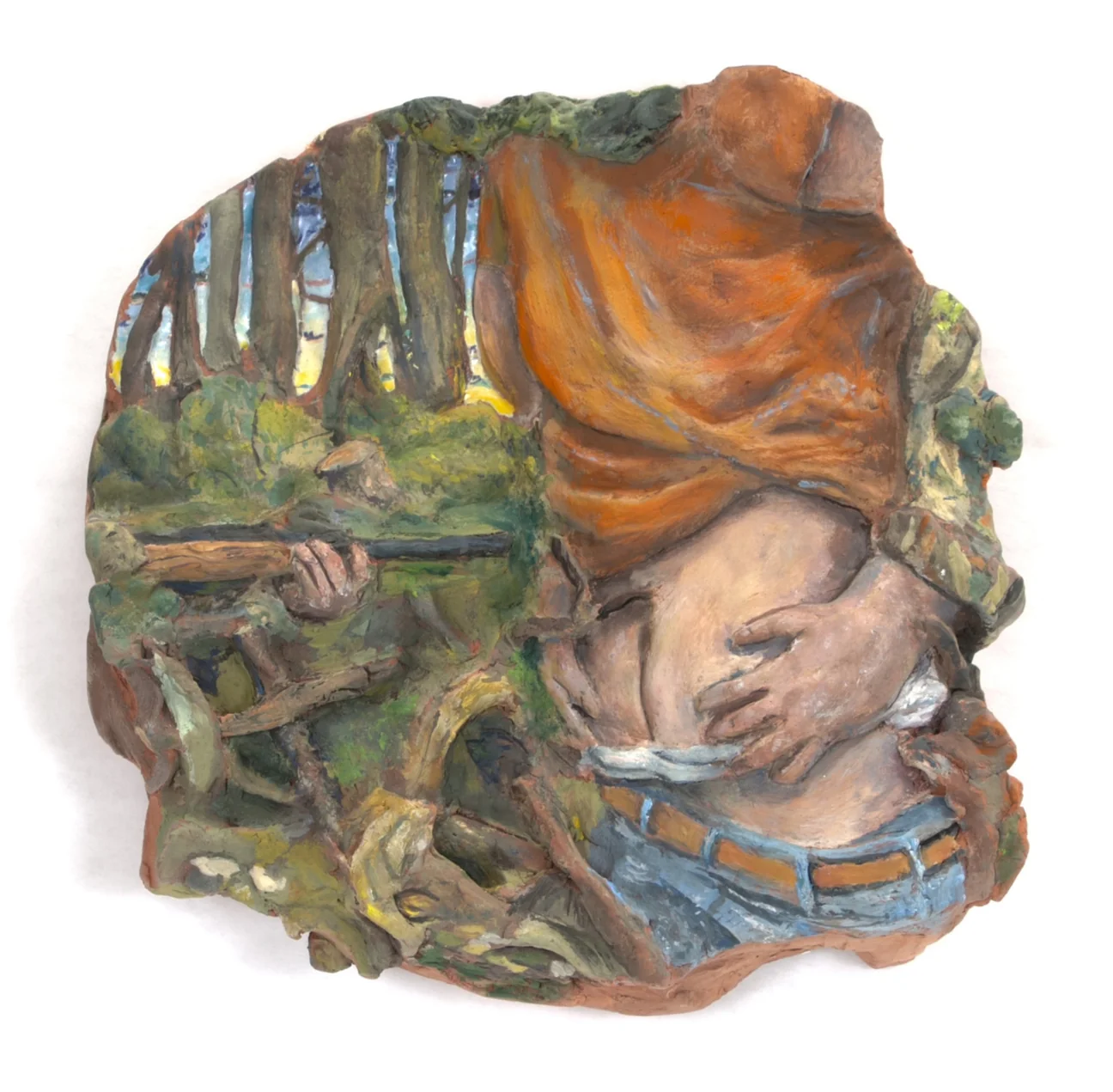
Edward Staffini. “Sunrise Embrace,” 2022/2025. Oil paint on partially-glazed maiolica terracotta, 9 x 8 x 3 inches, Unique. Courtesy of the artist.
Thinking of news, the fair’s theme of HIDE N SEEK gave artists the opportunity to respond to our current political landscape marked by surveillance, patriotism, and subjugation. Used as a language within itself art here becomes a glimmer of hope. Artists speak across time and through current political upheaval and restrictions with the works they make. Messages that may not be safe to utter plainly can instead be encapsulated with a stroke of paint. Art as a form of protest can be as loud as screaming in a politician or religious figure’s face about your grievances and worries.
Below are three booths that spoke to the topics exceptionally well—
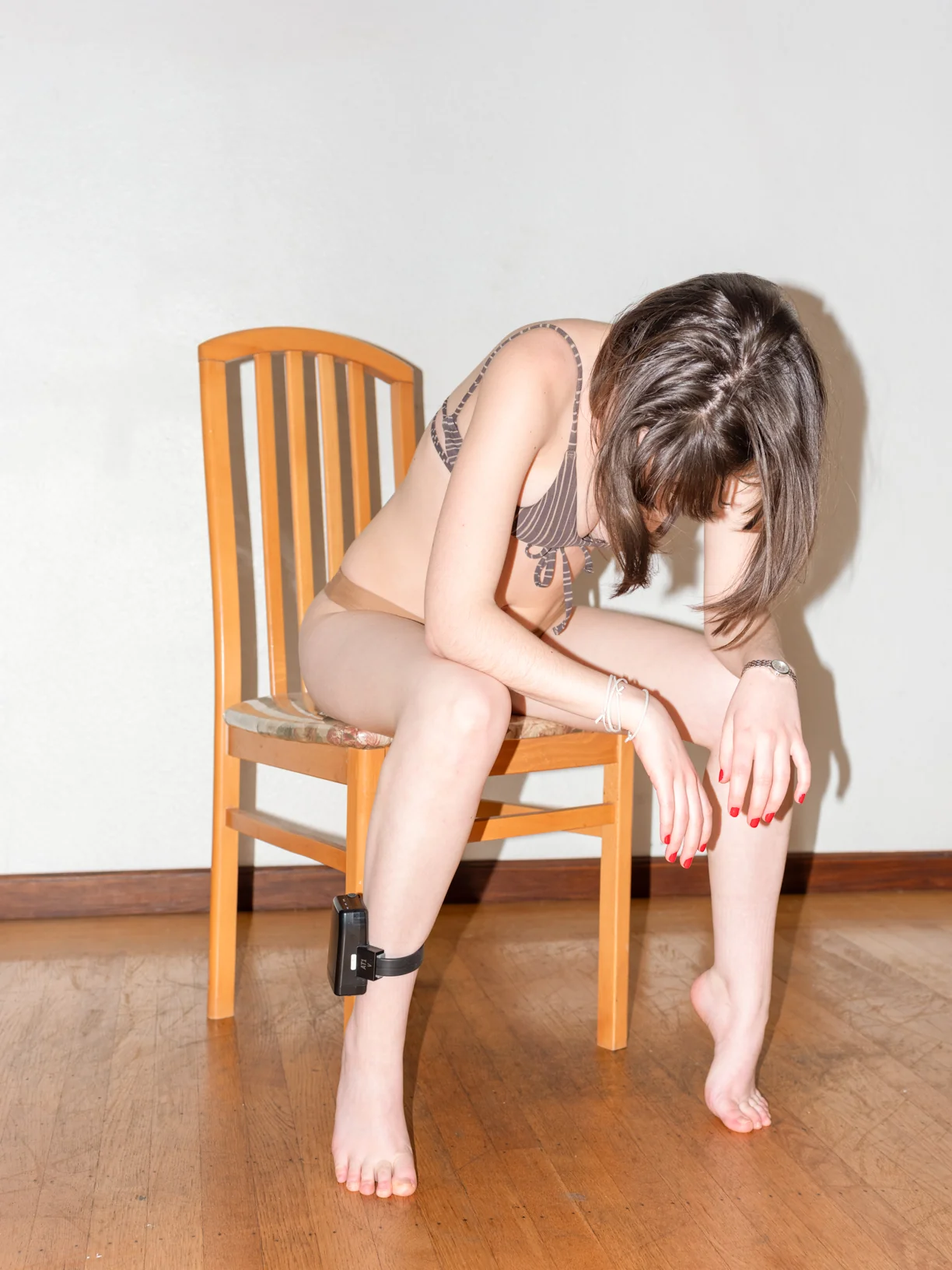
Alice Herbert: House Arrest, curated by Clio Herbert
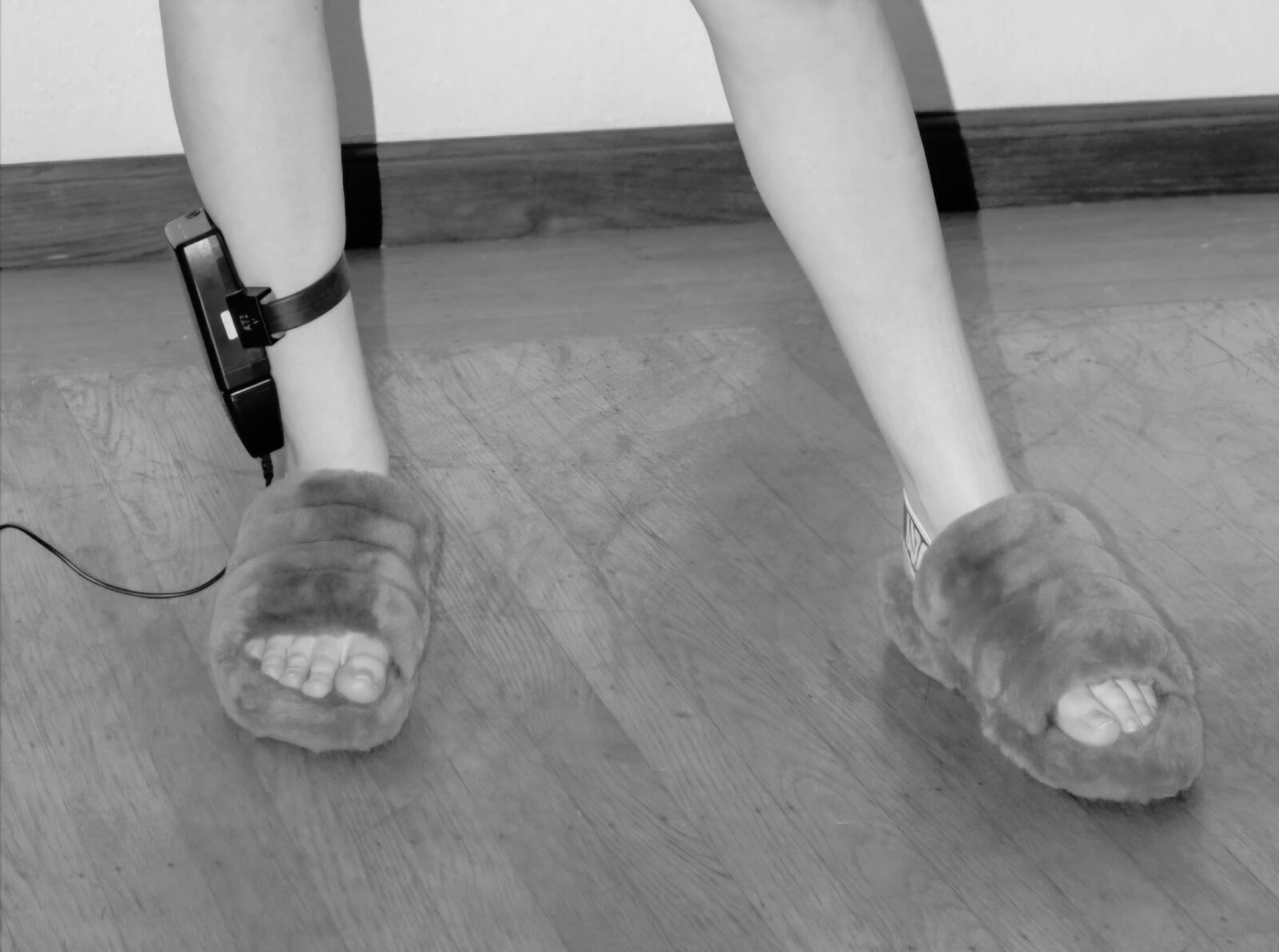
Isolation. The word often comes with feelings of punishment and reflection, a time when you are cut off from the rest of the world. Alice Herbert’s solo presentation House Arrest, curated by Clio Herbert, takes an experience associated with shame, hiding, and guilt and makes it something the viewer is invited to enter. Herbert documents the 24 hour house arrest she received for a DUI through solemn but slightly sexual photographs of herself alone in her room, her ankle bracelet visible. The bathrobe she wears in the photographs, a recreation of her side table, slippers, and a lamp are displayed alongside them. The barrenness of the presentation recreates the sense of isolation that she felt while taking the photographs of herself during those 24 hours. Redacted police records are also on view. Herbert told me the document says it is restricted to authorized persons, and because she was unsure what she was actually allowed to show, she concealed much of it herself.
Ankle bracelet batteries can die quickly, so Herbert mostly kept hers plugged in. If it died, she would have to go through the paperwork and court process again before serving another 24 hours. Herbert is not the only one to uncover her ankle monitor; in the late aughts Lindsay Lohan’s tweet to Chanel to help her glam up her SCRAM inspired Karl Lagerfeld to design a red patent “Ankle Monitor Bag” and Anna Delvey has sported a scarlet “A” on her monitor that she unabashedly shows in videos and photos. In these cases the monitor shapeshifts from tracking device to a political statement. I had never heard of house arrest lasting only 24 hours and wondered if the “punishment” did what it was intended to do. Herbert told me the months of paperwork, waiting, court appearances, and reliving her mistake were the real punishment. One moment became endless months, culminating in 24 hours of “hiding” at home. At SPRING/BREAK, she takes that private experience and chooses to reveal it.
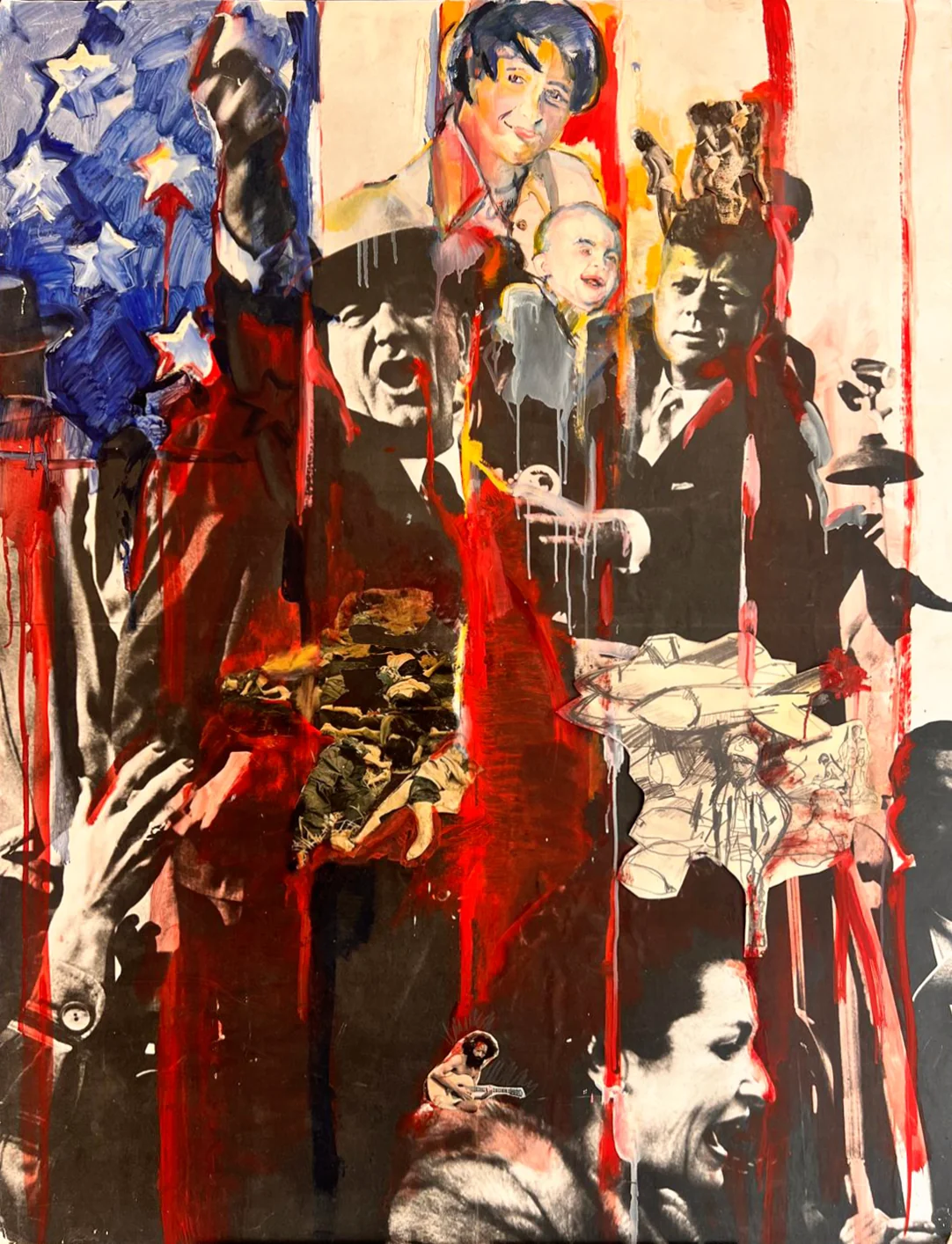
Love and War: Harvey Herman, curated by Michael Saccio and Amanda Weisenthal
There are pivotal moments in history that can bring shame to an entire country or generation. In the United States, the infamous 1961 Bay of Pigs Invasion—a failed covert mission that pushed Cuba closer to the Soviet Union—brought shame to the John F. Kennedy’s presidential office, the US military, and its people. This American disaster is one of many histories reflected upon in Love and War: Harvey Herman, curated by Michael Saccio and Amanda Weisenthal. Herman’s collages, paintings, and drawings from the 1970s evoke patriotism through strong reds, whites, and blues, alongside the weighted understanding of military actions carried out by men who believed what they were doing was right, and be damned the consequences. The presentation pushes that contradiction even further. Red, white, and blue stars cover the walls and hang overhead, almost like a joy-filled and boisterous Fourth of July celebration, while Herman’s works fill that patriotic environment with military, sexual, and religious imagery that refracts fragments of violent US-American history.
What was once breaking news has become history, by revisiting Herman’s historical works we are asked to reconsider how those events are remembered. His paintings refuse to let patriotism remain uncomplicated. Shame and patriotism, like the histories themselves, are allowed to exist together.
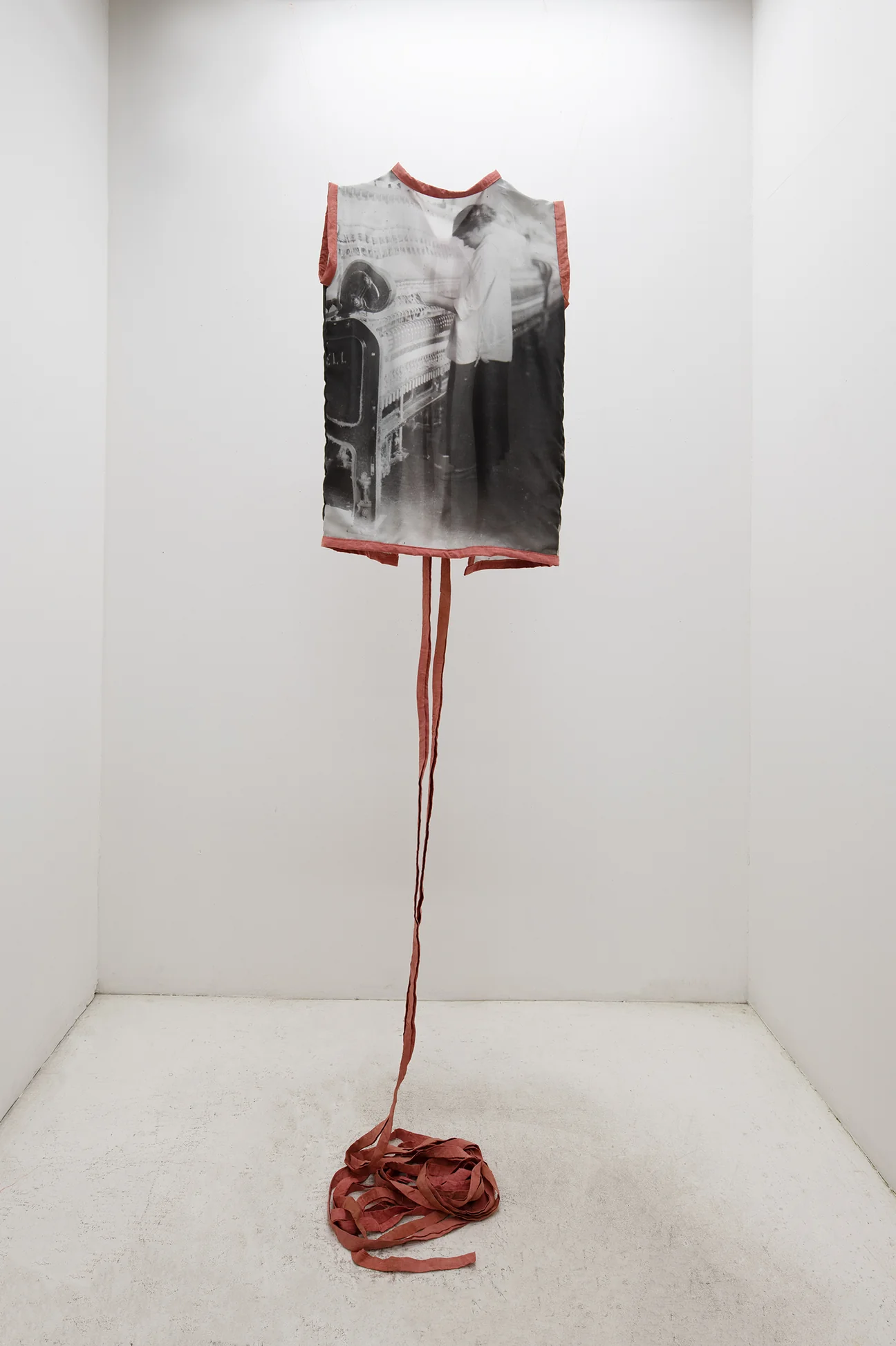
Sylvie Harris: Stepping On Apron Strings, Artist Spotlight
Not all histories being recovered are negative. That would be too simple a narrative. In Stepping On Apron Strings, Sylvie Harris looks to her own family’s immigrant history, particularly her great grandmother, who immigrated from Poland and worked in a Massachusetts garment factory. Harris intertwines this history with the unattainable ideals religion, particularly Catholicism, has placed upon women. Personal and found imagery is printed onto domestic garments, while long strings and strips of fabric extend from the works, cross the floor, and eventually culminate around the body of the central garment. I really liked the presentation of the works and the messiness of those threads. History, capitalism, religion, labor, and feminism become interconnected rather than existing as separate, clean narratives.
Talking with Harris made one work particularly meaningful to me. She uses a found photograph of a woman working in the same Massachusetts garment factory around the same period as her great grandmother. She is not Harris’s great grandmother, but I kept thinking about how she can stand in for her, while also standing for all of the immigrant women who worked there whose individual histories may have been lost or never recorded. Harris takes something anonymous and makes it personal again. The materiality reinforces that connection. In Apron #11, pigment prints on silk habotai are combined with fabric scraps that extend to the floor. The history cannot be contained neatly within an image or a single person. Like the fabric running throughout the booth, it becomes tangled with everything around it.
SPRING/BREAK Art Show 2026 is on view through Monday, September 28 at 555 West 57th Street, NYC.
You Might Also Like
9 Artists That Urge You to Stop and Linger at SPRING/BREAK Art Show 2024
What's Your Reaction?