Five Videos in ‘Under Light of Moon and Sun’ That Refuse to Flatten Place

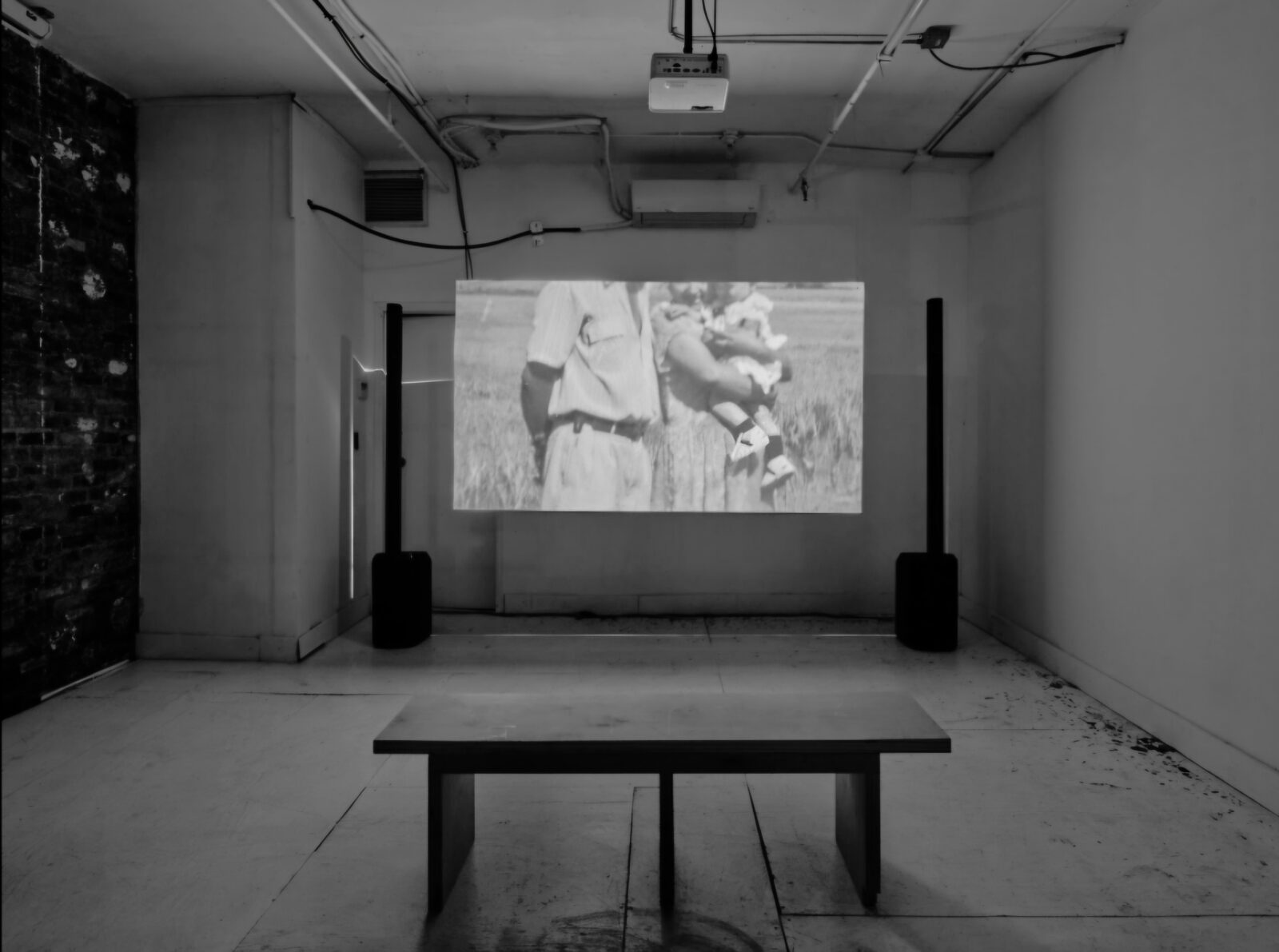

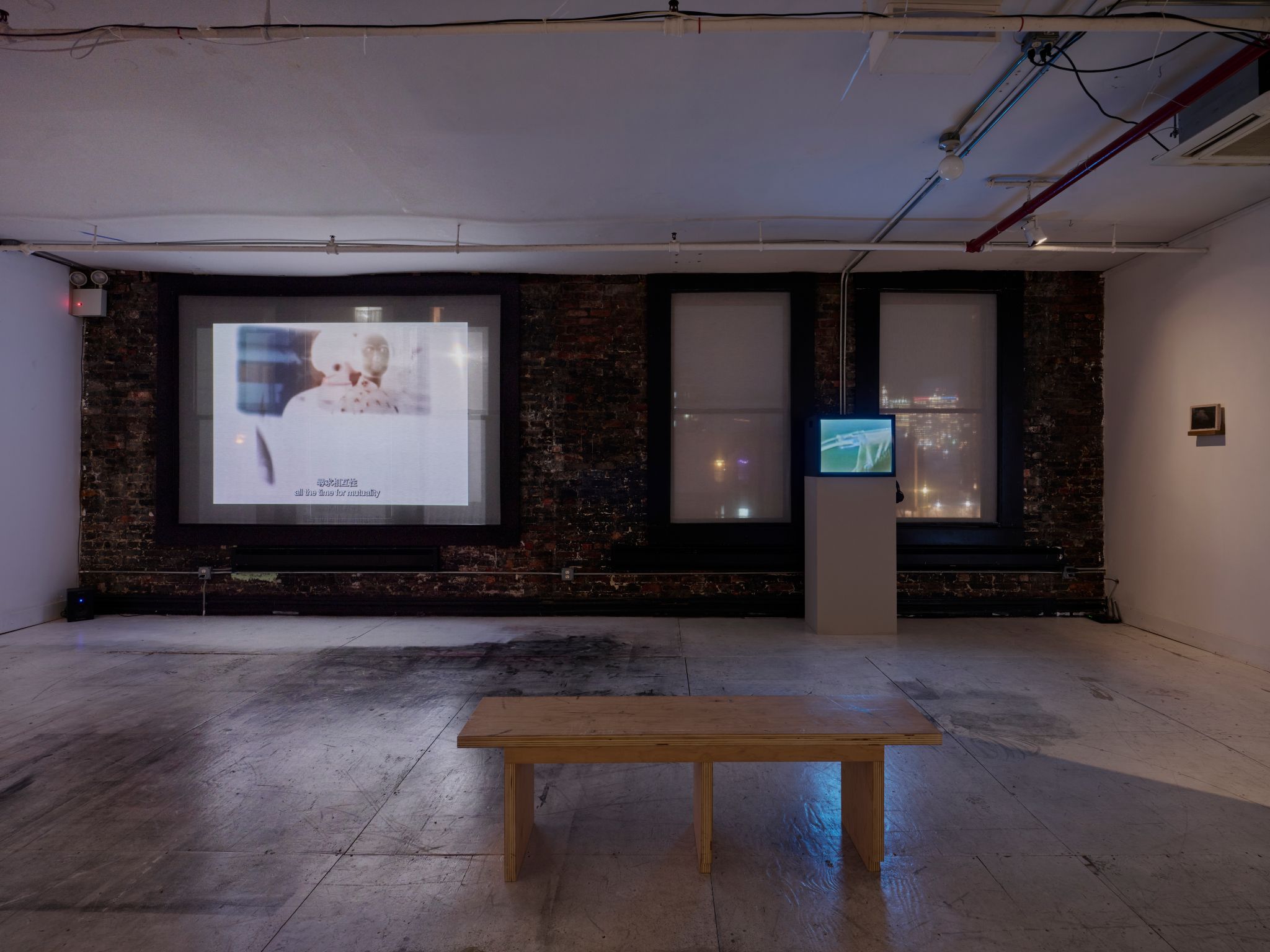
Under Light of Moon and Sun, presented at 99 Canal in December, unfolded with an unusual quietness through textile sculptures, installations, works on paper, and—most notably—a medium that has become increasingly rare: video. At first glance, the list of artists might suggest a cohesive focus on a generalized “Chinese” identity or a flattened diasporic narrative. Yet the eighteen artists, who come from Hong Kong, the Uyghur diaspora, mainland China, Southwest China, Europe, and transnational North America, instead treat place as specific and irreducible, each shaped by distinct conditions of emergence and disappearance. A distinction that is especially clear in the five video works included in the exhibition.
The logic of place as non-substitutable is particularly clear in Mukaddas Mijit’s Geopoetics (2024), a collaborative audiovisual work led by the Uyghur artist that brings together six contributors across the diaspora. Unlike a documentary format, the piece is structured as an open score: loose instructions that participants activate through sound and gesture. Strummed instruments, fragments of music, spoken poetry, casual dance, and iPhone selfie videos accumulate without necessarily resolving; the multi-frames allow elements to sit beside one another without hierarchy. What binds the work together is rhythm: timing and attunement above territory. Mijit’s score organizes participation, where procedure creates community. The repeated “Don’t seek the world, you are the world” functions as a diasporic inversion of geography: belonging is enacted through a collective performed identity.
Fot the exhibition’s curator, Cici Wu, and her co-curator, Karen Wong, collaboration is embedded within their own diasporic connective narratives. Wu, a New York-based Chinese artist, was an artist in residence at 99 Canal in 2024 when conversations about the exhibition started. Soon, she invited her longtime collaborator Wang, an Assistant Curator at the Rockbund Art Museum in Shanghai, China, to join the project, and their choice of Chinese, American, and European artists reflects being embedded in multiple artistic regions. The exhibition serves as an intimate, provisional tool for remembering and staying in relation, and exploring emotional relations to place and its histories.
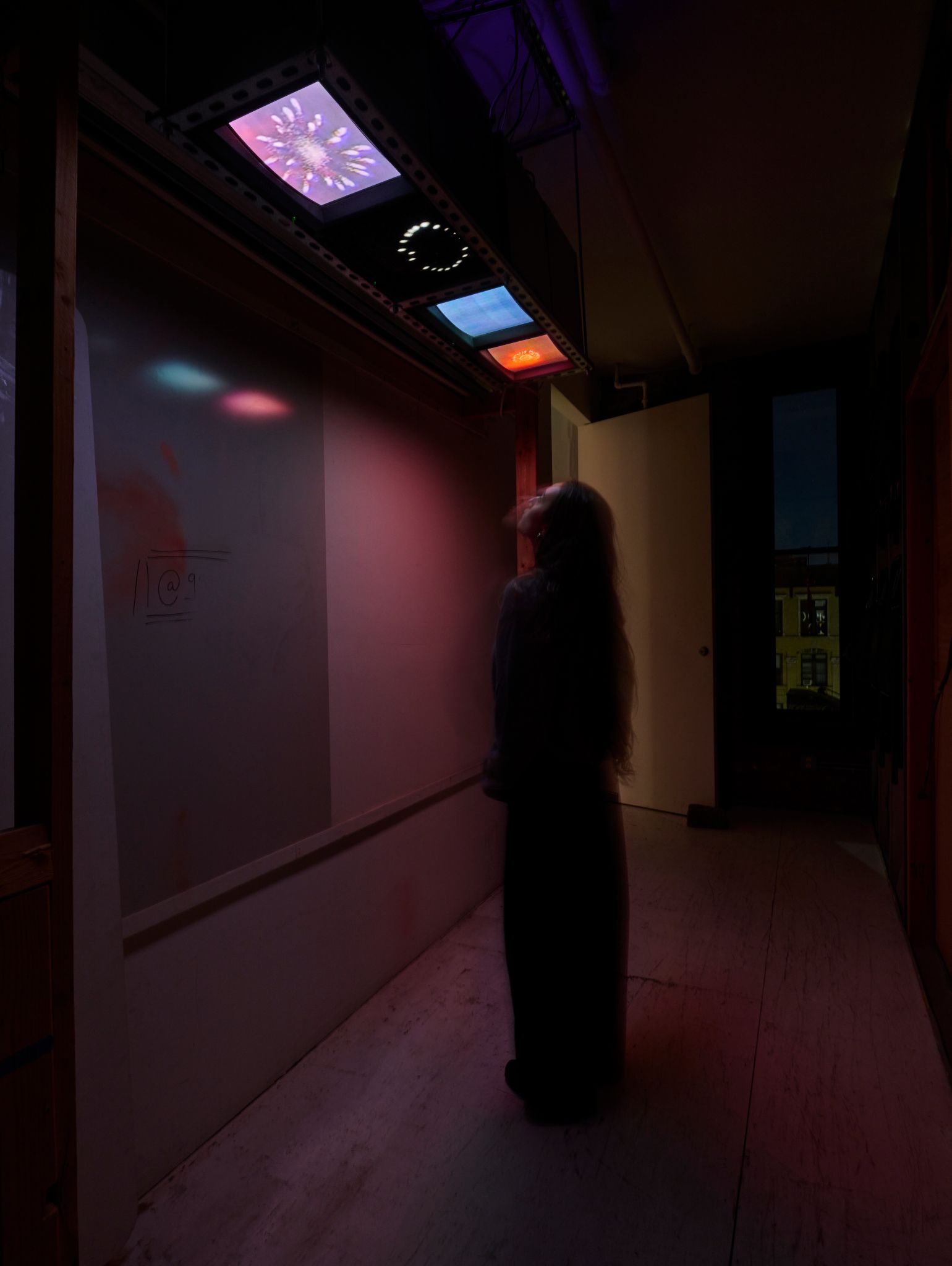
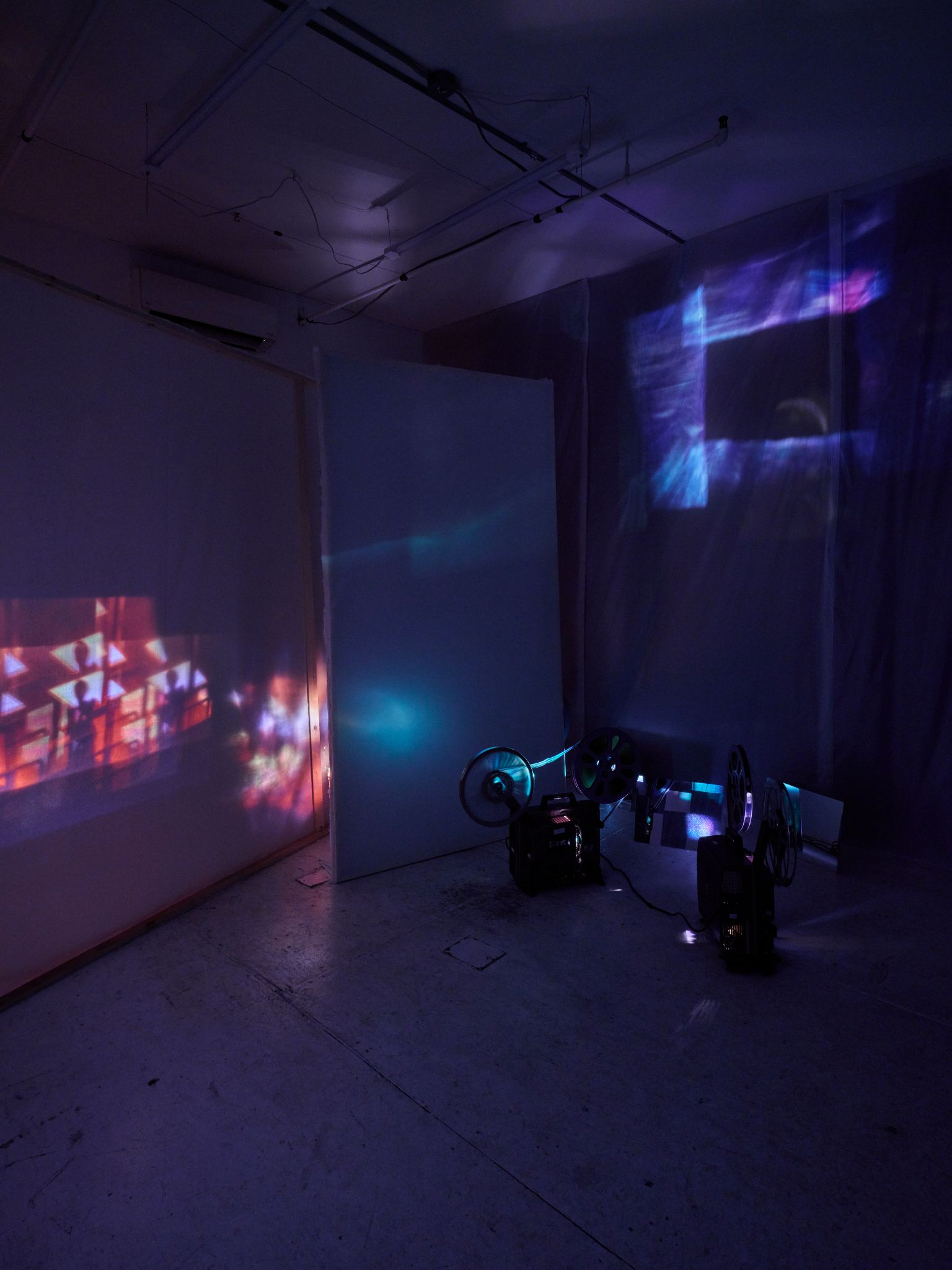
In Hong Kong, fireworks were, until recently, a unifying collective public ritual, marking New Year countdowns, Lunar New Year celebrations, and national holidays. The fireworks have been waning, first interrupted by the pandemic and then curtailed because of disasters such as the recent Wang Fuk Court fire. Mark Chung’s installation Shortest Summer (2015) recreates a version of Hong Kong’s fireworks through four CRT TVs hung from the ceiling pointing down at the audience. Each screen loops footage of individual fireworks rhythmically exploding in the night sky. Mounted so the images are above the viewer, the installation compels viewers to tilt their heads back, reenacting the postures assumed by Hong Kong crowds gathered along Victoria Harbour, where the fireworks usually took place. The fireworks are grainy, small, and endlessly repeated, stripped of scale. Within the gallery space, Chung’s installation transforms a collective gesture into a solitary act of looking—this movement from public spectacle to private perception is also articulated in Simon Liu’s Site Watch. Installed in one of 99 Canal’s studio residency rooms in another wing of the building, the work deploys multiple 16mm projectors that cast rapidly cut imagery across walls and mirrors. Videos of neon lights, brick pavements, street lamps appear momentarily before dissolving into abstraction; yet, their textures are unmistakably Hong Kong. The mechanical whir of the projectors in the space can be likened to the energetic chatter of the city. Both Liu and Chung are attempting to capture Hong Kong as it undergoes profound change, from a Western-oriented international hub to a city tightly integrated with mainland China. Site Watch evokes Hong Kong as a dreamlike but disfigured city.
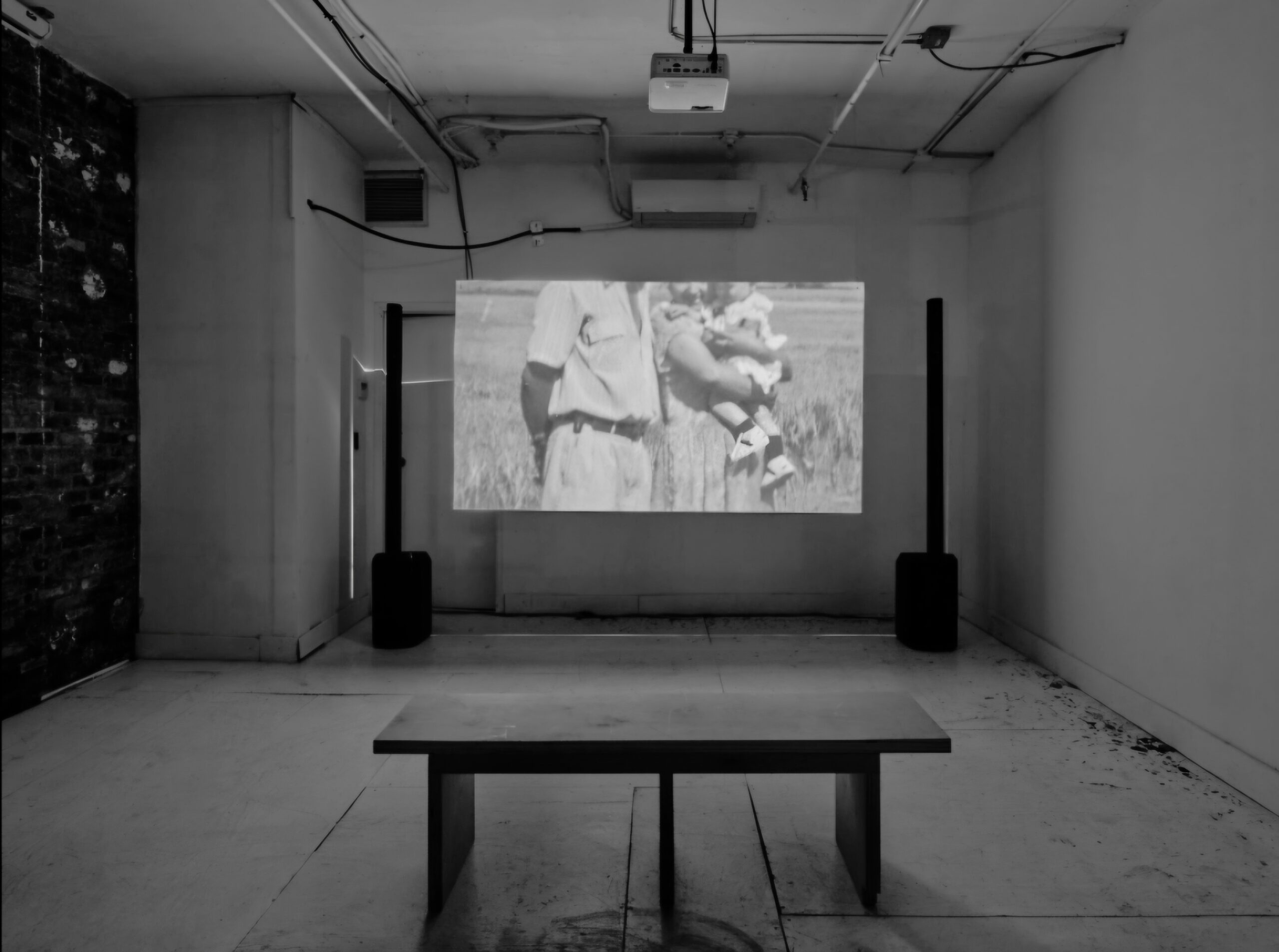
The exhibition repeatedly returns to the relational scale between the collective and individual, foregrounding how communal life is lived on a bodily level. Darya Andijan’s Do You Know That I’m With You? offers a layered meditation on this scale. Part historical imagery, part visual diary, the work presents a melancholic journey shaped by myth and displacement. Drawing on Gülem, a forgotten carpet-weaving goddess from the Uyghur region, Andijan imagines traveling with her across Central Asia to piece together lost histories. Landscapes unfold slowly, presenting themselves as maternal spaces welcoming the return of her children. Andijan’s subtitles slip between sincerity and double-speak. At one moment, she thinks to herself, “You’re trying the accent too hard,” a line that exposes translation as labor and performance. Footage of weavers working as they watch dance videos on their phones—hands moving rhythmically between screens and threads—reanimates the traditional craft. With a sense of insistence, Andijan’s accumulation of small narratives weaves into a fabric of diasporic identity.
Situating later practices within a lineage of video as diaristic musings, Ellen Pau’s Video Is a Hole (1990) moves between scenes of a hospital bed, fireworks, a concert, and a paper house burned for the dead, the work assembles fragments without hierarchy or explanation. Recording a period of hospitalizations in Hong Kong, Pau has described the piece as anti-intellectual, a refusal of interpretive tangents. As its title alludes, she does not frame the medium as a window but a hole, an aperture towards the interior, when outward access is blocked. By filming through literal openings, Pau uses video as a tool for staying with vulnerability rather than transforming it into discourse.
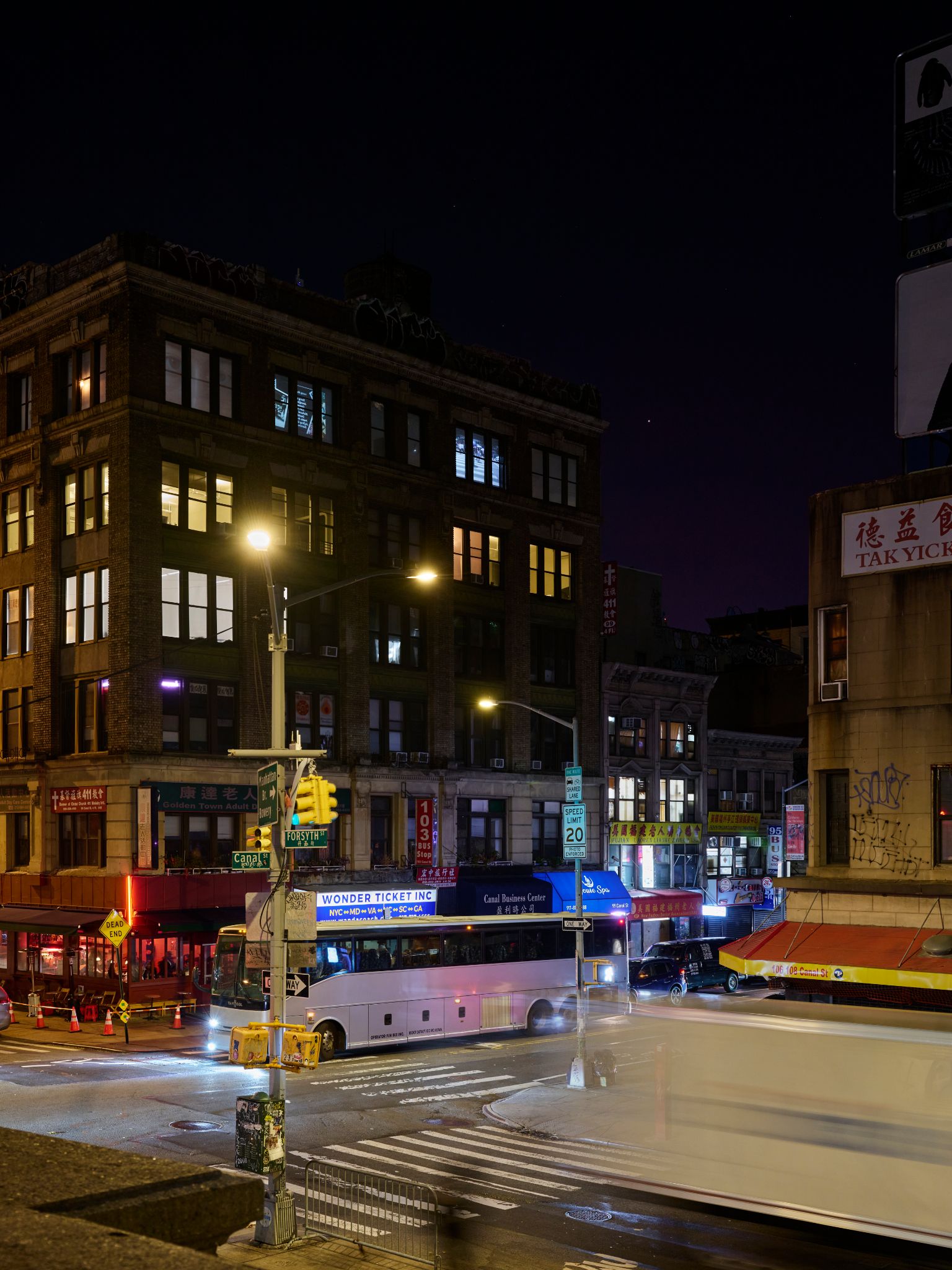
What Under Light of Moon and Sun ultimately offers is a shared tone. Across generations and geographies, the videos refuse spectacle and the flattening logic of global contemporaneity. Instead, the durational works ask to be held gently, briefly, like a letter, a score, or a diary entry whose meaning remains contingent on the conditions of its reading. The works at 99 Canal cross-pollinate with the local urban context of migration, informal economies, and linguistic density and the projector screens are textured by the Chinatown skyline seen through the windows. Site-sensitivity unfolds further as visitors exit the space for dumplings and noodles across the street, imagery of home-away-from-home lingering, extending far beyond the exhibition space. The moving image work in Under Light of Moon and Sun articulates a quiet proposition: Where speech is constrained, memory unstable, and belonging fragmented, art’s most urgent task may be not to speak louder, but to remain with others, place, and deliberate on the unfinished present.
Under Light of Moon and Sun was on view at 99 Canal in New York City through December 27, 2025 and featured Darya Andijan, BHKM, Chan Hau Chun, Siyu Chen, Mark Chung, Sandy Ding, Rania Ho, Qingtai Hu, Chuqiao (Chloe) Li, Yutong Lin, Simon Liu, Mukaddas Mijit, Ellen Pay, Prickly Paper, Yuhan Shen, Wan Qing, Qiuyu Wu, and Yau Ching.
You Might Also Like
Total Refusal Say Idleness is Theft While Observing NPCs in Videogames
William Kentridge is a Star Among Many at Powerhouse Arts Artists Celebration
What's Your Reaction?