‘Hard Feelings’ and the weight of memory: Lucy Liu at Alisan Fine Arts

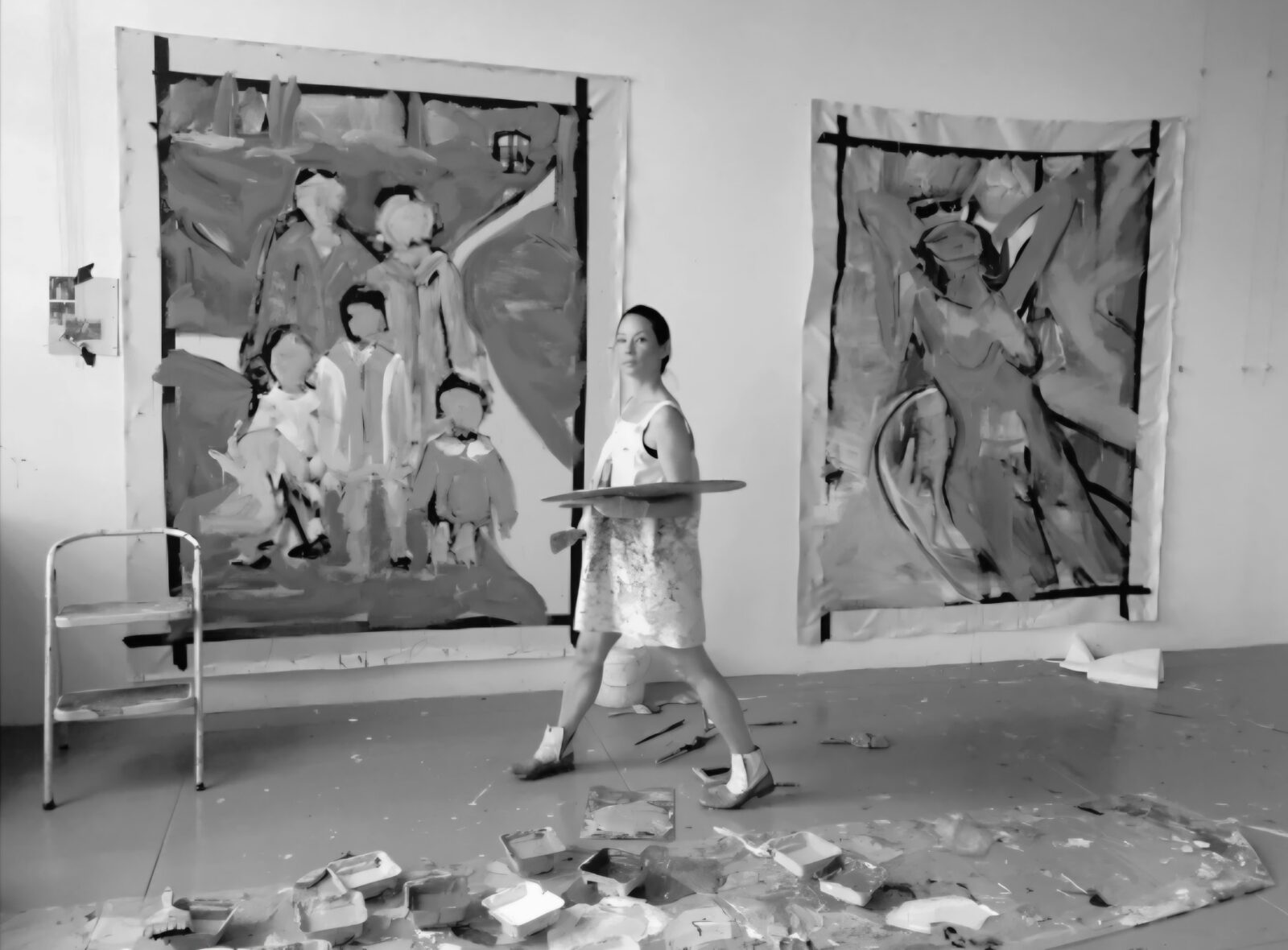

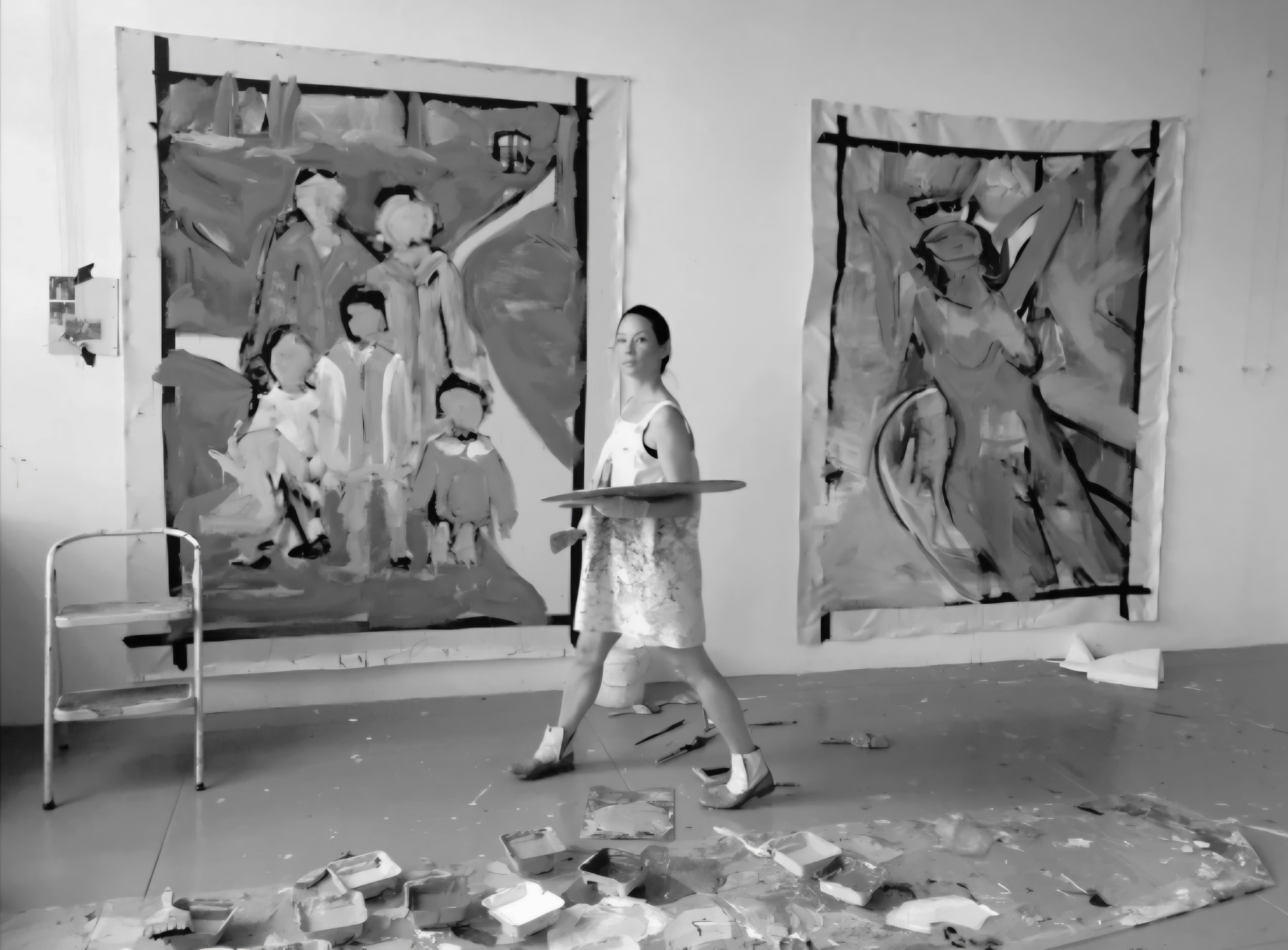
At Alisan Fine Arts, Lucy Liu presents a body of work that understands something many autobiographical exhibitions fail to grasp: family history is not a coherent narrative waiting to be recovered. It is unstable, contradictory, and often inaccessible even to the people who lived it. “I think grief altered the temperature of my memories more than it unlocked them,” Liu writes to me over email before the show opens.
In Hard Feelings, Liu paints from family photographs, but the paintings are not really about the photographs themselves. They are about what resists being remembered. Faces are repeatedly reworked or interrupted. Bodies fragment or dissolve into the ether. In several works, it feels as though the image is actively fighting against its own preservation. But Liu does not romanticize this instability. There is no attempt to neatly reconcile grief, childhood, or family trauma into something redemptive. Instead, the paintings linger in emotional uncertainty, which gives birth to the exhibition’s title.
At the reception, Liu appears in counterpoint to the restlessness of the paintings; Calm, graceful and poised. In a black camisole and a white jacket, she moves through the gallery with an instinctive ease. She greets me with the familiarity of an old friend, and I briefly assume we must have met before. We haven’t. When I introduce myself, I mention our previous correspondence, particularly her unusually revealing reflections on memory, and our conversation naturally shifts toward the strange pathos of remembering the dead.
The exhibition began after the death of Liu’s father, but grief operates here less as subject matter than as a destabilizing force. “The sensations were always there, but after my father died, they became impossible to keep at a distance,” Liu explains. “Loss collapses time in a strange way – my childhood, family history and all these unresolved emotions began to push me towards an urgency to look directly at things I had spent years circling around.”
That phrase, “Loss collapses time in a strange way,” feels central to the entire show. The paintings are not acts of recollection so much as emotional atmospheres. Liu understands that memory does not return cleanly. “Art is a way of sitting with instability,” she says. “Memory is unreliable. Grief is not linear and it distorts and sharpens simultaneously – certain details become painfully vivid while entire emotional landscapes remain inaccessible.”
The true triumph of Hard Feelings, however, is its refusal to hunt for closure or manufacture a neat resolution. In the art world, exhibitions dealing with family trauma are frequently framed as journeys toward healing or “recovery.” Liu’s work rejects that easy exit, actively embracing the gaps in her own history. “I’m probably more interested in the impossibility of complete recovery,” she states. “I don’t believe the past can be reconstructed in a whole or truthful way, especially when memory is shaped by emotion, family mythology, and time. Everything else after that becomes a circulation of convenient revisions. How can I recreate what I think happened based on photographs or what someone said or what I thought someone else heard?”
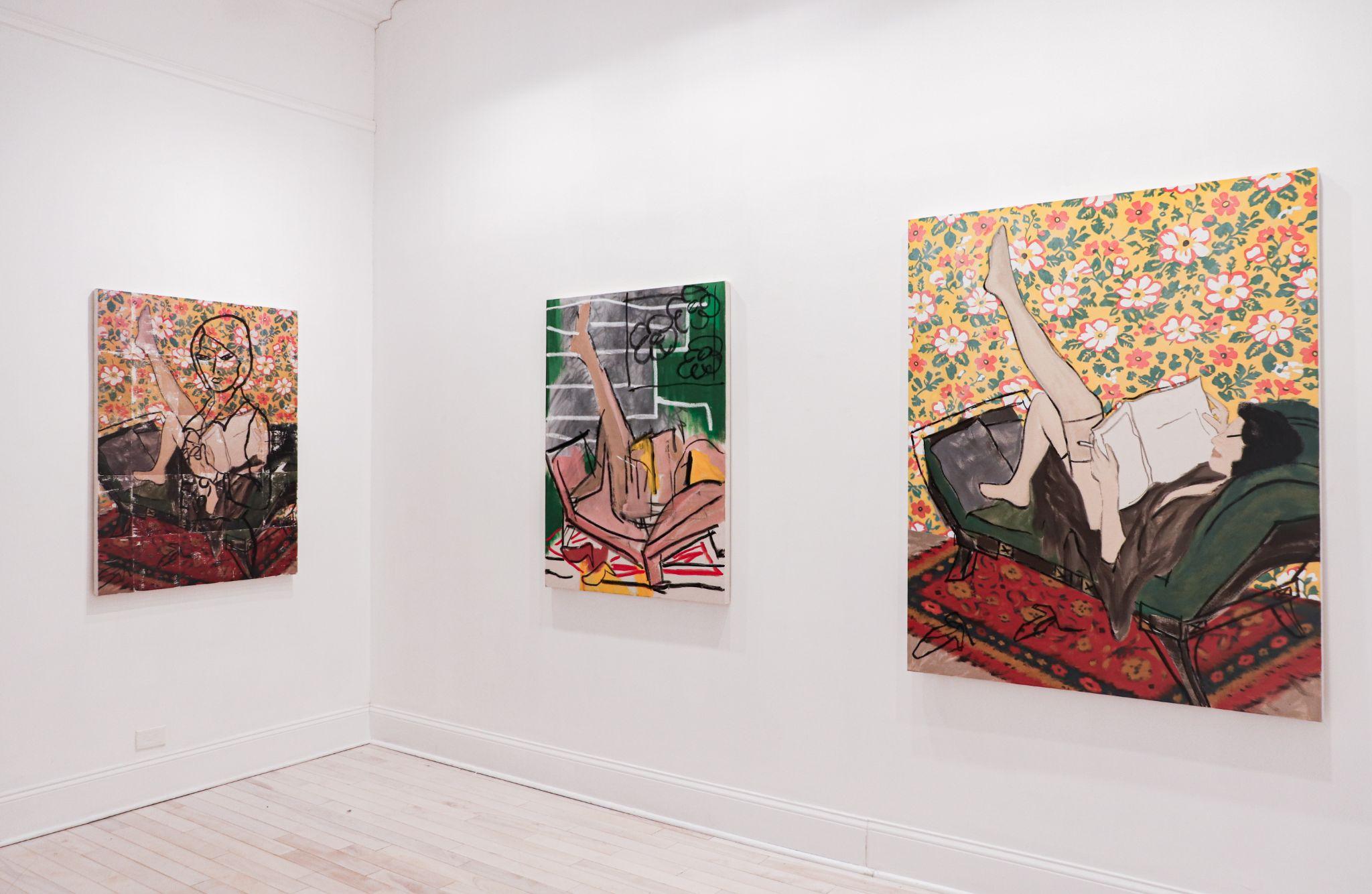
Instead of hiding these inconsistencies, Liu elevates them into the formal language of her work. Rather than trying to fill the void left by time and loss, she lets the void speak for itself: “I’m not searching for resolution through painting—I’m more interested in letting absence be a presence. What cannot be fully seen or understood still carries emotional weight. Why can’t I remember my childhood? I can see it so plainly in this photograph but cannot access my memory of it.”
That psychological dimension is where the exhibition succeeds most fully. The paintings are strongest when they abandon the role of family archive and instead become unstable emotional terrains. As Liu notes, “Sometimes obscuring a face or interrupting a body, revealed more emotional truth than rendering it clearly ever could.”
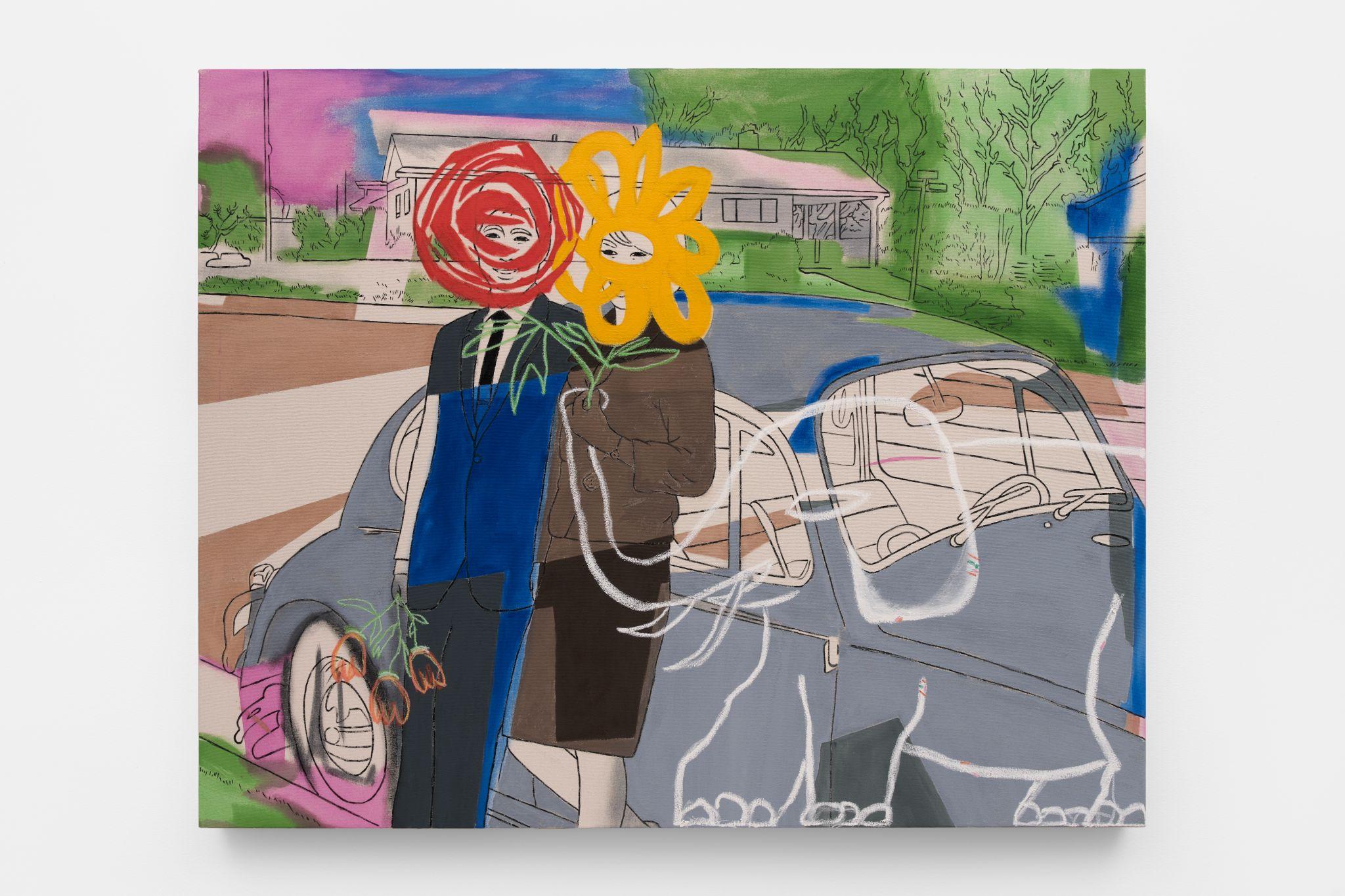
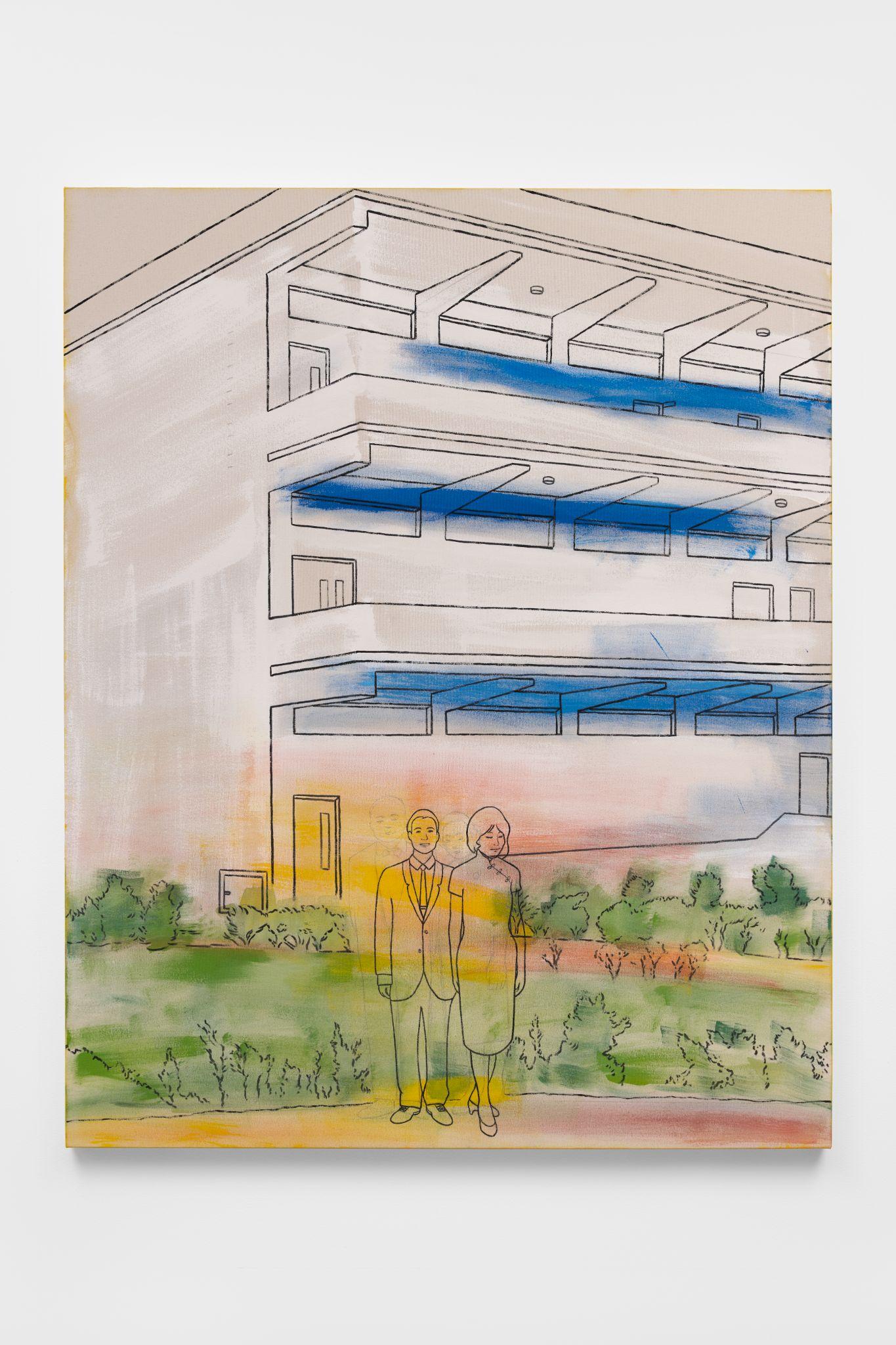 Lucy Liu. “Hourglass,” 2026. Acrylic on canvas. 152.5 x 122 cm (60 x 48 in), Courtesy of Alisan Fine Arts.
In the show’s strongest work, Hourglass, Liu renders both of her parents through a graphic, linear geometry that feels closer to a drafting blueprint than a traditional portrait. By foregoing the distorted overpaintings, the work acts as a literal distillation of time- capturing her parents, and faint outlines of her grandparents, as historical individuals suspended in a space that predates Liu’s family itself. The composition’s clean lines operate with a clinical, architectural coolness, mirroring the way decades of distance can transform raw, agonizing grief into analytical clarity. Unlike other pieces in the show, it is a quiet work, using formal reduction to show that the ultimate consequence of time isn’t forgetting, but a profound, detached decompression of past trauma.
What ultimately holds Hard Feelings together is its refusal of closure. The paintings substantiate what Liu has repeatedly returned to throughout her long artistic career: that some memories remain inaccessible, some emotions remain contradictory, and some histories cannot be repaired into coherence.
Lucy Liu: Hard Feelings is on view at Alisan Fine Arts, 120 East 65th Street, New York, May 14–June 6.
You Might Also Like
Spotlighting The Others: Lucy Liu and Elizabeth Colomba in Conversation
“Parasites and Vessels:” Conveys the Resilience of Immigrants
What's Your Reaction?