
Not Reining in, Natale Adgnot Sculpts Fat Girls Who Dare to Break Out

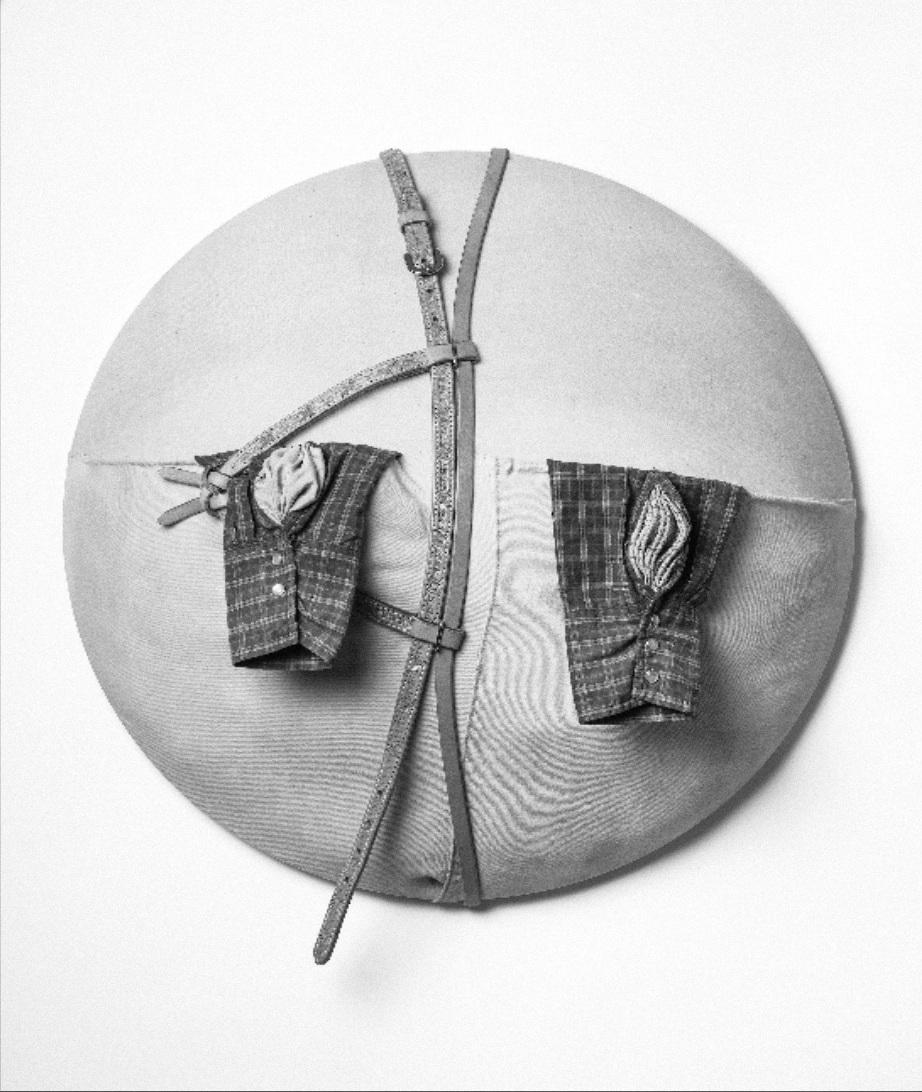

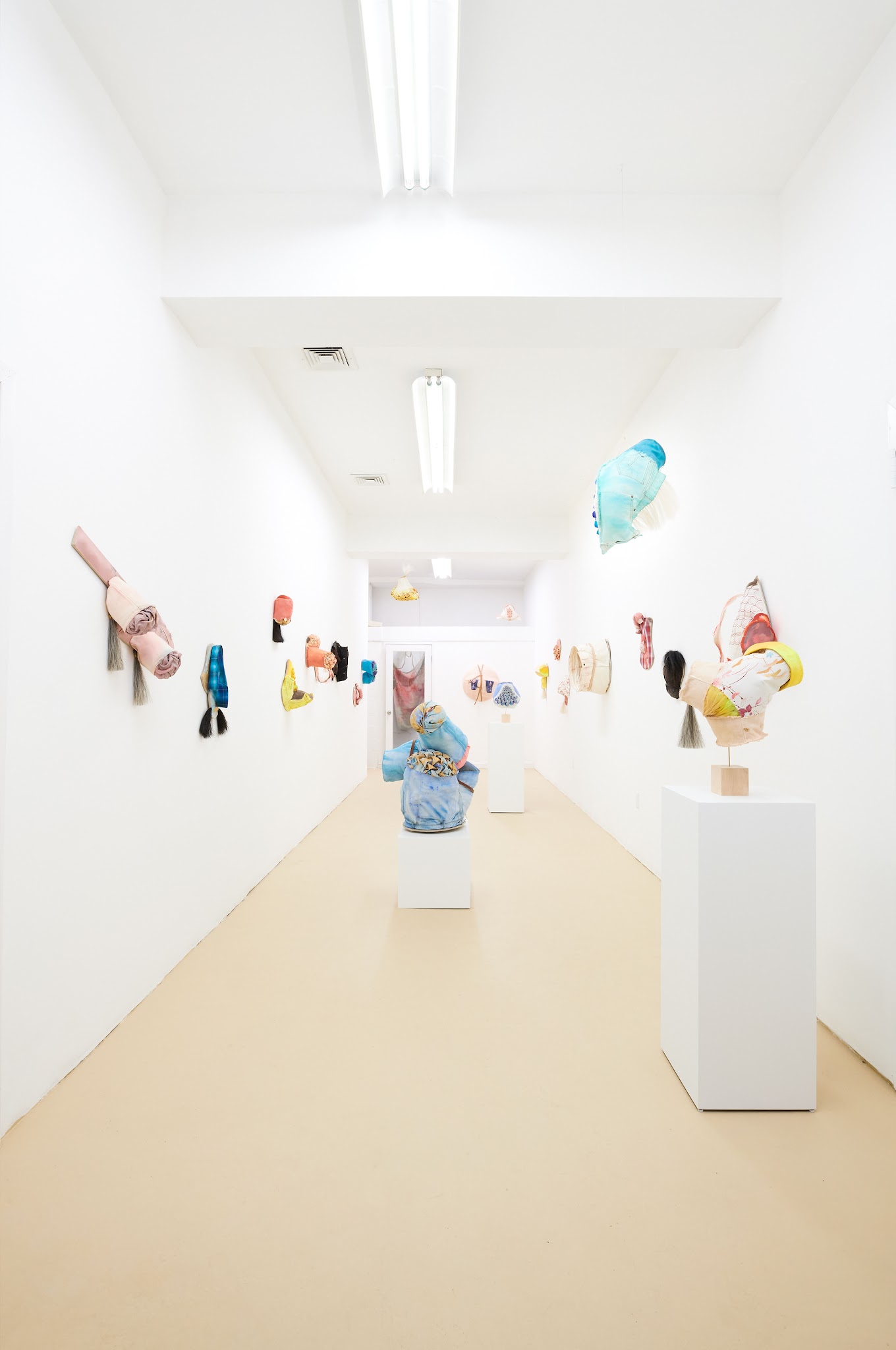
Recently I sat down with artist Natale Adgnot to chat about her solo exhibition, Reined In at Peep Space in Tarrytown, through November 1st, 2026. Moving through her fluctuating weight and combining Texas equestrianism with techniques borrowed from haute couture, her newest series of sculptures examines our relationship to our bodies and the systems of class, beauty, and relationship structures that shape self-worth.
Lydia Nobles: The title Reined In immediately suggests restraint. What are the forces doing the restraining in this work?
Natale Adgnot: Society, and therefore myself. The title originally played on my Texas roots and the fact that my mom was a horse trainer, so there’s an equestrian/Western influence throughout the whole series. On top of that, I’m layering a new facet: dealing with my fluctuating body shape and size. Moving through the world in a bigger body, it’s infuriating to realize how differently someone is treated based on how well their body adheres to societal expectations.
I lived in France for about ten years, working in haute couture toward the end. I was in an atelier where literal modeling agency models came through for fittings. One intern—a 22-year-old, gorgeous Parisian girl—referred to me right to my face as “Micheline,” which translates to “what’s-her-name.” I was this 30-something, somewhat overweight woman on the same team, but not worthy of being addressed as a person. That microaggression symbolizes how you move through the world. It’s bad in America, but it was really magnified working in France, and in haute couture especially.
I was terribly bullied as a kid, largely for being fat, so I felt like a misfit. I desperately tried to fit in. As an adult, I realized Texas wasn’t right for me. There have been all kinds of restrictions that I’ve broken out of as I’ve gotten older.
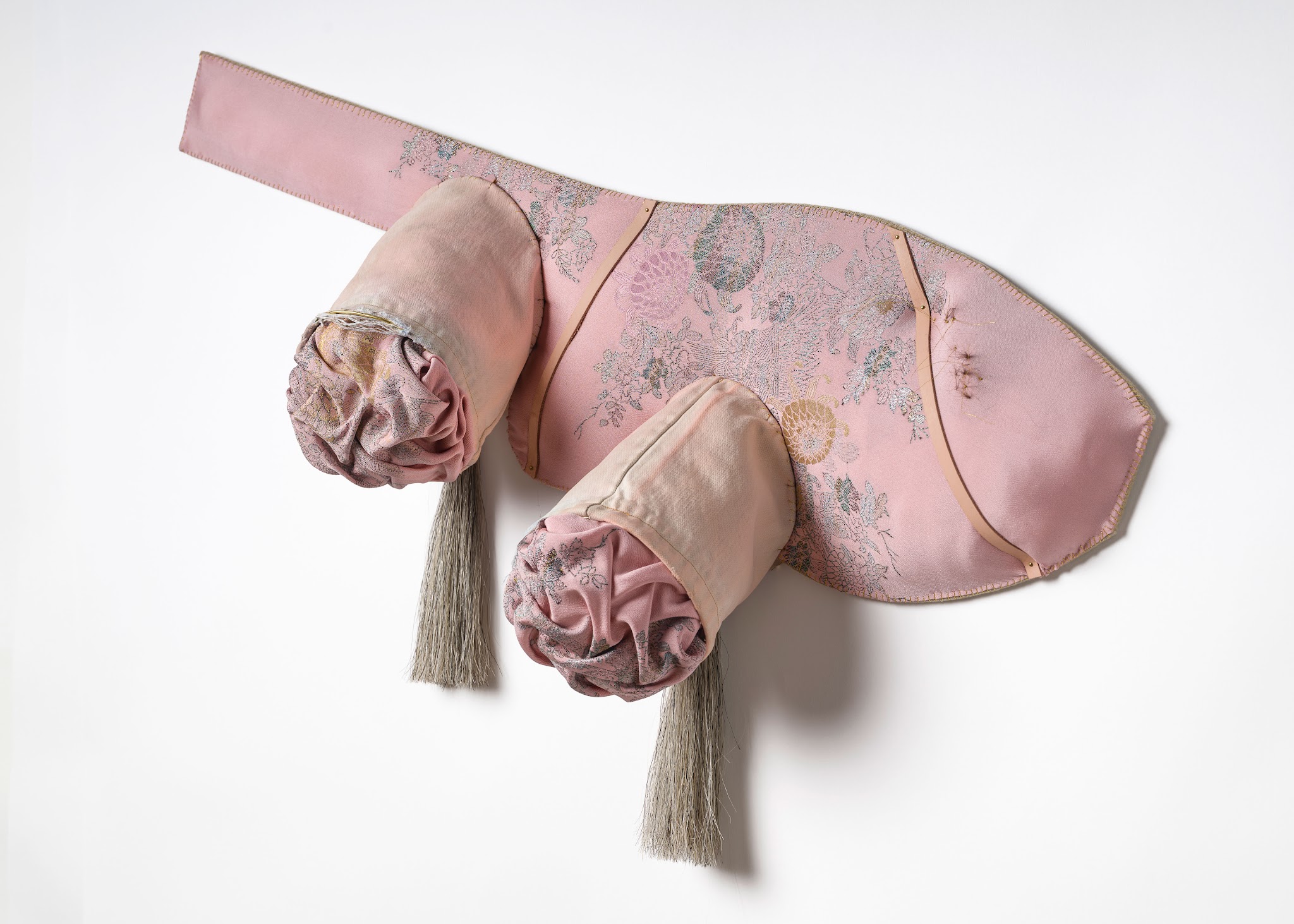
LN: The materials in Saddle Couturage come from very different periods and places in your life. How did they become an autobiographical vocabulary?
NA: A couple of years ago someone asked me, “Why do you use the materials you use?” That launched me into a search for materials that told more of my life story. Thermoplastic has been my trademark material for eight years. To me, it symbolizes New York: it can take many forms, it’s malleable, and it can be transparent or opaque. It represents being who you want to be—the opposite of fitting into a mold, which is what Texas was for me.
I also began sourcing Western clothes like the ones I wore while helping my mom on a 70-stall ranch. It was very blue-collar. This is not fancy equestrianism. When I visit family in West Texas, I buy up all the snap shirts and starched Wrangler jeans from every Goodwill and Salvation Army. The choice to use garments came directly from working in French couture, but making sculptures instead of clothing has been liberating because I don’t have to worry about how the fabric falls on a human body. I also bring in influences from Japan, where I lived for three years. I was profoundly moved by the seemingly conflicting ideals of Japanese excellence and wabi-sabi.
LN: You’ve compared making these sculptures to combining several puzzles that were never designed to fit together. How does that relate to the larger idea of “fit”?
NA: Every shape in the work comes either from garments I’m cutting or from a saddlemaking pattern. Sewing them together in ways they aren’t meant to go is like dumping out three jigsaw puzzles and making them work together anyway. When I’m making these sculptures, I’m taking pieces of my life experience and stitching them into something I actually like, even when I don’t like the individual parts.
I also love the element of chance in buying used jeans, snap shirts, and bulk vintage kimonos. You don’t choose the patterns or colors. Life is like that. I didn’t choose to be born into a religious, conservative Texas family. They loved me, but it wasn’t the right life for me. I took that raw material and built something I actually wanted.
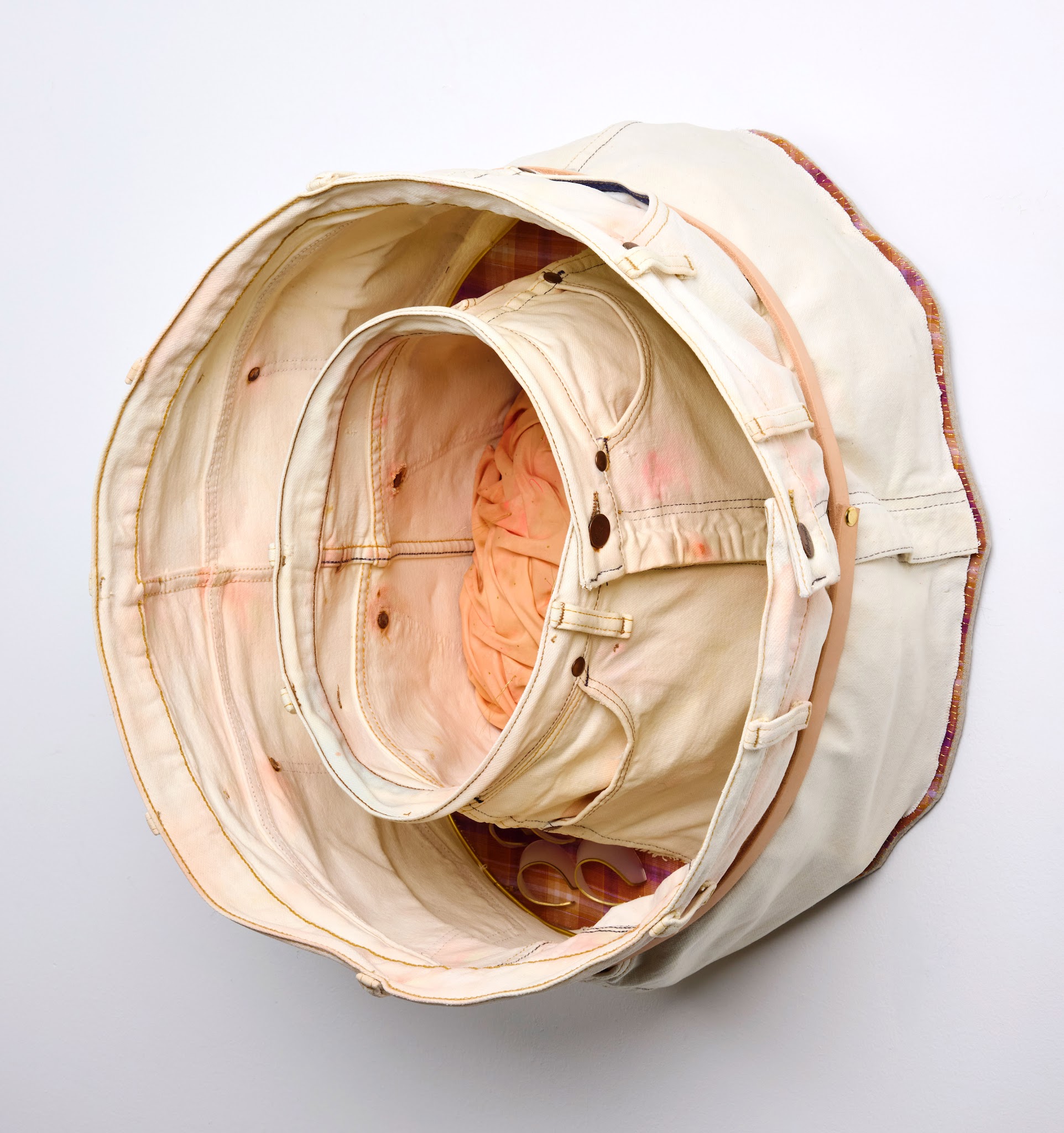
LN: You said, “The body can be disciplined, but at what cost?” What is that cost, and how does your experience of moving through the world at different sizes enter the work?
The body can be disciplined, but not without cost. Sometimes that cost is fair, like taking time to eat well and exercise. But sometimes we punish ourselves, costing us our health and self-worth. I’ve become more direct about the word “fat.” I hate that fat is treated as a bad word. It shouldn’t need to be euphemized and it infuriates me to see how differently you’re treated based on body size. The title, Wildly Signaling To Be Let Out, references the famous phrase: “Imprisoned within every fat man is a thin one wildly signaling to be let out.” I gained weight at puberty and paid a massive social price. My weight has fluctuated ever since. I developed an eating disorder in France because I felt unacceptable as I was. During that period, I was far less healthy and happy.
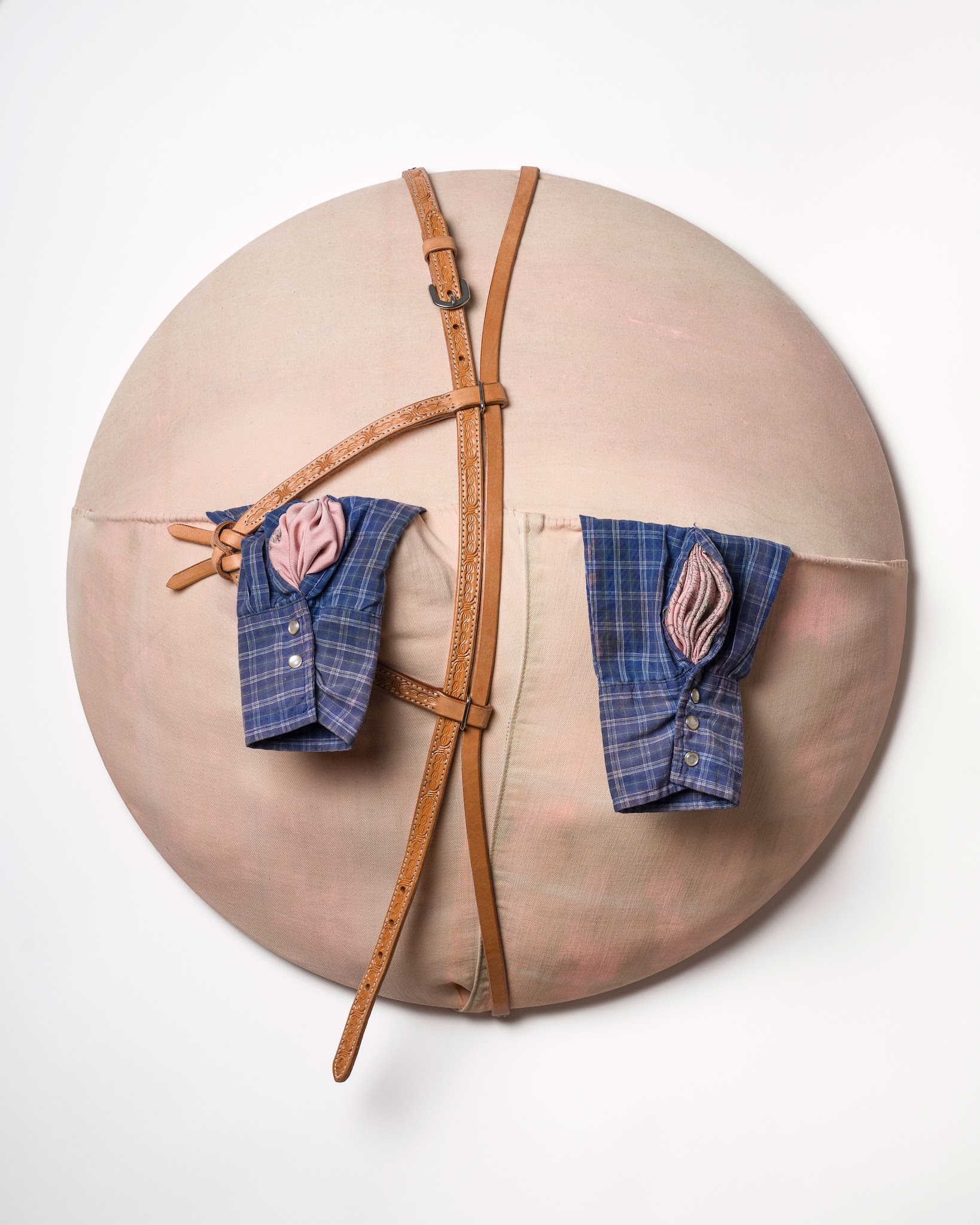
LN: In your work, the body is rarely represented directly, but it is physically present. How do processes like smocking and stiffening allow fabric to behave like a body?
NA: Canadian smocking creates exaggerated depth, and the folds and dimples mimic the flesh of a larger body. Stiffening the jeans implies the body within: society wants to rein you in, but your rolls still spill over the waistband. I captured that by leaving the marks of tightly tied rope around the denim as it dried.
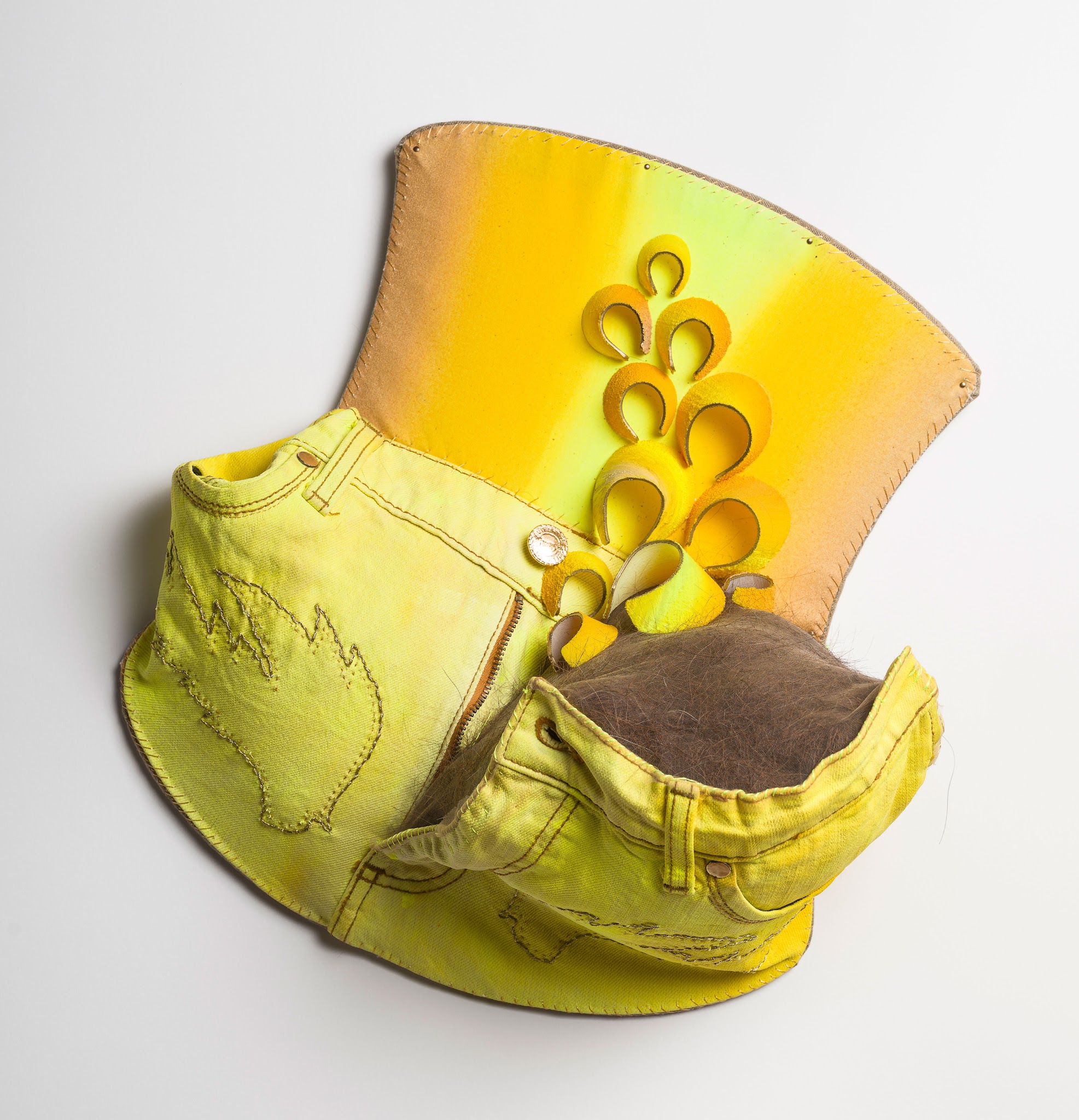
LN: What interests you about the collision between beauty and disgust?
NA: I love mashing up beautiful, refined things with things that are a bit disgusting. Openings are covered in flesh-tone tulle painted with pretty gradients, but felted horse body hair peeks out to bring that ick factor. Frayed hems represent common, relatable scars. I mix fine silk with torn denim and horsehair and sew them together with gold thread. Using visible gold thread is a nod to kintsugi—the ethos that something repaired is more beautiful and valuable than something perfect.
LN: There’s humor in the work, especially in a title like It’s What’s Inside That Counts.
NA: “It’s what’s inside” refers literally to chunks of horse hair spilling out, but it also mocks the platitudes you hear as a fat girl. All your friends have boyfriends and you don’t and someone tells you, “Oh, well, it’s what’s inside that counts.” Basically: you don’t look great, but you’re nice. It’s just this bullshit platitude.
Reined In is on view through November 1st, 2026 at 92 Central Ave, Tarrytown, NY 10591. FITTING IN: A Panel Discussion on Self-Reinvention, the Body, and Control with Angelik Vizcarrondo-Laboy, Bailey Coleman, and Amy Rosenblum-Martin, moderated by Lydia Nobles, takes place on Sunday, October 18, from 3:00 PM to 4:30 PM. RSVP.
You Might Also Like
What's Your Reaction?