

The Here and There Host Their First Gala

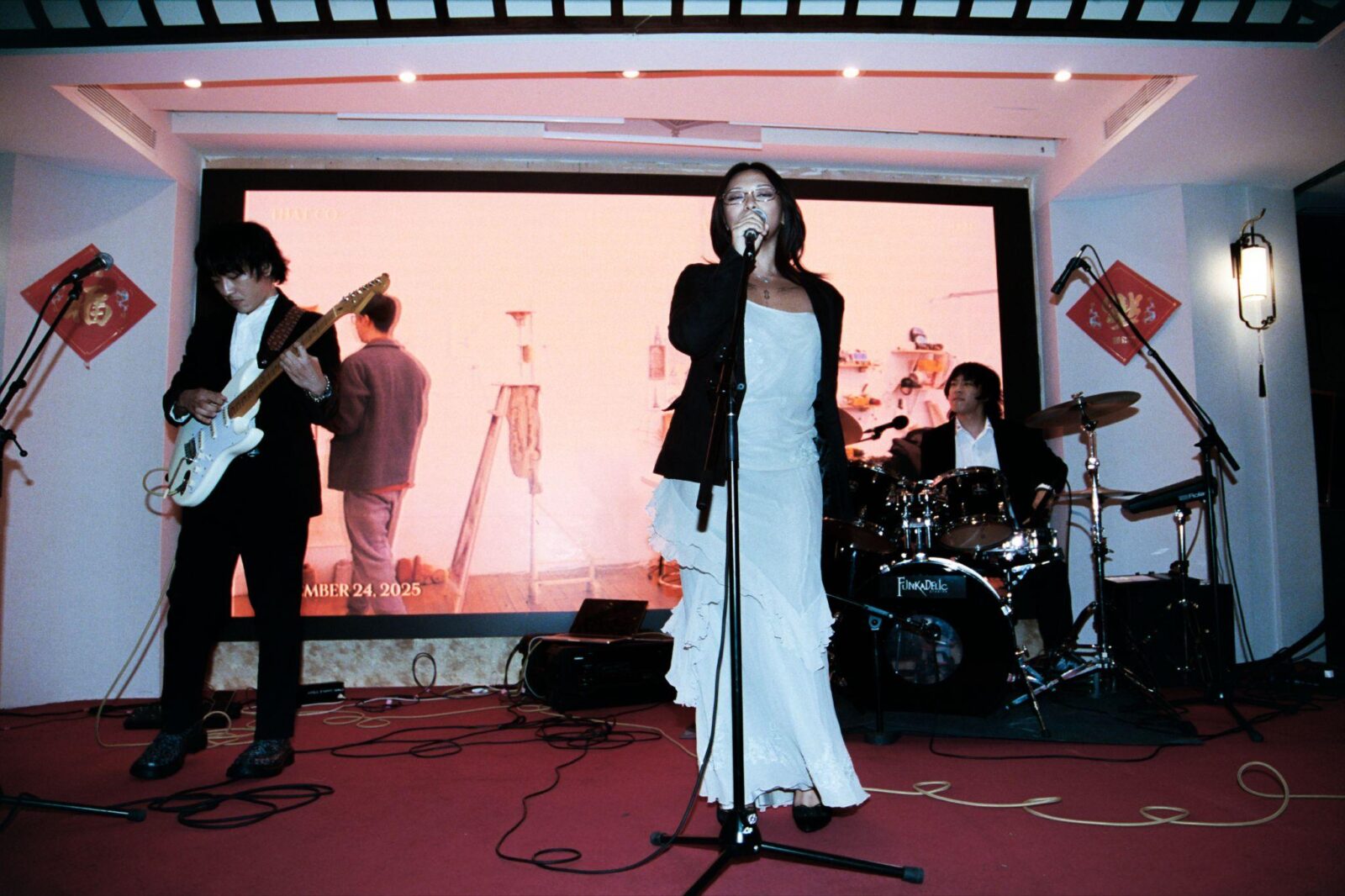

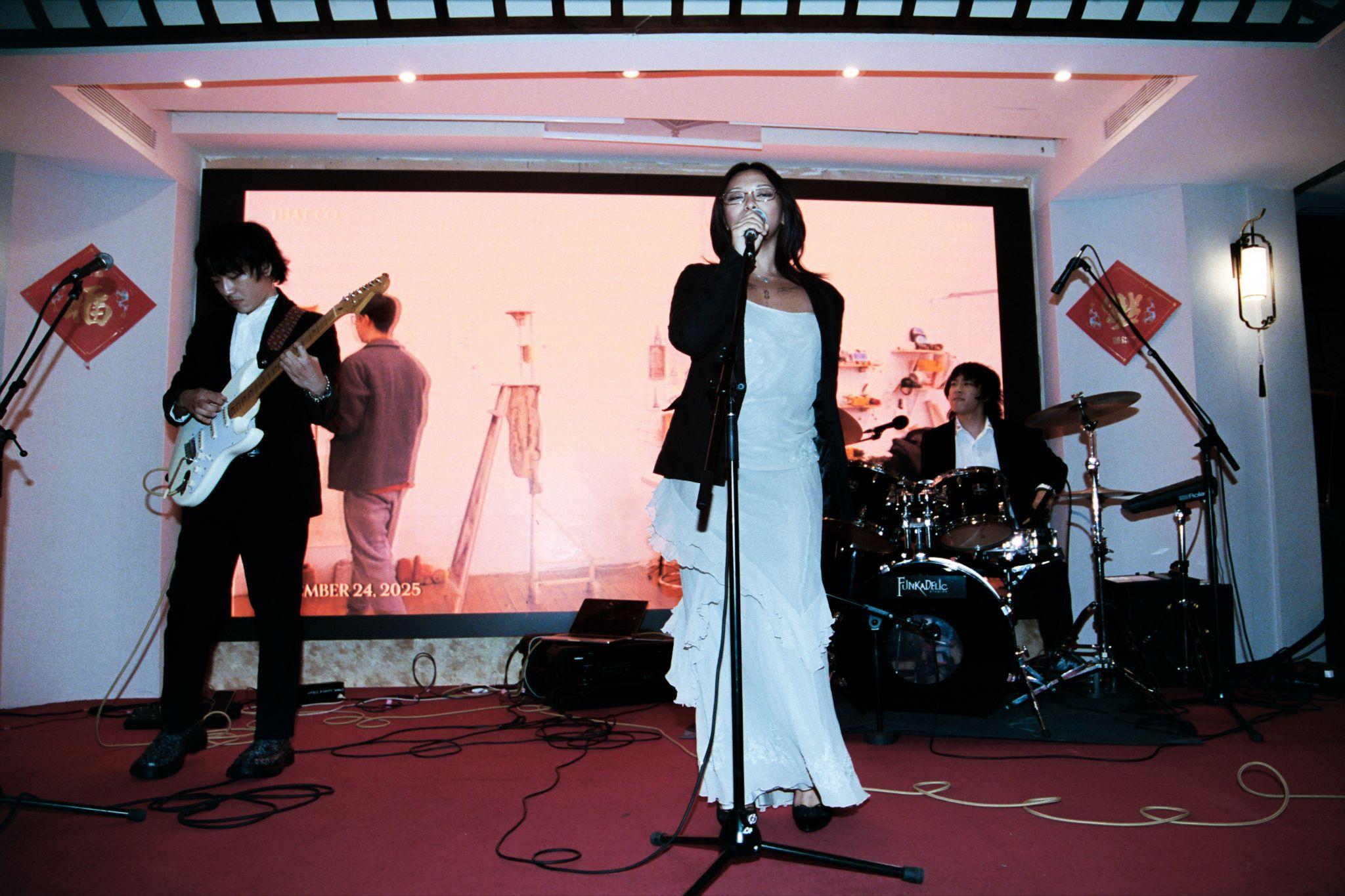
The Here and There Co., THAT Co. for short, began in 2021, as a series of virtual studio visits organized by Lisa Young, Steven Abraham, and Dan Nguyen. The trio created the project as an effort to support the artistic community and chronicle work during the pandemic, an isolating and difficult time. Almost six years later, THAT Co.’s video archive boasts over 130 features. Continuing an ethos of supporting artists within the Asian diaspora, they continue to grow their offerings. They run a six-month residency program for artists, and a newer one for curators. With rising rents in New York, a free-of-cost studio can allow an artist to quit or work fewer hours at their day job and working under less financial pressures can take their practice into new and unexpected places.
On November 7, THAT Co will bring Asian American and Asian diaspora arts communities, and their supporters, together as they host their first gala at Jeffrey Deitch. Kelly Akashi and Eugenie Tsai, both long-time supporters of the organization, will be honored, and there is a benefit auction with works and activities by Hiba Schahbaz. Melissa Joseph and Jia Sung. I sat down with co-founder Young, director to director (I run The Immigrant Artist Biennial and we have shown many overlapping artists) to talk about how the grassroots organization has grown, what to expect from the evening, and what it means to run a small non-profit in New York today.
Anna Mikaela Ekstrand: What has been your journey as a non-profit—behind the scenes—how have you sustained thus far?
Steven Young: It has been a lot of learning as we go. We are a very small team, and for years our growth has come from relationships more than infrastructure. We feel fortunate to have a network of artists, curators, galleries, institutions, writers, like-minded organizations, and patrons who believed in what we were building and kept showing up to collaborate with and support us. We also entered the art world as outsiders, and we think that served us well. We came hungry to learn and connect, with no preconceived notions of what we could or couldn’t do.
Sustaining what we’ve built is another story. Underlying our work is a question of how to create a support system that helps our community in the long run, and we think that comes down to building slowly and intentionally while staying flexible enough to adapt to change. It is a constant balancing act, but at the end of the day, intentionality is what matters most.
On our end, with The Immigrant Artist Biennial, it is definitely help from friends and dedication (read: free labor) by myself, my co-director, and our volunteers that keeps our programming going and sustains our ability to platform our immigrant arists. We have felt the pull-back of overall federal funding to the arts by extension, through our host institutions, who have lost funding, which has led to fewer partnerships with outside collaborators. And we felt the slog in the art market, as we also sell donated artworks. Donations from individuals are more important than ever right now for us, like yours, to support our 2026 catalog. Thank you. What is your situation?
This seems to be a more common conversation these days, and we certainly feel the same pressures. It goes back to what we said about balancing flexibility with intentionality. With so much shifting in what funding looks like in 2026, being able to adapt is necessary, but never at the expense of staying true to our mission.
Like you, we rely heavily on individual support, and the generosity of our community is what keeps our programs running. That is a big part of why this Gala matters so much to us. It is a chance to celebrate that community and to invite new supporters in, so we can keep this work going for years to come.
Your support for the Asian diaspora is very important in a city like New York. Did you see Cultured‘s most recent articles/Instagram posts on the economics (financial hardships) of being an artist here? Sad but true. Your 6-month studio residency helps artists in a big way, and I know you have a curatorial residency coming up too. What is your philosophy for the residency?
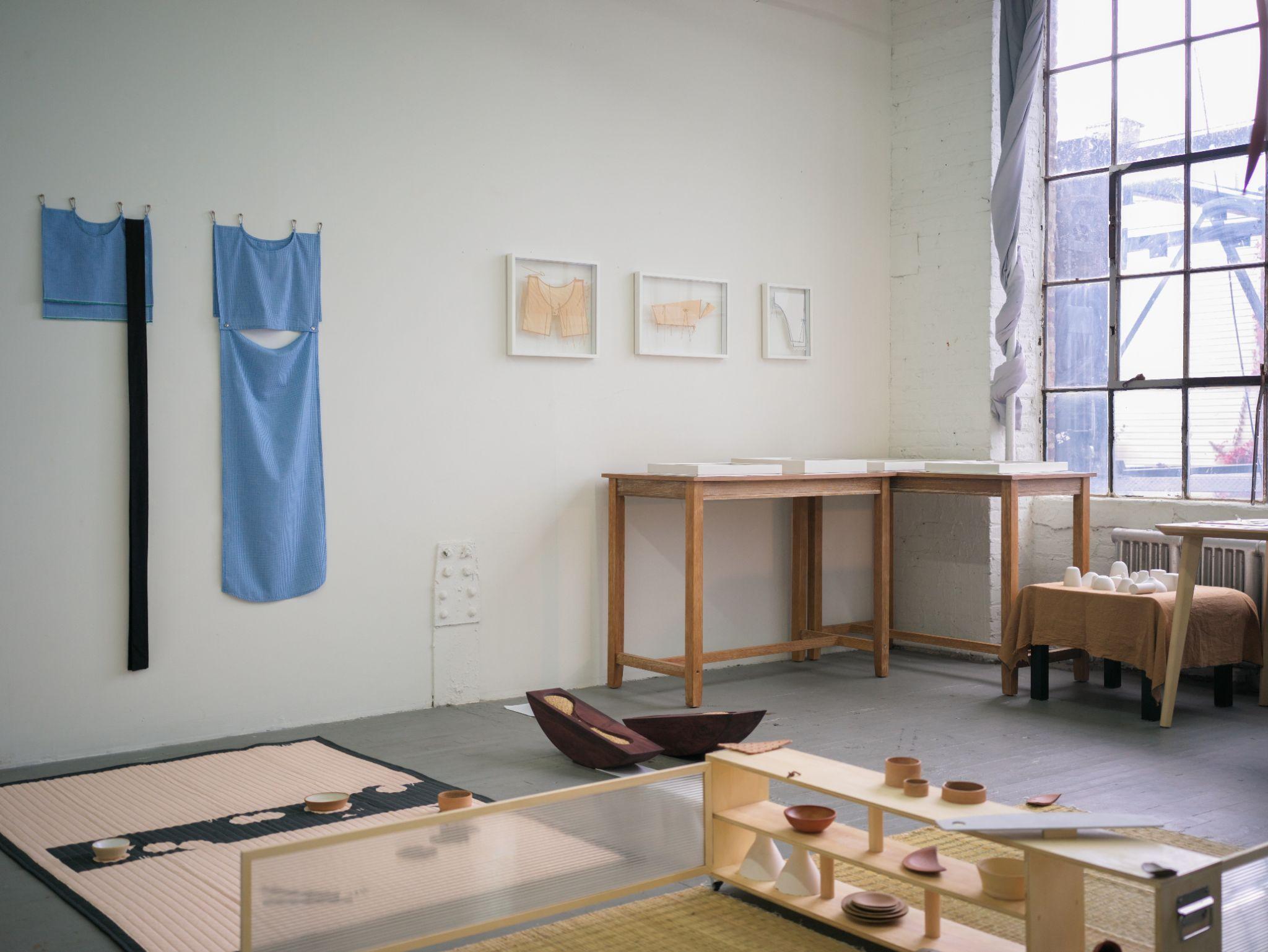
Our philosophy is that support should be individualized, not one-size-fits-all. Every resident gets fully funded studio space for six months, but beyond that, the program is shaped around what each artist actually needs, whether that is mentorship, studio visits with people in our network, or simply uninterrupted time and space to experiment. We ask early on about their goals, and we build from there. We’re proud to be in our fifth cohort and to have built a strong group of alumni, some of whom have gone on to exhibit at places like Mass MoCA, Princeton, and the Buffalo Institute for Contemporary Art.
Our Curatorial Residency, Room for Error, is now in its second year. It grows out of the same core belief, applied to a different part of the ecosystem. Curatorial opportunities for AAPI practitioners are still limited, so we wanted to extend the same mentorship and resourcing model to curators early in their careers. Instead of studio space, we support them in mounting an exhibition in New York. Our inaugural resident, Riley Yuen, presented a wonderful show at Long Story Short gallery last year, and we recently announced Kaylee Moua Nok as our newest resident, with a show planned for 2027.
Your artist features are also amazing. You just did one with Anh Vo before they cycled into the Hudson River in Phoenix Forever as part of TIAB. They are kind of what got you started, right?
Thank you! Yes, the Artist Feature Series was the first part of THAT Co. Back in 2021, it started as informal Instagram Lives, conversations meant to document Asian diasporic artists at a moment when many people felt isolated and unseen. Those early conversations revealed that the visibility created by our features could lead to tangible opportunities and meaningful momentum in artists’ careers. Seeing that impact pushed us to evolve into a more structured organization, one that could be more intentional and polished in how we approach the series.
Since then, it has grown into one of the largest publicly accessible video archives of living Asian diasporic artists, with over 130 features and counting. What has not changed is the intention behind it. We still see it as a discovery tool and a way to make sure these artists’ practices reach audiences long after any single interview ends.
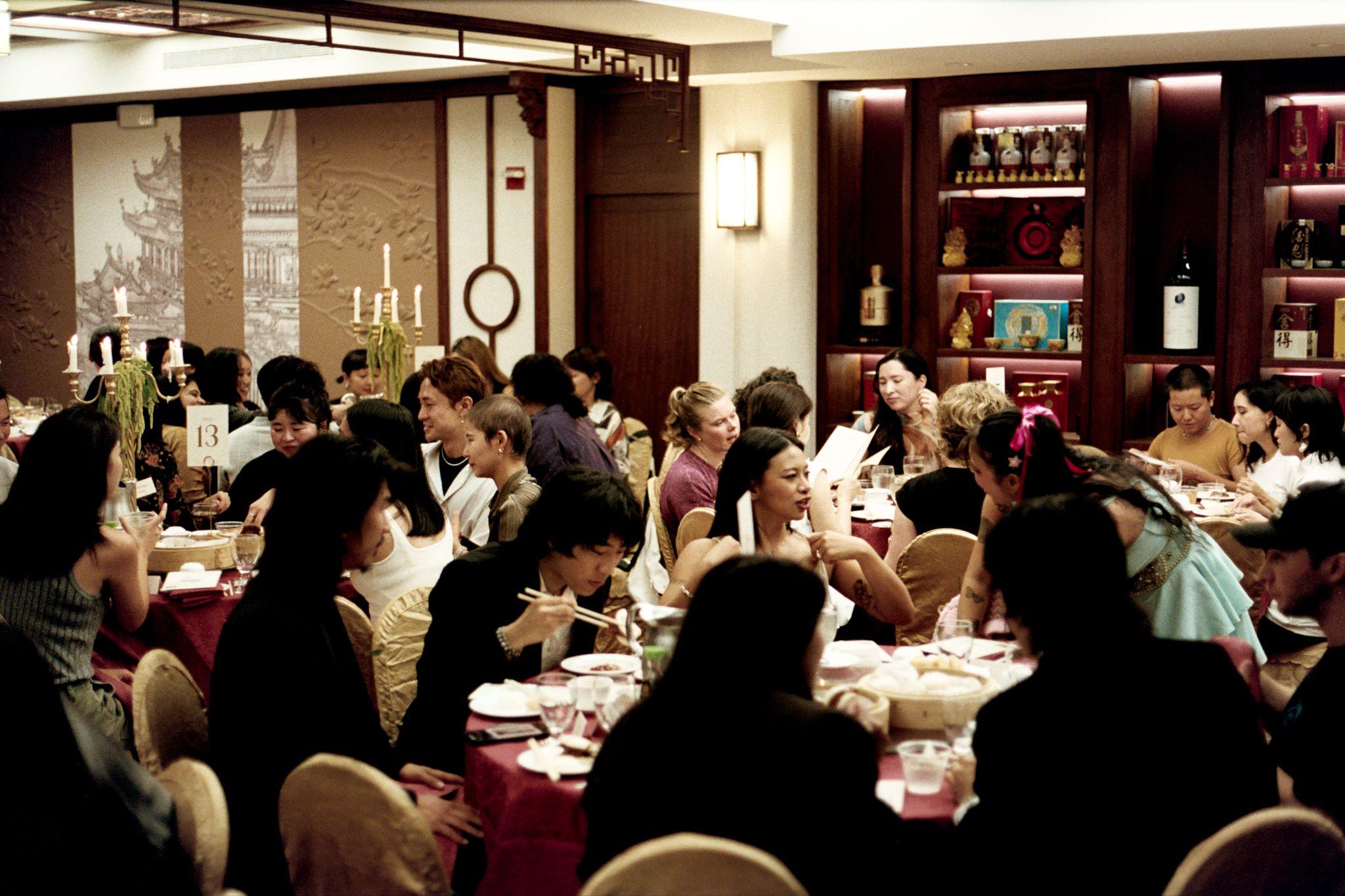
I seem to remember a dinner that you organized last year where a chef made dishes inspired by your resident artist, Anna Ting Möller, also a TIAB alum. Was this a benefit or a celebration?
That was a celebration of our residents to date, along with the patrons and friends who helped make it happen. It was actually back in 2024, and we wanted to bring everyone together to mark how far we had come. We worked with the wonderful chef LJ Almendras, who took inspiration from each of our residents, including Anna Ting Möller, to create a beautiful dinner. We were also thrilled to have MIZU, an incredible cellist who participated in our performance program at Spring Hill Arts Gathering, perform for our guests.
I loved the idea, and the photos looked fantastic. Food was gorgeous and guests were chic! You can certainly throw a party.
Thank you! We are working to bring that same celebratory, personalized energy to the Gala. Vietnamese chef Bé Bếp will create a beautiful dinner, and our wine partner is China Wine Club, whose mission is to highlight wines from China in the US. Up-and-coming artist FIG will also join us for the evening’s entertainment.
We will also have a special silent auction, and it won’t be your average one. We are curating some truly unique items that you won’t want to miss. Even if you can’t be in the room, keep an eye out for how to participate online.
For your 2026 Gala, you are being hosted by Jeffrey Deitch Gallery on Wooster Street. Amazing. What can we expect? In three words!
Art, food, community.
You are honoring now-independent curator Eugenie Tsai, who left the Brooklyn Museum after sixteen years there in 2023, and 2026 Whitney Biennial artist Kelly Akashi. So well deserved. What are the motivations?
Eugenie and Kelly have both been part of our journey, and each deserves their flowers. Eugenie has supported us since our earliest days and is a pillar of the Asian American art community. As one of the first Asian American curators to work in a major US institution and a founding member of Godzilla: Asian American Arts Network, she has been a true trailblazer. Kelly was one of our earliest artist features, and she has since reached major milestones, including work in the Whitney Biennial and a commission for the soon-to-open JFK terminal, all after losing her studio and home in the LA fires last year. Her resilience, and the work she has made through it, is a testament to her strength as an artist.
Honoring them together felt important because it connects two generations of AAPI leadership in art, one in curatorial practice and one in the studio, and highlights the long-standing relationships that helped shape THAT Co.
I can’t wait to hang out with you at the party. Who else will be there?
It will be a packed house! Aside from our honorees, ourselves, and our residents, we have a fantastic host committee: Carla Shen, Christopher Y. Lew, Dominique Fung, Jane Hait, Kathy Huang, Matthew Huang, Rafael Flores, and White Rabbit Trust. And that is just a few of the many people who will be in the room. We can’t wait!
THAT Co. Benefit is on November 7, 2026, 6-9PM, 18 Wooster Street. Get your tickets. See the benefit auction.
You Might Also Like
What's Your Reaction?
