Tricks as Gentle Pressures


If you are looking for an uncomplicated art exhibition, one in which artists were given clear instructions, made predictable objects, and hung them on walls without incident, I’m afraid Tricky Collaboration is not the exhibition for you. Curated by scholar, editor, and self-described grandmaster trickster Anna Mikaela Ekstrand, this group exhibition at Accent Sisters involves a cemetery, a blindfolded artist elected by rock-paper-scissors, Easter eggs, and at least one group taking shots every time someone laughs.
Drawing from feminist activism’s use of play, early childhood philosophy, and the Fluxus movement’s insistence that process matters more than product, twelve artists embarked on a serendipitous journey of negotiation, collaboration, play, and occasional rebellion.
The twelve artists’ gentle ordeal began in late February, when Ekstrand called them together and divided them into four groups of three. Each group was assigned a location in New York and told to collaborate and make whatever they wanted.
Here is the catch: Ekstrand informed the artists that their art-making would be gamified. She would devise tricks — the word “trick,” here means surprise instructions, provocations, or even disruptions delivered to the artists at the moment least expected.
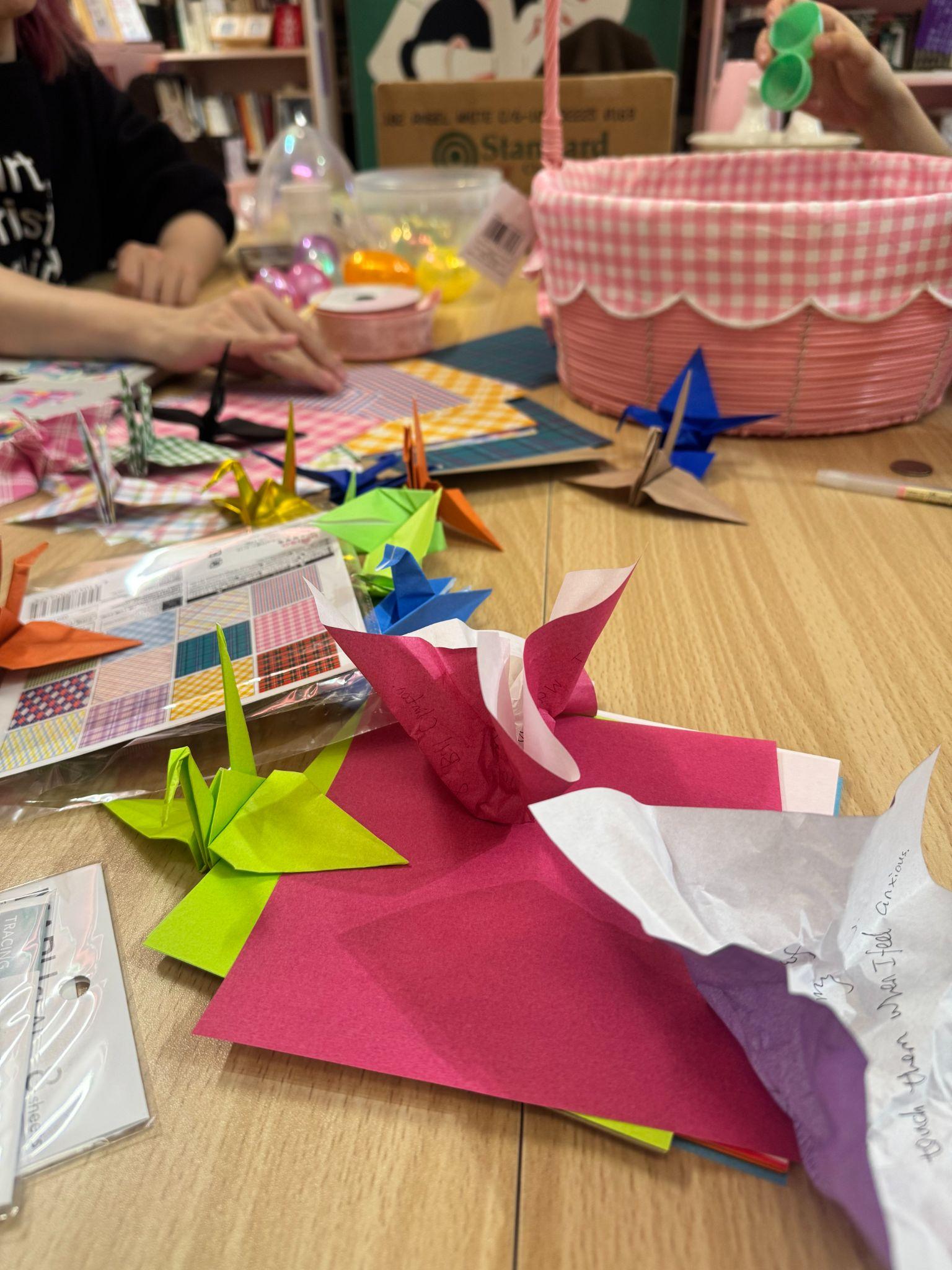
The first group, Wisteria Deng, Yi Chen (Natsume), and Cynthia Langyue Chen, landed in the familiar fever dreamland of Accent Sisters: a pink-walled bookstore stuffed with vintage oddities, colorful posters, cutesy trinkets, and books of whimsical fancy.
The trio soon came to a fork in their creative decision-making. “What road do we take?” They asked. Ekstrand smiled like a Cheshire cat and said, “Let coin flips determine your work processes.”
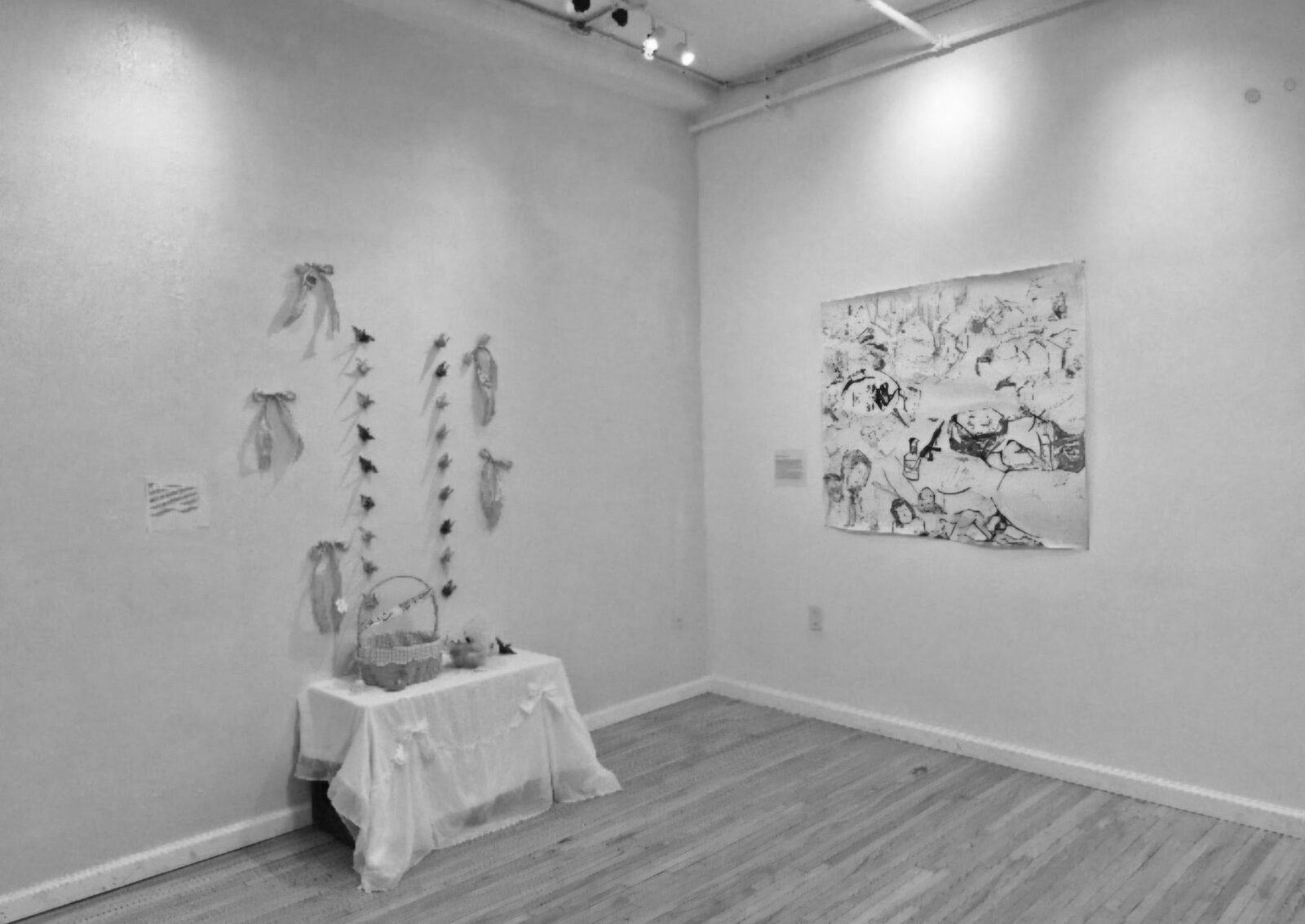
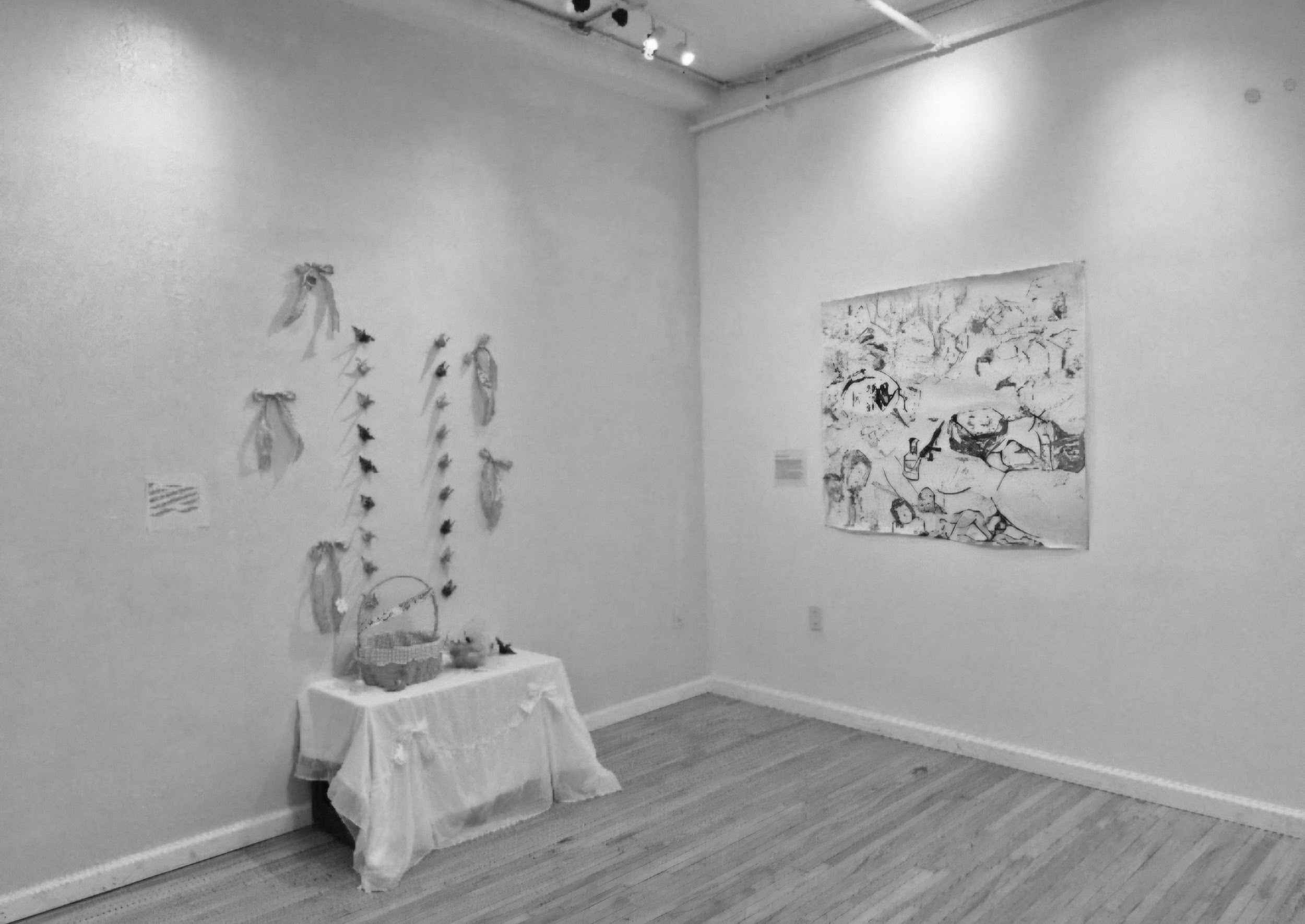
They pooled together their combined talents of writing, design, psychology, and performance art, and tossed coins. Together, three artists and a coin produced Eggoyster — an altar of paper cranes and pink bows, a cottage-core basket of pastel-colored Easter eggs. On the basket is an instruction written across a velvet ribbon. It reads, “Crack to Find.”
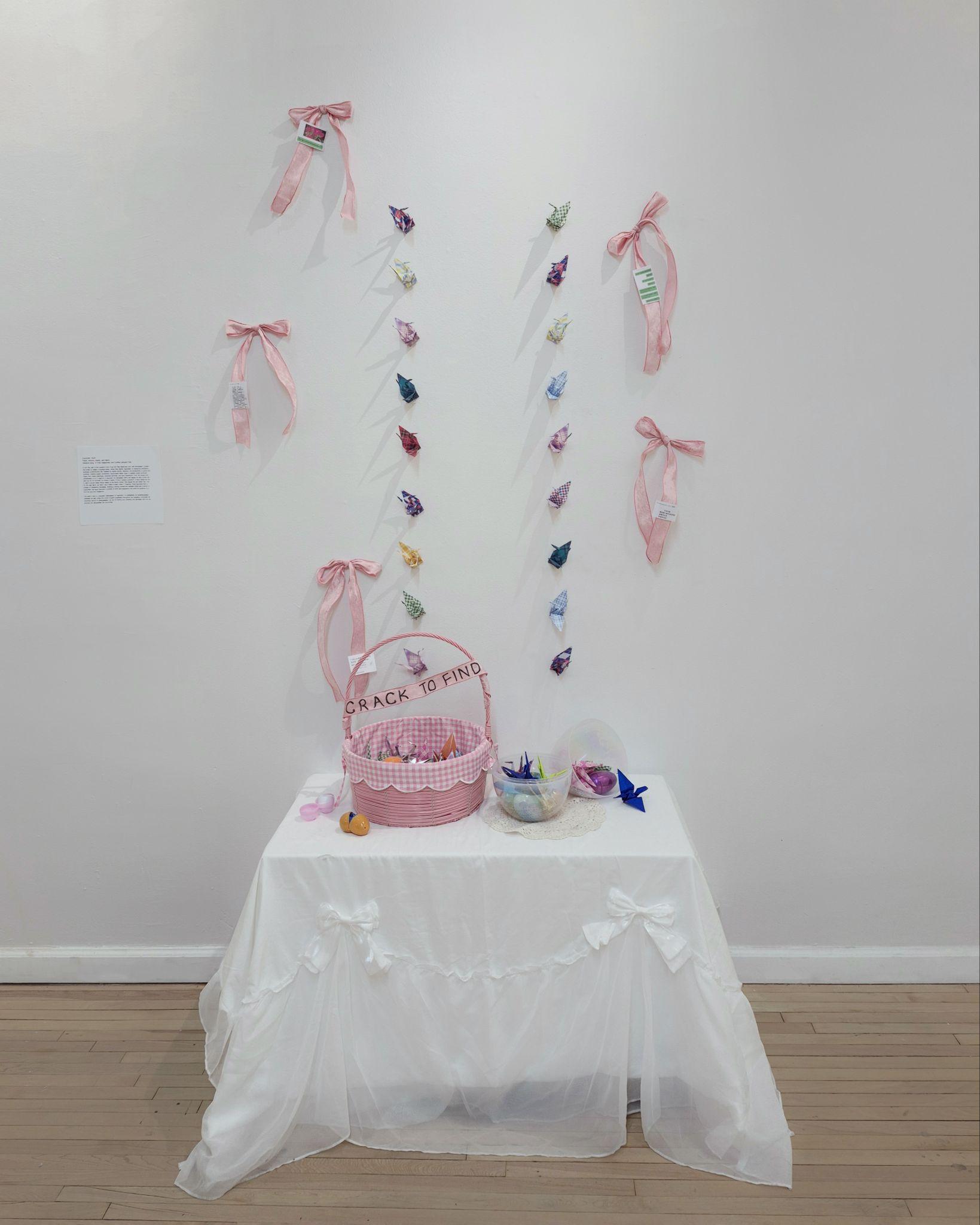
Cracking the egg open, you will find vignettes gathered from news headlines and lived experience: “I used AI to resurrect my deceased nanny and began my daily phone call with her for 30 minutes.” “Once I rented a girlfriend. On the way back, we didn’t say a word to each other.” Each fragment is a small detonation, intimate, specific, opening into an entire narrative if you let it.
Eggoyster absorbed the gamified spirit of Tricky Collaboration and decided to pass it on. It invites you on an adventure of carefully constructed absurdity. and in doing so, puts the coin in your hand.
Of the four groups, Bianca Abdi-Boragi, Mahsa R. Fard, and Jia Sung had what many would consider the most atmospheric studio in New York City. Sung holds a residency at Greenwood Cemetery, which provides a working studio with stained glass windows and a craft table. Outside, acres of green rolled between headstones, stone-faced weeping angels and occasional elaborate mausoleums.
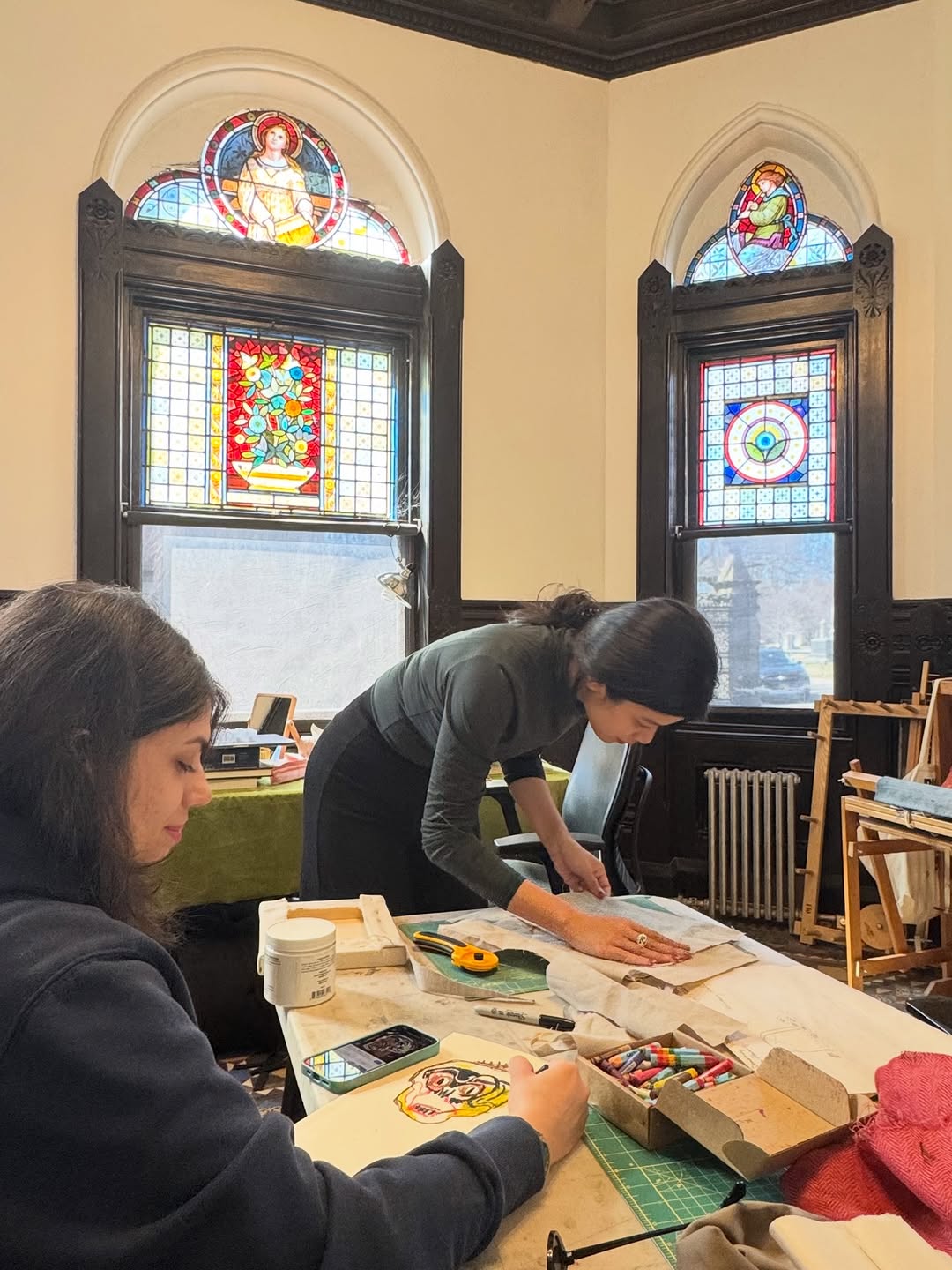
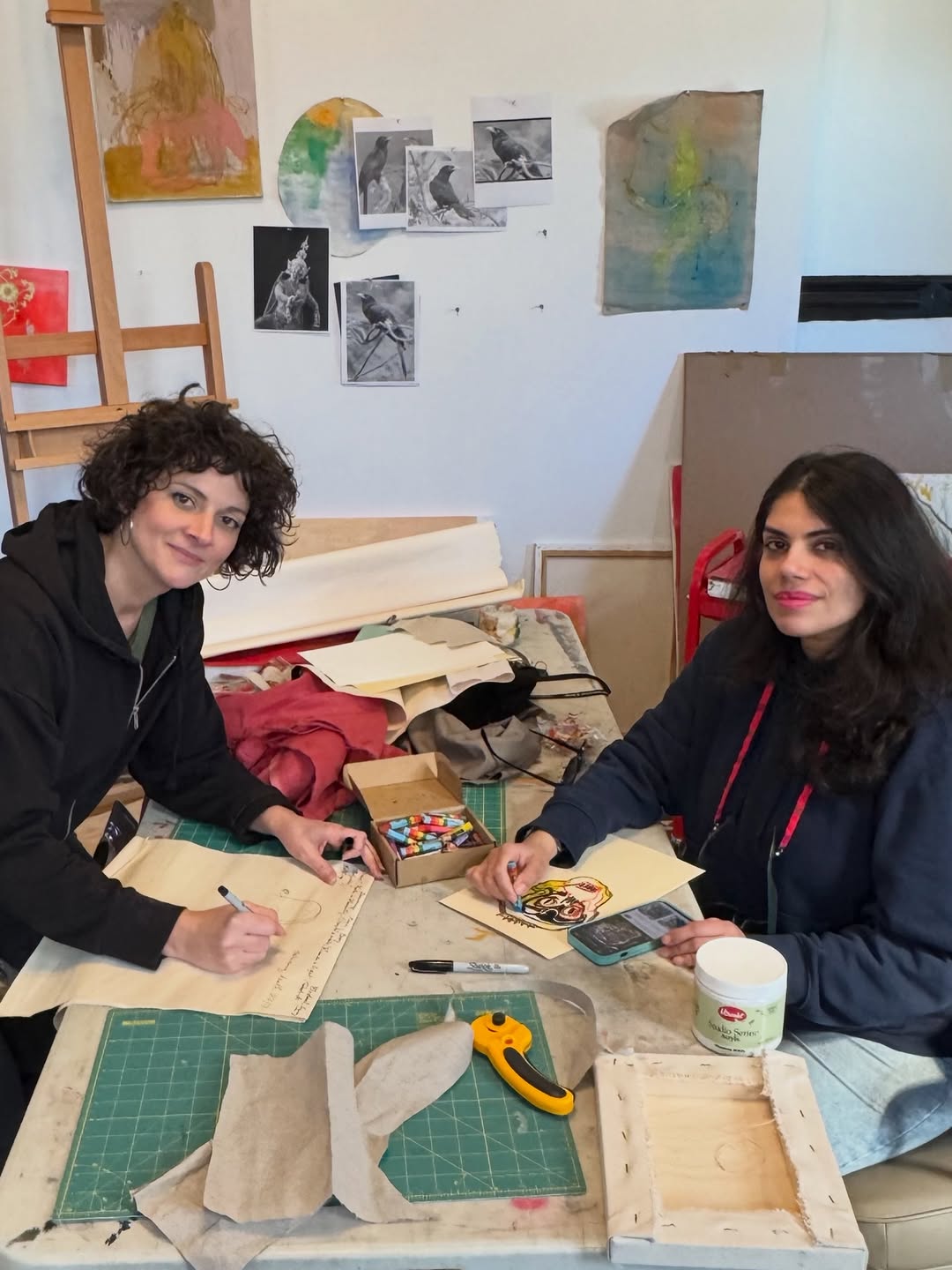
They had barely settled when Ekstrand played her hand: “Start over. Find a cardboard box and a headstone. Write an obituary.” Considering where they were, this felt less like a disruption than a nudge to engage with the environment. They found a box in Sung’s studio. Abdi-Boragi and Fard wandered out and picked flowers and fauna, plastic and organic, from a dump truck.
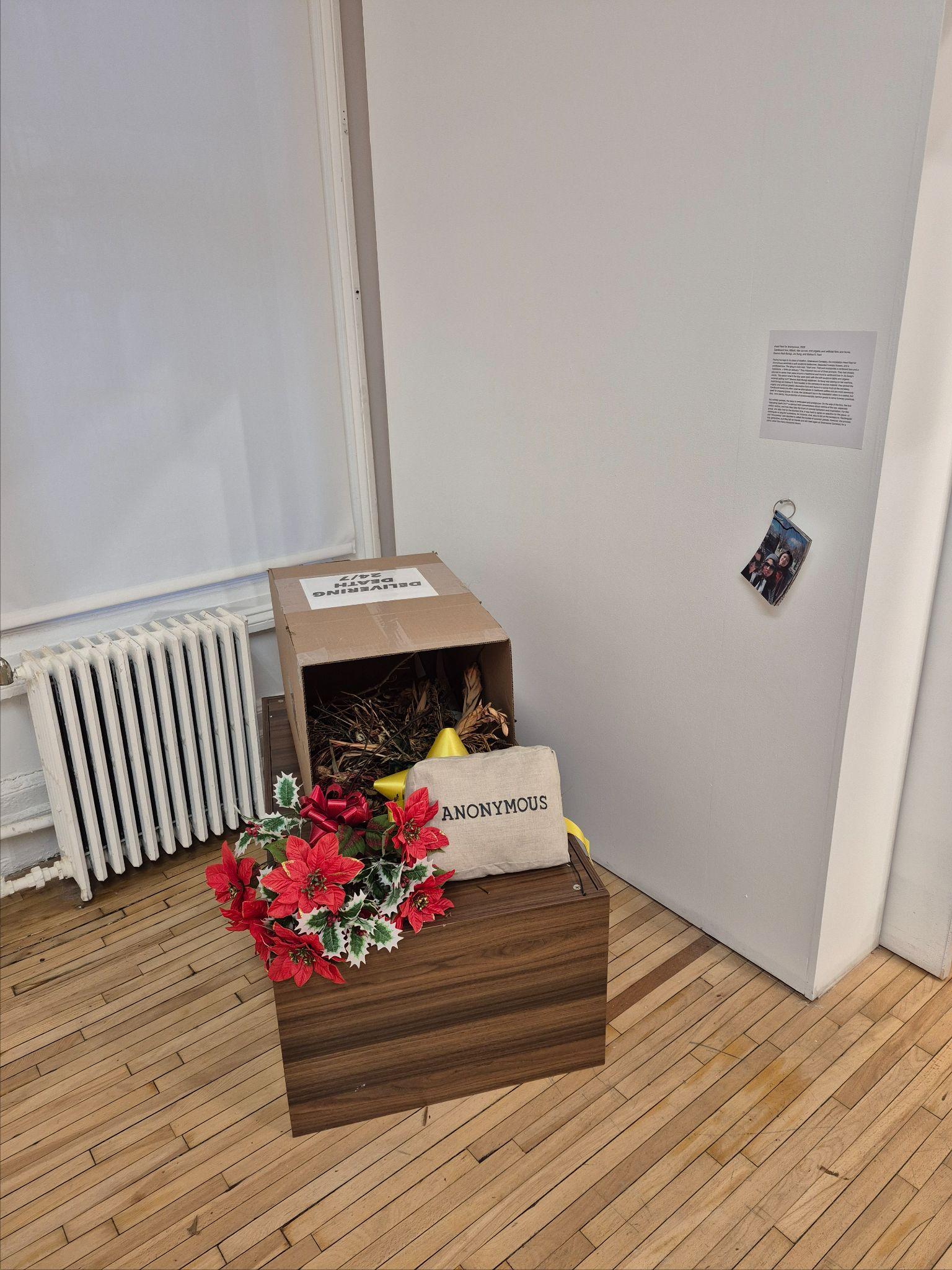
Together they made Head Rest for Anonymous, a soft-sculpture tombstone spilling abandoned flowers from a cardboard casket marked delivering death 24/7, holding civilian death, imperial violence, and the mundane logistics of dying in the same breath.
The obituary demanded by their curator was never written. Perhaps because of this collectively-decided act of rebellion, the group left as friends. They decided to meet again among the headstones when the cherry blossoms bloom.
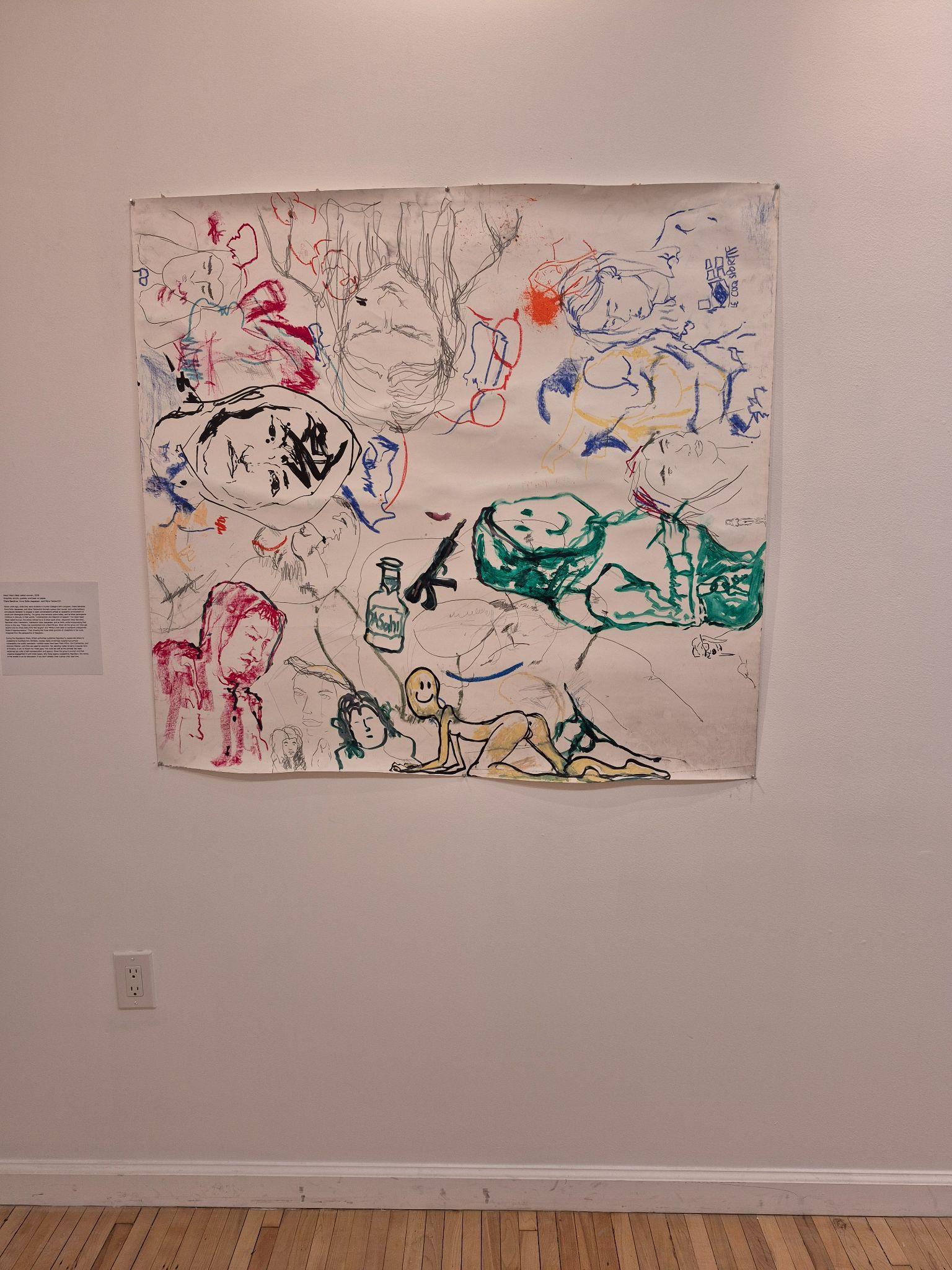
The third group were already friends. Claire Bendiner, Anna Sofie Jespersen, and Alina Yakirevitch have shared a seven-year-old group chat called “anti-woke lesbians and pseudo-lesbians”, where they had open conversations about uncensorship and freedom of speech. For Tricky Collaboration, they reunited around a single large sheet of paper, taking turns drawing each other in graphite, acrylic, and pastels. Then came the intrusion. “Claire has transformed into a Red Pill guy. Do shots every time ASJ laughs. Write a love letter to someone unexpected. Make it Napoleonesque.”
A lesser group might have written a letter in the style of Napoleon. This group interpreted Napoleonesque not as an adjective but as a proper noun. The three artists added three small portraits of Joséphine in the nude, imagined from her lover Napoleon’s perspective. The resulting work, Head Head Head naked woman, is not quite an exquisite corpse, but rather a conversation about openness, love-messaging, and the benevolent and malevolent power of exposure. As to Ekstrand’s instruction, one imagines considerable laughter, and alcohol was involved. To find out exactly what was discussed, you will need to join the group chat.
Of all the tricks Ekstrand devised, the one dealt to Anoushka Bhalla, Alexandria Deters, and Munus Shih had the most uncertain logistics. One of them would be blindfolded for the remainder of the art-making process, the victim determined by rock, paper, scissors.
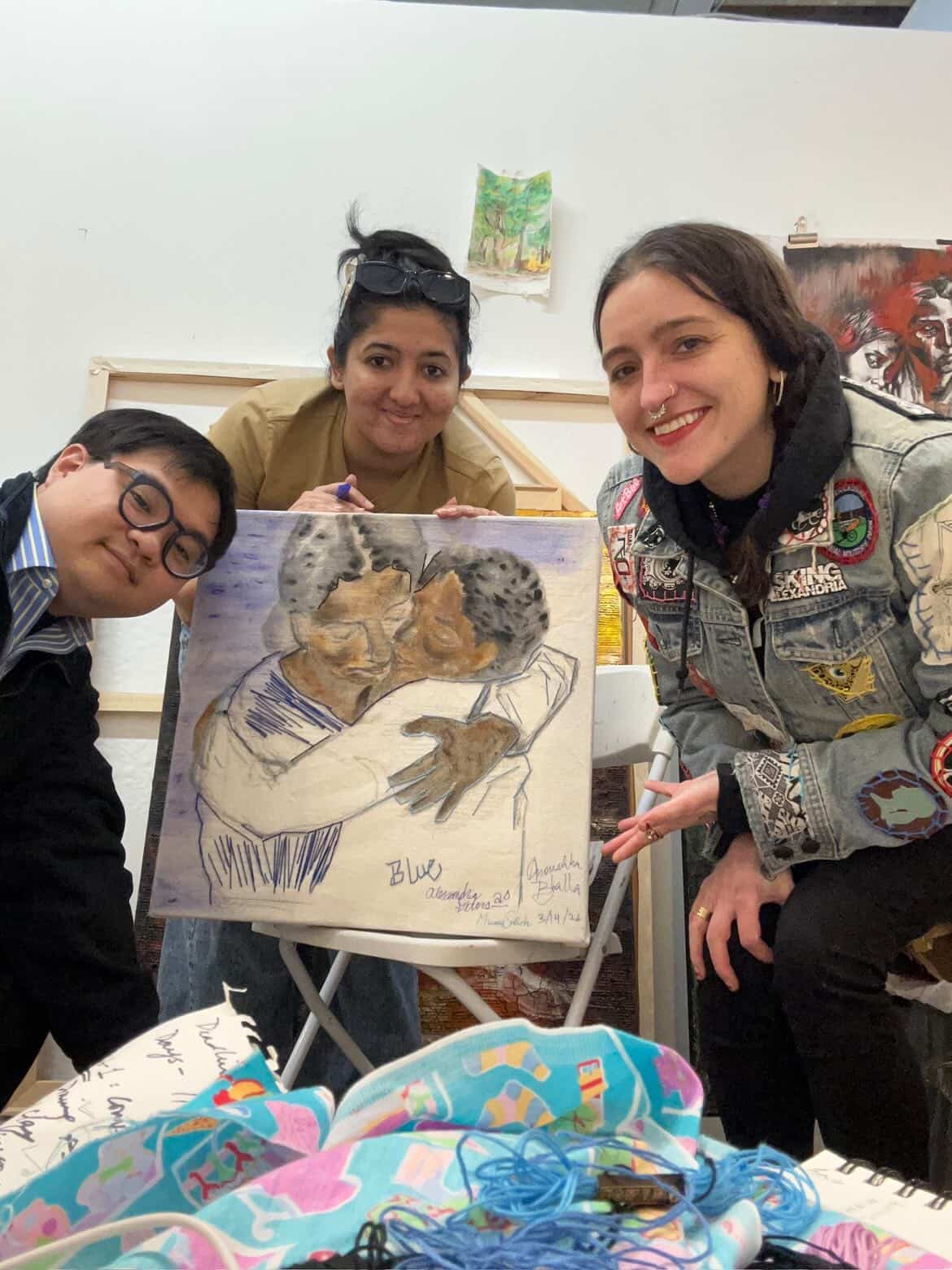
The artists’ creations are centered around personal narratives, active listening, and care. In Bhalla’s Ridgewood studio sat an unfinished underpainting of her grandfather being held by her great-grandmother. Deters embroidered directly onto it with her own needles and thread. While she worked, Shih recorded an hour-long conversation between himself and Bhalla, where they shared their family histories of colonialism in India, Pakistan, and Taiwan. Later Shih did text analysis on the recording for its most frequently spoken words. As the final act of the art-making process, the artists shared a meal, and the conversation continued on into reflection on what it means to be an artist and activist in the present day.
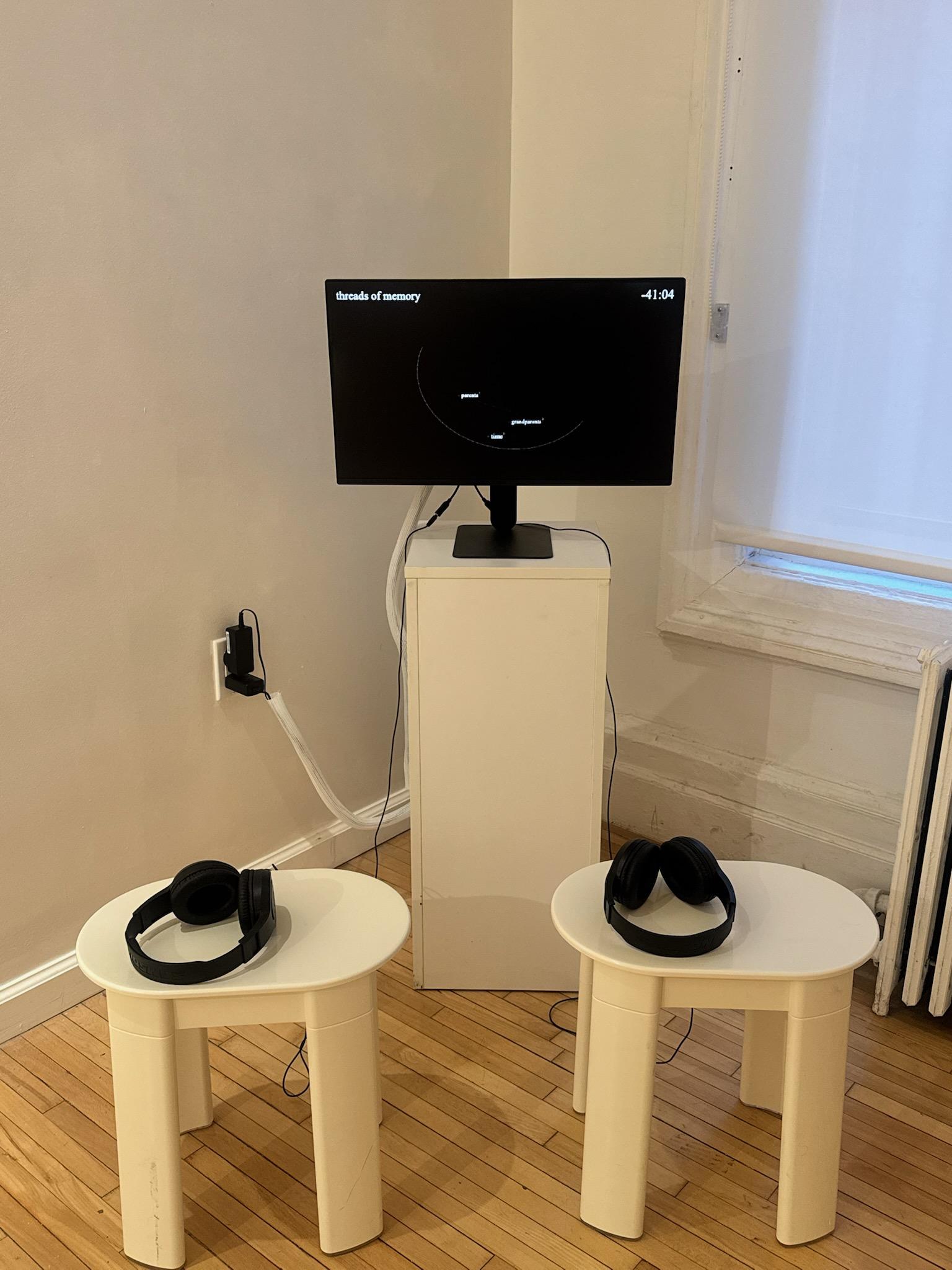
At the exhibition, displayed alongside the thread-laced painting, Shih’s digital visualization maps these words: people, family, school, history, grandparents, land, over the original audio. On the screen, the keywords are suspended and connected, tracing how personal memory accumulates into shared historical narrative, and weaving all three artists together.
A series of very fortunate things have happened in the course of Tricky Collaboration. With Ekstrand’s tricks as gentle pressures, the four groups of artists were prodded, inspired, and given something to react to and push back from. They were immersed in a playground simulation, where they rehearsed negotiation with authority, agency, collaboration and discourse in a safe environment of tenderness and care. Meals were shared, friendships were formed, and art was made.
Tricky Collaboration was on view March 18-April 5 at Accent Sisters 重音社, 89 5th Ave #702, New York, NY 10002.
You Might Also Like
Curating beyond, or against the stream
At Accent Sisters Home is an Ongoing Story
What's Your Reaction?