
As Karl Lagerfeld Stated, “Art is Art. Fashion is Fashion”


I have only ever cried in a museum once.
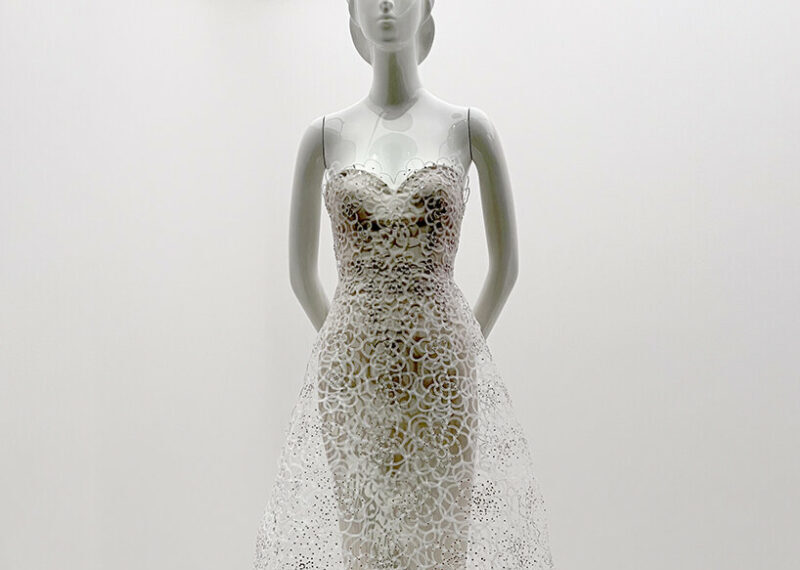
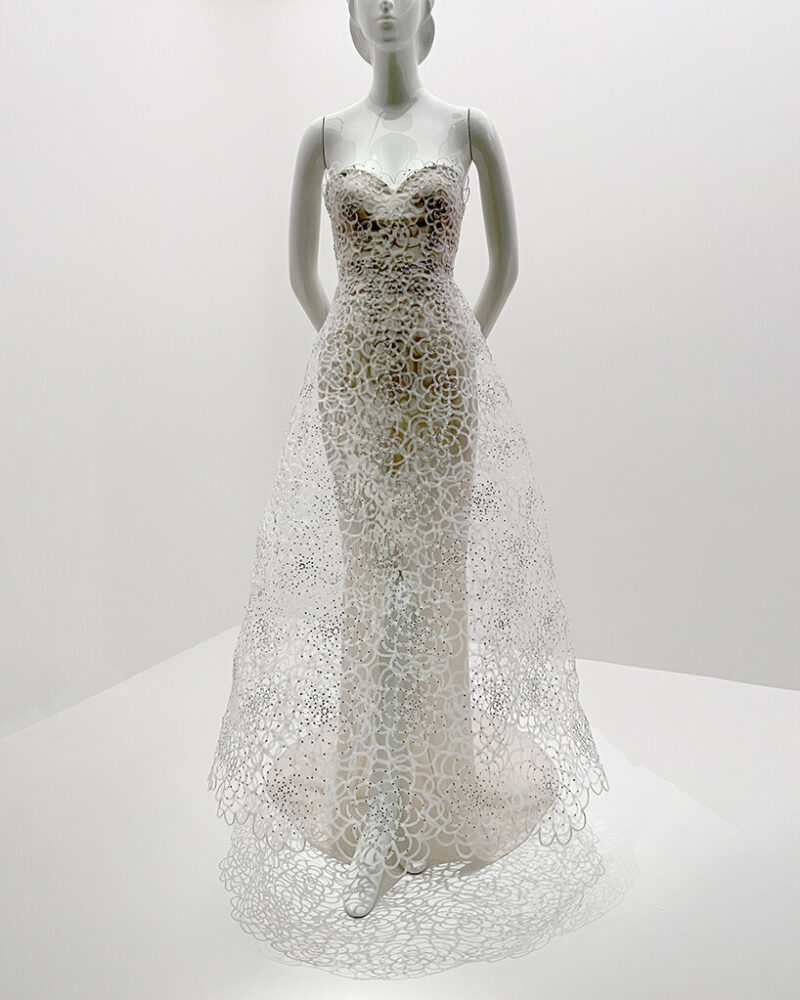
I wish I could say it was in front of a painting or sculpture, but no. It was while viewing a dress by Karl Lagerfeld for Chanel at the 2023 Metropolitan Museum of Art’s exhibition Karl Lagerfeld: A Line of Beauty, curated by the head of the Costume Institute, Andrew Bolton. Because of the show’s long lines of eager visitors, my husband and I could only catch a glimpse of it about half an hour before closing time. By then, aside from a handful of devoted Asian superfans and a few weary guards, we had the place almost entirely to ourselves. In an interview with Hans Ulrich Obrist Lagerfeld said: “For me drawing is the same as speaking and writing. I never understood that no one thinks the same way.” I draw, so perhaps this common root draws me to his work.
Either way, the exhibition was spectacular. What stayed with me most was the celebration of the unsung heroes of the fashion industry: the petites mains, the seamstresses. They, more than anything else in the show, clarified why fashion matters. I can watch endless fashion documentaries if they offer glimpses inside the atelier. There they are: women, and the occasional man, bent over a garment, placing each bead by hand, sometimes for thousands of hours. They are the artisans, the invisible architects of beauty. Incidentally, when Lagerfeld was asked if he considered himself an artist, he replied: “I am not an artist; I work with fashion, and fashion is not art.” If anything, he said to Obrist, he would call himself an ‘applied artist,’ a craftsman, rather than an artist. To Lagerfeld, the distinction was clear: “Art is art. Fashion is fashion.”
I could not agree more. The Lagerfeld exhibition featured screens where seamstresses spoke about what it was like to decipher the details of his drawings while laboring long into the night. Hearing them describe the process was genuinely moving. It made me realize that, when it comes to fashion, I want to be in awe of how something is made. I want to see: the hand, the labor, and the deepest devotion of time.
But when it comes to art, I don’t care.
I do not want to know how long it took. I do not want to picture the artist scratching away, hunched over a canvas at three in the morning. I want to be enthralled and transported somewhere I did not expect to go. Art, for the most part, hangs on a wall; it is meant to be treated as a portal to the vague land where the artist and art live, whereas even the most obscure fashion designers have to consider how a living, breathing person might wear their creations. Which is why the conceit of the current exhibition, Costume Art, also curated by Bolton, unsettled me with its ask to regard fashion as art, rather than as fashion—much as I imagine it would have Lagerfeld.
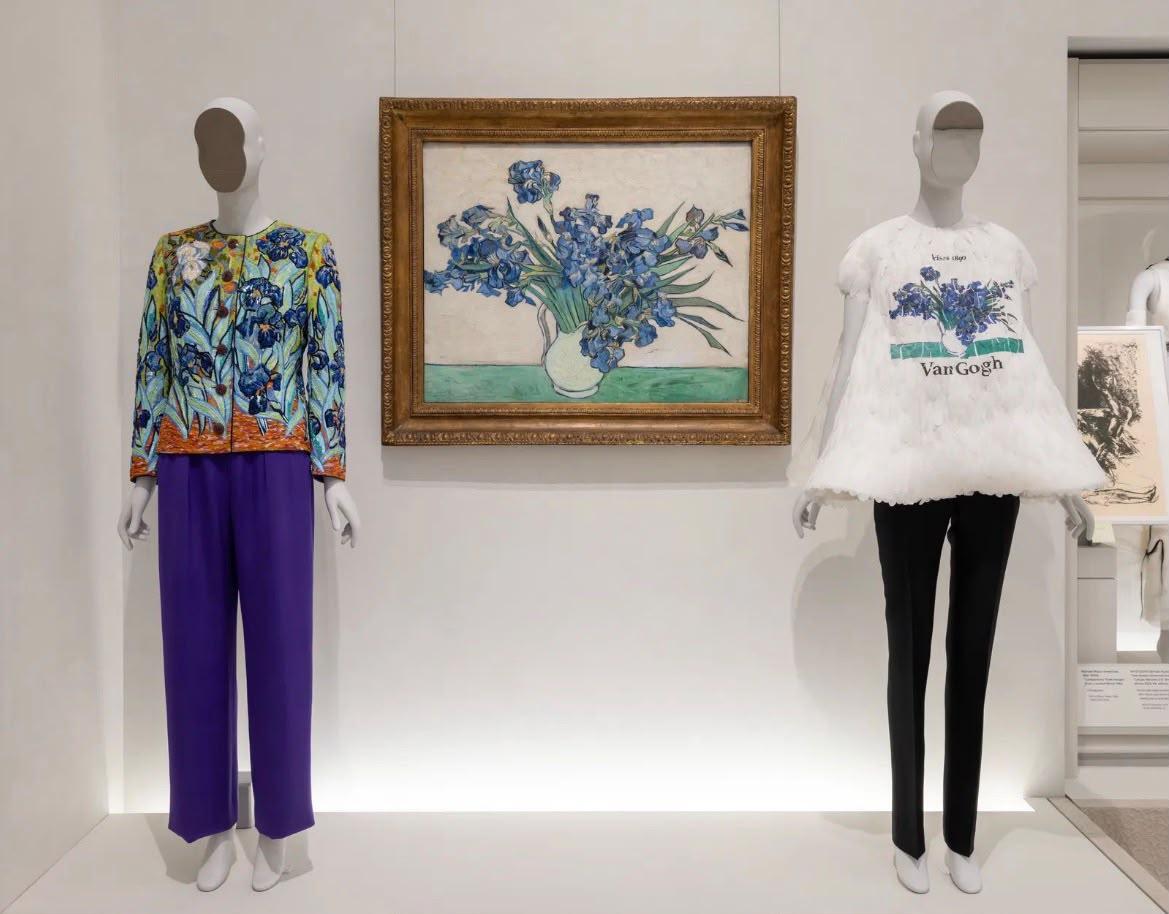
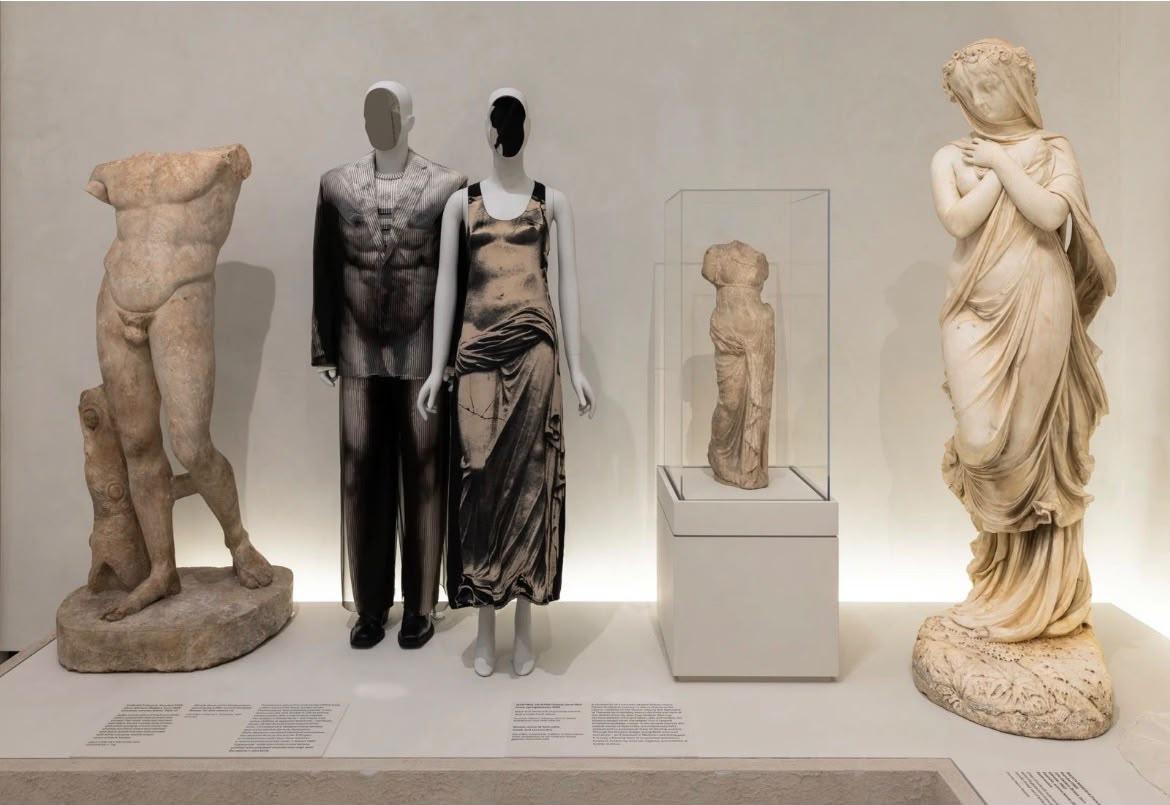
Costume Art is installed in the museum’s brand-new and vast Condé M. Nast Galleries, adjacent to the Great Hall. The absence of a line outside this year’s show was perhaps an ominous sign. As soon as one enters the show, it becomes obvious that a somewhat simple curatorial strategy was on offer: a round dress beside a round sculpture, a red dress beside a red artwork, and so on. Despite the obvious shape and color pairing, the dresses and artworks stood side by side, not together. The artwork did not always expand or enlighten the viewer as to the concept of the garment or vice versa. The Van Gogh section was delightful but in the opening Greek and Roman section, I did not understand why Bolton chose those specific sculptures to stand next to the dresses and not others. This was disappointing because I came to see a dialogue of fashion, thought, and image.
Insisting that fashion designers are artists suggests that fashion needs art’s validation to be taken seriously. It doesn’t. Fashion is an enormous cultural and economic force in its own right. Its economic scale is substantially larger than that of the commercial art market. Estimates of the global fashion industry vary considerably depending on what is included: McKinsey estimated the global fashion industry at approximately $2.5 trillion in annual revenues before the COVID-19 pandemic, while other estimates have placed the apparel and footwear market closer to $1.5–$1.7 trillion. By contrast, the Art Basel and UBS Global Art Market Report estimated global art-market sales at $65 billion in 2023, although the market subsequently fell to $57.5 billion in 2024. These figures illustrate the vastly different economic scales of the two sectors. On these estimates, the global fashion industry’s annual revenues are roughly 26–38 times the value of annual global art-market sales, although the comparison is indicative rather than strictly like-for-like. Fashion need not look to a museum for validity. Look at your brand’s stock listings instead.
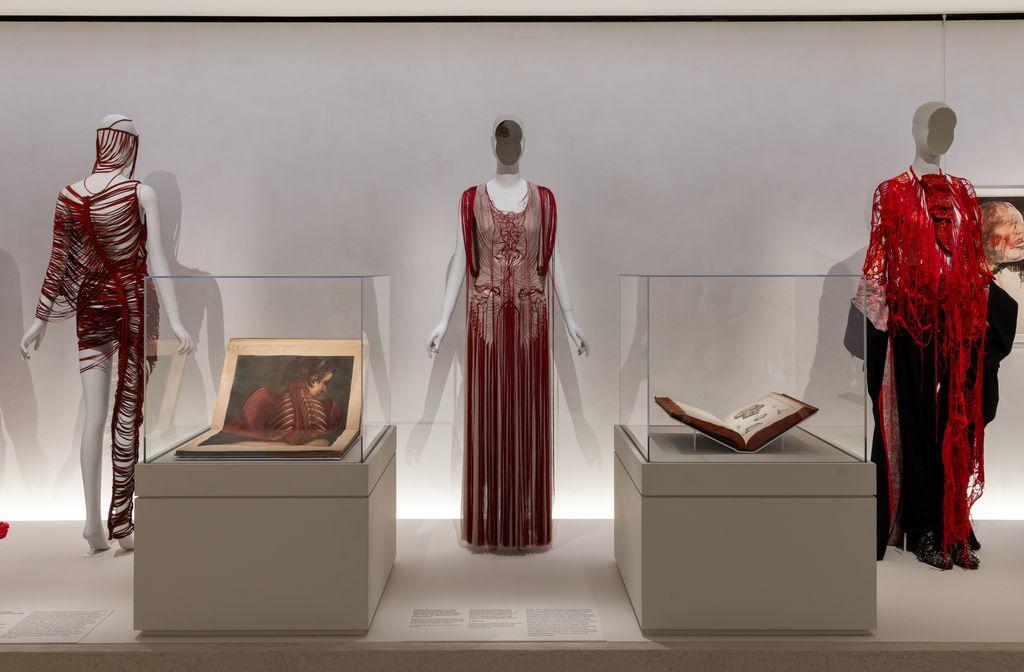
I do not question the validity of the Costume Institute, nor do I question that some clothes are so beautiful and historically significant that they belong in a museum. Art and fashion occupy different roles in both museums and our lives. This spring, I wrote, on the occasion of Schiaparelli: Fashion Becomes Art at the V&A, that designers, such as Schiaparelli, collapse the boundary between art and fashion by employing artists in the design of their dresses. Lagerfeld instead emphasized the artisanal wonders and craftsmanship of fashion. Costume Art argues that art becomes fashion when its visual language is embodied and worn, while fashion becomes art when the garment transcends its function of dressing the body and transforms the wearer into a living artwork. I think that no matter how artistic the impetus to make a garment, it still needs to be worn first and admired second. I, for one, have never made an artwork with washing instructions attached.
As though the art-versus-fashion question were not enough to contend with, another thread ran through the exhibition: body diversity.
The mannequins came in various forms: some sat in wheelchairs; some were pregnant, there were petite bodies, and male bodies. Yet all were white, with a peek-a-boo mirror where the face should have been—a device that seemed to ask: Are we all models? It was playful to “try on” some of the dresses by looking into the face-shaped mirror, but the gesture also underscored a fundamental difference between art and fashion. Fashion solicits our response from the outside in: Does it suit me? An artwork might be beautiful, and it might even coordinate perfectly with your new sofa, but its power does not depend on beauty or utility. It can reach us through something less conscious, something that precedes taste.
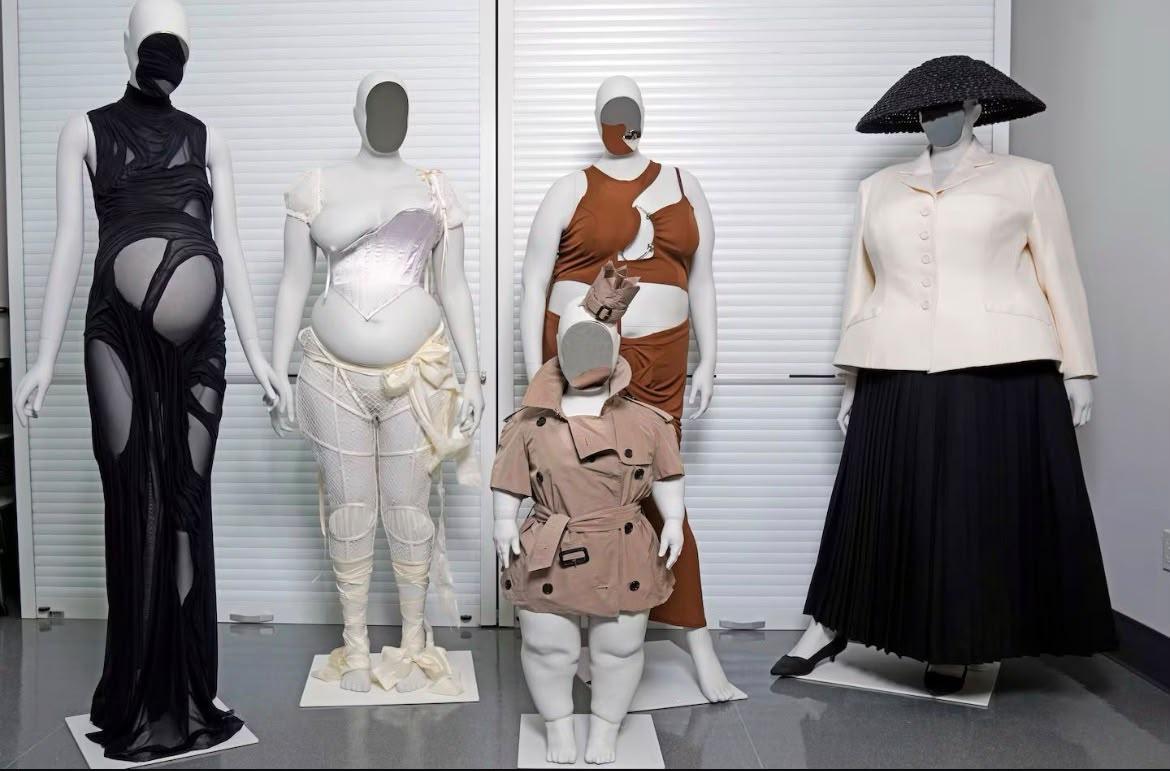
Aside from including artwork that featured similar body types, Bolton did not distinguish how his variety of mannequins related to the original question about fashion as art. Clothes—and the fashion industry—have long argued that garments look best on bodies that create a particular silhouette onto which the clothes can be projected. Which is why models’ measurements are often standardized to fit sample size. As an artist, I find that kind of uniformity less interesting. Thin bodies are not necessarily as compelling to draw; a curved line is, to me, almost always more sensual and visually interesting than a straight one. When making a portrait, I am also less invested in imposing my own vision onto someone than in drawing out something of their personality—their quirks, peculiarities, and individual presence. What looks striking on a runway does not necessarily translate into a painting. Fashion is designed to create an image; portraiture, for me, is about discovering one.
Artists have limitations, but they are not, fundamentally, confined by the human body in the way fashion is. An artist can, of course, draw a beautiful woman wearing a beautiful dress, but they can also make this lady have two fingers on each hand or turn them into a cloud. Designers only get to dress human beings as they actually are. The body, whatever its shape, size or state, is and will ever be fashion’s canvas. The Lagerfeld show was not simply a genius vision of a single designer, but the extraordinary negotiation between an impossible vision and a human body. The designer imagines; the petites mains make it possible; all so the body may have the pleasure of living inside this amazing labor of dreams.
Fashion’s charm is that it appears and disappears like phases of the Moon. It’s all about the here, the now, the today, and pity anyone wearing something from last season. Whereas in art, time zig-zags: it loops back, doubles over itself, resurrecting the past and making it strange again. A drawing can be hundreds of years old and still feel more startlingly present than anything that has been made this week; a sculpture can gather meaning as the world around it changes. Fashion, by contrast, is always fleeing its yesterday. Its power lies partly in that vanishing act: what is desirable today becomes obsolete tomorrow. Shoes will wear out, and trousers may tear, but an artwork, if hung well, will be there for the rest of your life and that of your great-grandchildren.
You Might Also Like
Is Men’s Fashion OK? Jonathan Anderson’s Dior Homme F/W 2026 Got Me Wondering
Woodmere Highlights U.S. Fashion Icon in Their Jewelry Vault
What's Your Reaction?