
Can Art be Fashion? Schiaparelli at the V&A

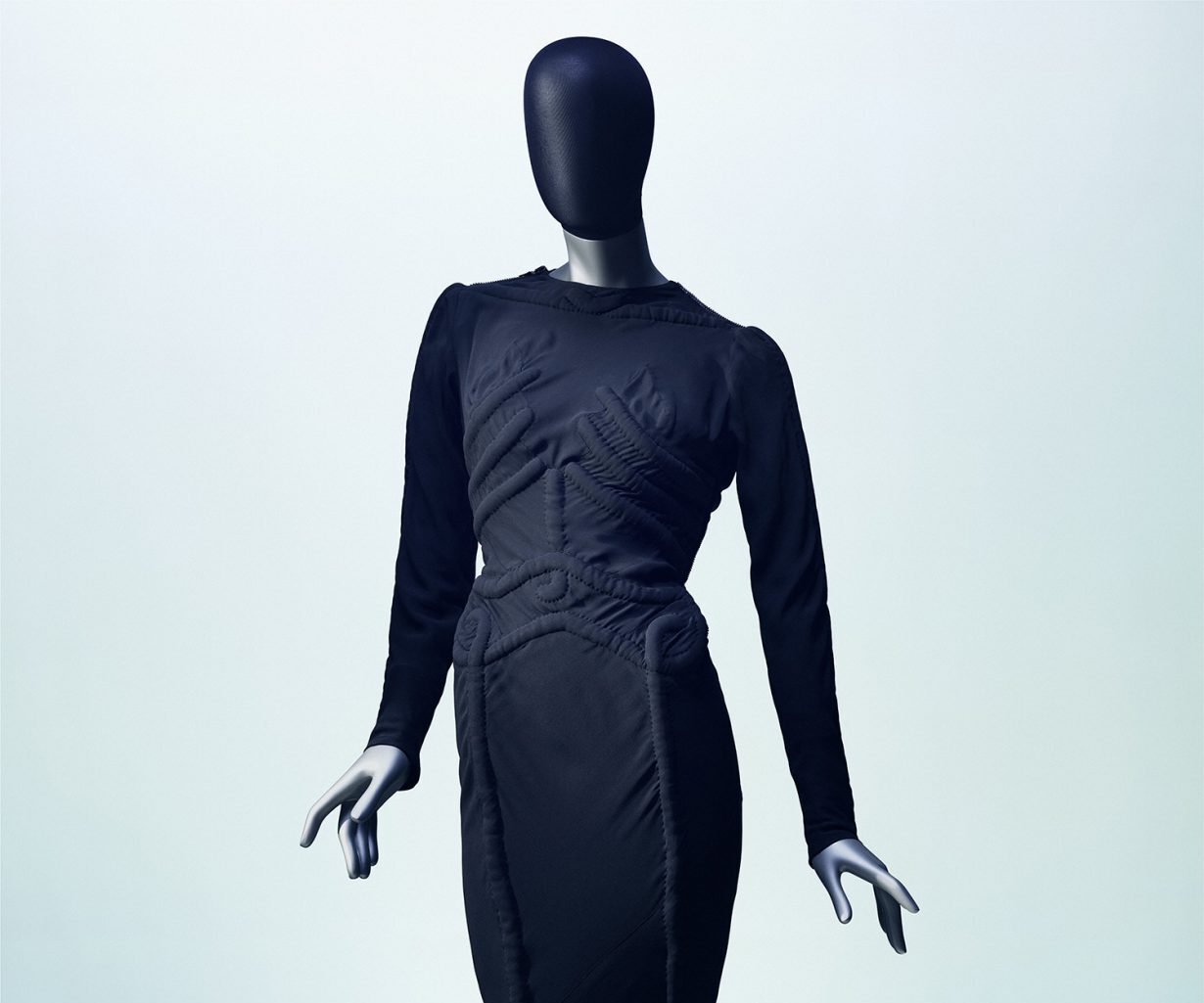

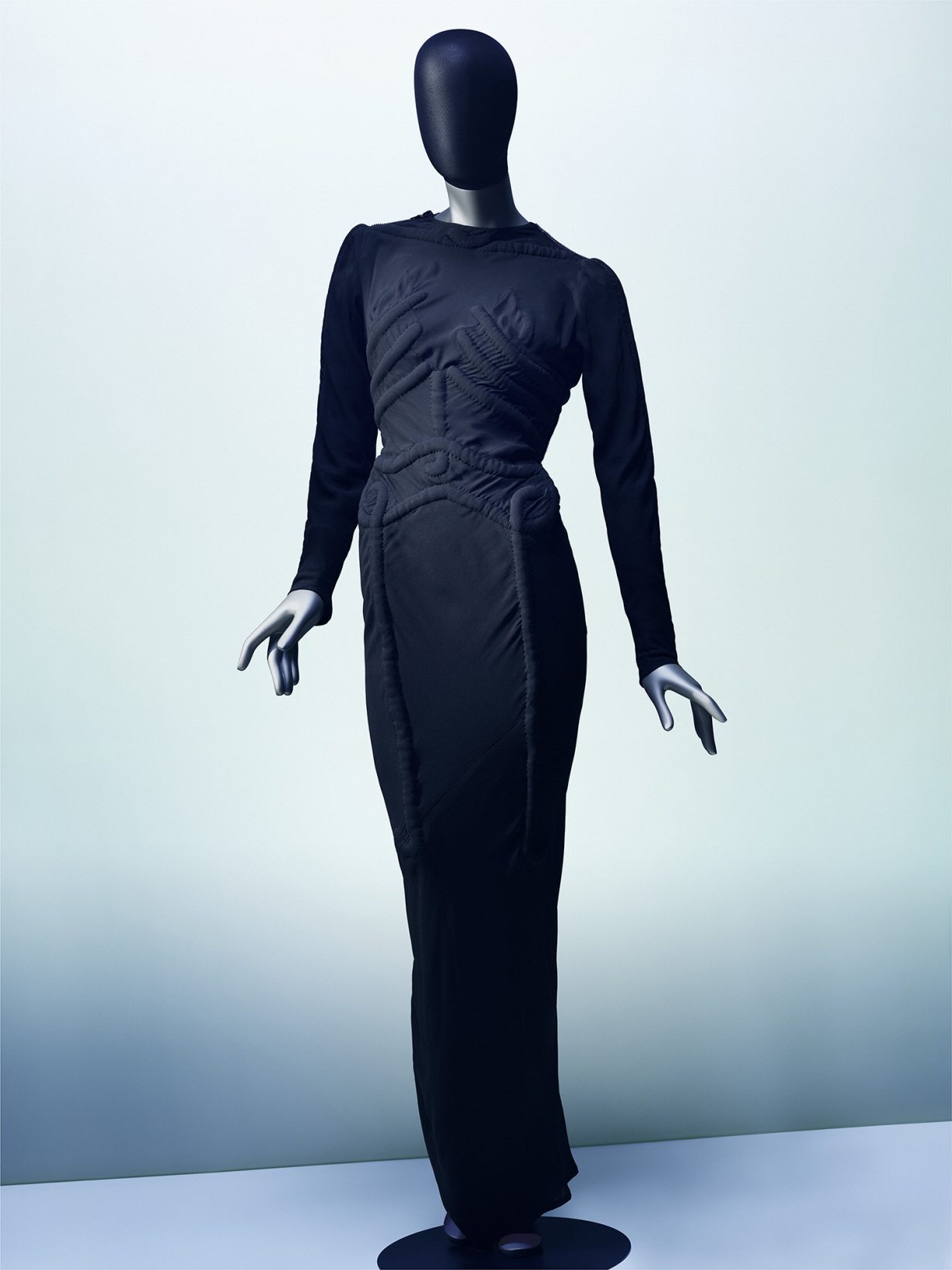
Today, we have largely accepted that fashion belongs in art museums. Fashion is art. While walking to the Victoria and Albert Museum to see their new blockbuster show Schiaparelli: Fashion Becomes Art, I wondered about the reverse proposition: if fashion can be art, could art also be fashion?
The Schiaparelli gown that welcomed the visitor into the dimly lit show was designed by the surrealist artist Salvador Dalí—the Skeleton Dress from 1938. Along with the sketch of his design, the artist wrote: “Dear Elsa, I like the idea of ‘bones on the outside.’” Considering Dalí had a pet anteater, as well as a lobster telephone, the practicality of life as a woman with bones on the inside does not enter into his concerns when designing a dress, nor does it preoccupy the House of Schiaparelli much. The female body is more of a canvas than a human.
What about the woman who wears the bones?
I spent some time imagining myself dressed in any one of the dresses or trousers on display. Where would I go? What would I do? Nothing came to mind except standing perfectly still, like one of the V&A mannequins. Coco Chanel, Schiaparelli’s great rival, famously insisted that “the dress shouldn’t wear the woman, it’s the woman who should wear the dress.” Schiaparelli delighted in precisely the opposite possibility: that clothing might transform the wearer into a work of art. In today’s world of flip-flops and quiet luxury, it is left to celebrities such as Lady Gaga and Bella Hadid to embrace Schiaparelli on Cannes’ red carpet or during the Biden Inauguration.
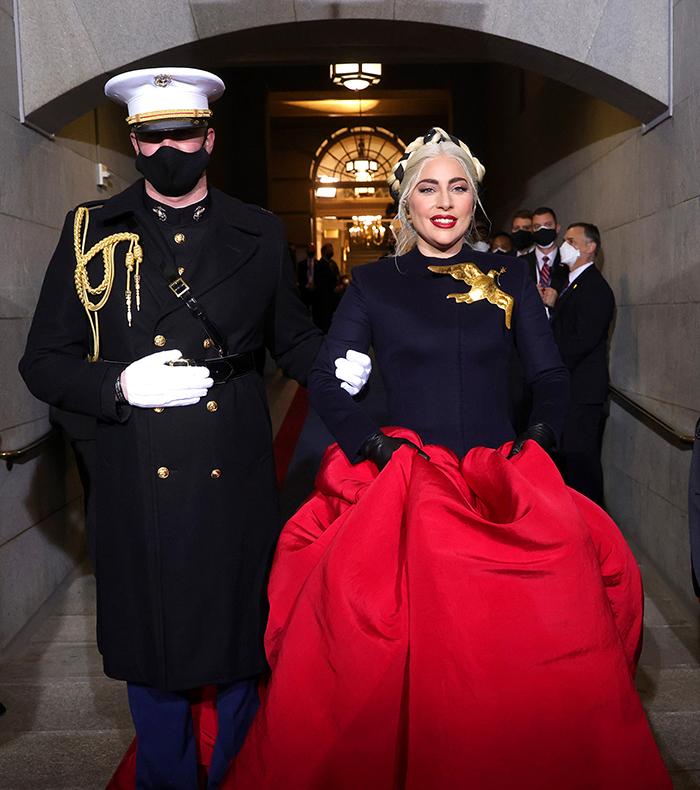
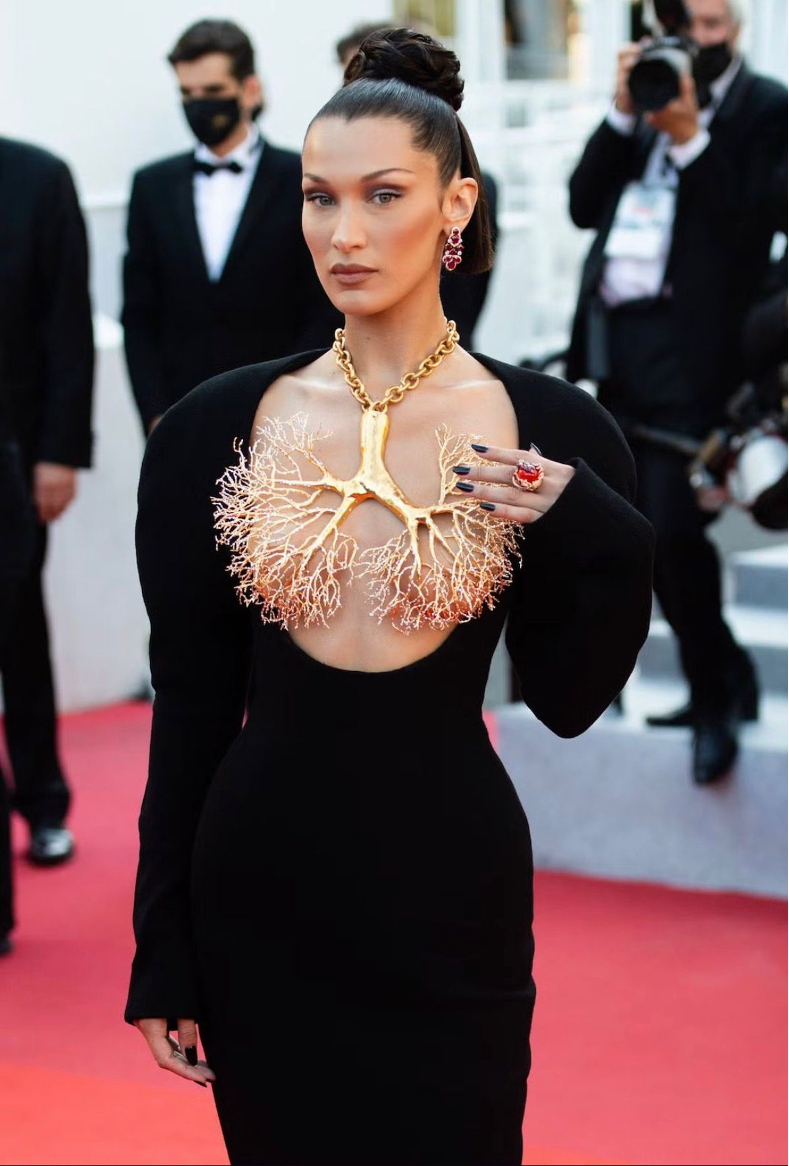
Gaga and Hadid’s appearances serve as a reminder that clothing can still astonish, provoke, and inspire, assuring that a place remains for fantasy in a culture increasingly devoted to practicality, comfort, and understatement. Schiaparelli’s enduring appeal lies precisely in this refusal to be sensible: her clothes are not designed merely to be worn, but to be seen and remembered.
Whenever someone buys one of my artworks, they often tell me it is because they recognize something of themselves in it. I love hearing that, because for me art is an invitation to see the world together. Schiaparelli, by contrast, seems largely uninterested in inviting either the viewer or the client into her world. When confronted with the daring Lobster Dress, the crustacean functioning as a phallic symbol, famously worn by Wallis Simpson just weeks before her controversial marriage to Prince Edward, Duke of Windsor, in 1937, the impulse is not to imagine oneself wearing it. After all, none of us can outdo Wallis Simpson. Instead, one marvels at the audacity of Schiaparelli’s and Dalí’s imaginations. Simpson herself seemed to understand this dynamic, remarking, “I’m not a beautiful woman. I’m nothing to look at, so the only thing I can do is dress better than anyone else.”
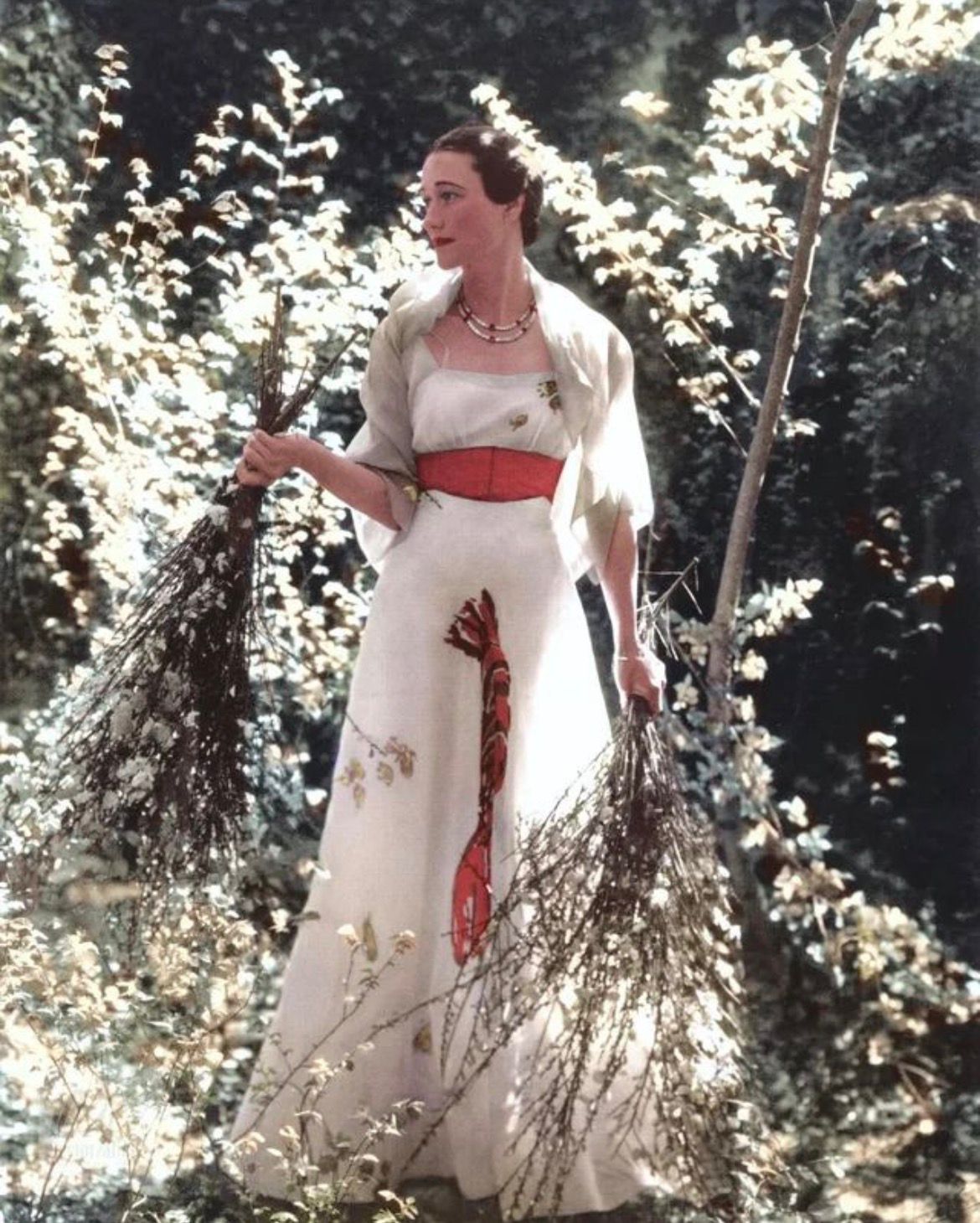
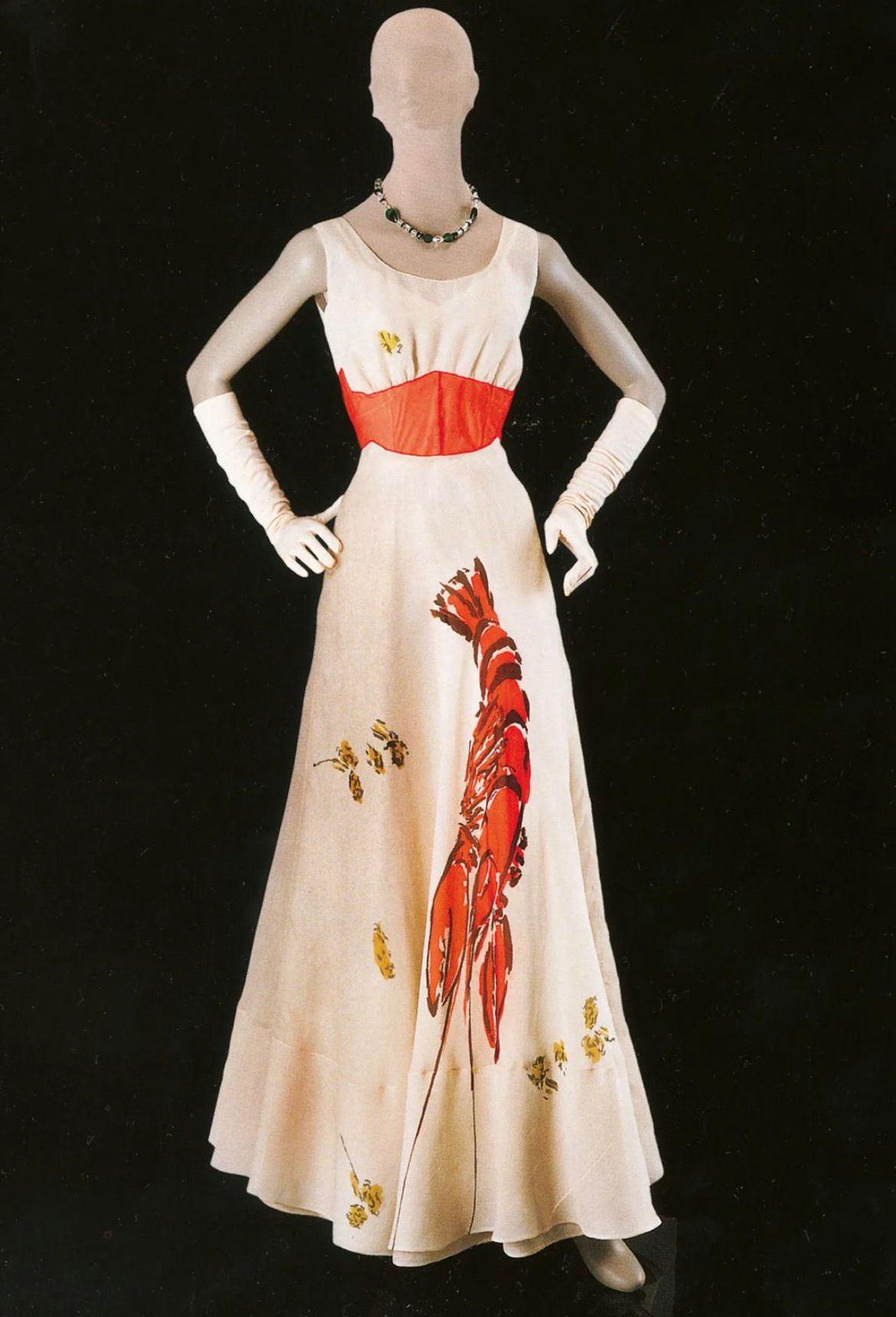
Schiaparelli’s creations do not function as mirrors. They are self-contained worlds, surreal propositions that ask to be admired, interpreted, and decoded rather than inhabited. The wearer becomes less a participant than a vessel through which Schiaparelli’s imagination can briefly enter reality. Apart from Dalí, she also with Meret Oppenheim, Jean Cocteau, Leonor Fini, Alberto Giacometti, and Man Ray to create unusual designs.
The exhibition traces Schiaparelli’s groundbreaking career and the 2010’s reinvention of the House of Schiaparelli under Daniel Roseberry. The latter continues to expand upon the distinctive visual language and house codes established by Schiaparelli during her remarkably influential career, which spanned from 1927 to 1954.
But, the exhibition does not fully address is what became of Schiaparelli after her fashion house closed in 1954. Unable to adapt to the tastes of the post-war era, which increasingly favoured simplicity, practicality, and a more natural vision of femininity, Schiaparelli literally fell out of fashion. She lived until 1973. Perhaps, after the seismic horrors of war, the ability to shock left art and fashion flatfooted. The house remained dormant for decades before being revived in 2012.
As I left the exhibition, I pondered why the 1960s, 70s, 80s, and 90s, despite their appetite for experimentation and excess, had little interest in this particular kind of artifice. Why did women in the post-war decades prefer to look inward rather than participate in Schiaparelli’s surreal external transformation, and why are we so captivated by Schiaparelli and her house, driven by Daniel Roseberry today?
Perhaps it is that we live in an age obsessed with self-expression. On the street, if you are not a woman who is increasingly interested in the illusion of self-care, spa vacations, and athletic yoga stretch fabrics, an alternative way to attract attention is to create an illusion that becomes a work of art, both in terms of the garment and the wearer.
Schiaparelli still offers something different: the permission to become something else. A statement. Her clothes do not reveal the wearer; they reinvent her to a greater mission: To be the event. In that sense, Schiaparelli feels less like a designer from the past than one whose moment has finally arrived.
Schiaparelli: Fashion Becomes Art, curated by Sonnet Stanfill, Lydia Caston, and Rosalind McKever, is on view until 8 November 2026 at the Victoria and Albert Museum.
You Might Also Like
Is Men’s Fashion OK? Jonathan Anderson’s Dior Homme F/W 2026 Got Me Wondering
Woodmere Highlights U.S. Fashion Icon in Their Jewelry Vault
What's Your Reaction?