
Kennedy Center Protest Turns Into a Joyful Occasion as Trump-led Changes are Deemed Unlawful

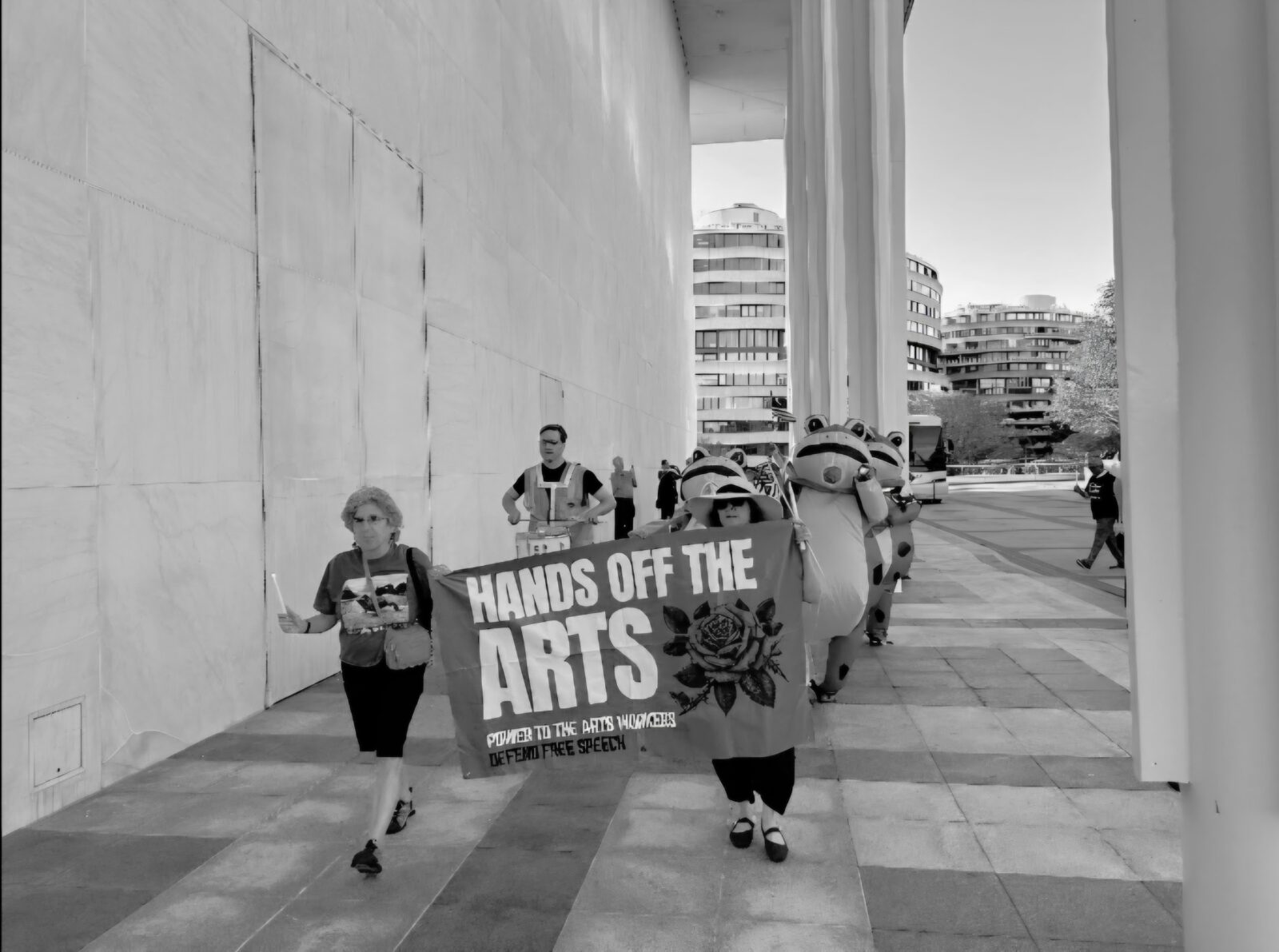

Yesterday, a federal judge blocked the Kennedy Center from closing its doors for Trump’s two-year renovation and ruled that the president’s name must be removed from not just the building but all materials that are distributed by the center. U.S. District Judge Christopher Cooper ruled in his opinion that Trump’s name was added to the building unlawfully. The lawsuit was originally filed by Democratic Representative Joyce Beatty of Ohio, herself a member of the Kennedy Center’s Board of Trustees.
The center has faced artist cancellations and declining ticket sales after Trump-appointed trustees named him chairman and moved to rename the institution after him. In February, Trump announced a two-year closure to accommodate extensive renovations, leading to many workers losing their jobs. Decisions that the courts have now overturned.
Trump will not fight the judge’s decision and will back away from his proposed renovation and returning control of the arts institution to Congress. Responding on Truth Social: “Unless I am free to do what I do better than anyone else, bring this Institution back, physically, financially, and artistically, I have no interest in continuing what could only be a hopeless journey into ‘NEVER NEVER LAND.’”
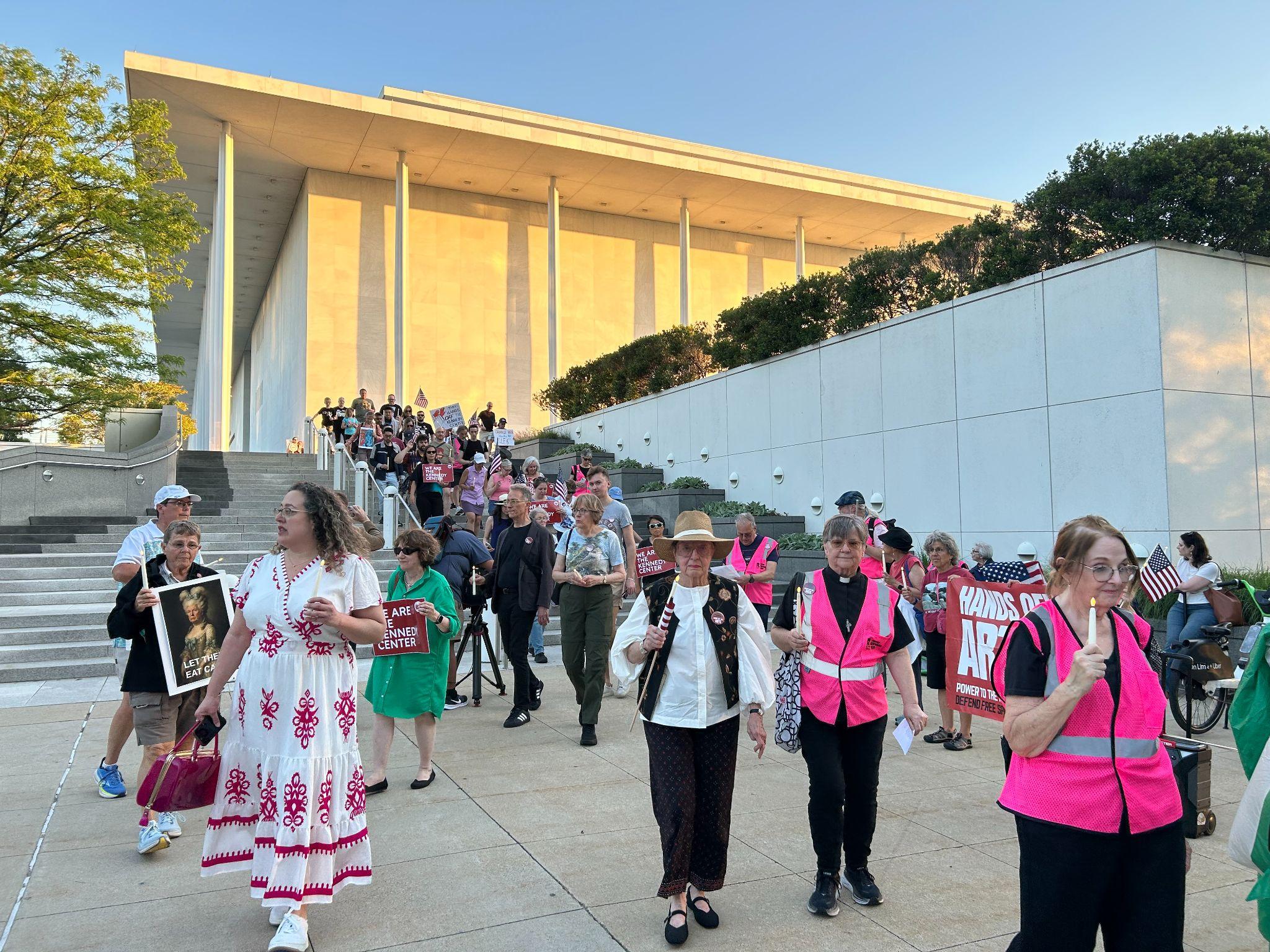
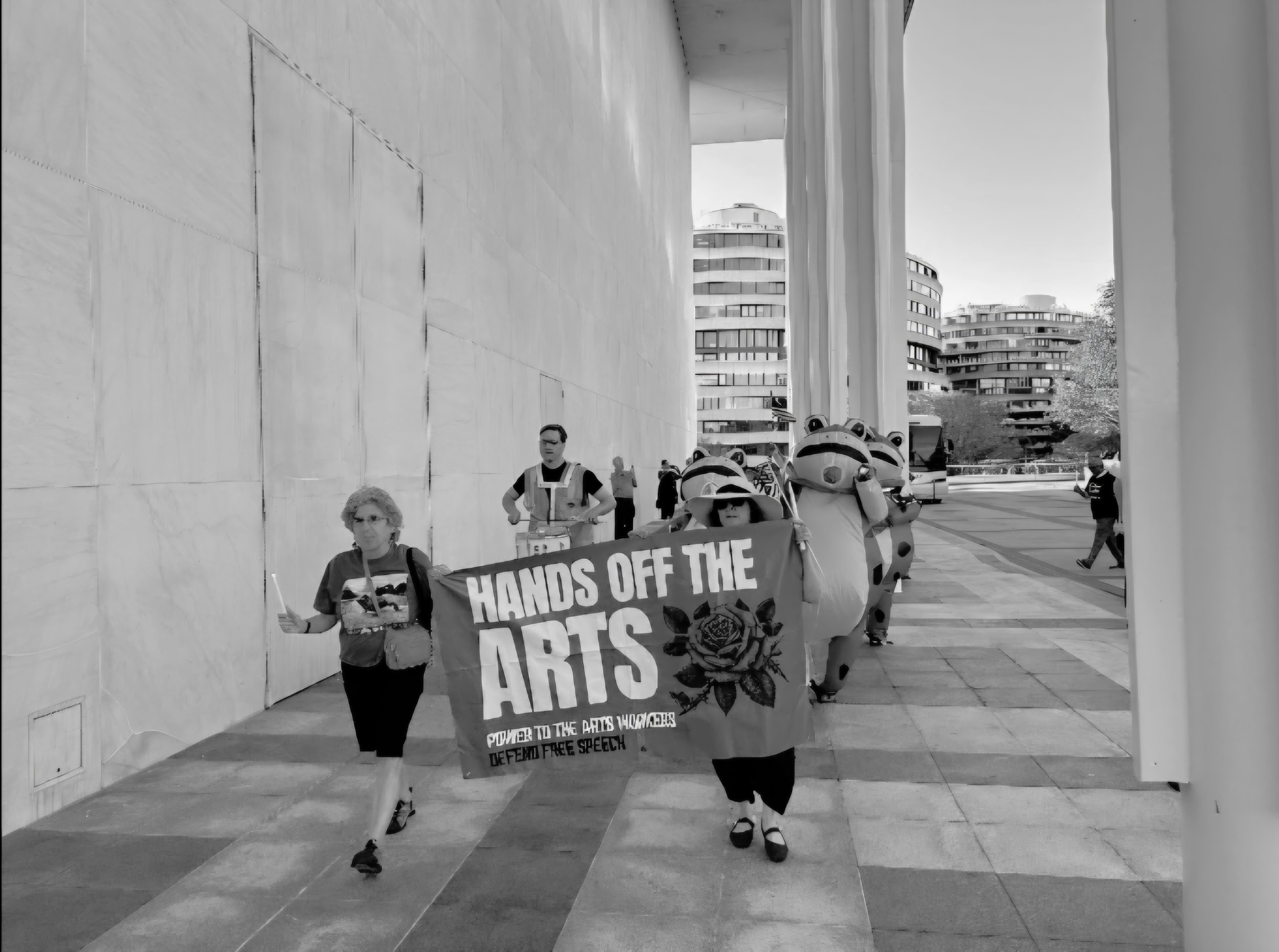
It’s a momentous step in the right direction for Hands Off the Arts, an organization that has been fighting to keep the Kennedy Center and surrounding DMV stages free from authoritarian oversight and protect the rights of artists and cultural workers. Before the news about Cooper’s decision broke this afternoon, Hands Off the Arts and local drag queen Tara Hoot had planned a protest, a vigil for President Kennedy’s 109th birthday. Some speakers even speculated that Cooper’s decision to release his opinion tonight was in poetic recognition of the president’s birthday.
As a current Hands Off the Arts organizer and former dance curator at the national arts institution, Mallory Miller shared, “Hands Off the Arts is incredibly excited and so proud of this moment. This is a long fight and it’s far from over,” Miller explained to Cultbytes at the vigil, “but this is exactly what needs to crystallize a win in the moment.”
Dan Deutsch, a local arts organizer and contributor to Hands Off the Arts, affirmed that what is happening at the national institution is bigger than the Kennedy Center itself. “We are fighting back against government overreach of the arts, and that’s starting at the Kennedy Center, which just happens to be a national symbol.”
“I’m hoping that it has a ripple effect into other local arts and culture institutions [showing] what happens when you have a collective fight against power,” Deutsch continued.
Suzanne Richard, co-founder and artistic director of Open Circle Theatre, a professional theater uplifting the work of artists with and without disabilities, agreed that this fight is about what the Kennedy Center represents to many different communities, including her own. “Now we have a whole network of artists with disabilities, which never would have happened without the Kennedy Center putting their name on it,” Richard explained.
The evening’s event featured a performance by cellist Jodi Beder, followed by members of Third Act DC, a protest group composed of people over the age of 60, reading JKF’s own words about the importance of protecting arts in the United States. JFK initiated federal policy to establish the National Endowment for the Arts, signed into law by his predecessor, Lyndon B. Johnson, which offers federal funding for the arts. Trump has significantly defunded the arts during his presidency.
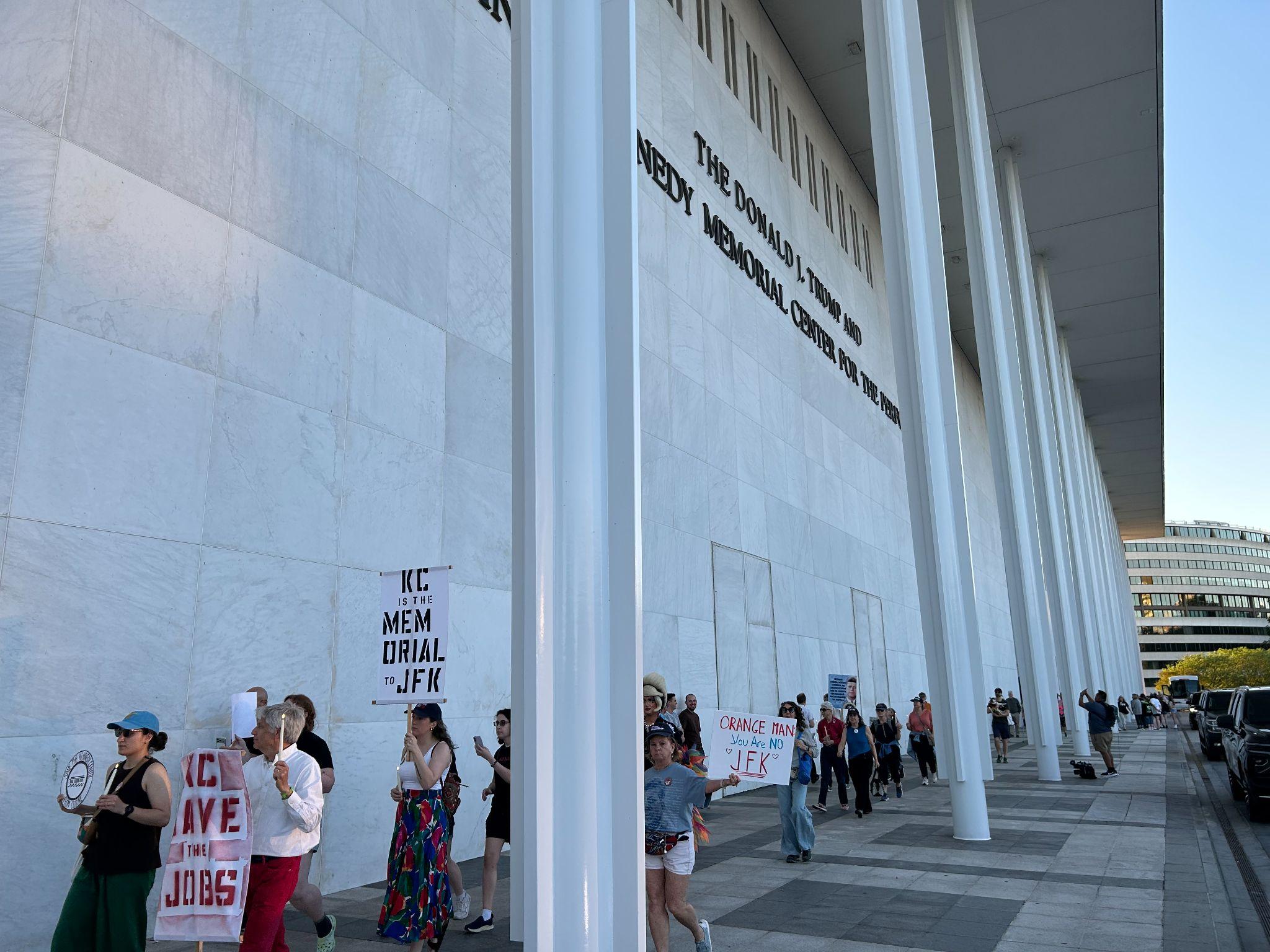
Honoring JFK’s vision to support the arts, volunteers then read selections from Cooper’s ruling: “the Kennedy Center Board’s decision to rename the Center, along with its decision to affix President Trump’s name to the building’s facade, violate Congress’s unequivocal mandate,” followed by chanting “null and void,” further uplifting Cooper’s decision, and “tear it down,” referring to Trump’s name off the Center’s portico wall.
Most impactful was hearing testimonies from former Kennedy Center workers who shared their deep belief in the institution. Cathleen O’Malley, who previously worked at the Kennedy Center and was on the organizing committee for the Kennedy Center United Arts Workers, detailed how she and colleagues formed the union amid a culture of fear, surveillance, and mass firings. Just over a year ago, she and others began the process to unionize.
“It is a union effort, union drive, but at its heart, it is a resistance movement,” O’Malley said, reflecting on what led up to today’s momentous news. She admits that she was initially hesitant to celebrate Cooper’s ruling knowing how much more work needs to be done, but she called on everyone listening to “let that [Cooper’s decision] buoy and energize our next test. We must celebrate the wins fully, wholeheartedly, and let that fuel and motivate our next action.”
Cooper’s decision added a joyful edge to the otherwise somber candlelit vigil walk around the perimeter of the Kennedy Center. As opposed to past protests held every Friday on the sidewalk, tonight’s event spread up the stairs, and protesters marched unchallenged in front of Trump’s name hung above JFK’s on the front white portico wall.
The night ended with a benediction by Beth Goss, a retired Presbyterian pastor who has ministered to different congregations across the District of Columbia, Maryland, and Virginia area and a jovial round of “Happy Birthday Mr. President” in JFK’s honor. The song arrangement—a reference to Marilyn Monroe’s infamous performance—was an unexpected and unplanned, but a welcome addition. O’Malley thundered in the loudspeaker, “W[hen] we are inspired to act, we create, we improvise. This is not the first time authoritarian forces have attempted to capture and co-opt our beloved, cultural ecosystem towards illiberal aims, and it will not be the last, but with every win, we are forging alliances.” It was an ending that highlighted what makes the Kennedy Center resistance movement strong.
You Might Also Like
50 Departments Across the Metropolitan Museum of Art Will Unionize
A First, Making Undocumented Artists Visible at Brooklyn Museum
What's Your Reaction?