

In Uneven Geographies, Clouds Are Not Only in the Sky

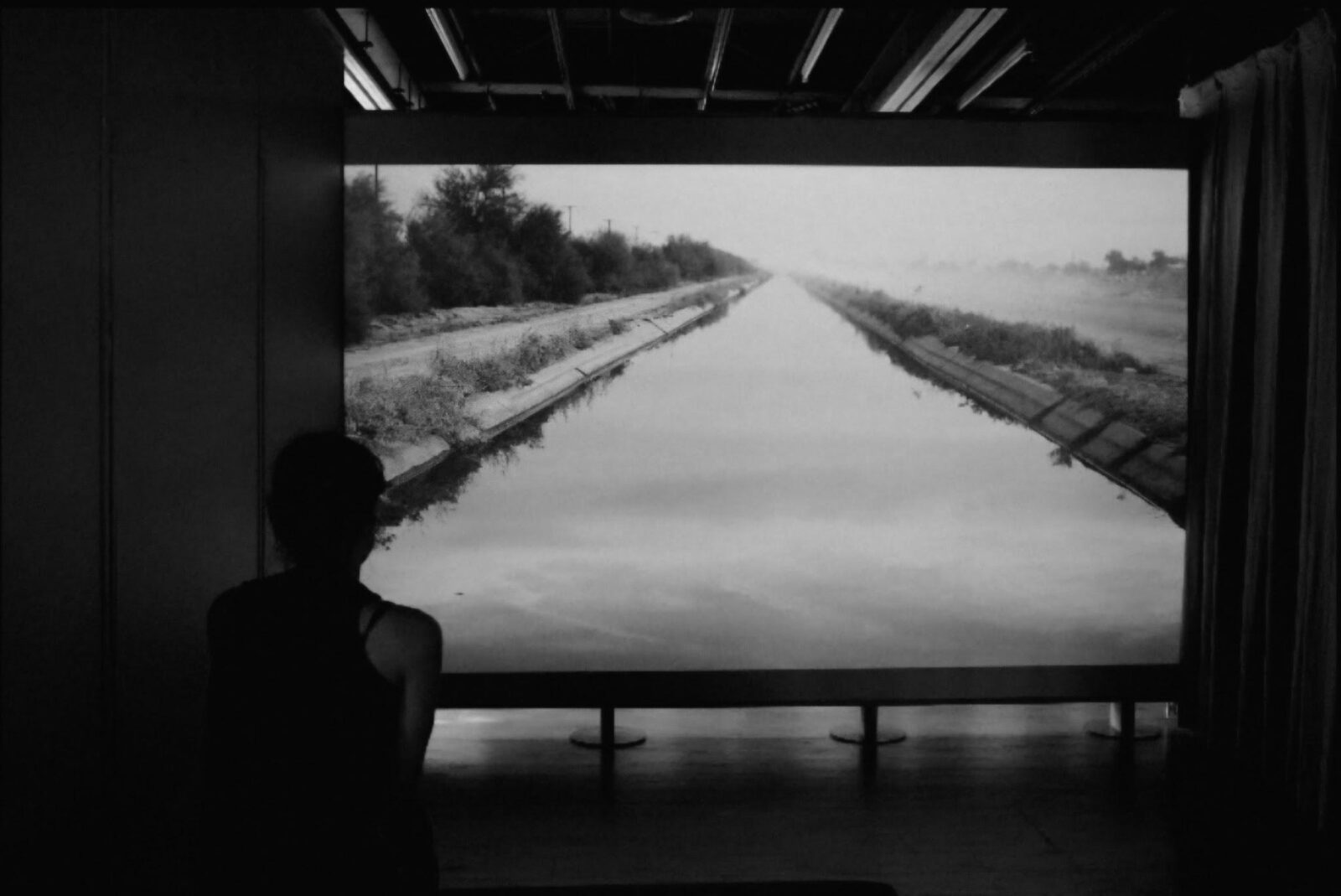

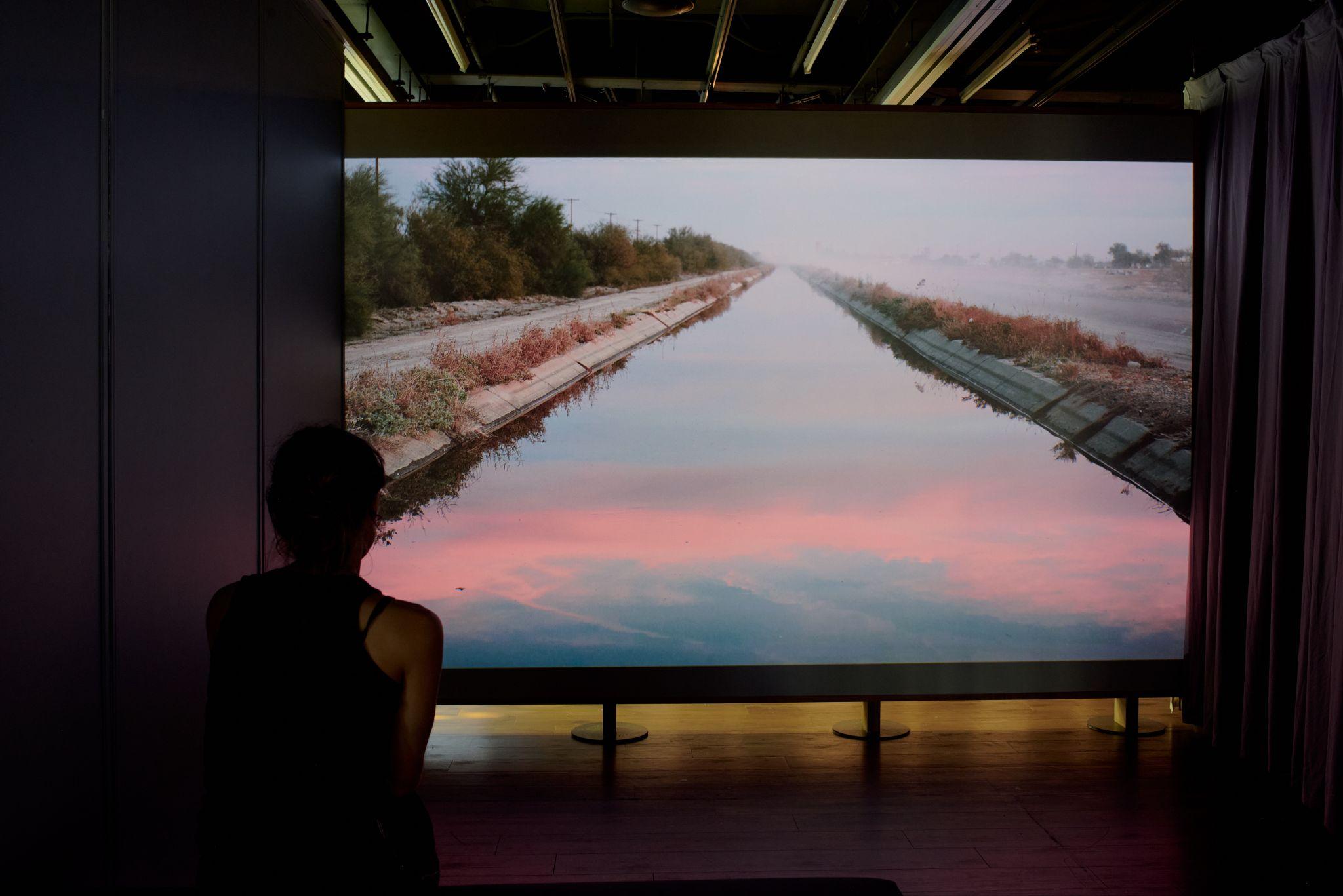
At Shiva Gallery, six artworks and community projects frame conditions for geography as social and political processes. Delivered via the exhibition’s title, Uneven Geographies, resistance and navigating are explored through environments: ecological, domestic, and historiographic. Covering a wide range of the world, Jordan, Palestine, Taiwan, India, Kashmir, and the U.S.,, these multimedia works are instrumentalized through the curatorial premise to stake a claim on the far-reaching consequences of cause and effect that lead to gender inequities, ecological destruction, and communities coming together to cope. Across these uneven terrains, human interaction with land, water, and the built environment is explored.
In and around a microchip plant in Taiwan—a country that holds 60% to 70% of the global semiconductor foundry market—the artist speaks to fishers and workers, moving around by car. One local fisherman explains that they don’t believe the official reporting on river health; instead fishermen check the water with their eyes to determine how murky it is. Sometimes the shrimp are so dizzy that they float ashore. The film is not expository; no broad claims or arguments are made; instead Su Yu Hsin’s camera is observational and participatory. But much is also missing. We see no executives, products where microchips are used, or trade routes, instead the video focuses on the hyperlocal rural environment of the plant. The second video, also screened in a temporary room in the exhibition space, tells a broader story of how the burgeoning microchip industry in Sun City, Arizona, a cooperation between Taiwanese and U.S. businesses, ushered forward by the U.S. Chips and Science Act of 2022, which attempts to gain more market share, is altering the landscape. A voiceover markets the booming and growing area while roofers lay tiles and builders construct new houses in the desert landscape—the voice conveys ready for you and your family, but the imagery does not. Hsin explores the tension of these unfinished building sites as promise versus destruction and ecological decline. She sits in a driverless car traversing the built and natural landscape. Water is central, but elusive; the way she merges indigenous thought—working with the land—in this video brings with it a more layered understanding of how this new plant and its development work against the landscape and what it has to offer. Microchip production requires immense amounts of water, a resource scarce in Arizona.
Outside of the room, around the corner, polycrystalline silicon, a substance that does not exist anywhere in nature, produced by these plants, is displayed on shelves. Hsin treats them like sculptures. This is what the multi-billion-dollar chip industry looks like: its environmental impact and the materiality of the natural resource. The showcase is both sleek and thought-provoking, in which indigenous and post-industrial technology are placed in opposition to each other. I am doing the walkthrough with Shiva Gallery’s director, Macushla Robinson, who also teaches at the college. She explains that she often starts the semester by asking students to take up their phones to check how many images they have on them: 700-7000 is the range. Hers, she admits, is in the upper range. How much water it takes to construct a chip, phone, or to run a data center is absent, yet present, the titles of all three works allude to clouds: “Particular Waters,” “Where Clouds Once Formed,” and “Sunless Circuit.” Both in the sky, but also, cleverly, the digital cloud, where your phone’s photographs might be stored.

Amongst the strongest pieces in the exhibition is Raneem Ayyad’s “Where Do We Meet the Sun?,” where she has reconstructed a room from her aunt’s house; it is transported into the gallery with its beige-toned bookshelves, seating area, television, and curtains drawn. In Jordan, women spend much time in their homes, with the curtains drawn, natural light is lacking. In Al-Zarqa, in the 1970s, to meet the demands of a growing city, apartment buildings were built close to each other to maximize living space at the expense of residents’ access to light and the outdoors. Meeting both of these conditions, privacy, and lack of access to the outdoors, women find ways to recreate natural light through lighting design. A video piece in the recreated living room shows some of the women that the artists have studied through anthropological and ethnographic modes. When I came to the realization that the exhibition’s lighting is not designed to resemble the sunlight in the original room, but that women in Jordan design lighting to resemble sunlight they lack, the piece darkened in my mind. Outside of the room, a video work details a mother speaking about cleaning the ventilation system adjacent to the airshaft in her son’s room. Visitors can cosplay this action of care and domestic labor by taking a broom and sweeping sawdust on the floor. Why are women sequestered? Why do their children live in badly ventilated homes? Ayyad’s piece speaks to the tension between conditions and choices, and their uneven distribution.
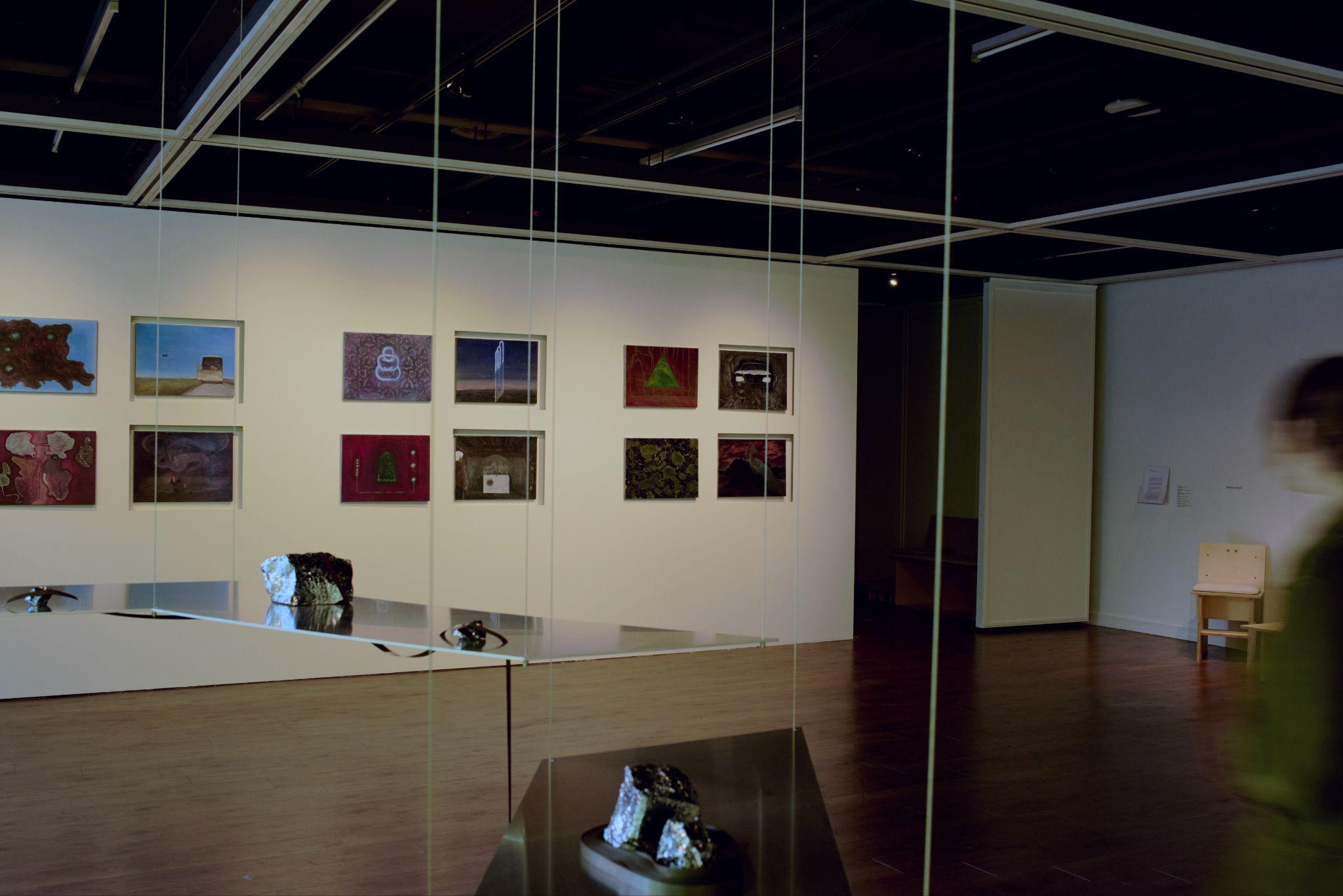
The longest-working artist within the group is Mel Chin, who has since the 1990s become known for his ambitious ecoventions, such as Revival Field (1990–1993), a green mediation project where he extracted toxic heavy metals from the soil at a waste landfill in St. Paul. Together with a creative collective, he also placed subversive artworks into the sets of the iconic 90s TV show Melrose Place, arguing for the importance of art within media which was becoming increasingly consumer-focused. The series of paintings on view in Uneven Geographies are more intimate, subtle, but still collaborative—Chin fielded unusual memories from various people and painted them in diptychs in Interpretation of Vision (pronounced “Eye Of”) (2024). He paints poet Mary Munson McGee’s recollection, or poem, as it is displayed next to the work, of her camper van going up in flames, which she calls an “end to our nomadic existence” likening herself to an unbiblical Missus Job suffering floods, plague, conflagration, and disease—a fire is none of those things in reality, but the metaphors are strong—while enduring Trump. Within the exhibition, I am struck by how chance and circumstances can come to represent something larger in life; this is part of the human condition, drawing seemingly logical deductions, sometimes when it is not there. This piece of personal resistance, experience, and interpretation counterbalances some of the public and communal actions in the exhibition; like the maps created by the social justice initiative Save Ennore Creek Campaign (SECC), comprised of local fishermen in North Chennai, India, who have since 2014 advocated for preserving the wetlands by countermapping, protesting, and issuing a cookbook, together with the Vettiver Collective, with ephemera on view. Here the enemy is tangible, it is the planning authorities who continue to sidestep legislation to protect the wetlands. Marking another one of the exhibition’s illustrations of how government and local authorities deprioritize the environment that people live and farm in.
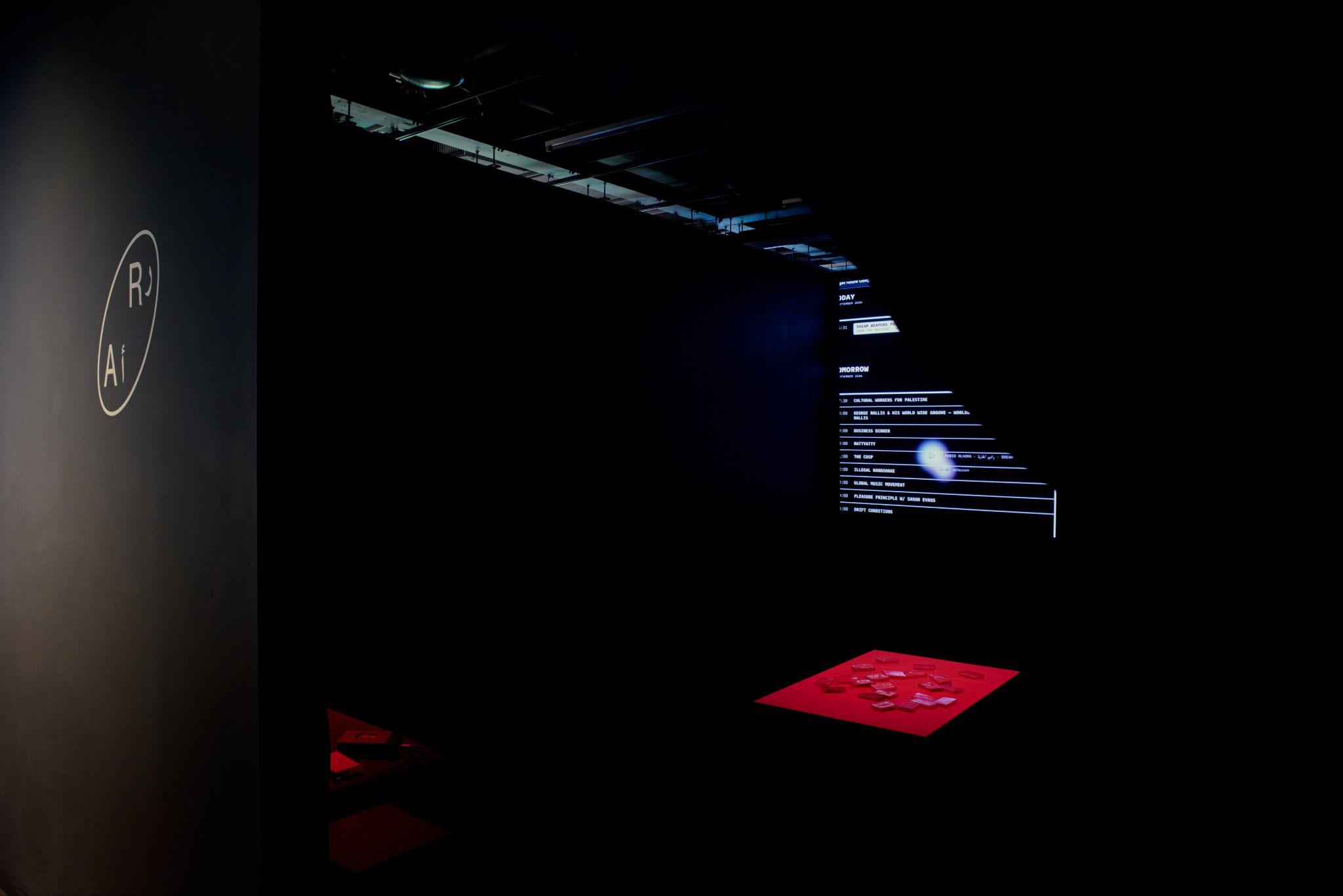
For those who know Shiva Gallery, it is usually an open space, however, the show’s exhibition designer Amir Halabi made use of its kitchen to show SEEC’s cookbook, created two temporary rooms, Ayyad’s aunt’s living room and Hsin’s screening room, that recenter the body in space. Chin’s works are recessed into the wall. Subtle design choices that speak to the embedded nature of the topics at hand. Tucked into the back is a room dedicated to Radio AlHara, the independent online community sometime activist radio station founded during the early COVID-19 lockdowns, operating from Bethlehem and Ramallah in Palestine. It constitutes a haven of sorts—a space to linger, listen to a live broadcast, or browse parts of the station’s archive which curators Gauri Bahuguna and Candice Strongwater transferred onto cassette tapes. This will be the first time many of the students visiting the exhibition and younger visitors handle the now-dated technology; to engage with this tactile artifact is an invitation to slow down. In the middle of the exhibition space, two 35mm projectors buzz as they display a commentary on settler colonialism in Kashmir, “My Memory Is Again in the Way of Your History,” an excerpt from Kashmiri-American poet Agha Shahid’s “Farewell.” Much to learn and ponder. Rather than a spatial revelation, the most important take-home from Uneven Geographies is perhaps that forces of technology, stewardship, and change are never linear.
Uneven Geographies is open through October 30, 2026, at Shiva Gallery, John Jay College of Art, 860 11th Avenue, New York, and is accompanied by a catalog and an education kit to support educators.
You Might Also Like
Interview with Tulu Bayar: “A Space With No Border”
Idelle Weber and Aurora Robson’s Environmental Works at Hollis Taggart
What's Your Reaction?
