How to Show the Disappeared


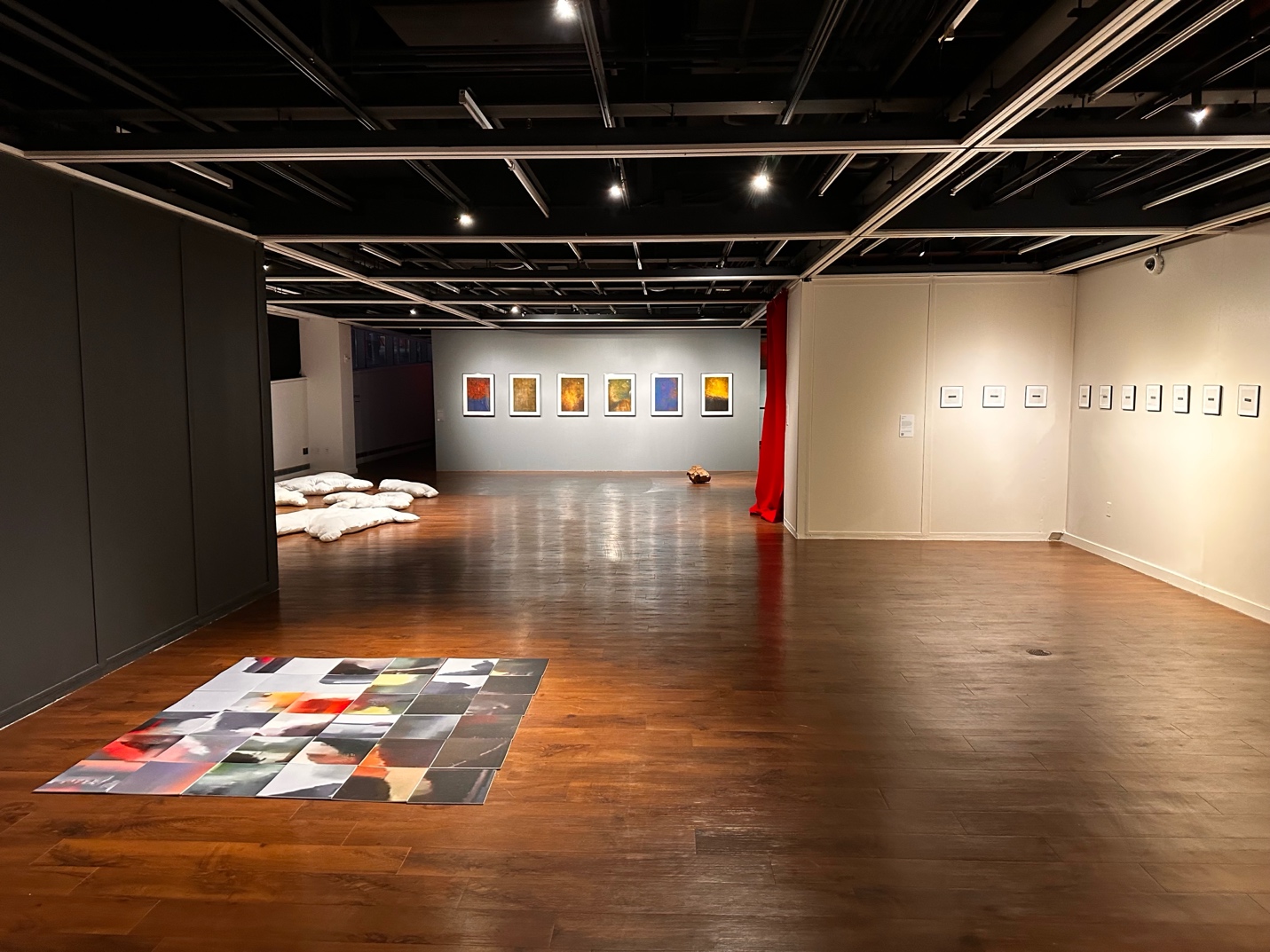
How to display nothingness? That’s the question posed by On Absence, currently at the Anya and Andrew Shiva Gallery in the John Jay College of Criminal Justice. It’s apropos that this exhibition be mounted at this academic institution now, at a time when the United States government is, by unjust and sometimes illegal means, making several of its inhabitants disappear into concentration camps and foreign gulags. Precisely because of this show’s location and the distress of the moment, I would not have been surprised to find a group of artworks tapping into the deep outrage, anger, and sadness that I feel just reading about the varied depravities carried out by this administration. But this show strikes another kind of emotional tone. It is considered, contemplative, and in some cases, conceptual, more than deeply felt. And where it shows heart, it surprises too.
The exhibition is curated by Oorja Garg, a curator and researcher from New Delhi, and Achia Anzi, an artist and researcher who is also based there. They selected eleven contemporary South Asian artists and one collective who, as indicated in the press release, address themes “specific to the South Asian experience, including the politics of caste, the legacies of colonialism, the intergenerational impact of partition, …” The artists also explore themes that connect to other histories closer to United States mainstream culture.
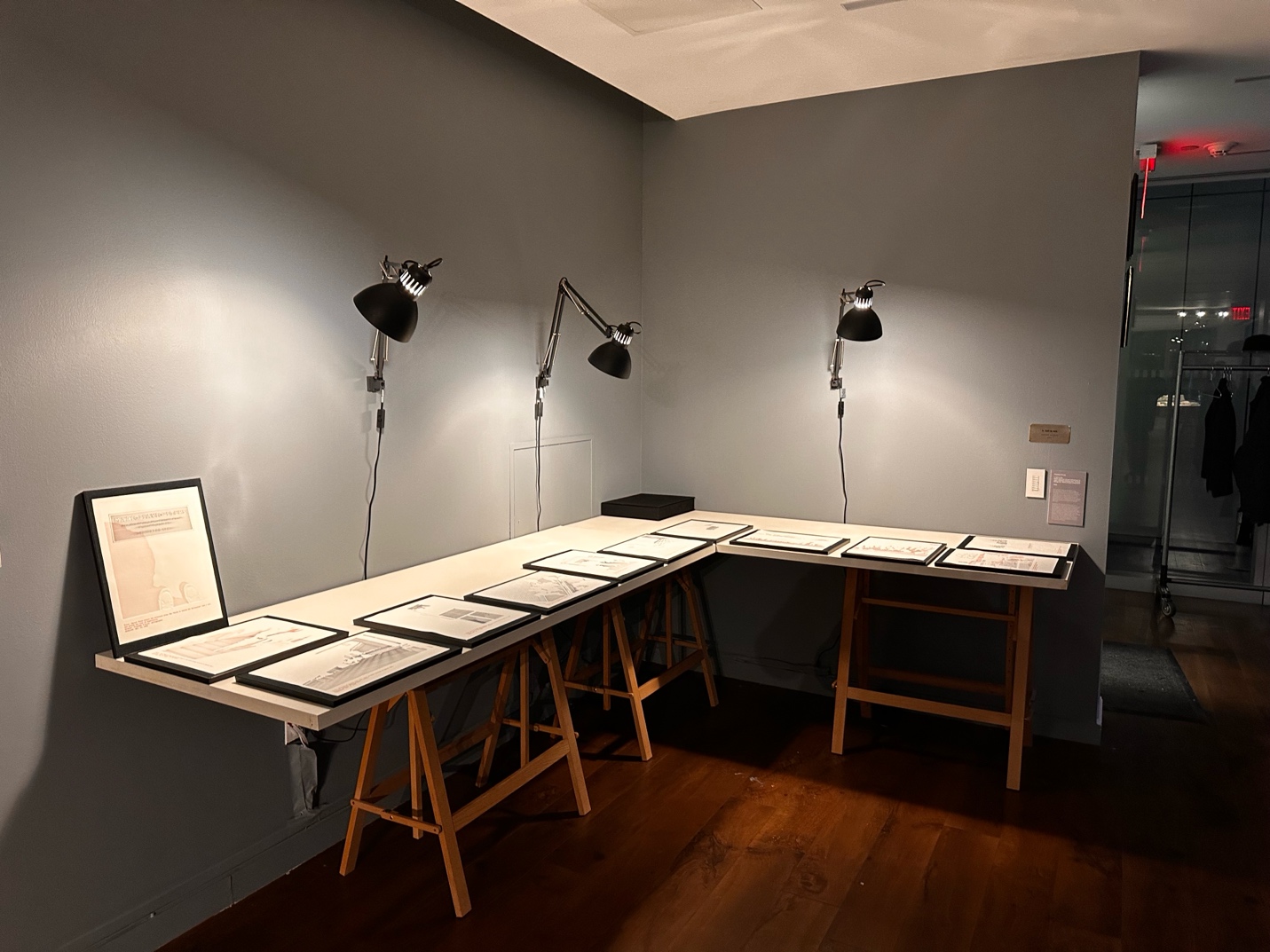
The show opens with Priyanka D’Souza’s Call in Sick (2025), which uses found photographs of protests on the UC Berkeley campus in the 1960s. In this work, installed on two adjoining tables lit by lamps, D’Souza traces the participants’ contours and uses a machine to create phantom embossments as a base for sparsely illustrated recreations of these photos on archival paper. In these illustrations, blankets, human bodies, clothing, and handwritten signs almost disappear into negative space, close to being indistinguishable from the backgrounds. The curators indicate via the caption that the work brings into view those often left out of heroic protest stories, that is, the ill and disabled who cannot walk or stand in solidarity with the cause. I agree, and the subtle negation of people’s presence in the images also makes me think about how present and visible I have been at public demonstrations and what difference my presence might have made.
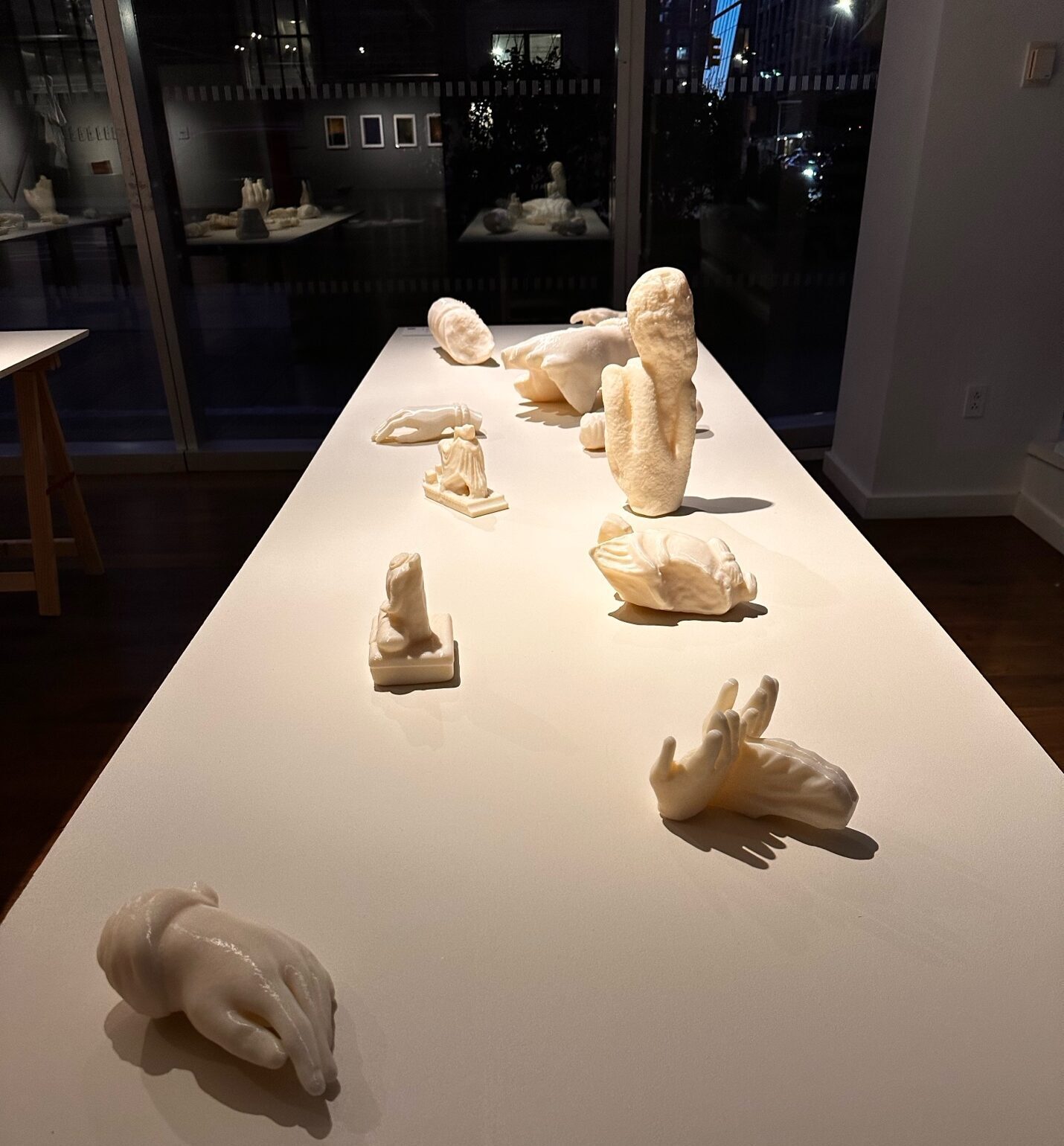
The poignancy of absence can also be felt keenly through limiting presence to just one part of a figure, as in the case of Shaurya Kumar’s A Case of Broken Hands (2021). The installation work contains forty-one sculptures that have been 3D printed and replicate the severed appendages of unknown sculptures collected by the Archeological Survey of India. The work eloquently resurfaces the hasty violence and destructive greed that underlie the theft of cultural artifacts that likely previously existed in temples and other sacred spaces. Ironically, the work also points to the hands that brought about this absence, the hands of those who are often invisible and unlikely ever to be brought to account.
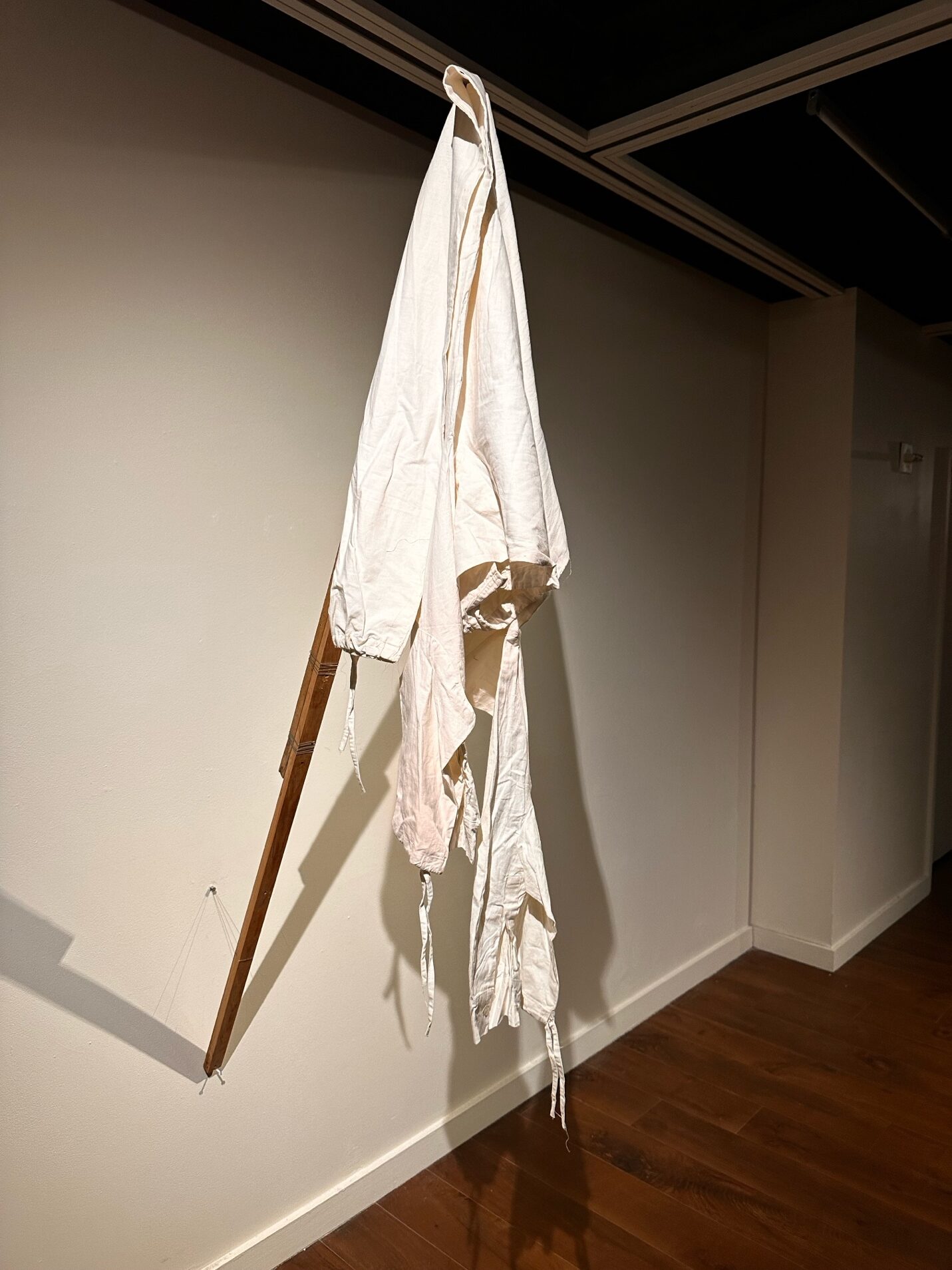
The lack of a public acknowledgment of atrocities, particularly those carried out by political insurgencies impel people to develop their own rituals and ceremonies around the disappearance of loved ones, for example, Shilpa Gupta’s Untitled (Wives of the Disappeared) (2006). It is minimal in composition, consisting of only two wooden rods wrapped together with wire to form an ad hoc flagpole with white garments draped over the end. The fragility of the body is made apparent precisely in its omission.
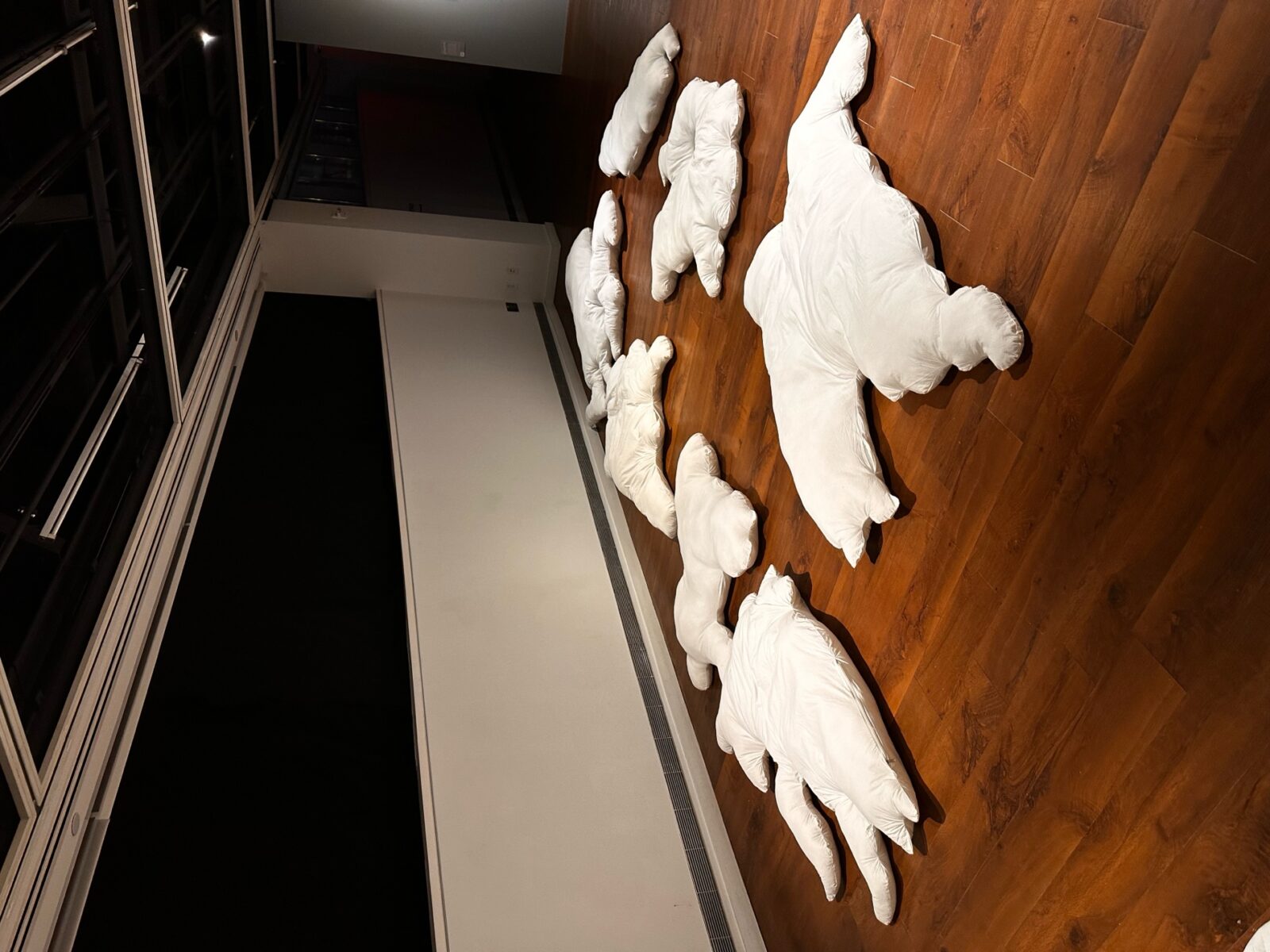
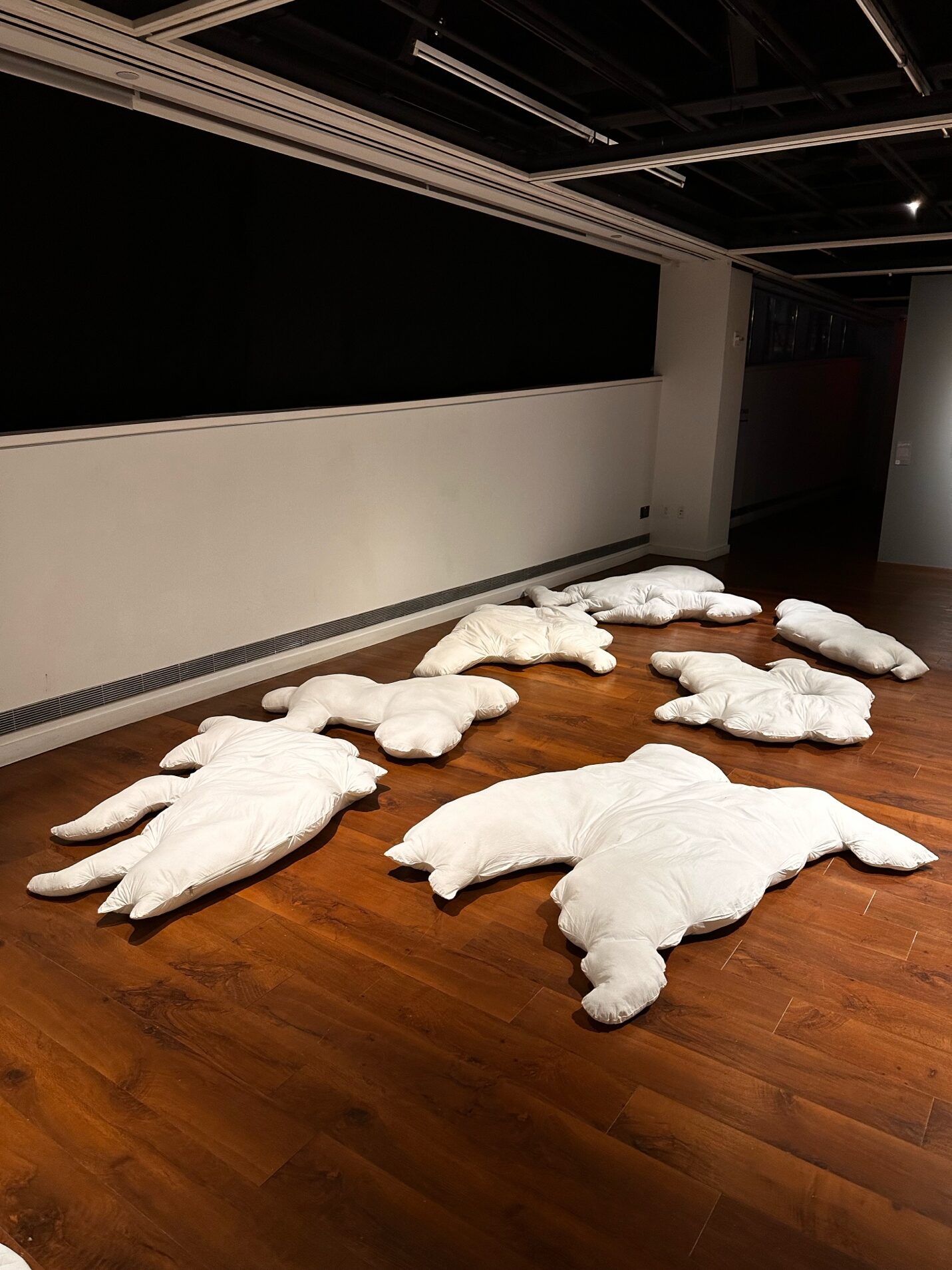
Lastly, Swati Kumari’s Beside Your Warmth (2025) makes the suggestion that substitution is also always a way of pointing to the lack of human presence and a tactic for making accommodations for this lack. Kumari has stitched together pillowy white cushions in the shapes of the traced outlines of the resting bodies of her mother and her grandmother and lain them on the ground.
This is the nature of lived human life: we make approximations and substitutions that are often merely shadows of what had been substance. How do you demonstrate nothingness? You show what we put in the place of the missing to avoid looking into emptiness.
On Absence continues at the Anya and Andrew Shiva Gallery in the John Jay College of Criminal Justice through May 15, 2026 (860 Eleventh Avenue, Lincoln Square, Manhattan) and features Payal Arya, Yogesh Barve, Sonam Chaturvedi, Priyanka D’Souza, Priyesh Gothwal, Priyank Gothwal, Shilpa Gupta, Rahul Juneja, Shaurya Kumar, Swati Kumari, Raqs Media Collective, and Mohit Shelare.
You Might Also Like
Revisiting Artist Pritika Chowdhry’s Oeuvre for the 75th Anniversary of India’s Partition
What's Your Reaction?