

Kristin Stewart’s Directorial Feature Debut is Unsorted, Wild, and Searing

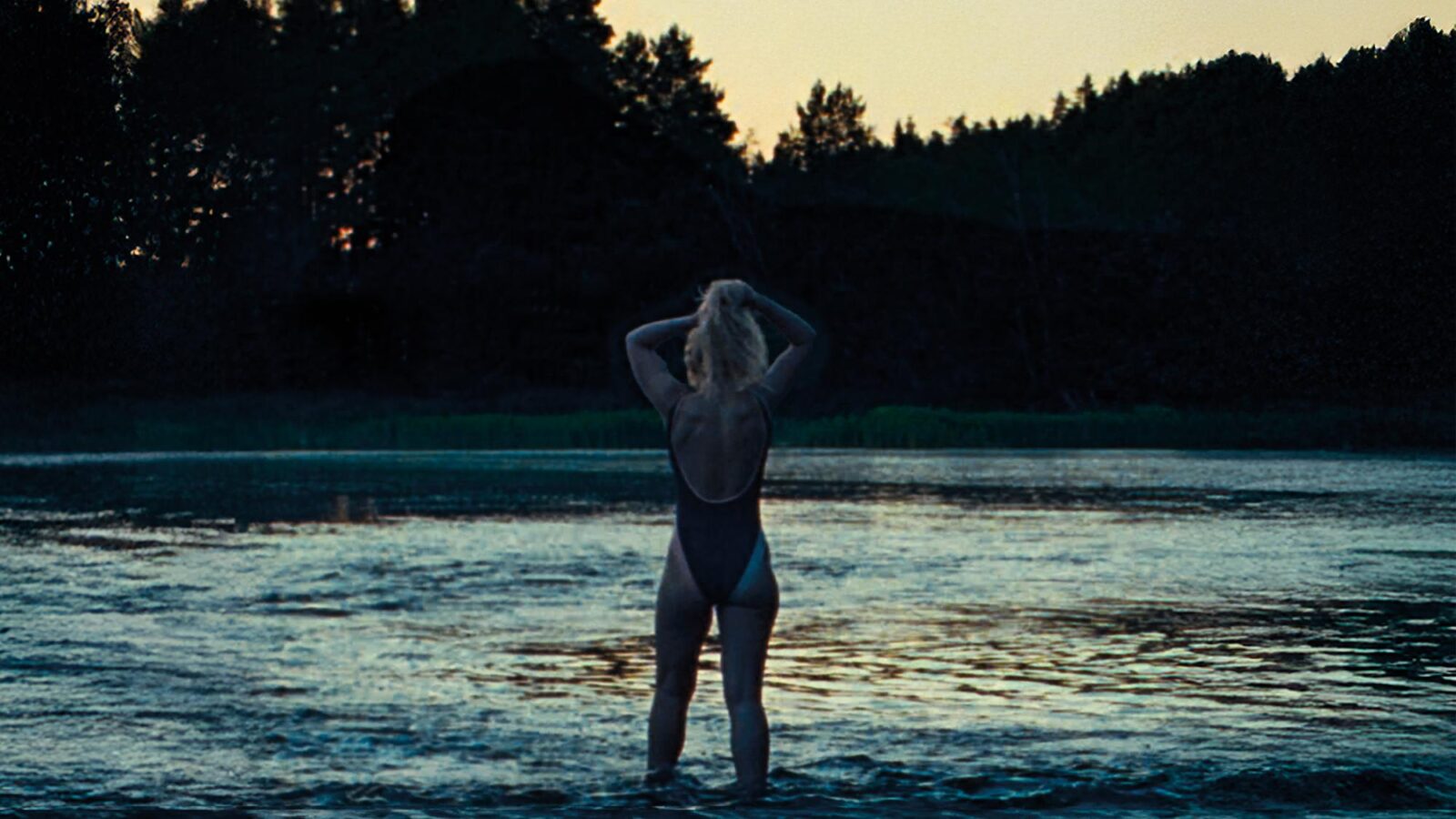

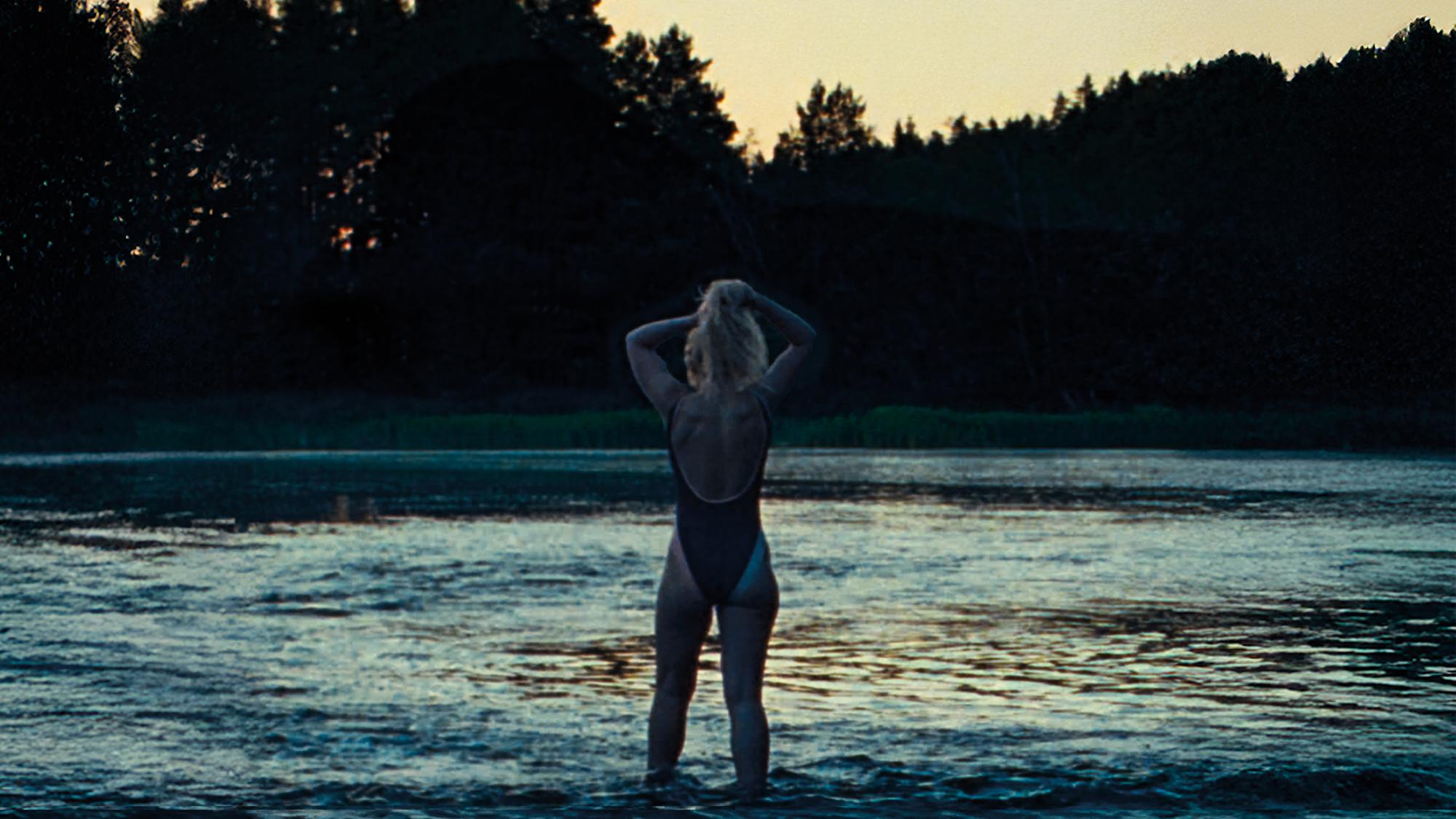
Perched on an 8.5 foot bronze statue of Buddy Holly is a fit blonde broadcasting her fury at the wider world. Her boyfriend is at the foot of the statue, strumming a guitar, but he’s not the problem. The problem is out there, beyond the scrims of a budding twilight, a town, a set of people and habits, a series of repetitions of abuse. But for now, the fit blonde is on top. She’s drunk and high, an adult acting out on behalf of a younger self who never could. Emotions, a voice, a sense of self, these were punishable offenses in her household. And so she acts out when safe to, up there on top of the world. It’s when she masticates a booze-infused salivary bolus and parts her lips for thick drool fall on her boyfriend’s head that we know testing boundaries and self-destruction are one and the same for her.
That scene is one of many dialectical visuals in Kristin Stewart’s directorial feature debut, The Chronology of Water, which is an adaptation of Lidia Yuknavitch’s 2011 memoir of the same title. Stewart directed three award-winning short films before committing eight years of development to this memoir. It’s an inventive and bold adaptation that paces the original novel with tenacity and insight into the felt world of young girls whose voices are brutally quelled, but emerge whole on their own time. In 1980, when that Buddy Holly statue was unveiled to the public in Lubbock Texas, Yuknavitch was 17 and attending college on a swimming scholarship, as Imogen Poots portrays on film. Playing Yuknavitch convincingly from 17 to 37 is a magnificent role for Poots whose range and nuance are on full display in this film, embodying the fragility of adolescents within abusive homes who grow up grieving the loss of selfhood that humiliation and abuse can temporarily replace.

As a film, The Chronology of Water showcases two auteurs (Yuknavitch, Stewart) who each dispense with narrative convention to create forms with their material rather than entrap the story within expectations. The resistance to convention on both sides of this book is what makes this film indelible despite being grounded in harrowing experiences. Neither the book nor the film are chronological and so the film paces the pliability of self and memory through cinematic strategies borrowed directly from experimental cinema. The cutting (by Olivia Neergaard-Holm) assembles flashbacks, flashforwards, and non-sequential vignettes to expand the contours of an inner world that relied on dissociation to survive. The only conventional element I found in this film could also be dispensed with: the sound of pencil scratching on paper could have been removed. For such a strong film, that pencil was too literal. In the book, Yuknavitch writes, “I wanted to stay like that, outside of any word,” a sturdy indication that writing is the safest portal through which her self reconstitutes, anew.
The sense of time in the film brilliantly delivers the kind of persistence the novel unravels through, “the way water cut the Grand Canyon,” as Yuknavitch has written. We all live with many kinds of time simultaneously: our circadian time, the clock’s time, geological time, but this film shows the kind of time trauma impresses psychologically. And so it’s one of the few films I’ve seen that show the kind of time Post Traumatic Stress Growth can feel like: unsorted, wild, searing, glorious, lonely, beautiful.
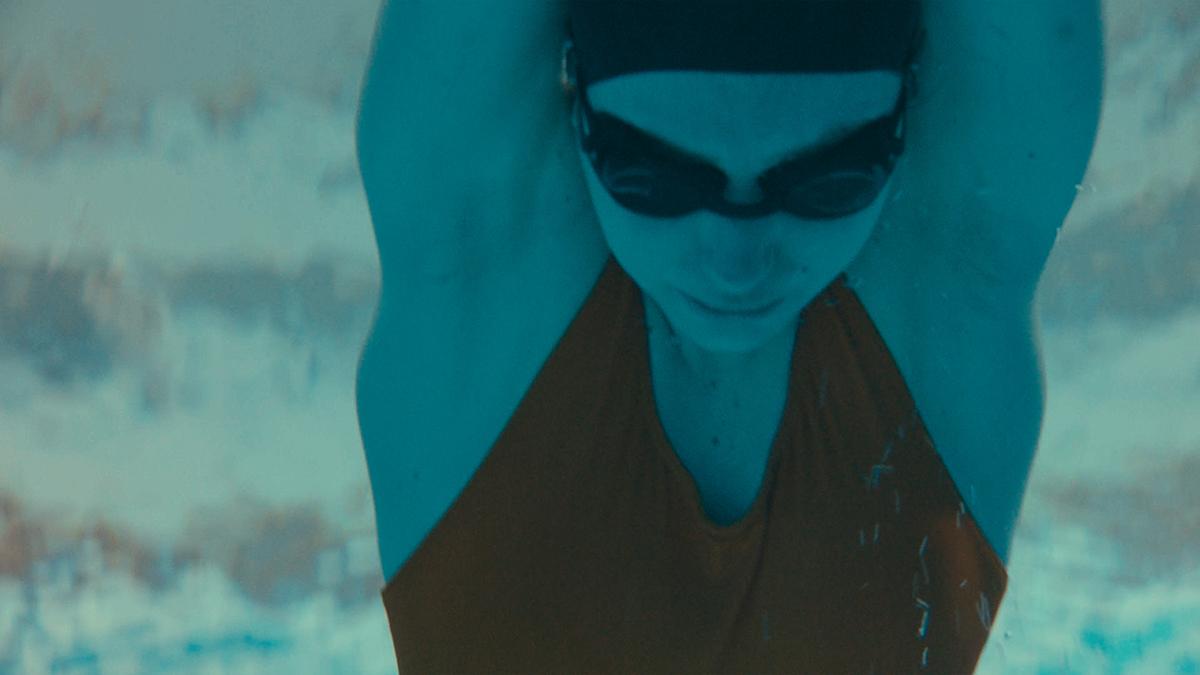
When Yuknavitch’s character wins first in the nation at a swim competition, three frames are sequenced: the paddle about to wack the swimmer’s ass/the top half of a gold trophy/blue eyes opening. It’s quick, but it efficiently communicates how all the spaces for refuge eventually devolve into spaces for shame created by the paternalistic sadism of abusive men. If not home, or parties, then at the pool. Eleven minutes into the film, she posits: “How many miles does it take to swim into a self?”
It’s not a film that glamourises trauma, violence happens offscreen even though we know exactly what is going on. The resplendent sex scene references the less figurative language in Barbara Hammer’s Multiple Orgasms, 1976. Between an ending often looming and delayed, and a beginning that starts in visual flashes, The Chronology of Water is a riveting experience to watch in a theater because Paris Hurley’s score and audio design is so engaging. The sound amplifies the visuals sensorially without mirroring and blends synched and unsynced sound bridges to enliven the film’s themes.
What’s so smart about this film is that Stewart, who also wrote the screenplay, uses cinematic expressiveness to convey the original text without negating the printed form. For those who will read the book after seeing the film there are still many dimensions to find that are best preserved within the intimacy of text. The Chronology of Water isn’t about a hero’s journey, or a triumphant victory over vice and villains. It’s just about living. It’s about surviving the big things so you can live small with moments of pure buoyancy to remind a once-lost body that home is where the self can exist on the ambition of one’s own terms.
You Might Also Like
Preserving B-Cinema: Disc-Junkie Illuminates the Alleys and Backlots of Hong Kong and L.A.
Two Collectives are Using Instagram to Diversify the World of Film