
Nicolas Party: Dead Fish

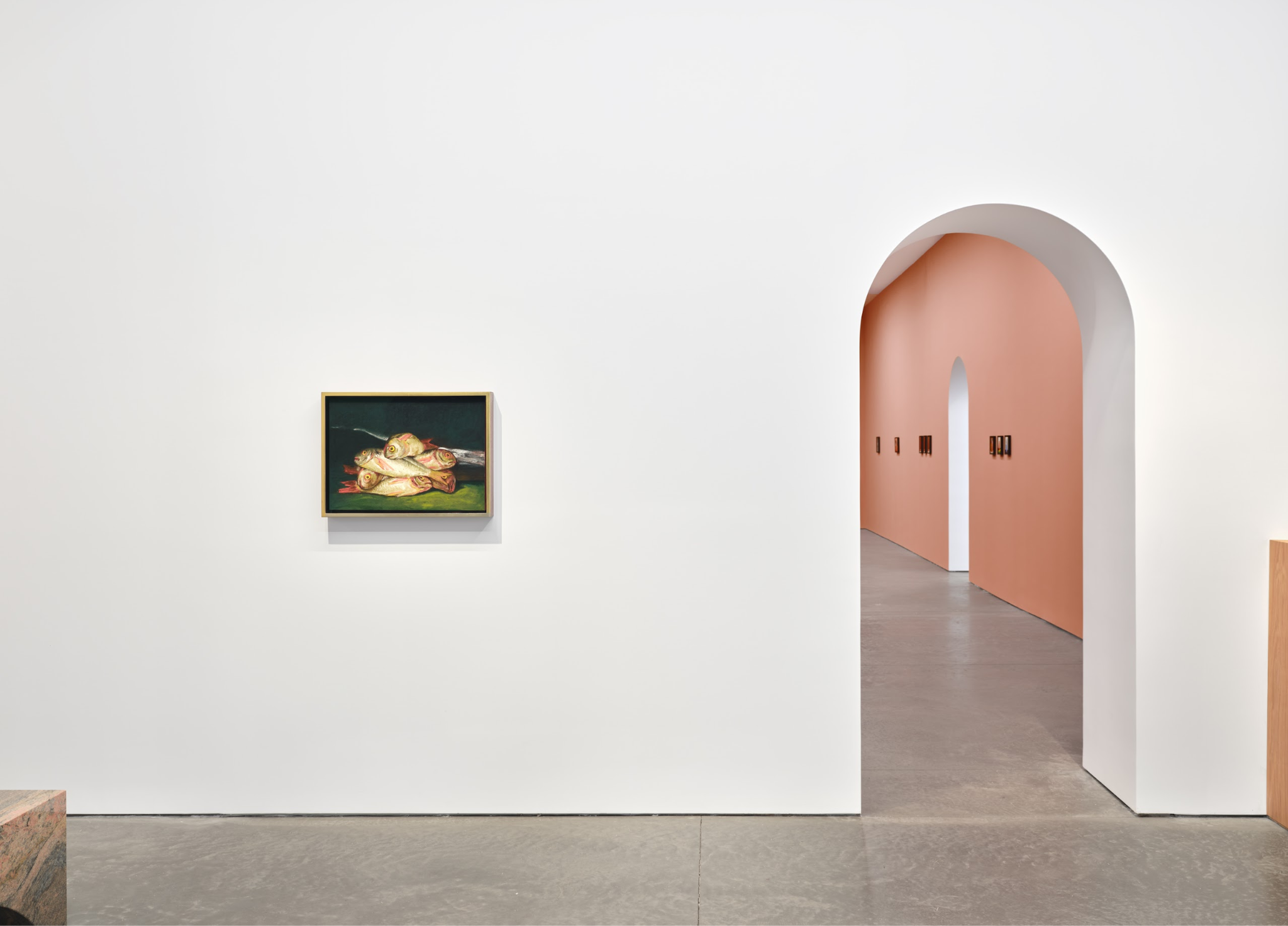

In his latest solo exhibition, Dead Fish at Karma Gallery, Swiss artist Nicolas Party presents oil-on-copper reworkings of artworks he produced over the last thirteen years. The show’s name comes from three works engaged in copying–a painting after the Spanish master Francisco de Goya, a miniature still life, and a mural derived from the latter. Through copying, Party revives motifs associated with death and decay, materializing a tension between the depicted subject matter and the act of renewing the composition.
As visitors enter through the gallery’s foyer, they first encounter Still Life with Golden Bream, after Francisco de Goya (2025), installed alongside the exhibition text it acts like a visual prologue echoing Goya’s 1808–12 still life depicting a pile of dead fish on a grassy knoll by the sea. Created during Spain’s Peninsular War, the painting functioned as Goya’s study for the compositions of dead bodies in his Disasters of War folio (1810–20). Reflecting Goya’s use of the still life as a preparatory device, viewers next observe Party’s own smaller oil-on-copper still life Dead Fish (2025), which occupies its own wall beyond the entrance. Although the artwork maintains a similar arrangement of lifeless fish, Dead Fish strips away the background, suspending the fish amidst a field of white and pink. In addition to Goya, Party identifies Pierre-Auguste Renoir’s fish still lives, particularly Poissons (1915), as an influence. Like Renoir’s sketch-like composition, Party’s painting relies on loose, impressionistic brushstrokes to establish the fish’s forms, while articulating details through bright, primary colors. This stripped-down composition shifts attention from subject to process to emphasize the mechanics of copying.
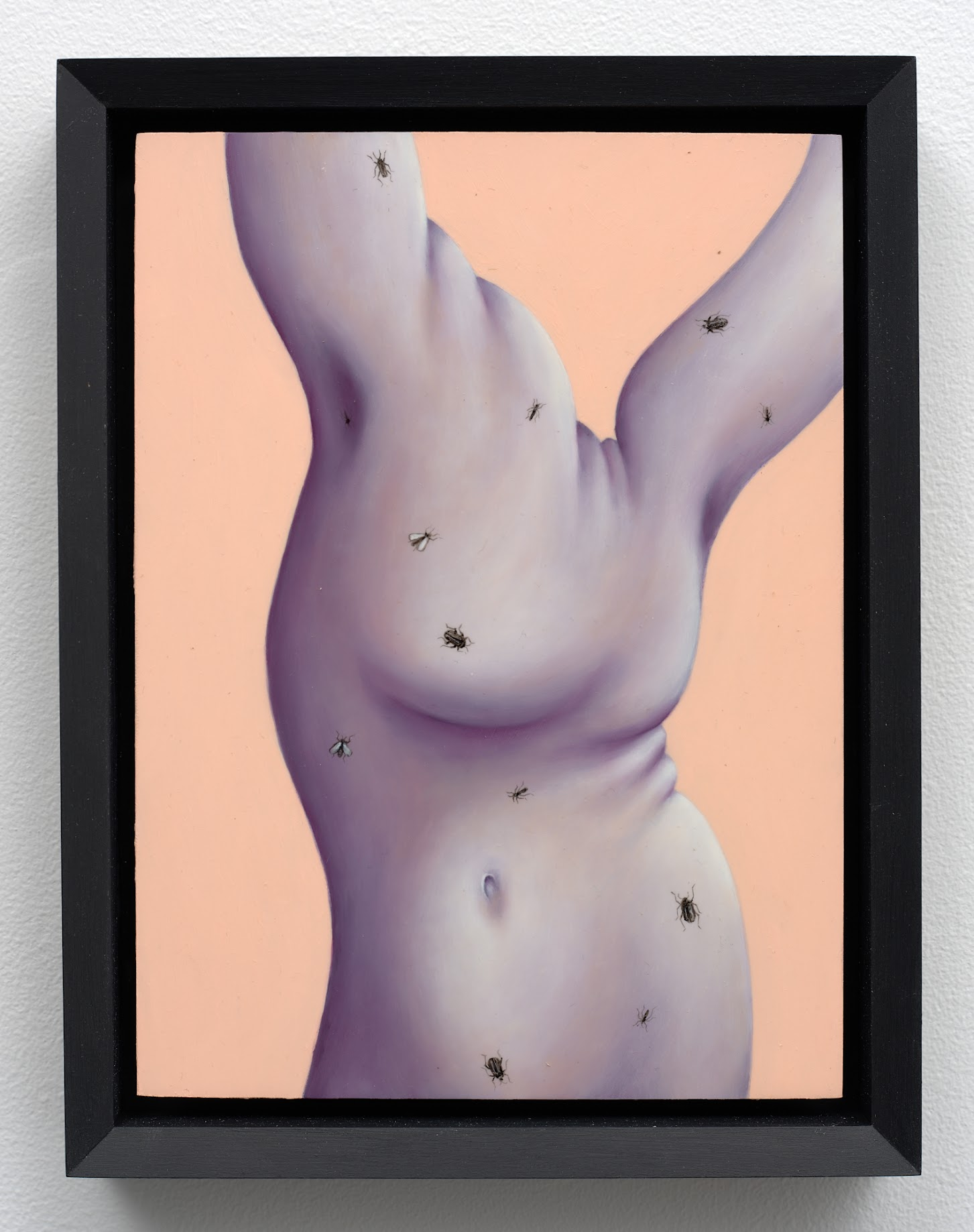
Akin to the strategic placement of Still Life with Golden Bream, after Francisco de Goya at the exhibition’s start, Party redesigns the gallery space in a dusty pink hue evocative of Rococo interiors–a color seemingly from the undertones in Dead Fish’s background. Through carefully curating the space and sequence of images, Party primes the audience for the exhibition’s concerns with influence and copying, which unfold in the subsequent oil-on-copper reworkings. Overall, these copies allude to Marcel Duchamp’s Boîte-en-valise (1935–41), a suitcase containing miniature reproductions of Duchamp’s major works that acted as his self-curated retrospective. Though the selection in Dead Fish initially feels vast and dizzying, the oil-on-copper works ultimately converge on recurring themes of mortality, humanity, and nature, and are grouped by Party’s different phases and conceptual preoccupations. Together, they evoke the logic of a wunderkammer, compressing decades of work into a dense field of repetition and variation.
Within this wunderkammer, Party’s sustained meditation on the body and the natural world crystallizes. For example, Portrait with Snakes (2019) and Portrait with Mushrooms (2019) both debuted in Party’s 2022 exhibition Sottobosco. Each portrait depicts a human figure in proximity to organisms from the forest floor, highlighting the symbiotic relationship between humanity and nature and their connection within the larger life cycle. Likewise, the artist’s 2025 copies of the Creases series (2019-2020) present the body as folds of violet-toned flesh, constrained within the contours of a human form and covered in detritivores. While visually reminiscent of the contorted bodies of Francis Bacon, Creases highlights mortality constrained between the animated silhouette and texture of rotting flesh. Across these small-scale works, the human body emerges as materially continuous with nature. By copying both his own work and art history, Party reenacts cycles of decay and regeneration, positioning repetition as a critical strategy of revitalizing subjects that appear inert.
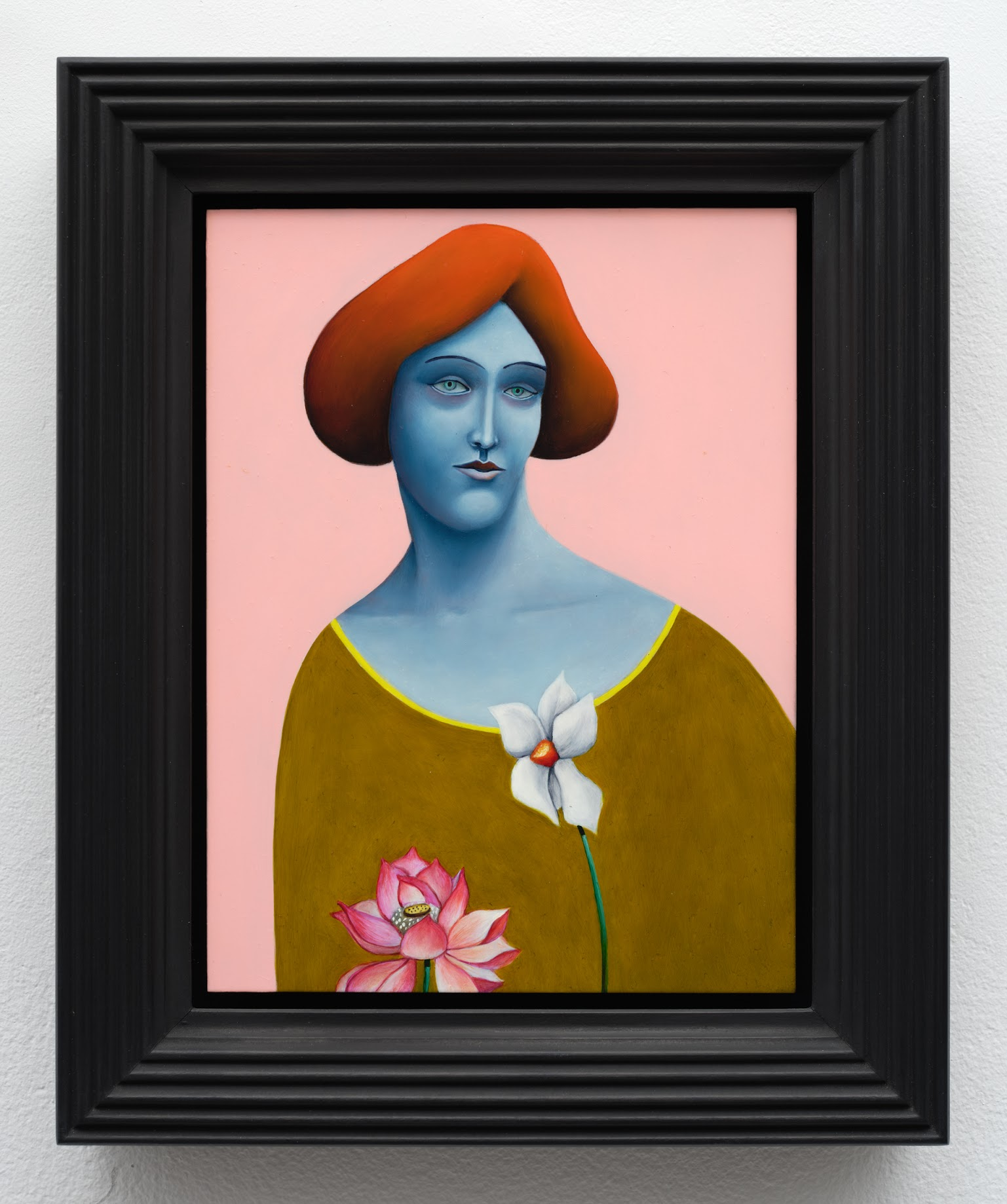
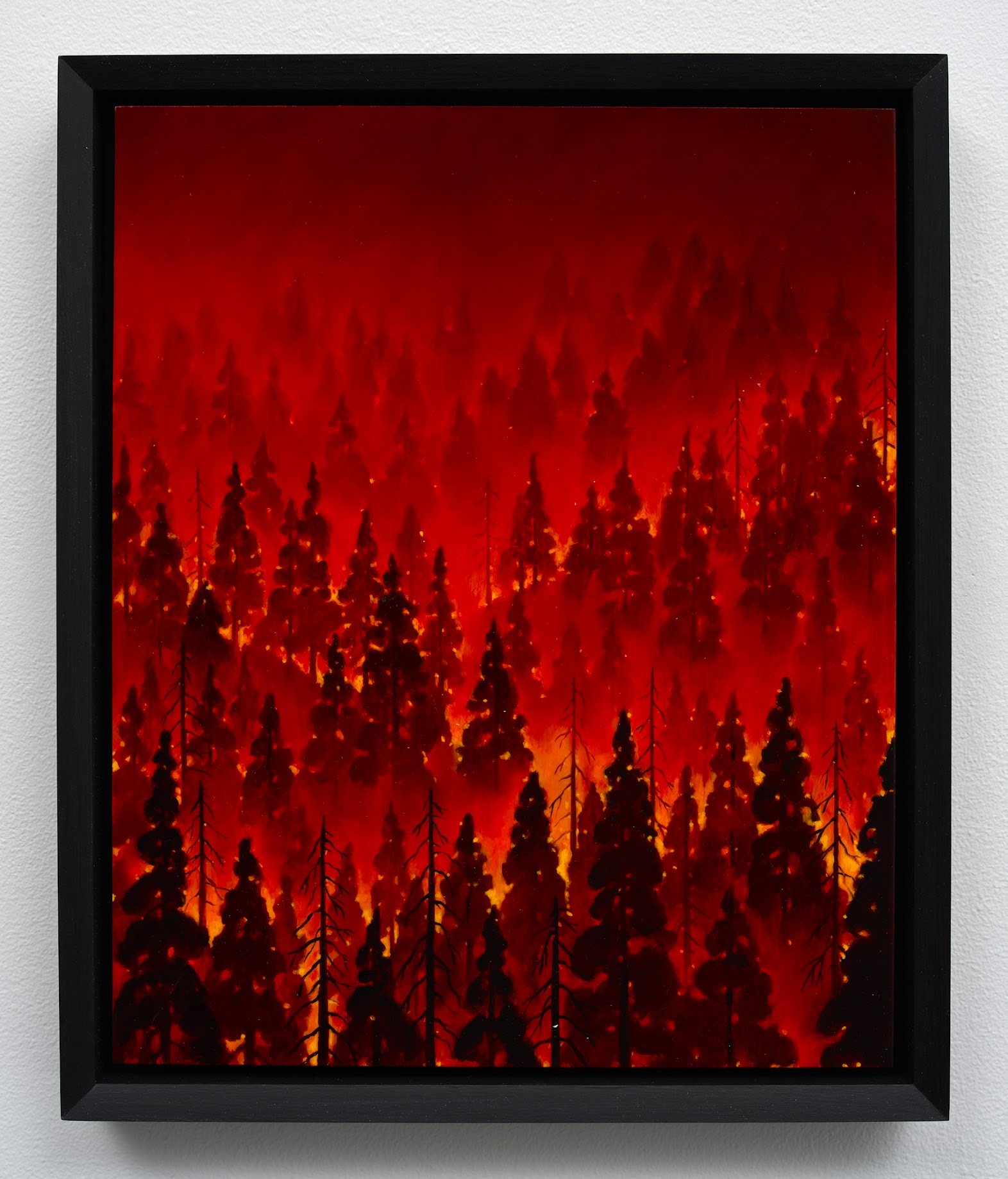
This conceptual repetition is reinforced through Party’s meticulous reworkings, where he translates compositions that once spanned several feet into oil-on-copper works only a few inches in scale. Portrait with Flowers (2021) follows the artist’s 2018 composition of the same name. Depicting a blue-painted woman accompanied by two flowers, the copper version heightens the chromatic contrast around the figure’s face and intensifies the saturation of blues and reds. In this iteration, the enhanced colors and textures amplify the perceptual friction between the woman and the flowers she holds, rendering her body strangely artificial in contrast to the more naturalistically depicted flora. A comparable strategy is evident in Red Forest (2025), a reworking of Red Forest (2022). In this image of a forest engulfed in crimson hues, Party intensifies the vibrancy of the palette, transforming the trees from purplish tones into stark black silhouettes and heightening the painting’s sense of estrangement and instability.
In the final room of the exhibition, the audience confronts Dead Fish once more, now expanded into a monumental 14-by-17-foot pastel mural. Installed within a freshly recontextualized space–the gallery walls return to white as a visual reset–the mural’s scale fundamentally alters the viewer’s encounter with the image. What previously appeared as a small, studied copy is transformed into an immersive surface, where the impressionistic brushstrokes of the miniature oil-on-copper painting are reanimated as expansive pastel shades. In this mural, Party compels the viewer to find novelty within repetition.
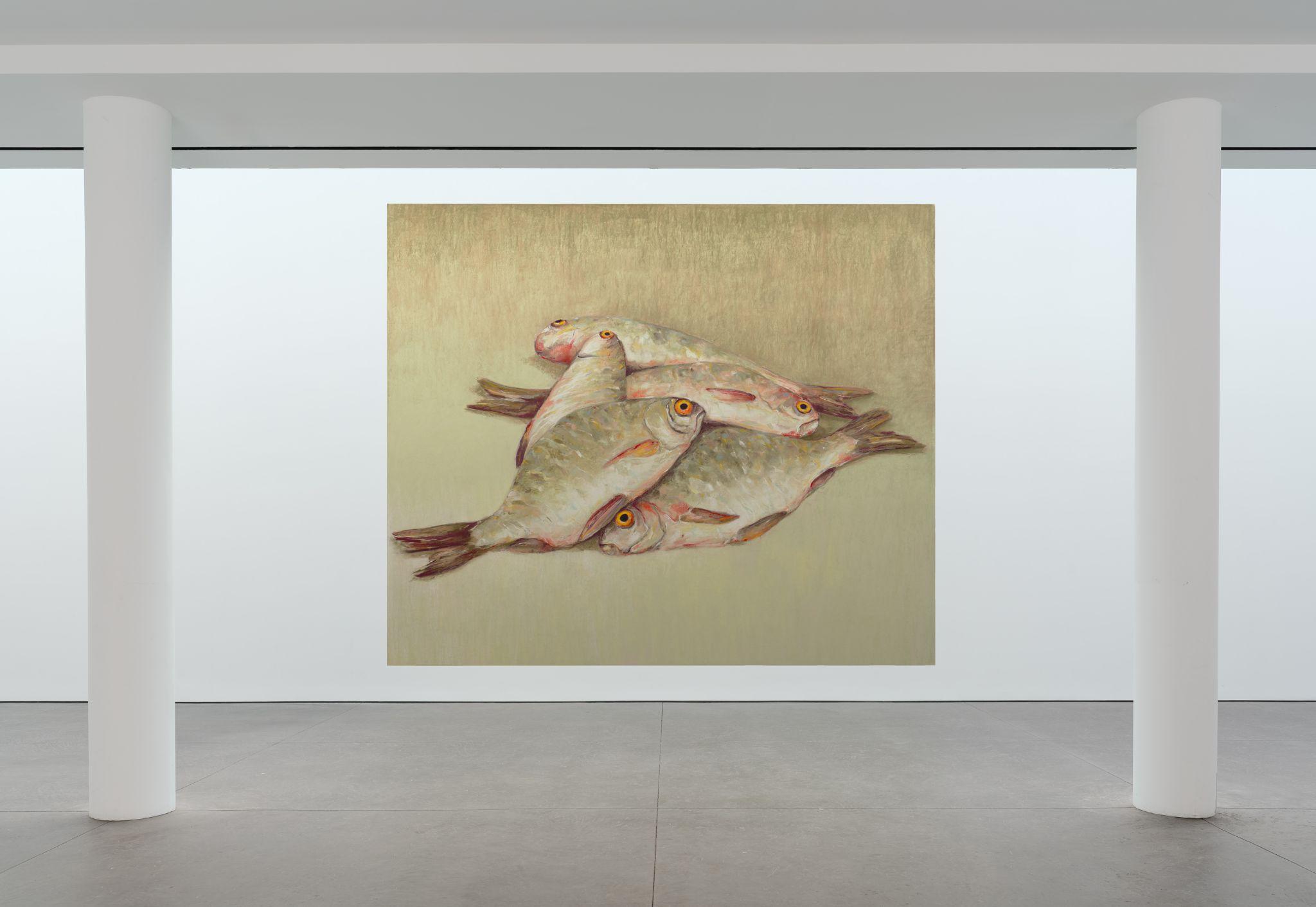
Beyond intensifying the composition, the final mural retroactively reframes the works that precede it: barren landscapes of burning trees, skeletal trunks populating desolate scenes, and humanoid cats. Seen through the lens of the mural, these paintings reveal humanity’s fraught relationship with nature and mortality. However, by reworking and re-scaling the same motifs, Party refuses closure and finality. In doing so, he positions copying as a kind of visual necromancy–one that allows what is already dead or deemed history to live again.
Nicolas Party: Dead Fish on view at Karma, 549 West 26th Street, New York, through February 14, 2026.
You Might Also Like
Cement Greenberg #13: Cool Kids
A Dragon in Venice: Lap-See Lam Stages an Avant-Garde Cantonese Opera in the Nordic Pavilion
What's Your Reaction?