
The Garden Within: A Conversation with Hiba Schahbaz


Over the past fifteen years, Hiba Schahbaz’s practice, rooted in a deep and rich study of Indo-Persian miniature painting, has developed from small to large-scale works and immersive installations, at times building spaces that offer pause—a departure from the chaos of this world and time. Her first retrospective, The Garden, curated by Jasmine Wahi at the Museum of Contemporary Art Miami, presents over seventy works from her oeuvre. In short, The Garden is a poetic visual love letter anchored in Schahbaz’s dedication to Indo-Persian miniature painting that continues to portray her own transformation. The exhibition’s design draws inspiration from the Persian and Mughal charbagh, a quadrilateral garden divided by water channels with a central fountain. It is a curatorial structure that flows beautifully into the South Florida landscape, lush and layered.
I first encountered her work at SPRING/BREAK at Field Projects in 2018, in an exhibition also titled The Garden, and was immediately struck by her perspective. Female. There is a quiet power in what she creates—something both intimate and expansive. She studied the art of miniature painting at the National College of Arts in Lahore, where she learned its painstaking traditional techniques such as making paper, crafting brushes, and preparing tea-based pigments. After moving to New York to study at Pratt Institute, she began combining these practices with Western artistic precedents, effectively subverting two distinct yet equally patriarchal visual languages and techniques by centering her own experience and self.
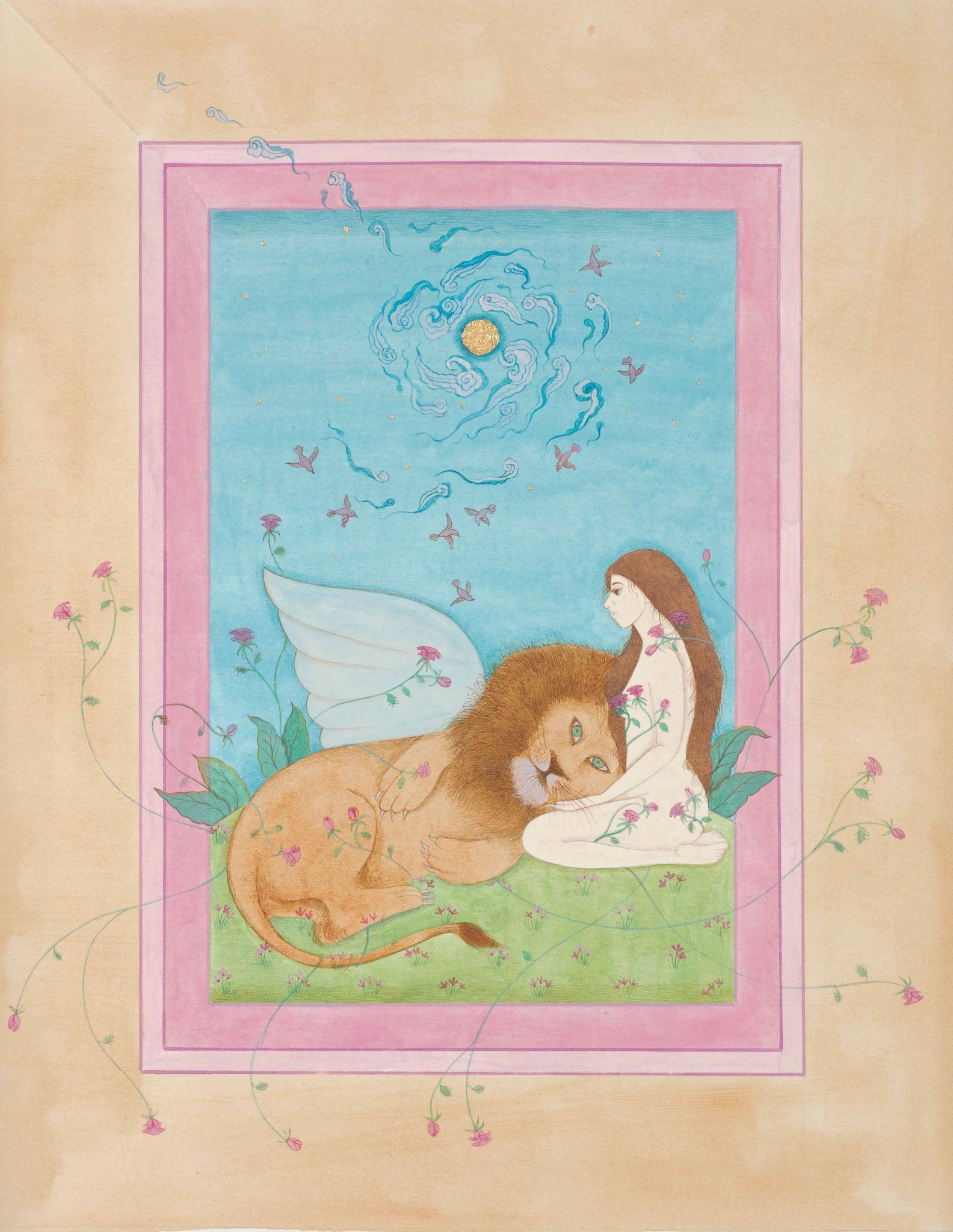
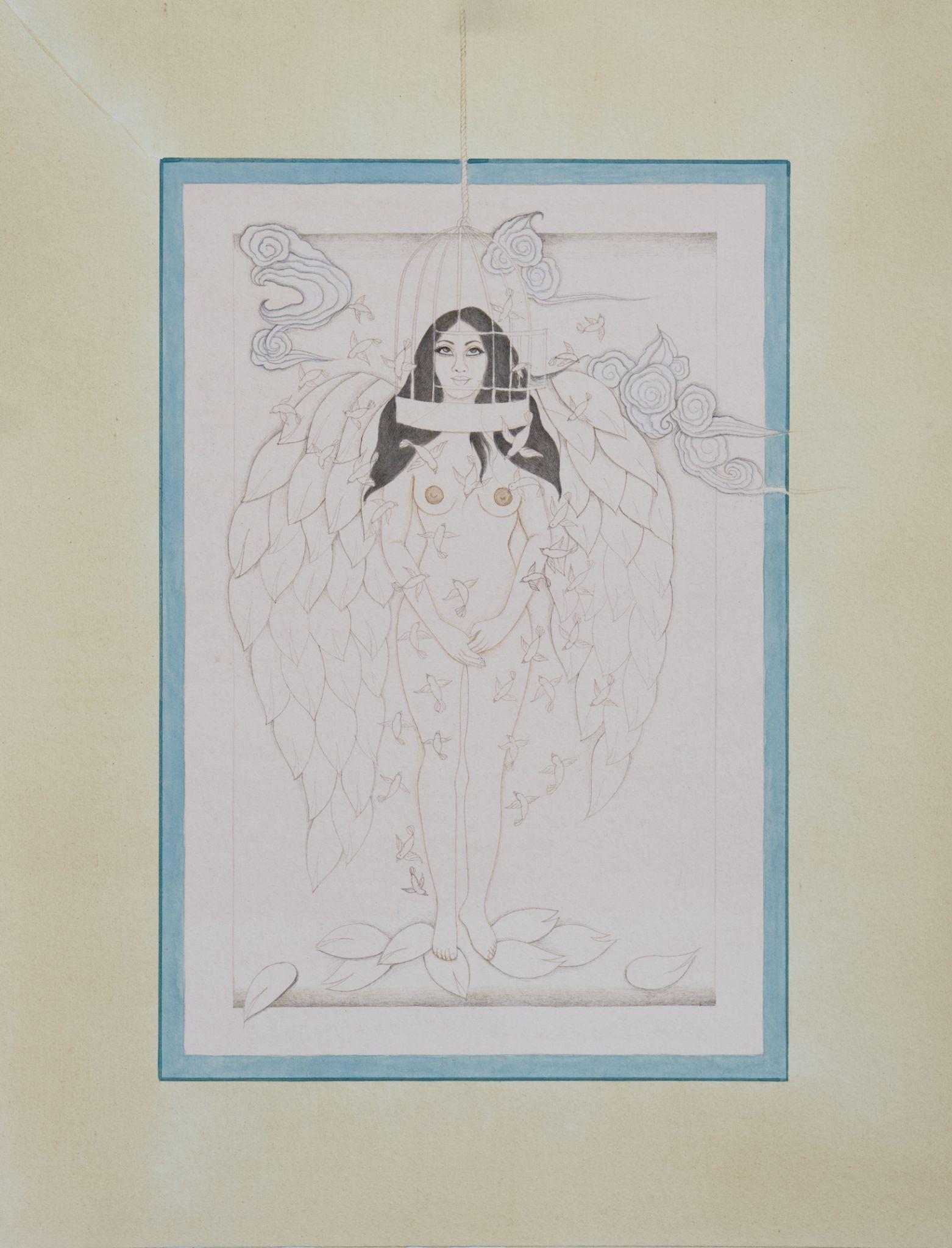
Throughout the MoCA exhibition, versions of herself as Édouard Manet’s Olympia, Jean-Auguste-Dominique Odalisque, and Eve appear alongside other women, like the nymph Daphne, who, according to Greek mythology, transforms into a laurel tree to escape Apollo’s pursuit. The latter is tellingly depicted by Schahbaz as larger than life, power and magic unite her figures. Mermaids, dragons, unicorns, and angels—mythic beings, inspired by art history—also convene in her frames. The late Gothic tapestries The Hunt of the Unicorn at the Cloisters, inspired her unicorns. Her works are populated by female figures, many self-portraits and filled with symbols of feminism, diaspora, love, and longing.
The Karachi-born artist, who now lives in Brooklyn, tracks the use of herself as muse to her young adult years, sitting many hours in her room, with no one to paint but herself, in front of the mirror. Schahbaz’s works are playful with narratives that are not entirely clear, yet their softness and grace will bring you to a contemplative state. This depth and tranquility are perfectly aligned with the artist and woman she is, soft spoken but determined.
With this in mind, I invite you to learn a little bit more about the magic behind Schahbaz’s landmark MoCA exhibition.
It is clear when an artist works with a curator who understands their practice and vision—this energy, grounded in attention to detail, experimentation, and ambition, shines through in your retrospective, which is curated by Jasmine Wahi. Tell me about working with Wahi and your own experience having her curate this most important exhibition of your career to date.
The first time I worked with Jasmine was around 2012, when she was curating a group exhibition for Art Asia Miami, so in many ways this exhibition feels like a full-circle moment. Over the years, I’ve witnessed Jasmine become the curator she is today—she’s creative, and can connect with an artist’s ethos in an intuitive manner. She’s familiar with my art and South Asian culture, and our love for poetry, friendship and ability to make space for each other has made this show special.
Fantastic, she is a powerhouse. Covering fifteen years of your practice, what helped you and Wahi decide which works to choose to illustrate your practice and how it has grown, evolved, and even changed?
Looking back over a span of fifteen years with intention has been both rewarding and enlightening. There is so much forward momentum in making art, and a sense of urgency to create, that having the opportunity to step back and take it all in is a privilege. When looking at past artworks, or revisiting paintings I had forgotten about, I see an interconnected web of emotions woven into the evolution of my work. It’s sometimes clearer to see my practice in retrospect than in the moment of creation.
Your works give me such a sense of calm. When gazing at them, whether your miniatures or large-scale works, I tend to fall in and take in the moment. Can you tell me about your process when creating your works, in particular your latest works that are on view?
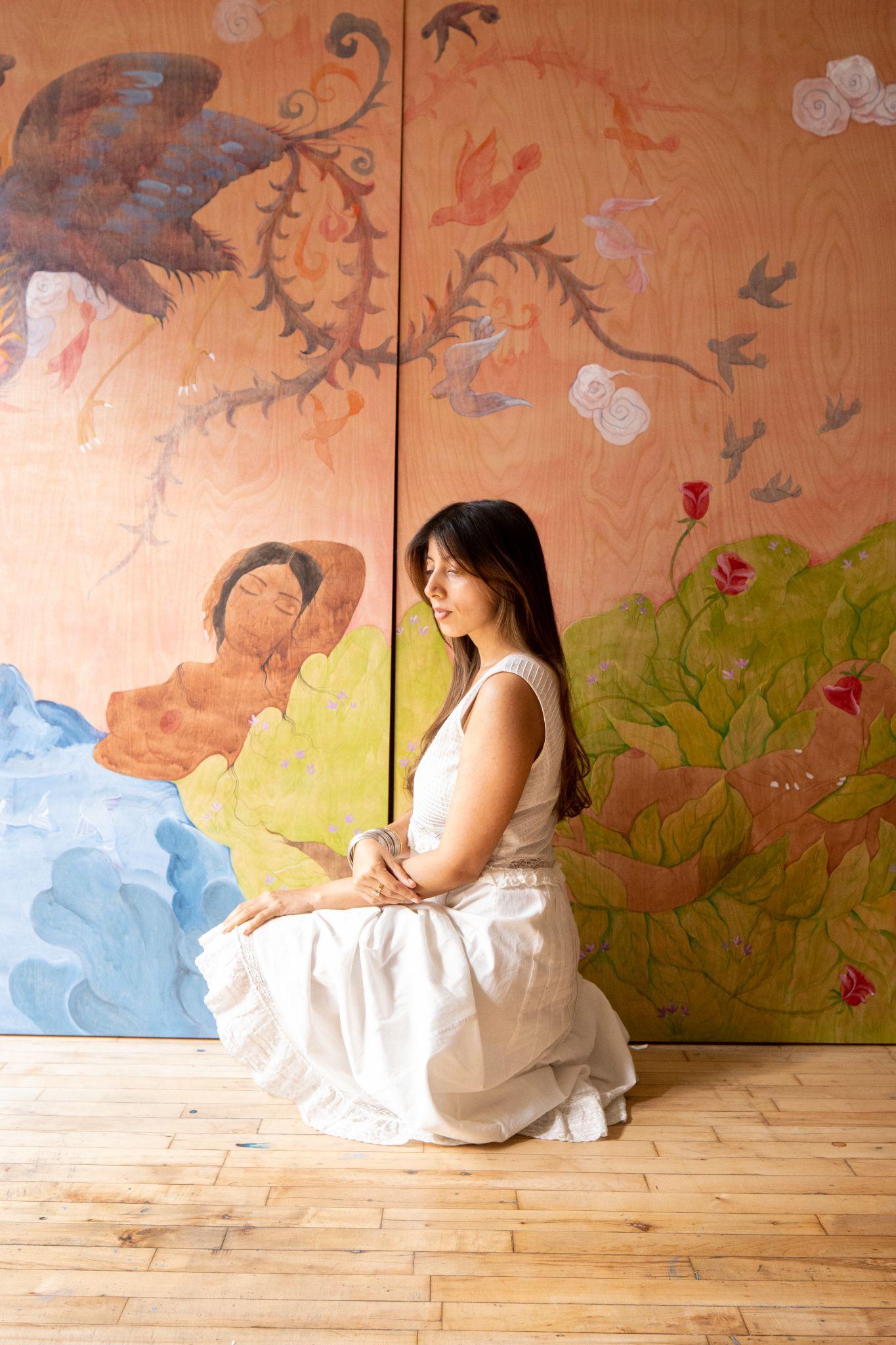
I’m happy to hear that. I’m very mindful and intentional about the energy in the studio and what I bring into an exhibition, as I want to create something beautiful and memorable for exhibition visitors and elevate their experience of viewing the work. For the artwork commissioned by MoCA we wanted to have a painting which had not been seen before, So I created a large piece comprising of six 4×8 ft wood panels, painted with transparent watercolor washes to allow the beautiful grain of the wood to show through, placed together to depict a landscape which moves through the four elements—water, air, earth and fire. These elements are prominent through this exhibition.
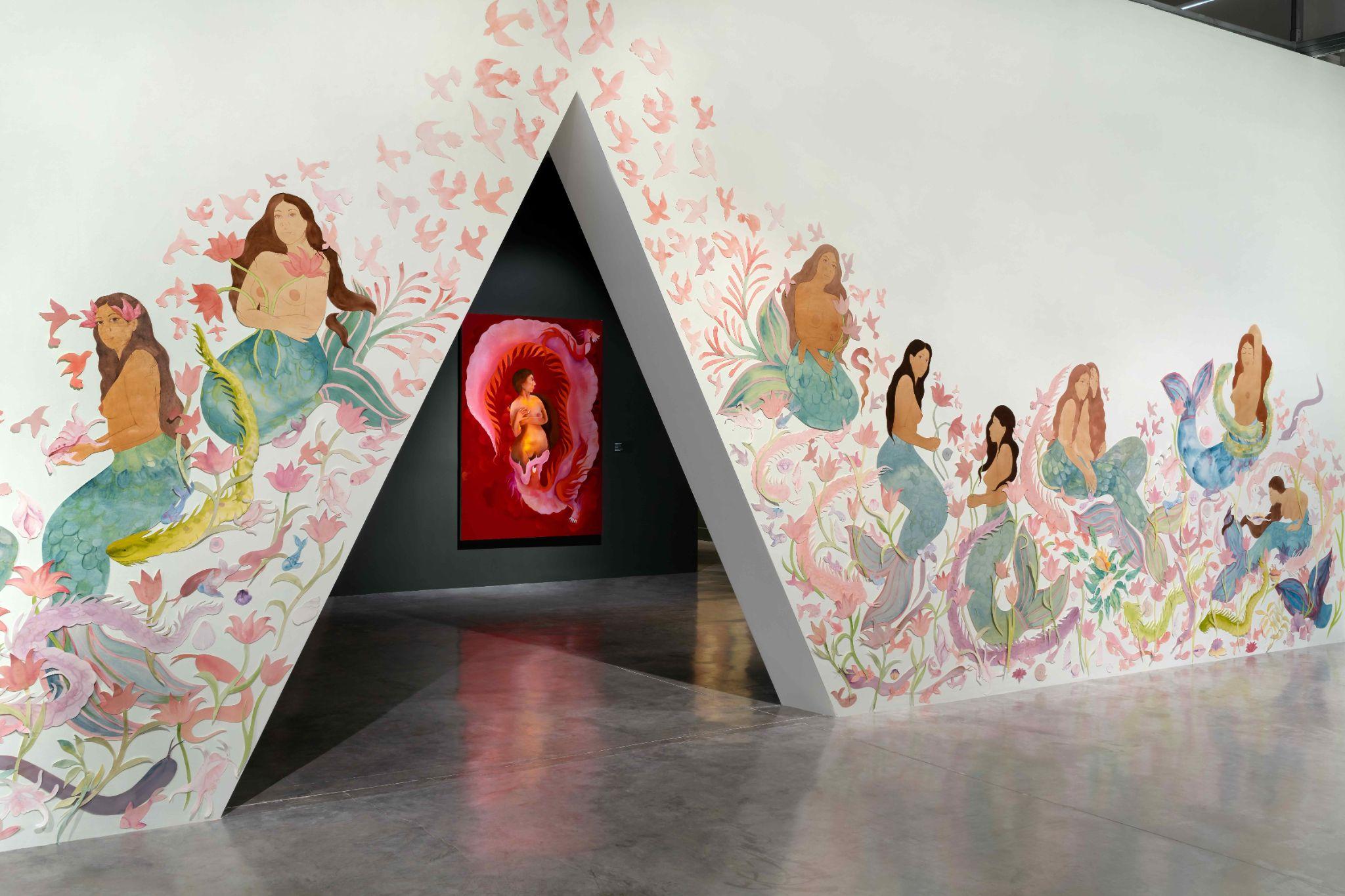
Another site-specific artwork in the exhibition is a wall of paper cutouts spanning 46 ft featuring mermaids, sea serpents, fish, shells, and flowers. There are hundreds of cutouts of watercolor and tea paintings on paper, which took several weeks to install.
Did anything unexpected happen during the process of putting this exhibition together?
Yes, one of the highlights of this exhibition is showing two of my largest works on paper, The Gathering and The Women. These two paintings were made around the same time and were in conversation with each other at the studio, but The Women was placed with a collector early on and not exhibited. I had dreamt of bringing them together for an exhibition. Having the opportunity to do that and seeing them in conversation with each other again is a gift.
Hiba Schahbaz: The Garden is on view through March 15, 2026 at the Museum of Contemporary Art Northern Miami.
You Might Also Like
Muralist Roberto Ruspoli Revives the Ancient Art of Fresco at SoHo House in Paris
Oral Collaging with Abdulmohsen Albinali from his Kuwait Solo Show
What's Your Reaction?