
Stories Produce Truth in Nour Helou and Afrang Malekian Nordlöf Malekian’s New Book


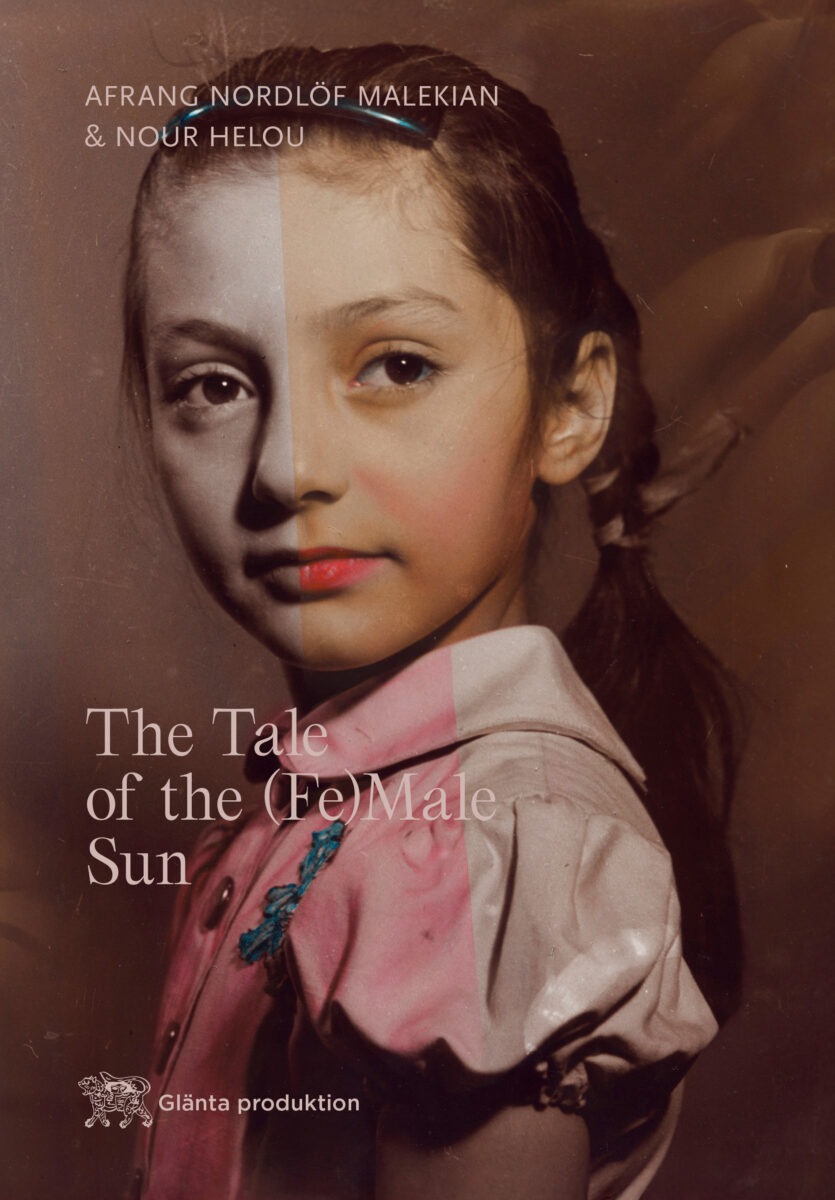
The sun is historically depicted in Persian visual culture as a face, neither fully male nor female. Through storytelling, allegory, and oral traditions, in their new book The Tale of the (Fe)Male Sun Nour Helou, a performance studies scholar and artist, Afrang Malekian Nordlöf Malekian posit the sun as a non-binary figure to question how colonialism and nationalism reshaped aesthetic ideals and imposed rigid gender distinctions across Southwest Asia and North Africa. Sweden connects the two practitioners who also work in Berlin (Nordlöf) and Lebanon and New York (Helou), their publisher Glänta, is highly respected, located in Gothenburg, and favors the essay format.
Developed through a series of exhibitions—including The Eclipse of the Female Sun and Shape Shifting Flickers of Love—the project draws inspiration from Persian mythology, Qajar-era portraiture, and contemporary life across Iran and Lebanon. Malekian Nordlöf’s work engages archival research, participatory narratives, and mythological frameworks to explore collective memory and identity across Iranian and European contexts, while Helou’s practice emerges from Beirut’s social and cultural landscapes, foregrounding embodiment, oral history, and everyday encounters as forms of knowledge production. Moving between archival imagery, Iranian passport photography, and lived experiences in Beirut, the book examines how appearances are regulated and how beauty becomes entangled with power, identity, and belonging. Together, their collaboration blurs the boundaries between fiction and historical inquiry, proposing storytelling as both artistic method and critical tool.
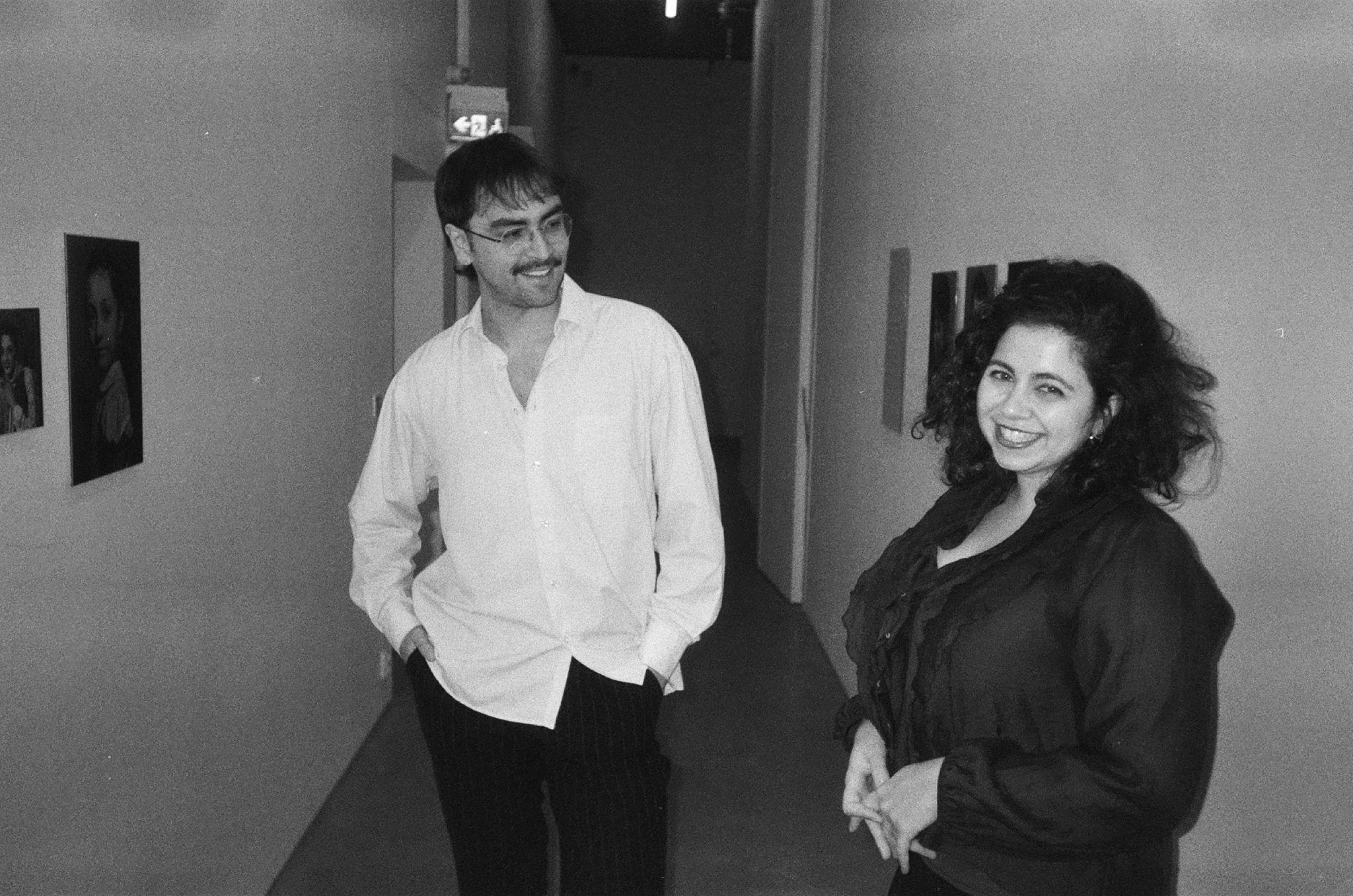
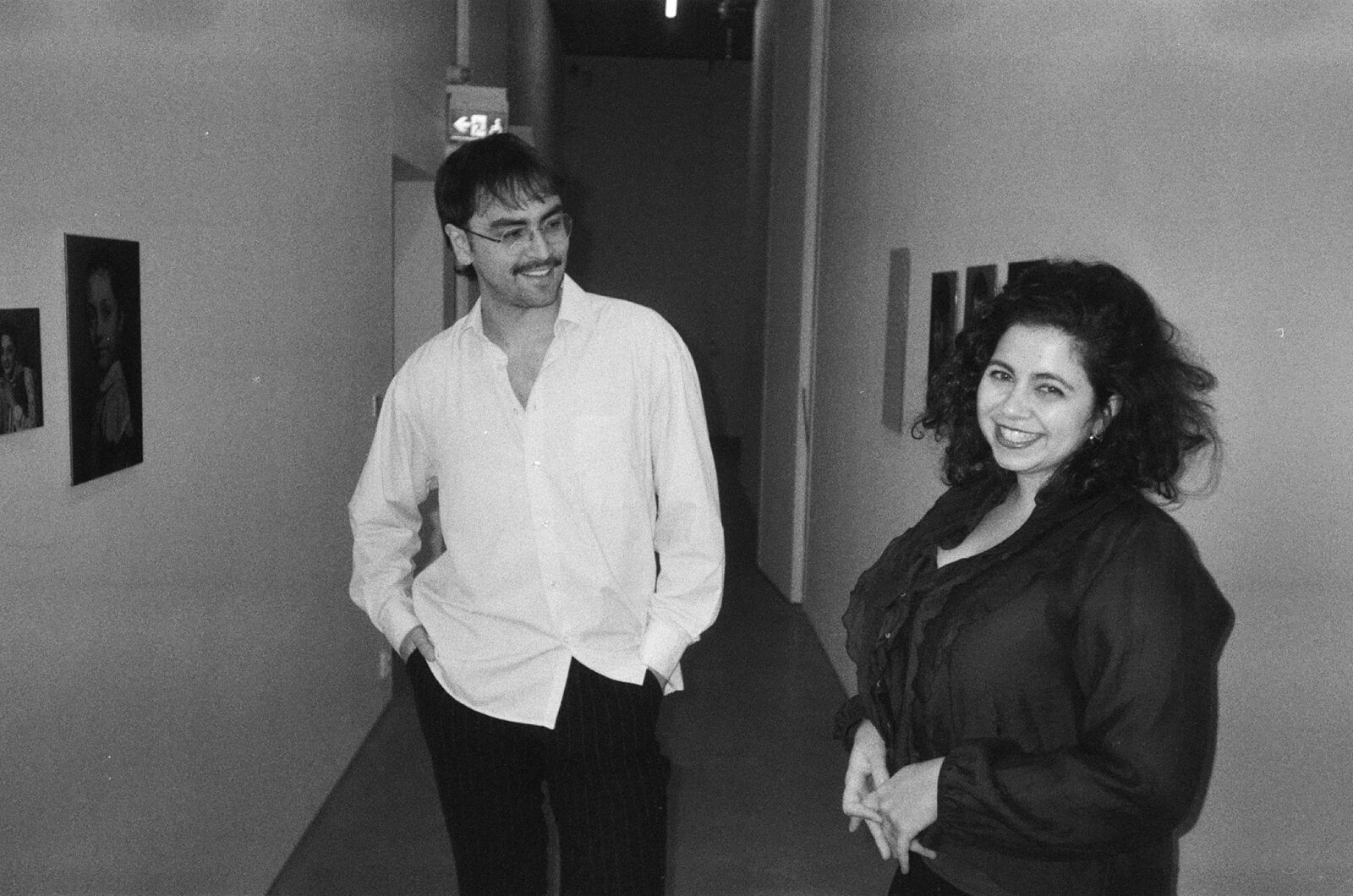
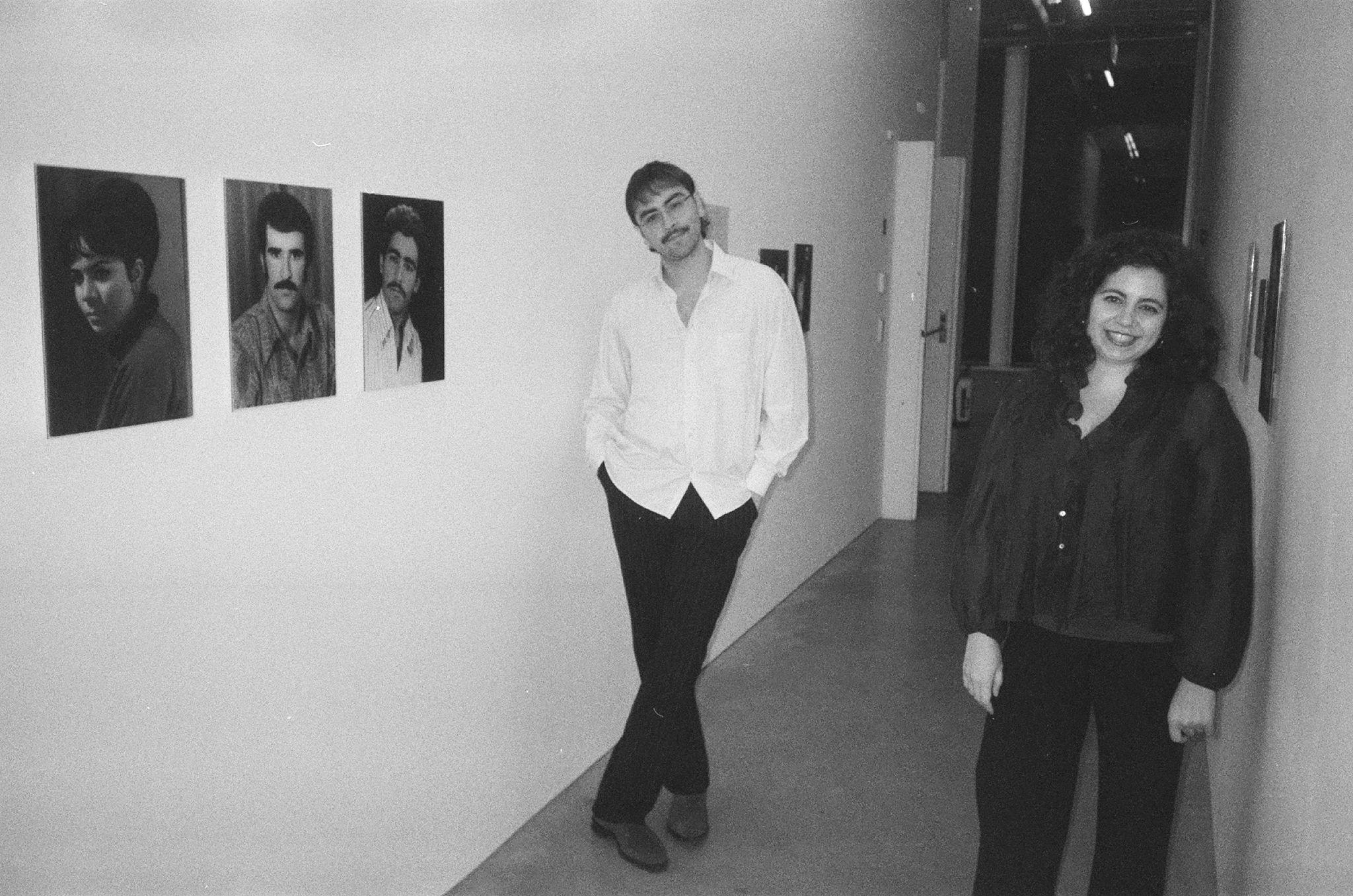
I met with the duo at Bonniers Konsthall, where Afrang Malekian Nordlöf’s latest work, which has heloped shape the book, is on view following his receipt of the institution’s Maria Bonnier Dahlin scholarship.
JJ: Your storytelling moves fluidly between personal memory and collective history—from passports to Qajar coins. How do you decide when to speak in the first person ‘I’ and when to dissolve that voice into something more mythic or collective?
AMN: We tried to create a clear distinction. The mythological and historical parts are never written in the first person. The “I” appears mainly in the anecdotes, where the narrator could be anyone. We also intentionally blurred locations and identities to challenge expectations tied to national narratives.
JJ: Is there a particular political or emotional reason for blurring locations and identities in that way—especially in relation to nationalism and diaspora?
AMN & NH: Yes — partly because we are critical of nationalism. Our backgrounds are layered and mixed, but that is true for many people. National histories often simplify these complexities. The regions we work with were historically interconnected and later divided through colonial agreements like Sykes–Picot. Borders created rigid identities that don’t reflect shared aesthetics, languages, or cultural practices across Southwest Asia and North Africa. By keeping locations fluid, we leave space for imagination and resist hierarchical structures tied to nation-building.
JJ: Both Iran and Lebanon are shaped by ongoing economic and social instability. How present are these contemporary conditions in your thinking when you work? Do they enter your practice consciously, or do they seep in more indirectly?
NH: It’s impossible for them not to be present, whether consciously or unconsciously. One story in the book describes entering Beirut’s Grand Opera House during the 2019 protests. The building had been closed since the Civil War, and reclaiming public spaces was one of the protesters’ demands.
That moment became part of the book as a record of history. Even if readers don’t recognize every reference, the story carries political meaning simply by existing in print.
JJ: In Iran and elsewhere, politics often governs visibility itself—what can be seen, worn, or shown. How does this regulation of appearance resonate with your long-term research into beauty standards?
AMN: My entry into the project came from renewing my Iranian passport. Passport photos are extremely regulated, especially for women. When I took mine, the photographer told me I looked “too feminine” and adjusted my appearance. Later, we discovered the photos had been retouched — whitening the skin and adding color to the cheeks and lips — in a way similar to hand-colored Qajar-era photographs I had encountered during archival research.
That moment made me question where ideas of femininity come from and how beauty standards are historically constructed. The face becomes a controlled surface, especially when other forms of expression are restricted.
JJ: Lebanon is constantly negotiating internal and external influences. Nour, how has growing up within that layered political reality shaped your understanding of your own identity?
NH: Lebanon contains many religions, ethnicities, and social realities, yet people can grow up within very specific bubbles shaped by class, language, or education. Beauty standards there often look toward Western approval — blonde hair, lighter skin, thinness, and strongly gendered expectations for men and women. Encountering Qajar imagery during my studies was liberating because it presented a regional aesthetic that was not strictly binary. Seeing that this alternative existed within our own histories opened another way of understanding identity and beauty — one not defined by Western norms.
J.J: Afrang, in your previous exhibitions, you show newly produced works alongside archival material. How do these new objects function within a practice so deeply engaged with historical traces and political ‘residue’?
AMN: The new works extend the research rather than illustrate it. Historical material carries political and aesthetic residue, and producing new objects allows us to continue the dialogue with those histories in the present. The works don’t attempt to reconstruct the past but to activate it — to show how these histories remain unfinished and continue to shape contemporary experience.
JJ: What drew you to this particular metaphor of the sun, and to framing the project as a tale rather than a more conventional art book or academic text?
AMN: The book begins with a mythological narrative paired with historical references. Many religious traditions contain creation stories, and we began to think of our project as a kind of creation story as well: the story of how this non-binary sun comes into being through the meanings humans project onto it. The sun itself is just the sun; meaning is something we continuously assign to it. When we began thinking about the book, we wanted it to feel like literature rather than an art catalogue. During conversations with one of the editors, we realized it should be framed as a tale — almost like an epic story.
NH: Historically, there are many depictions of the sun with eyes and a smiling face in Persian mosaics from the sixteenth to eighteenth centuries. That’s where the reference originates. The eclipse represents the moment when this figure was replaced by a faceless sun — particularly in nationalist imagery — because a gender-ambiguous figure could no longer represent the nation.
J.J: You have treated history like a fable—with lions, stars, dancers, eclipses. What does fiction allow you to articulate in your work that conventional academic language cannot?
AMN: Stories produce truth. If we think about texts like the Bible or the Qur’an, they shape understanding through narrative. From the beginning, we were interested in the history of aesthetics related to gender expression in Southwest Asia and North Africa. Much of this history is communicated through academic language, which is often treated as the only legitimate form of truth. We felt frustrated by that limitation. Fiction allows us to approach history differently — to think through symbols like the sun or the lion without imposing a colonial perspective that tries to dominate or explain everything from above.
NH: There is also a strong tradition of oral storytelling across the region. Knowledge has long been transmitted through stories rather than academic citation. Using storytelling continues that tradition and makes knowledge accessible in another way. The anecdotes in the book grew out of our research but also from lived experience — asking how we can develop our own language within postcolonial realities.
***
Created amid political unrest, economic instability, and ongoing protest movements, The Tale of the (Fe)Male and Male Sun positions myth not as escape from reality but as a way of thinking through the present—opening space for alternative futures and more fluid ways of seeing, belonging, and imagining otherwise.
The Tale of the (Fe)Male Sun is published by Glänta and is readily available.
You Might Also Like
“Eyes on Iran:” A Poignant Artistic Statement for Women’s Rights from New York
Using Old Cypriot Schoolbooks, Marina Kassianidou Reveals “A Partial History”
What's Your Reaction?