

Bullets That Carry Flowers: Ukrainian Artist Maria Kulikovska Lay Down Beneath 7,000 Casings at the European Parliament


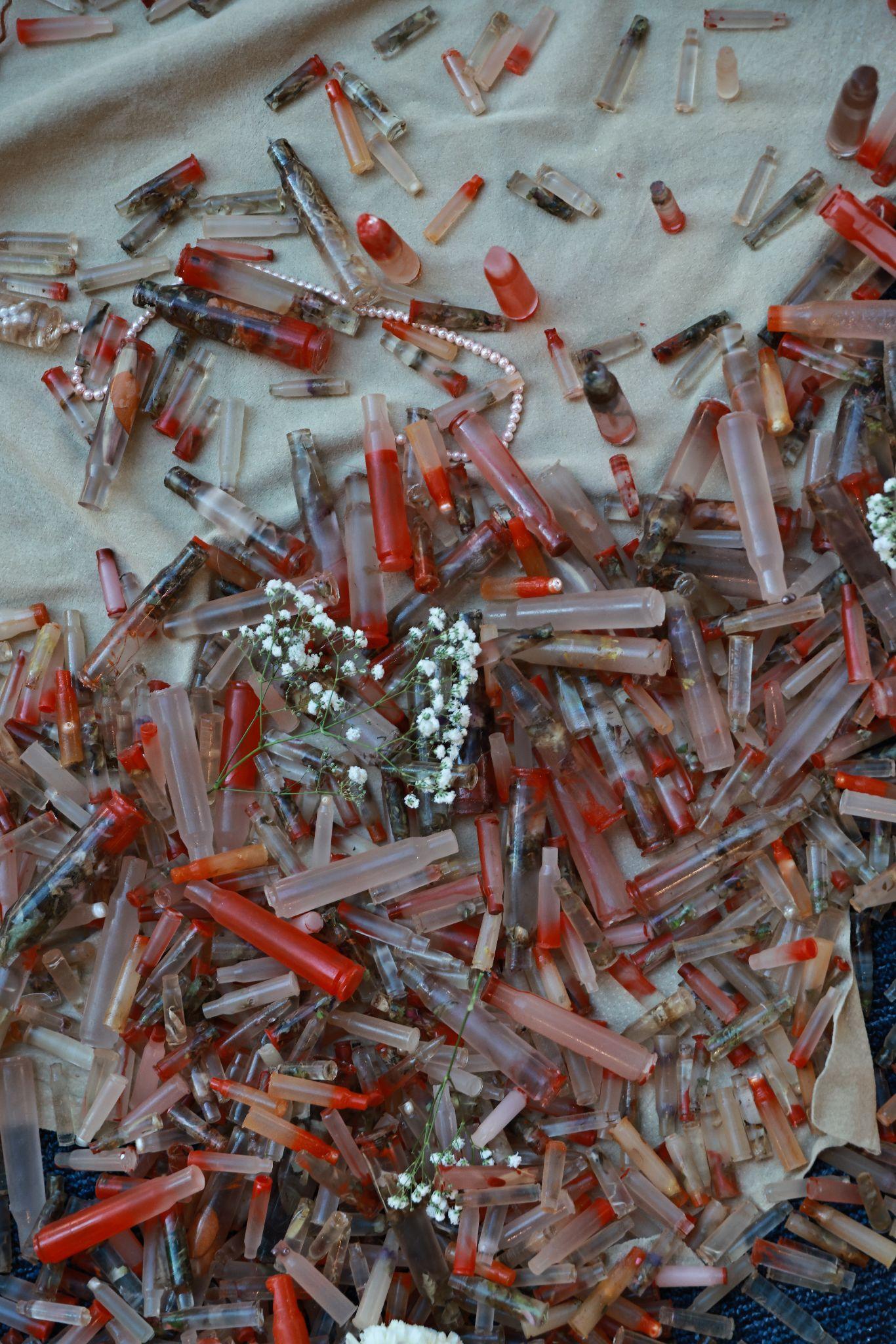
In June 2014, life-size casts of Maria Kulikovska’s where on view at IZOLYATSIA art centre in Donetsk. When Russian militants seized the area, they used the sculptures as shooting targets, calling them the work of a “degenerate artist.” More than a decade later, the Ukrainian artist brought a different kind of ammunition into one of Europe’s most guarded buildings: over 7,000 transparent resin casts of spent cartridges, each holding dried flowers and healing herbs where the gunpowder used to be.
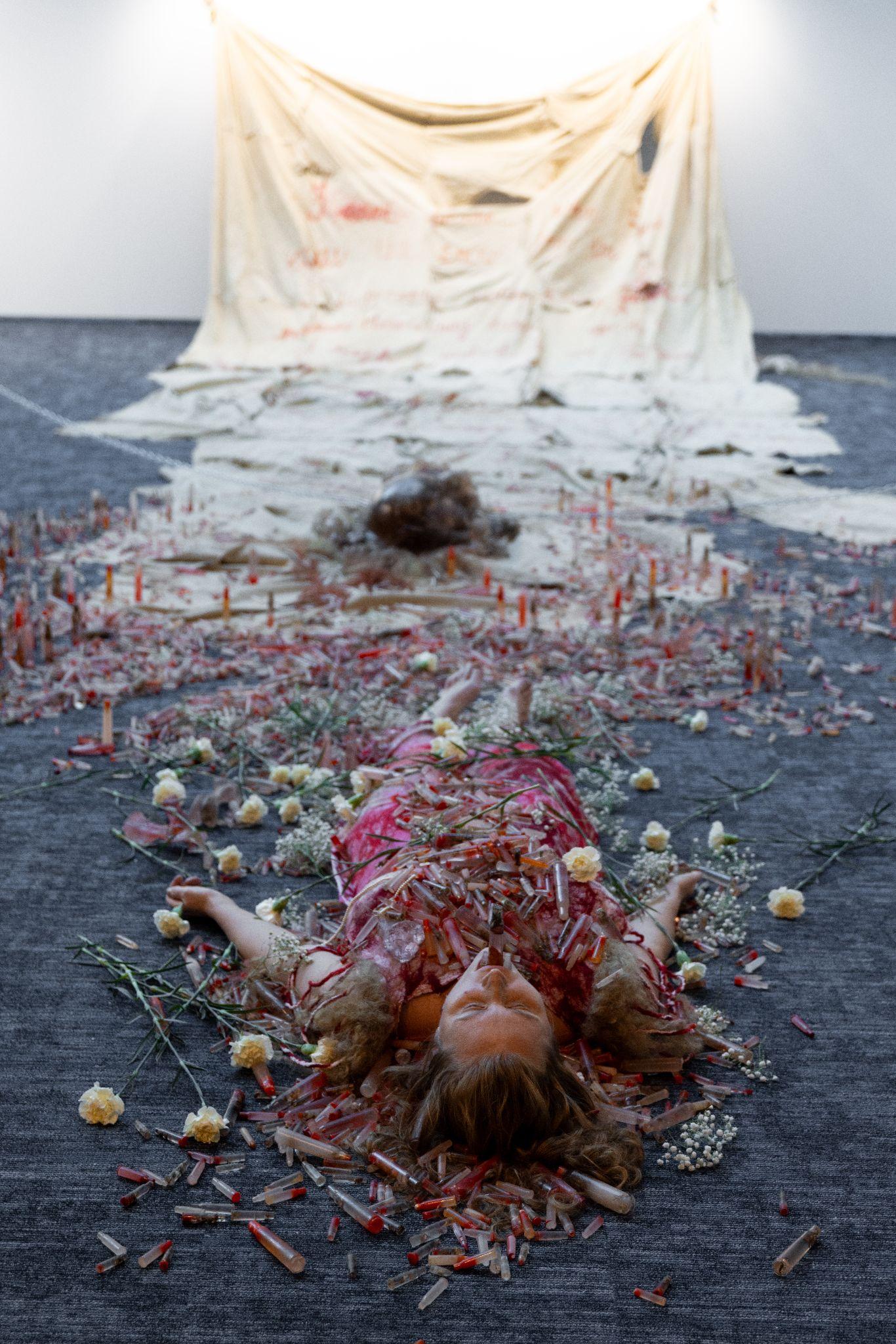
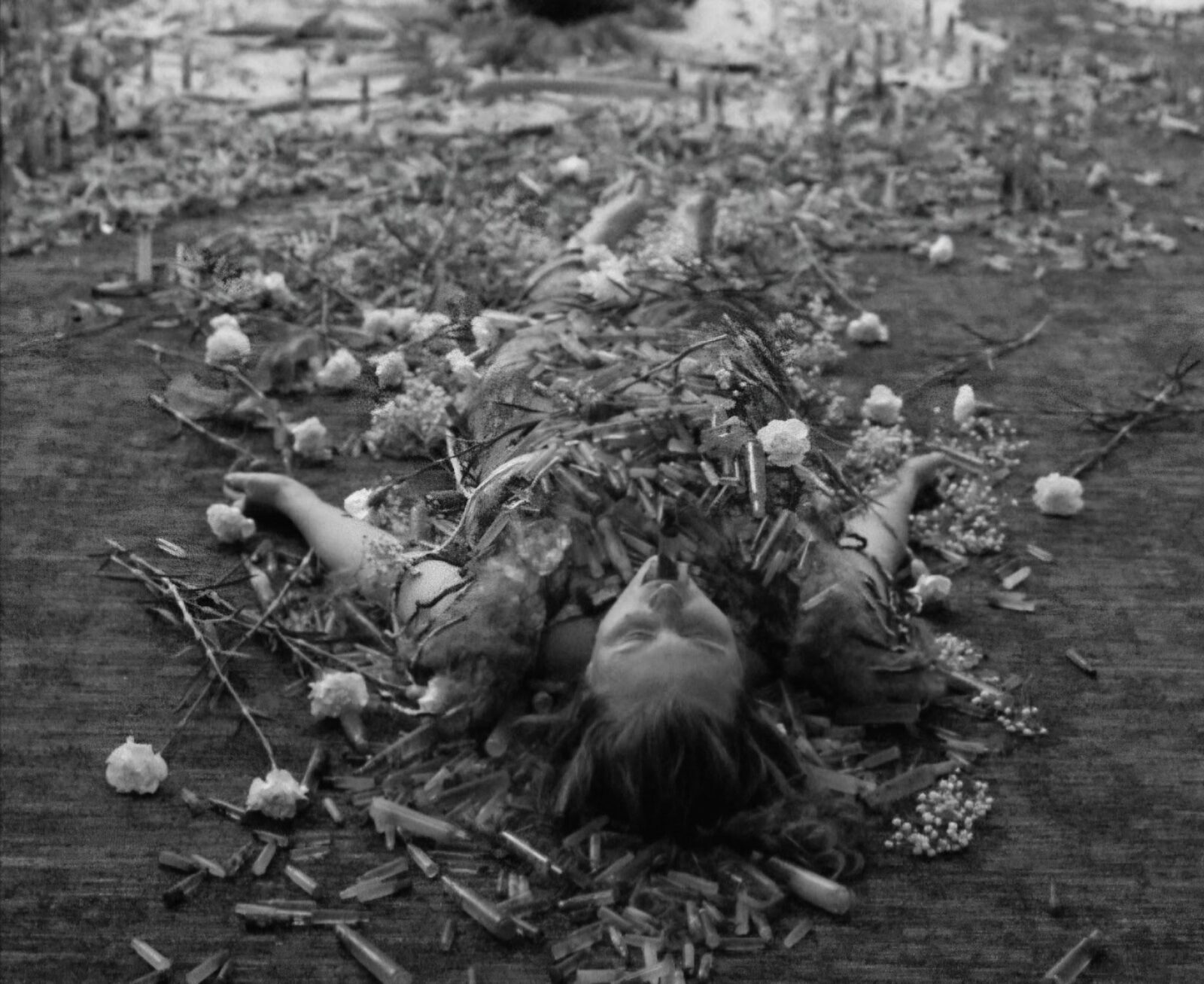
From 9 to 13 November, 2026, her solo exhibition Broken Lives and Flowers took over a space in the Altiero Spinelli building of the European Parliament in Brussels. At the opening on 10 November, Kulikovska lay on the floor among the casts, covered in resin casings, and fresh flowers, with a casing held in her mouth. A living body among the objects. The exhibition took place a few steps from the rooms where Ukraine’s future and Europe’s security are debated. The work quietly asked what security means to those who legislate it, and whom it is meant to protect. Given the limited public access to the building, it was a show about civilian loss seen mostly by politicians and diplomats, many of whom negotiate on or against Ukraine’s behalf.
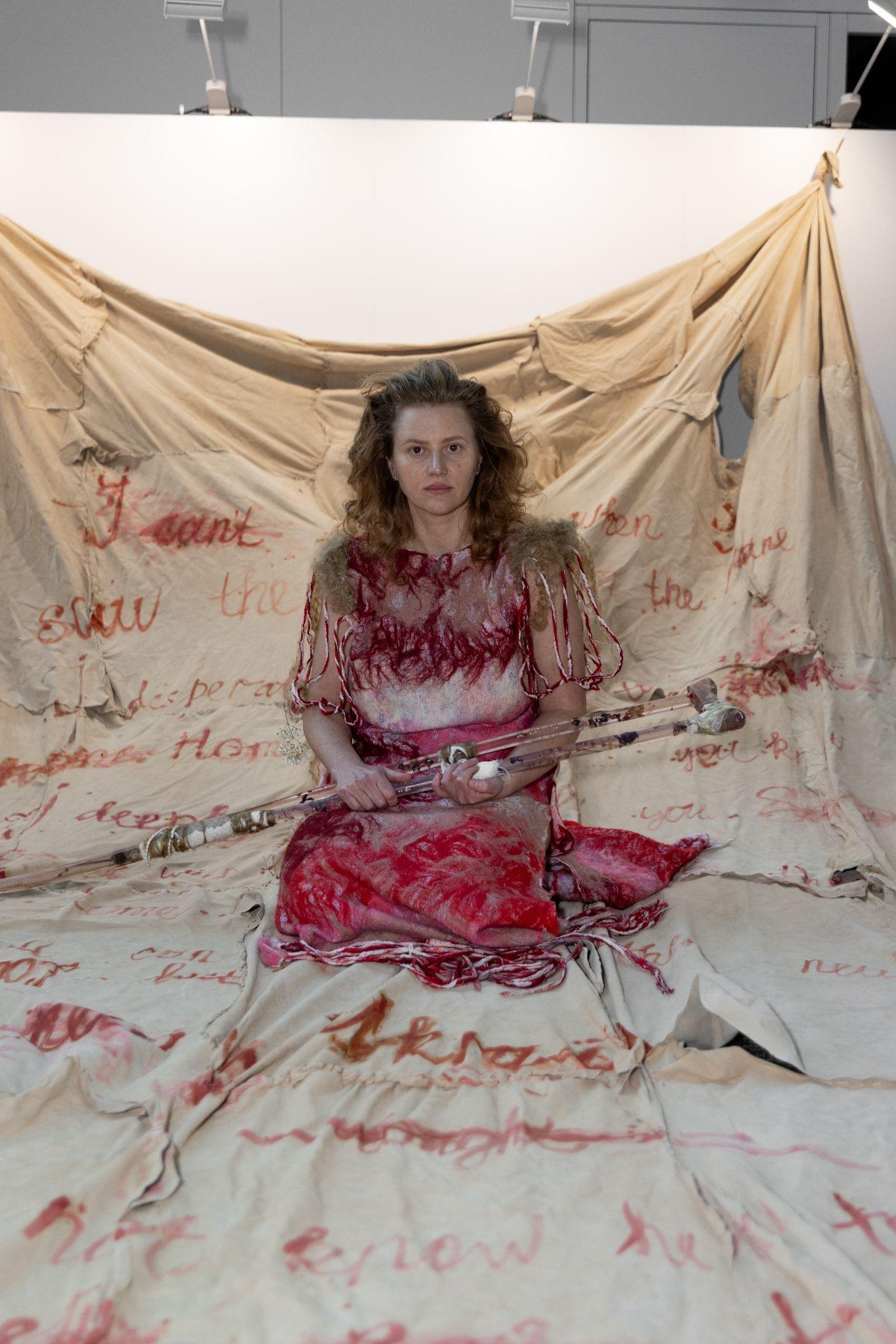
During the performance, Kulikovska lay motionless on the carpet in a garment of red and pink resin casings, scattered with white carnations and baby’s breath, a casing held in her mouth. Some guests stood still, looking closely. Others milled around, not quite understanding what was happening. It was hard not to read the casing on her tongue as a silencing. Violence is central to this war, but it is difficult to grasp how it really affects people. A few steps away, Lithuanian MEP Dainius Žalimas, who served as host of the exhibition of Renew Europe, spoke from a lectern. Žalimas has visited Ukraine many times since the full-scale invasion. In his words, Kulikovska’s work “serves as a powerful reminder of the human suffering caused by war.”
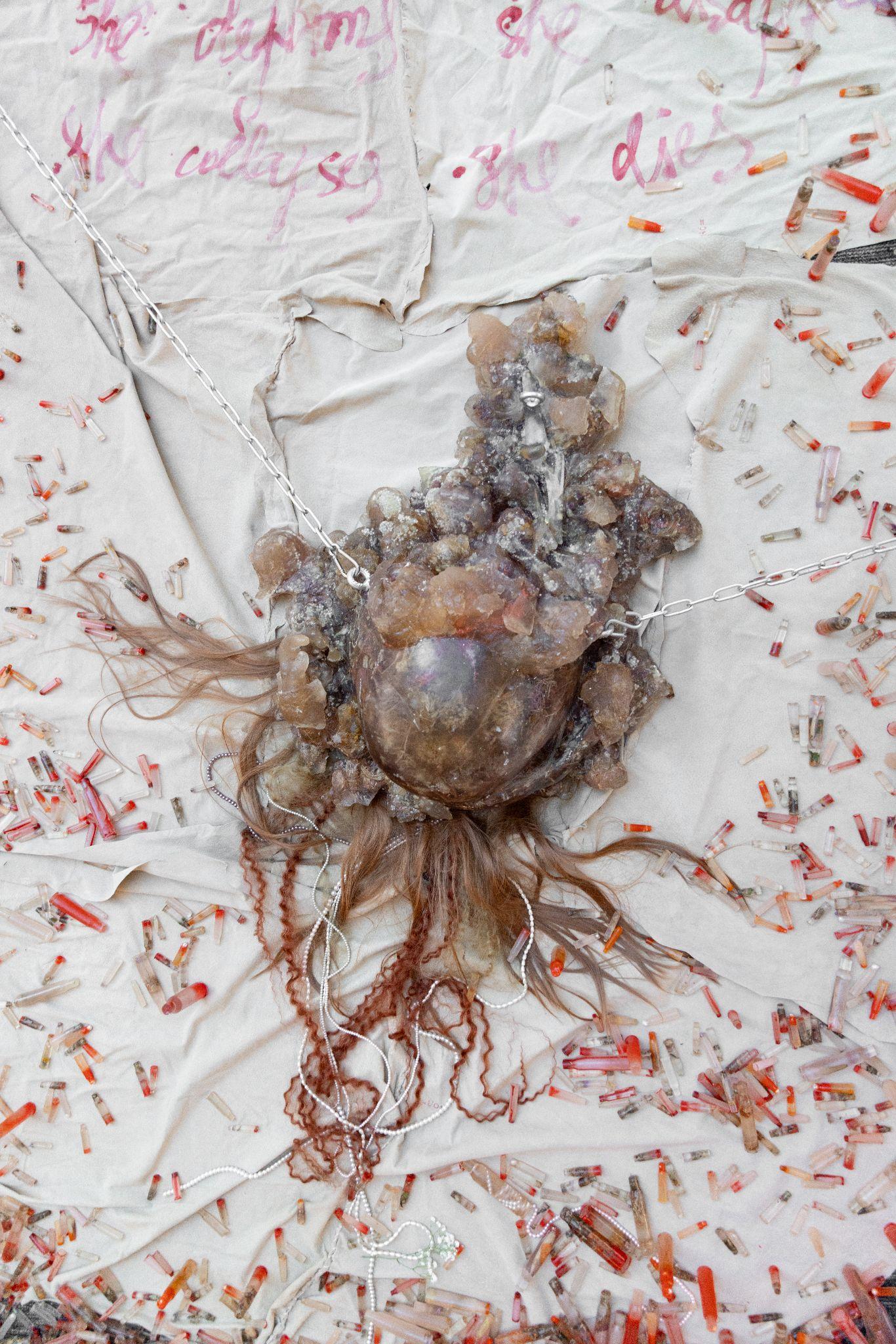
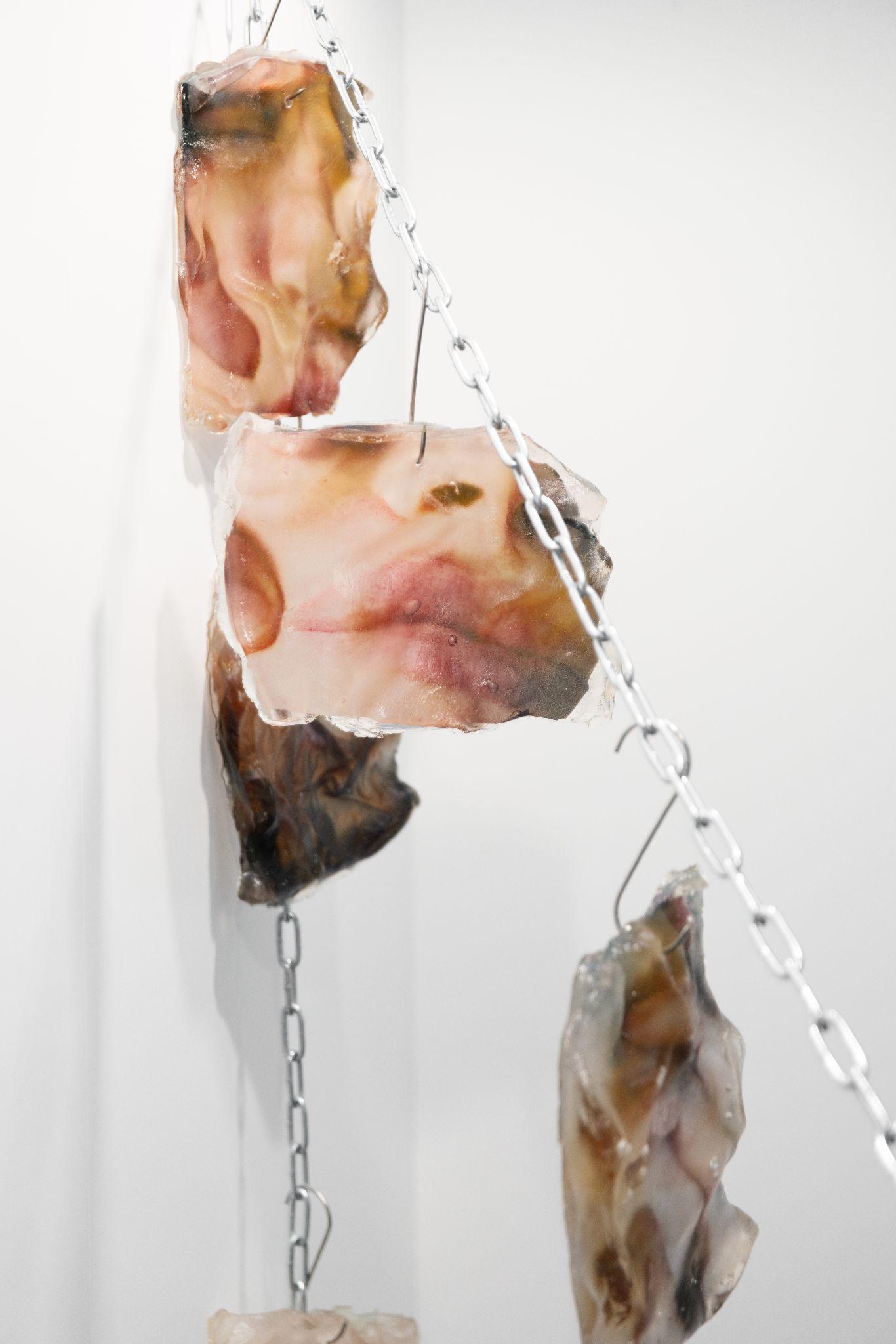
Three of Kulikovska’s installations surrounded the casings: Unfinished Mother, a fragmented maternal figure in resin threaded with dried flowers, pearls and hair; Botanical Supports, crutches and walking sticks whose transparent bodies hold petals and bandages; and Skin Apparitions, resin membranes with photographs and watercolours sealed inside, hung like shed skins. All belong to Bullets of Flowers, the thematic pavilion first shown at the Malta Biennale 2026. Brussels received a smaller, distilled version, curated by Renata Gibavičiūtė and Eszter Csillag.
Born in 1988 in Kerch, Crimea, Kulikovska has not been able to return home since Russia occupied the peninsula in 2014. For fifteen years she has cast her own body in soap, plaster, silicone and resin, then sent the doubles into the world, where rain dissolves them and bullets strike them. In 2014, at Manifesta 10, she lay on the steps of the General Staff Building in St. Petersburg wrapped in a Ukrainian flag; the action’s title, 254, is her registration number as a displaced person from Crimea. Her work has been shown in more than twenty countries, including at the Neue Nationalgalerie, the Albertinum in Dresden and the Saatchi Gallery in London, and is held in the Khanenko Museum in Kyiv. In June 2026 she performed at Art Basel alongside Rafael Lozano-Hemmer.
Last December, a vandal smashed three of Kulikovska’s sculptures outside Ukraine House in Copenhagen; the same day, her grandmother died in occupied Crimea. She carried the shattered works to Malta exactly as they were, and the fragments became part of her performance there. Central to Kulikovska’s work is exposing the materiality of destruction. Never repairing, rather, she lets the marks on her works remain, like scars on a body.
I consider Kulikovska’s grandmother, who taught her to gather herbs in the steppes and hills of Crimea, a place she can no longer return to. Both people and places have been lost in this war, some that Ukraine, with the help of Europe, hopes to regain. It is a war that continues, but with this work, Kulikovska’s artistic gesture has changed—Broken Lives and Flowers considers what happens after. Healing herbs sit where the gunpowder was; what heals, what damages, and what protects share one body, and the viewer must decide which is speaking.
You Might Also Like
Maria Kulikovska Resists Imperialism and Patriarchy
Art as an Act of Hope: The Ukrainian Pavilion in Venice and Artists in Flux
At NADA an Exhibition on Ukraine’s State of Emergency Unfolds