Cinthya Santos Briones’ ‘Living in Sanctuary’ Reveals a Paradox of Refuge and Containment


In Cinthya Santos Briones’ solo exhibition Living in Sanctuary the artist explores the lives of people—immigrants, asylum seekers, and refugees—who live in church sanctuary spaces across the United States through photographs full of life, warmth, and color. Briones began the documentary series in 2017, during Trump’s first presidency, when coverage of separate chain-link partitions, fenced enclosures, or clear plastic pods used to seperate people in detention centers flourished.
“The news media was more focused on children inside of the detention center,” she explained to me in a conversation before the show opened. “That was kind of the political propaganda against humanity, against children, against family, against human beings, and we saw the children in cages over and over,” she continued. As a Mexican and a person whose family lives in the U.S. undocumented, she wanted to paint a fuller picture, show people with their dignity intact, and how they created a sense of home.
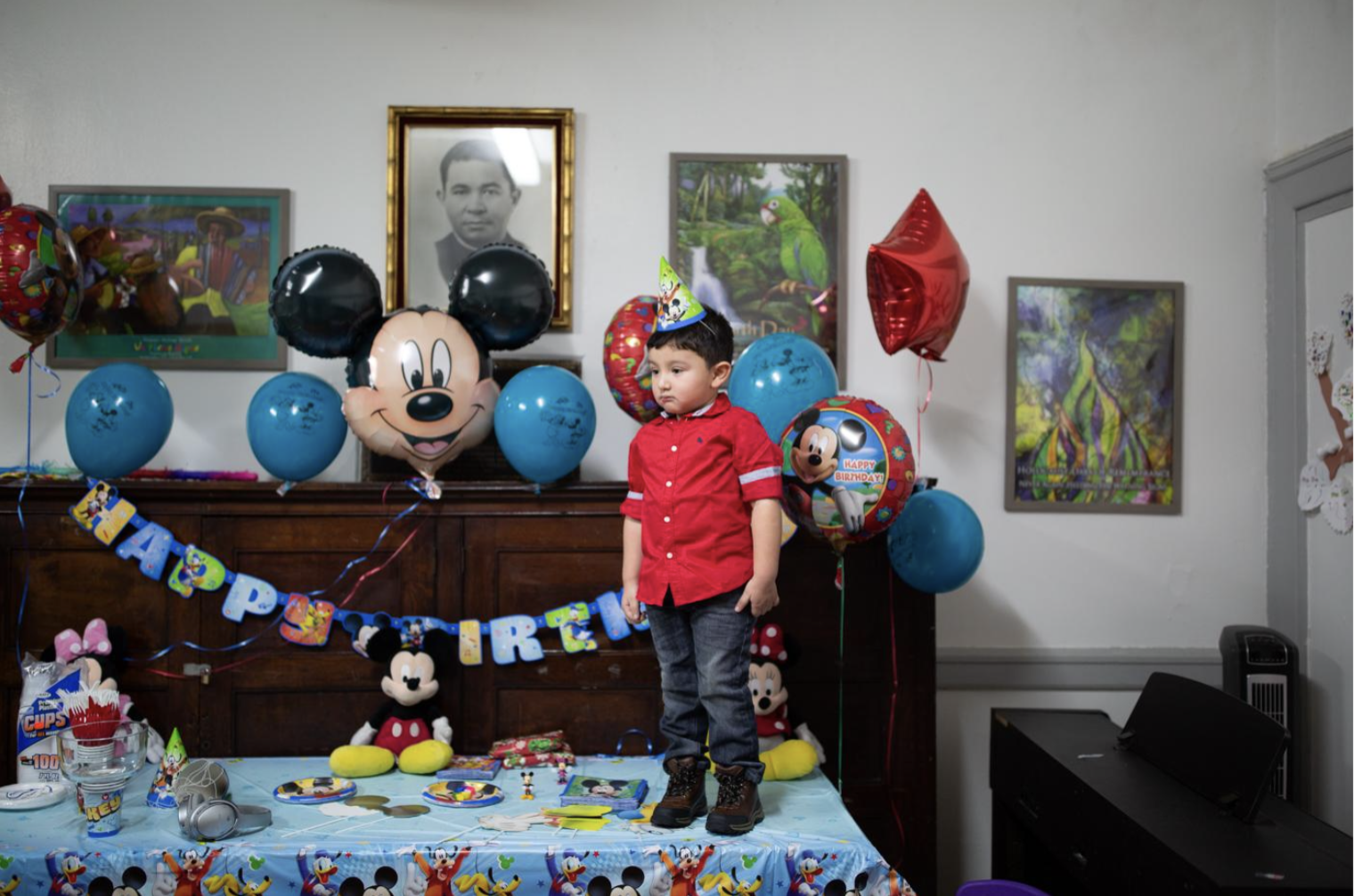
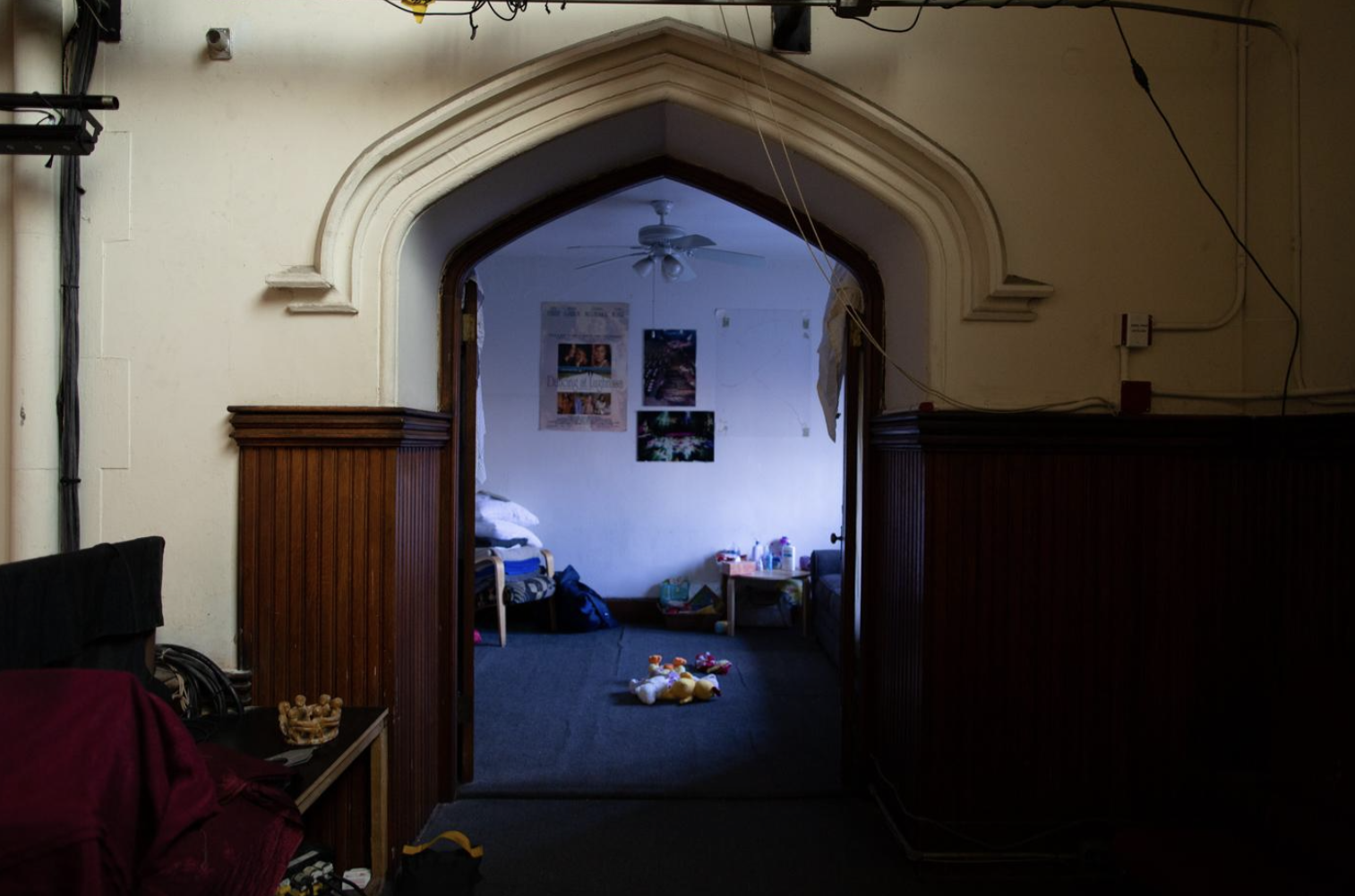
Across the United States, in cities like New York City, Boulder, and New Haven, Briones sought to capture daily life, namely “how you transform a space that was not destined to be a home into a home, in exile,” she explained. It means celebrating birthdays, Christmases, other holidays, in spaces that were never meant to house or shelter people—sometimes an office, a basement, a library. Briones’ photos of daily life showcase that living in sanctuary is often a paradox of “refuge and confinement.” Ethical infrastructures of care, sustained by community networks but marked by containment, unfold in her photographs.
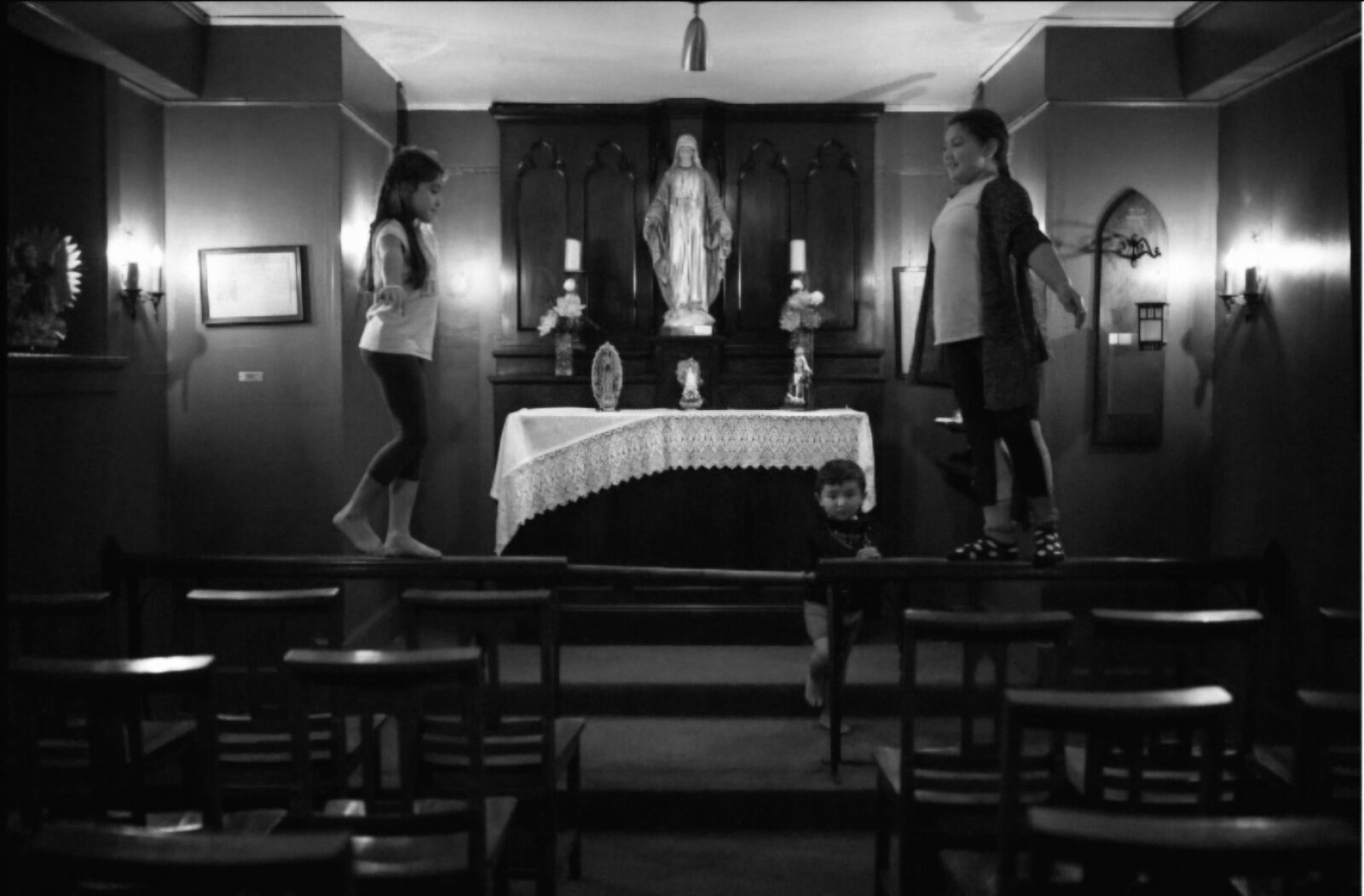
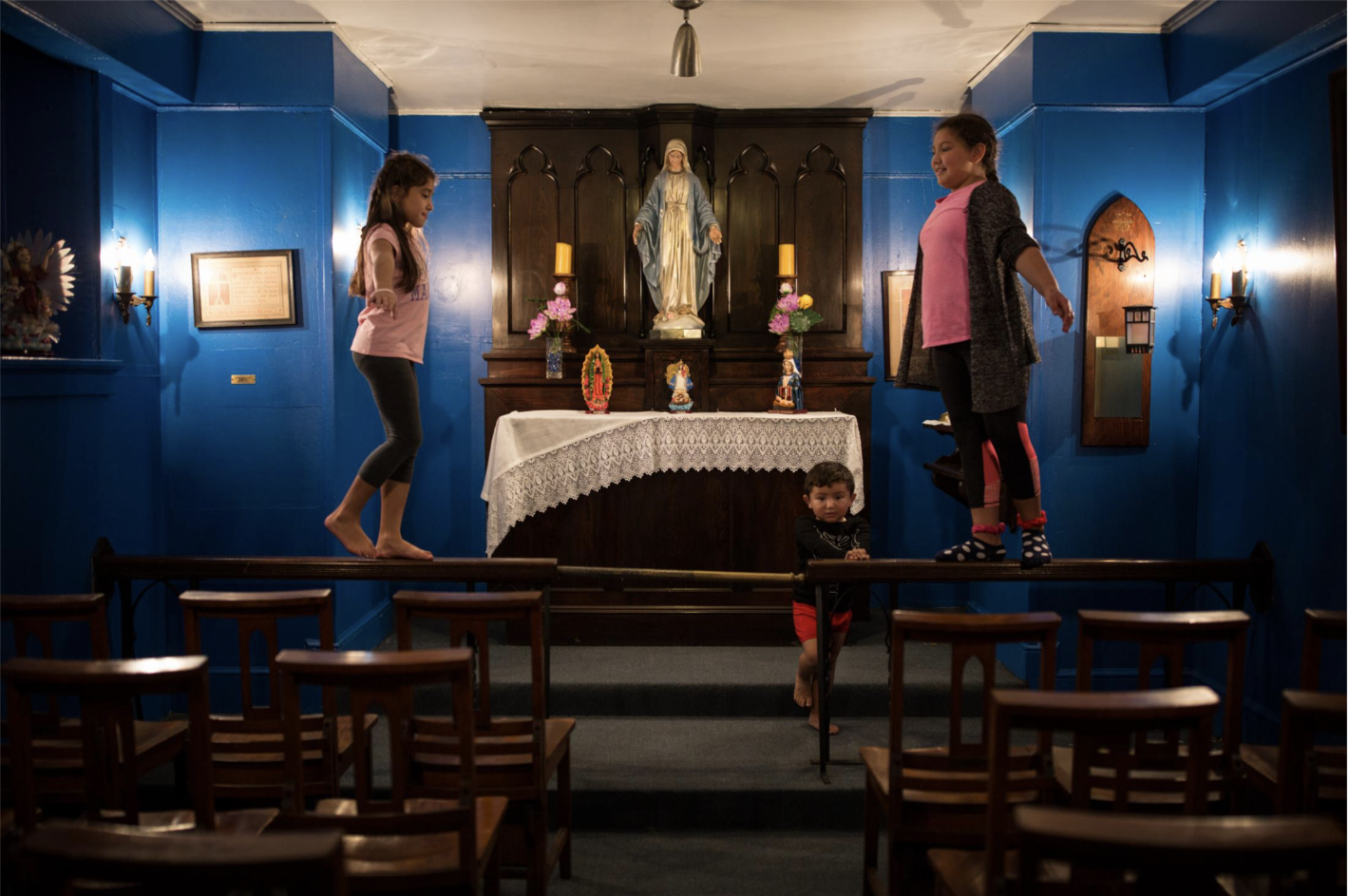
“Sanctuary” refers to jurisdictions and worship spaces that refuse to cooperate or limit cooperation with the US Immigration and Customs Enforcement (ICE) agency. Briones invites viewers into the worlds of those living in these sanctuary spaces, recasting worship spaces that have historically and socially been considered quiet, stoic, and reverent as full of play, celebration, and interpersonal activity. The best example is Playground New York City, USA, which depicts two young girls balancing on altar rails with their arms held outwards as if they were practicing to be gymnasts.
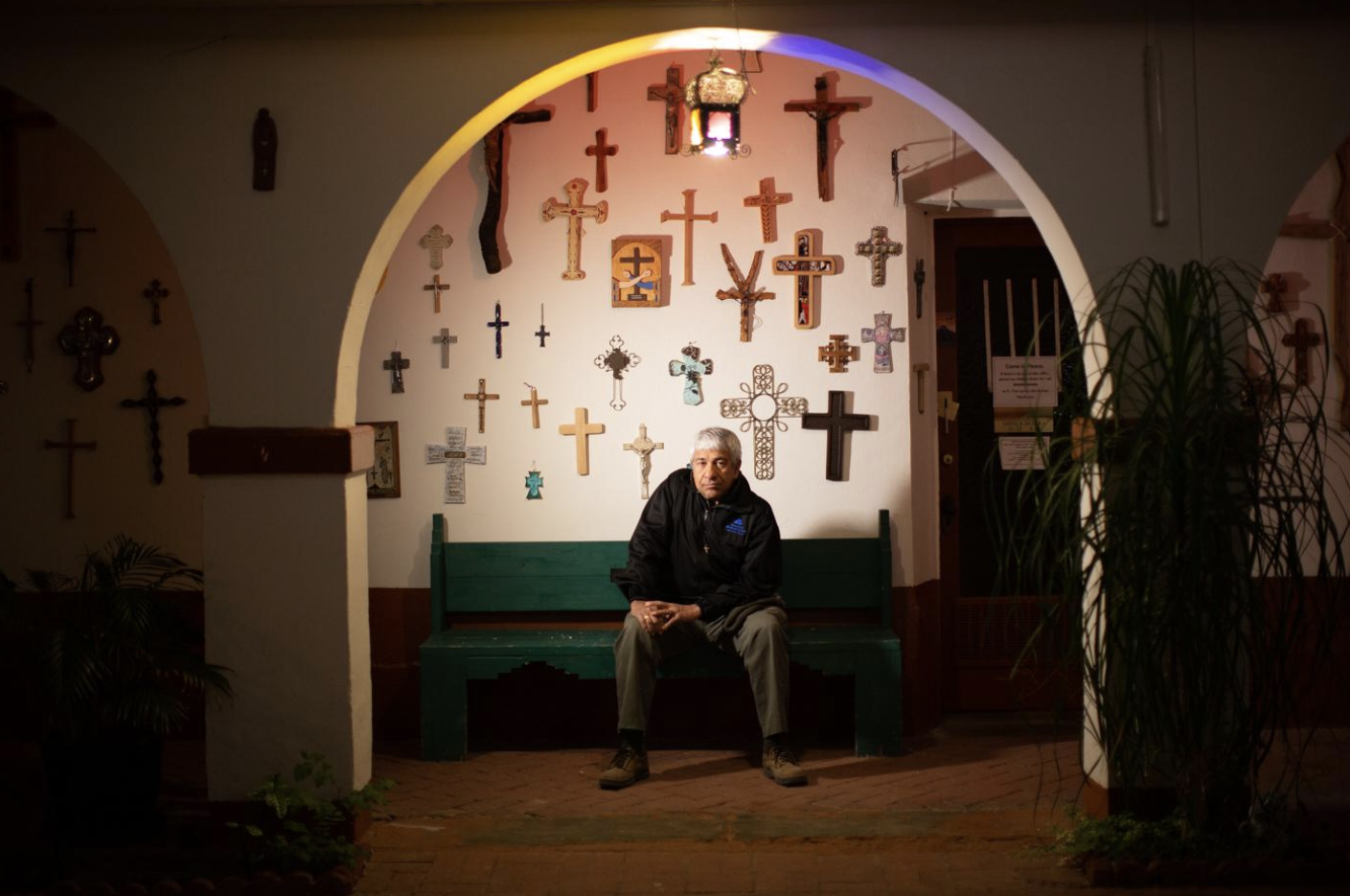
Set against the stark white gallery walls at BAXTER St, this intimacy is limited to the frames of her photos, just as the people inside the photos live contained—protected, yet possessed—inside of church sanctuaries across the United States. Her photographs also showcase how spiritually and physically draining it is to live in these spaces for years on end. In El lugar del silencio, a man sits in an alcove whose walls are covered in crosses, swallowed by the symbolism around him. He looks out at the viewer with a mixture of hope and exhaustion.
Although the exhibition documents communities and networks of protection created during Trump’s first administration, this groundbreaking gaze into the daily rhythm of safety and sacrifice, protection and imprisonment, is still timely as raids and violence by ICE agents increases. From the 500-1,000 congregations serving as sanctuaries during Trump’s first term, today more than 5,000 congregations now claim sanctuary status. The vast majority are Catholic, Presbyterian, Quaker, and Unitarian congregations and most are concentrated in large, predominantly Democratic cities like Los Angeles, Chicago, and Denver. These places are often considered “sanctuary cities,” meaning that local governments also have prohibited law enforcement from cooperating with and assisting ICE agents.
These churches recognize and continue a long history of houses of worship serving and protecting marginalized communities facing violence—from Medieval fugitives seeking asylum in cathedrals to enslaved people finding refuge in churches along the Underground Railroad to Central American immigrants fleeing civil wars and drug violence during the 1980s Sanctuary Movement. These congregations recognize that protecting immigrants not just from deportation but from ICE agents’ physical, sexual, and emotional violence inside and outside of detention centers is not just a political issue but a spiritual one as well.
As a queer person who grew up in the Catholic Church with the weight of expectation, conversion, and presentation, Briones’ photos stirred long-forgotten feelings of being imprisoned within a space that liked to think of itself as built from and by unending love.
Despite the importance of sanctuary churches, Briones’ photography captures the tenuous power dynamics within their walls. When people cannot leave the churches, when they are reliant on others for everything—food, clothing, healthcare, childcare, and legal resources, it can be easy, Briones cautions, to turn the people these communities care for into symbols and spokespeople for an entire group fighting an unjust immigration system. Sometimes, even well-meaning church members fail to acknowledge the agency, strength, and tenacity it takes to survive in these spaces. Briones hopes that these photographs will reinforce the personhood of people living in sanctuary churches and the mental and physical toll of being stuck within them.
Briones is planning to host gatherings in the exhibition space where she will invite migrant communities to talk with movement leaders, including Barbara Andrea Sostaita, author of Sanctuary Everywhere: The Fugitive Sacred in the Sonoran Desert, watch and discuss journalist Gerardo del Valle’s documentary film about Salvadoran author Javier Zamora, and embroider white pañuelos, or rectangular altar cloths, with news headlines. These events will connect violence across the Americas, U.S. state-sanctioned violence against immigrants, with the drug-related, gender-based, and other violence that can be the cause for emigration.
As more people receive their news via social media, it can become difficult to linger and process what we are seeing. In Living in Sanctuary, Briones invites people to reflect on what it means to live in sanctuary, while casting a light on the complexities of service.
Living in Sanctuary is on view through August 12, 2026 at BAXTER ST at the Camera Club of New York, 154 Ludlow St, New York. Follow @cintyiasantosb to see event updates.
You Might Also Like
Magic and Optimism Closes The Immigrant Artist Biennial
New York ‘Carrie Mae Weems: Three Decades of Photography’ on view at Solomon R. Guggenheim
What's Your Reaction?