
Did Duchamp Give Up on Art, or Did Art Give Up on Duchamp?

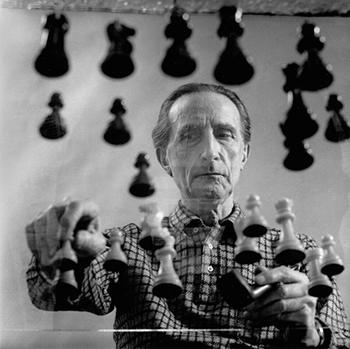

The French artist Marcel Duchamp famously gave up art to play chess. Meandering through the Museum of Modern Art’s retrospective Marcel Duchamp (1887–1968), I wondered whether it was not Duchamp who abandoned art, but art that had given up on Duchamp first.
As I entered the show, a family ahead of me shuffled, as though they had just driven in from the American Midwest. The father was dressed in the same outfit as his five-year-old son—matching white T-shirts, blue shorts, and bold caps. Blockbuster exhibitions at one of the world’s most famous museums are meant to be democratic affairs. Ideally, designed for the scholar and the sceptic. With that in mind, I fell in behind them, curious to watch Duchamp through the eyes of visitors with no apparent investment in this chapter of art history.
“That’s a bicycle wheel!” the father announced, delighted to have recognised something familiar.
“Is that a urinal? “ the little boy said. No answer came his way.
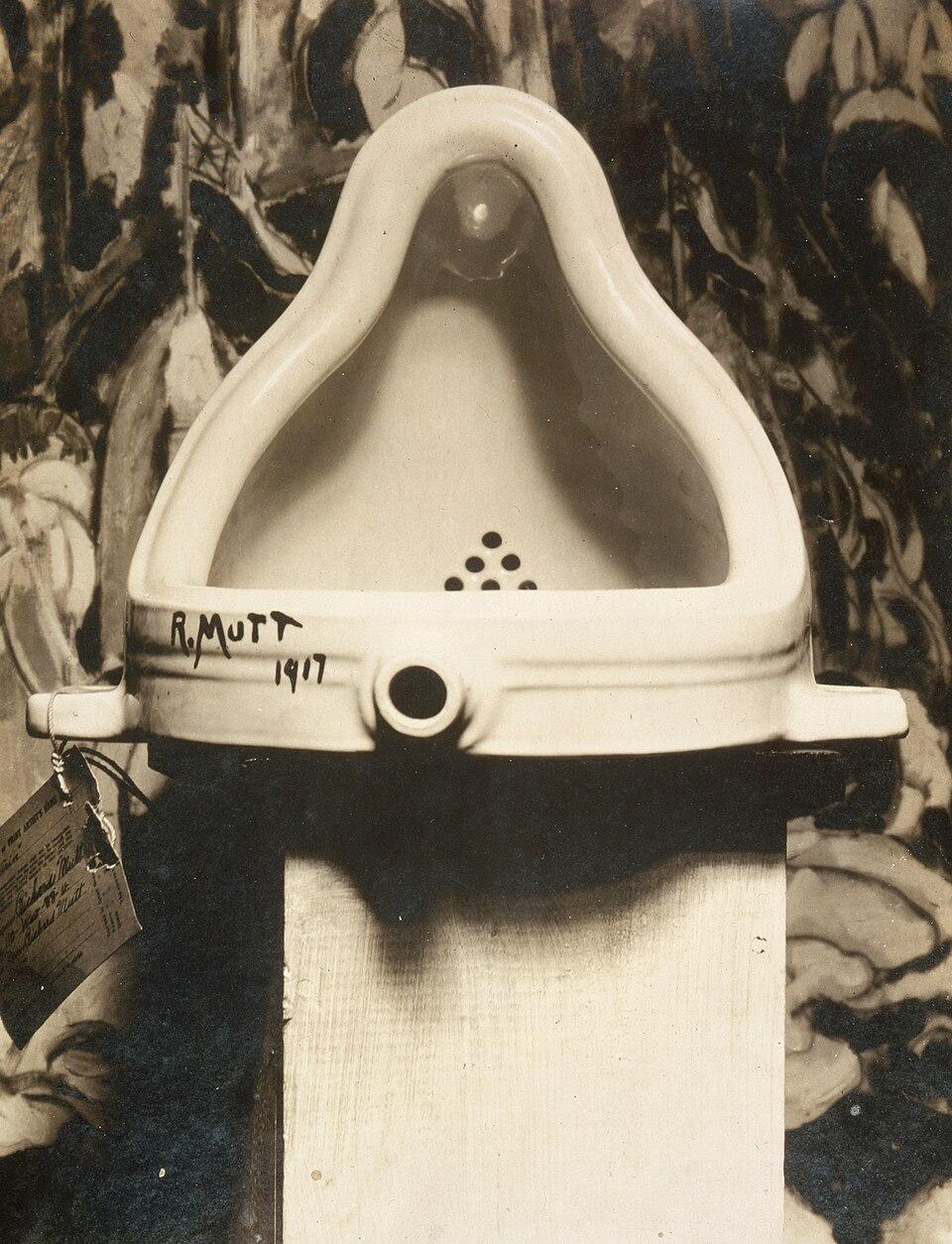
Their faces tightened into expressions of polite confusion before they wandered ahead. Neither glanced at the wall labels that the curators had undoubtedly agonised over, hoping to unlock the profound conceptual revolution contained within these objects. The family needed no explanation. As far as they were concerned, a bicycle wheel remained a bicycle wheel, and a urinal remained exactly what it had always been.
Reading this, one might interpret my tone as condescending; yet the hierarchy I am describing is not one I am imposing, but one that the museum itself has historically constructed. Careful consideration has gone into this first North American retrospective since 1973 of the behemoth artist who is taught in every Art History class; it is credited to three curators from two institutions (MoMa and the show’s next stop: Philadelphia Art Museum), two curatorial assistants, one exhibitions assistant, and one postdoctoral fellow. Museums act as the gatekeepers of taste, knowledge, and cultural value; someone has to. I wish the curators had considered non-art historians and their adjacents, like this ball-cap-wearing family, not by simplifying Duchamp, but by finding a more playful entry point into his work. After all, Duchamp’s greatest gesture was arguably to question who gets to decide what art is in the first place.
Observing them, I realized they were perhaps engaging with Duchamp more honestly than many of the museum’s patrons. They had arrived without the burden of knowing why these objects were famous. Their instinctive reaction was not one of revelation but of mild bewilderment, quickly followed by indifference.
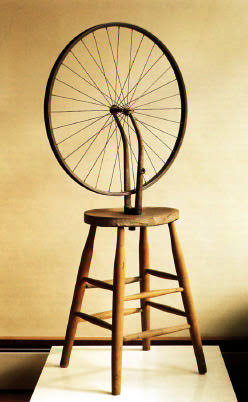
Perhaps that is Duchamp’s greatest paradox. His readymades were intended to undermine the solemnity of art, to puncture aesthetic reverence and expose the arbitrariness of artistic value. It was art for art’s sake. Yet a century later they have become relics in a secular cathedral, surrounded by reverential labels and either bewildered or admiring viewers. I wanted to run behind the family shouting ‘You can’t start with Duchamp! All of this started as a joke!’ The issue is that Duchamp’s anti-art gesture has become one of the most institutionalised spectacles in modern culture.
Where are we to go next?
Like so many fashionable retrospectives, the exhibition is arranged chronologically. Duchamp’s show was no exception. The first two galleries were filled with early competent, even charming, drawings and paintings. I think one room would have been enough. They revealed an undeniably intelligent artist, but not yet a revolutionary one. By the time I reached the room of readymades, I wondered whether Duchamp’s conceptual breakthrough had been born less from artistic conviction than from artistic limitation. The artworks on show, however important artistically, struggled to fill the vast exhibition spaces. The curators made a valiant effort by doubling the impact of the few works on display by lighting the objects so that dramatic shadows fell on the bare walls.
Faced with the prospect of competing with his contemporaries of extraordinary technical ability—Picasso, Matisse, Braque—Duchamp may have realised that he would never surpass them on their terms. Rather than paint better pictures, he changed the rules of the art altogether. If he could not revolutionise painting, he would reinvent what counted as art.
Seen in that light, the readymades become not only acts of intellectual provocation but also acts of strategic brilliance. I would have been very interested to see more context for the 1917 Fountain (urinal). Why wasn’t this context provided with other works that were included in the inaugural exhibition of the Society of Independent Artists in New York? This groundbreaking ‘no jury, no prizes’ show claimed to accept all submissions except Duchamp, whose piece shocked the ‘nonexistent’ jury, sidestepped the contest of virtuosity and created a field in which ideas mattered more than skill. Fountain was, and remains, one of the most successful artistic gambits of the twentieth century.
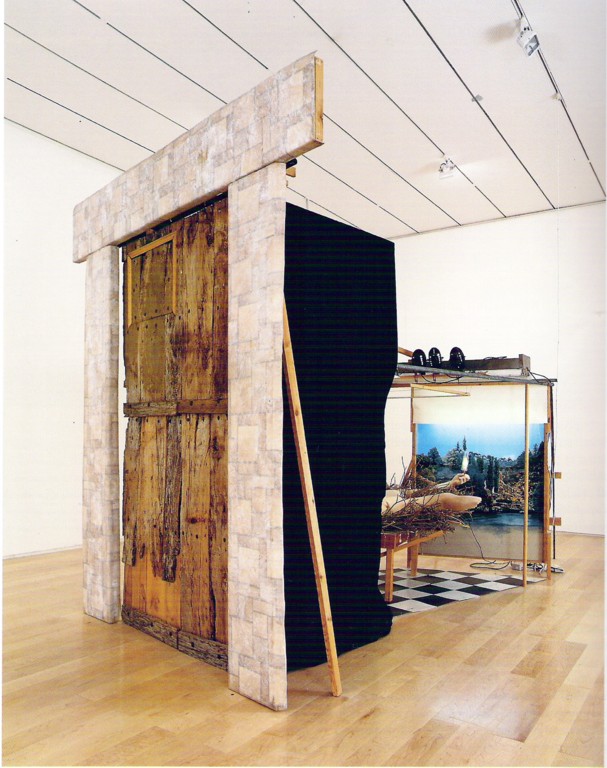
Duchamp never regarded chess as a retirement from art, but as another form of thinking. What began as an inspiration ended up taking over his life. Or so he claimed, because whilst he was ‘busy’ playing chess he constructed Étant donnés, an installation that will never leave the Philadelphia Art Museum, in secrecy from 1946–1966. I enjoyed looking at the construction photos of the peep-hole installation almost as much as the photoshoot in which Duchamp, appearing as his alter ego Rrose Sélavy, was photographed in 1921 by the American Dada artist Man Ray.
As I left the galleries, a row of chessboards had been set up, occupied by absorbed players. It was a thoughtful gesture, a nod to the pursuit that ultimately consumed Duchamp more than art-making ever did. Why confine chess to the exit, as an epilogue, when chessboards could have been placed throughout the exhibition? It would have injected life into an otherwise subdued exhibition. The inclusion of active chessboards throughout the show would have felt truer to Duchamp’s spirit than the hushed procession from artwork to masterpiece. If his life’s work was to question what art is and how we encounter it, then allowing play to continually interrupt the act of looking would have been the most Duchampian curatorial gesture of all.
Marcel Duchamp is on view through August 22, 2026, at Museum of Modern Art, 11 West 53rd Street, New York, NY, and Philadelphia Museum of Art, October 10, 2026, through January 31, 2027. A version of the exhibition, co-produced by Centre Pompidou, will be presented at Grand Palais in Paris in Spring 2027.
You Might Also Like
Peeling Back the Layers of Frida Kahlo as an Artist, Activist and Person at the Brooklyn Museum
What's Your Reaction?