

In Bed-Stuy, Rain Chan and Sofia Thiệu D’Amico Discuss Compulsive Archiving, “Other,” and Mousse


From documenting fictional U.S. presidents to the internet, “other” categories, double vision, train stations, and an upcoming exhibition at Hong Kong Palace Museum to “all hell breaking loose” as the chocolate mousse made its entrance this conversation took place over dinner at French chicken rotisserie Bed-Stuy haunt BADABOOM between two friends. An incredible architect-artist and an equally masterful curator, or two pretty darn good writers—by extensive impressive thinkers—whose creative work overlaps around archives and collaborative research. Both integral to New York’s niche set of creative avant-garde Asian diaspora, when they feel like ticking that box.
Trained at Cooper Union and the Harvard Graduate School of Design (on full scholarships) Rain Chan practices architecture at the global research-based firm Perkins&Will. On the side, he both makes art and designs for the arts, he led the research and fabrication of the centerpiece model of Šerefudin’s White Mosque for Toward a Concrete Utopia (2018) at MoMA and served as sculptural designer and technical director for Ellen Pau: She Moves, currently at the SculptureCenter. Curator Sofia Thiệu D’Amico has contributed to September, Chan’s just-for-fun but majorly compulsive New York-based contemporary art anthology whose contributors include Francis Alÿs, Dayanita Singh, Jeffrey Gibson, Christian Marclay, Vince Aletti, and myself. Thiệu D’Amico’s work focuses on migration, ritual, labor, and place, examining how artistic practice engages the politics of historical memory. She is currently co-curating The Immigrant Artist Biennial: Identity Card. Get ready, they are a power-duo.
-Anna Mikaela Ekstrand
Sofia Thiệu D’Amico: I want to start with the presidential project, because I think it says a lot about how you work. What was the initial pull — what drew you to it?
Rain Chan: I haven’t totally figured that out. I think it’s something about bureaucracy being beautiful and data being extraordinary. And the curator’s role being the most important one right now — not because curators have power over what exists, but because they have some say over what gets remembered. We can’t control what’s produced. But we can choose what we hold onto, what we submit to a formal operation. And for me, a lot of room opens up when you take these large bodies of internet data and ask what’s actually inside them.
ST: And the presidential project came from that?
RC: Almost every year, at least one Hollywood film features a fictional US president. So I started documenting them. Each president is assigned a term based on the year the film came out: Air Force One places its president in 1997, Black Hawk Down in the early 2000s. The structure creates an alternative history, a continuous line of fictional American leadership running parallel to the real one.
ST: It’s funny, because if you asked an AI to generate a typical U.S American president, it would almost certainly give you something that looks exactly like what Hollywood has been producing for thirty years — connected to very specific ideas about what power looks like, what security looks like.
RC: That’s exactly it. The fictional president is one of the most widely exported images of U.S American authority — more people globally have seen Bill Pullman’s speech in Independence Day than have ever watched a real State of the Union address. So in a strange sense, the Hollywood portrait is more truthful than the official one. It shows what the U.S. wants the presidency to look like. It’s a portrait of power as projection.
ST: And you’re coming at this from a third-party position, as someone from Hong Kong. Do you think that distance is productive?
RC: I think it’s essential for this kind of work. I’m not inside the mythology. I can see the machinery of it — how U.S. Americans keep returning to foundational documents, the amendments, the constitutional language, as if meaning has been fixed there permanently. It’s interesting to watch a culture locate its identity in texts written by a group of men in a room, and then watch that identity projected outward through cinema, as if the two are continuous. And I think a lot of Asian kids have a version of this perspective — there’s almost a sense in which all of us are third culture kids, caught between traditional values and the supposedly progressive values of the West. Hong Kong takes it on the nose a little more than most, but the question of colonization is more of a generational issue than a geographic one at this point.
ST: I see that in your projects, this interest in larger power systems, and also, I think, a kind of parody of them. There’s a genuine sense of humor in how you work. Is that conscious?
RC: I think humor is how you know you’ve found something real, when something is simultaneously funny and structurally true. A comedian once said that humor is what happens when systems stop working as intended. That’s also my primary mode of reading. The more rigid the system, the funnier it is when it breaks. And there are very funny things about tax forms and fan fiction archives and fictional presidents, you know?
ST: [laughing] The convergence of those three things as a body of work.
RC: I’m aware of how it sounds. But I think there’s a distinction between being amused by something and needing to command it. I’d much rather be in the first mode — confused by something, delighted by it, not entirely sure what it means yet. The moment I feel like I fully own the knowledge is usually when it stops being interesting.
ST: That resonates with me. A lot of the work I find most compelling right now is doing exactly that — pointing at what’s already been produced and saying, isn’t it kind of astonishing that this exists? Not over-producing, but looking at what the world has already made and finding the thing inside it that wasn’t supposed to be visible.
RC: Which is also what archiving is, at its most basic. Everyone does it. It’s not a specialized practice, it’s just the condition of having a phone and a memory and more images than you can ever actually look at. The question is what you do when you notice the accumulation is already there.
ST: Your relationship to the archive isn’t only conceptual, though. You’ve done actual archival fieldwork. The Tibet research?
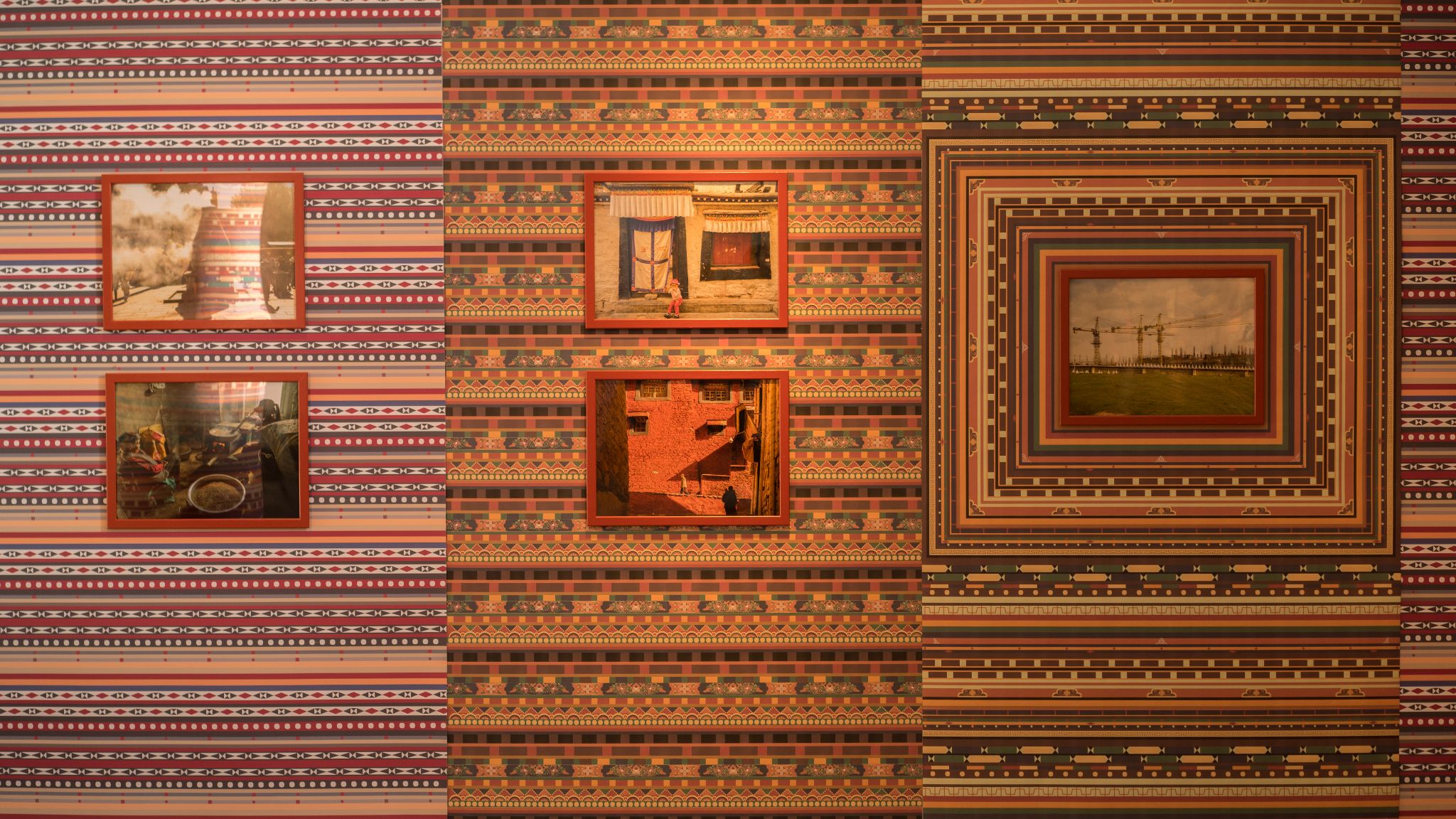
RC: 2017, on the Benjamin Menschel Fellowship at Cooper Union. Two teammates and I spent two months in rural Tibet documenting vernacular architecture, traveling village to village, photographing and measuring houses built from local lumber and stone. And what we found was an architecture that is itself a kind of living archive. These buildings are designed for disassembly. The same structure converts between grain storage in the winter and living quarters in the summer; the timber columns and beams get taken apart and reused across seasonal rebuilding, because lumber up there is genuinely scarce. The building is never finished — it’s continuously re-edited by the family that lives in it.
ST: Which is the opposite of how we usually think about preservation.
RC: Exactly, and that’s what the research became about. The government’s development policies encourage permanent concrete construction — well-intentioned, but concrete can’t be disassembled, so it doesn’t just replace the buildings; it erases the practice. A way of life encoded in a construction method. We produced measured drawings and photographs and turned it into an exhibition back at Cooper arguing for policy that could accommodate the vernacular instead of paving over it. That was probably the first time I understood documentation as a form of advocacy. The drawing is the argument.
ST: That instinct — reconstructing something from an incomplete record — shows up again at MoMA almost immediately after, no?
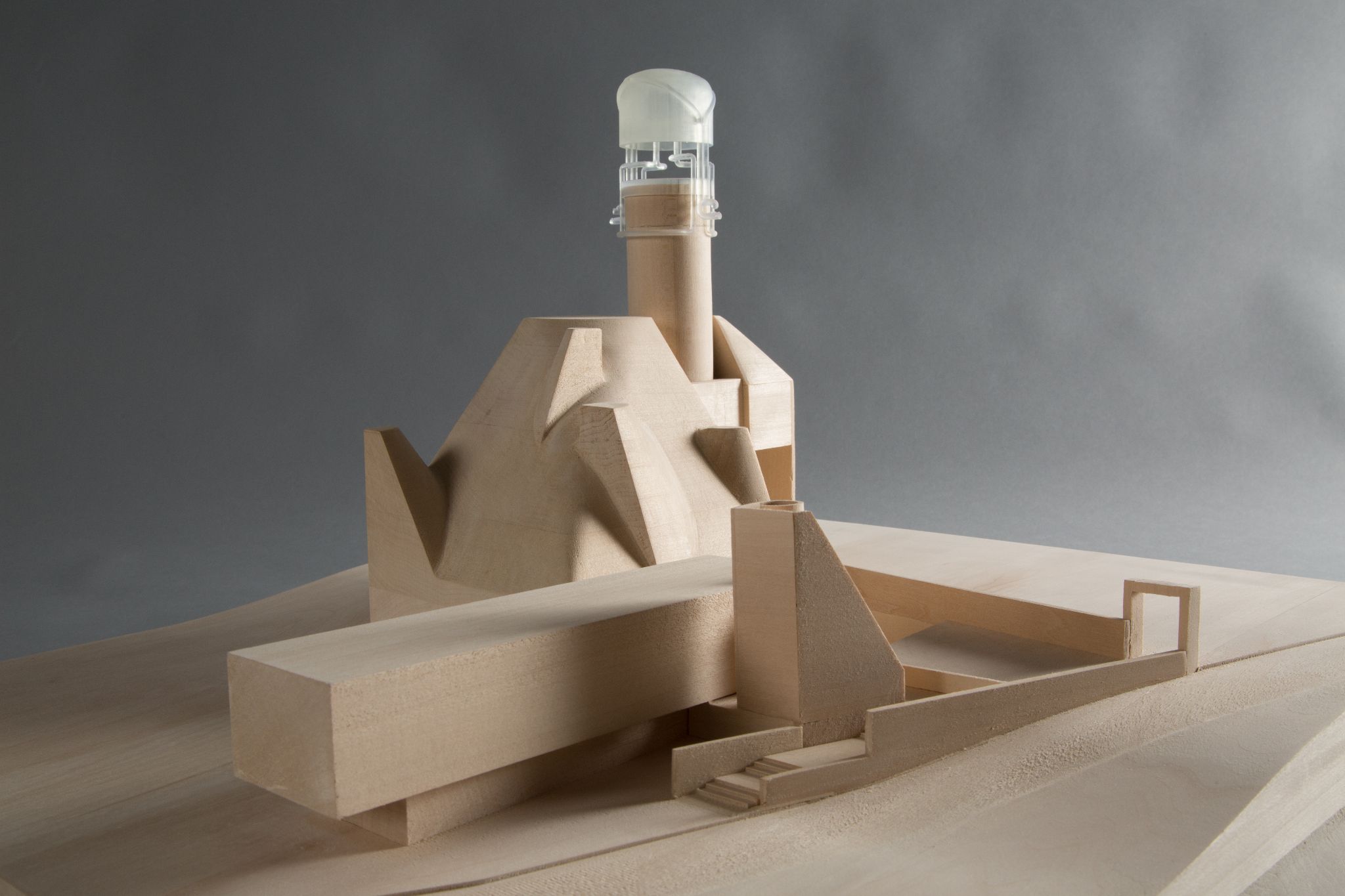
RC: Same year, actually. For Toward a Concrete Utopia, the Yugoslav architecture survey, I led a team of three researching and fabricating the centerpiece model of Šerefudin’s White Mosque — this extraordinary Aga Khan Award-winning building by Zlatko Ugljen in Visoko, Bosnia. And the archival problem was the whole problem. The building’s folded geometry is barely documented; the published drawings contradict each other and contradict the photographs. So before we could cut a single piece of material, we had to reconstruct the building analytically — studying Ugljen’s other works to learn his formal logic, cross-referencing photographs against the drawings, resolving the structure piece by piece. We essentially produced a new set of measured drawings of the mosque, more complete than what exists in the published scholarship, and only then fabricated the model — CNC-milled basswood and 3D-printed resin, to the standard MoMA puts on public view. The model and the research drawings were both shown in the exhibition.
ST: The model as an argument about its own sources.
RC: Every model is. We just don’t usually say so. Hundreds of thousands of people saw that building through our model who will never travel to Visoko. That’s the strange responsibility of the work — you’re deciding, on the archive’s behalf, which building to believe.
The waiter comes to ask how the ratatouille and rotisserie chicken are. It was great, both of them say. It was great.
ST: I want to ask about the IRS project, because it feels like the same instinct pushed somewhere harder.
RC: It’s the same thing in a different register. I downloaded all 8,000 publicly available IRS documents and ran a search for every instance of the word “Other” across all of them. What you find is that the IRS — which is essentially the most comprehensive attempt in American institutional life to make financial existence legible through categories — keeps running into things it cannot name. And every time it does, it sews a small pocket into the taxonomy. An “Other” field. The moment the form tears.
ST: That’s almost the form saying — we know something is here, we just don’t have the language for it.
RC: Exactly. And by assembling all of those moments into a single document — a composite form consisting entirely of “Other” fields — you get a portrait of everything the IRS cannot see. But it also becomes something strange in its own right. The assembled document is around 4,000 pages, which makes it larger than most of the original forms it was extracted from. The remainder has become its own monster. The exception has become the largest category.
ST: Did you encounter this personally?
RC: With the W-8BEN — a form for work conducted outside the United States. The entire document has been engineered to anticipate every possible international situation. Except that when it reaches my situation — Hong Kong has no tax treaty with the US — it essentially gives up. There’s a blank paragraph space and an instruction to explain why your country doesn’t have an agreement, and what deductions might or might not apply as a result. I had to Google my own country’s legal standing, and then write a paragraph justifying my situation to a form that wasn’t designed to hold me. I ended up in the “Other” category. Which, given what I now know about what “Other” means across 8,000 documents, feels like a very specific place to land.
ST: It’s also, I think, where a lot of people land who are international, who are living here, working here, navigating systems that were built without them in mind.
RC: The “Other” checkbox is where the form meets the world as it actually is rather than as the form imagined it would be. The named categories are where the system works. “Other” is where it becomes honest — where it admits the world is larger than it anticipated. And the thing is, by assembling all those admissions, you’re also assembling a kind of community. Everyone who didn’t fit. The largest group, made out of everyone the system couldn’t name.
The dessert menu arrives. Dark chocolate mousse and rice pudding. The mousse was sitting on the counter watching them the whole time, waiting to be ordered.
ST: Should we fully indulge?
RC: I feel like we earned it.
ST: Okay, the Amtrak stations. This one genuinely surprised me.
RC: I went to DC, Union Station. Then I went to Florida, also Union Station. And I started thinking, surely someone in a boardroom at Amtrak has flagged this. Like, guys, we have eighteen Union Stations. This might be a problem. There are eighteen of them, which means you could theoretically travel across the entire country — Union Station to Union Station, seventeen legs, no repetition. Coast to coast without ever leaving Union Station.
ST: Have you thought about actually doing it?
RC: I did the math. About $6,000. And spending more than ten hours on Amtrak starts to resemble a particular kind of confinement. But what interests me more is why the name is so prevalent. It goes back to the railroad company era — the US railway used to be operated by dozens of competing private companies, and “Union Station” was what appeared when multiple rail lines shared a terminus. The word was literally about the convergence of competing infrastructures. Now it’s just a name that nobody questions, repeated eighteen times across the country. The history of how America got connected is right there in the signage, and everyone walks past it.
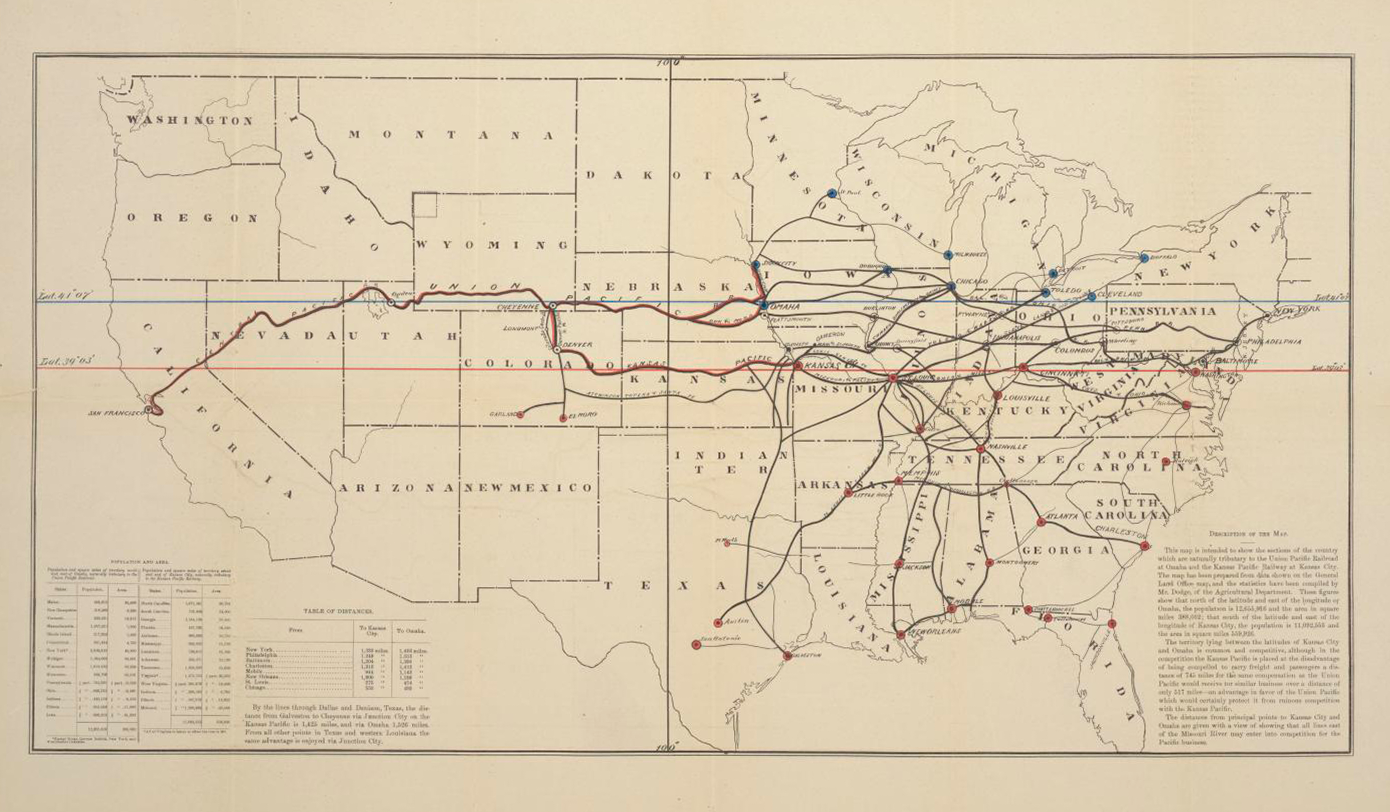
ST: Is that connected to the railroad’s colonial history too? The westward expansion, manifest destiny — the U.S. American railroad narrative is so bound up in that.
RC: It’s impossible to separate them. And I think that’s true of a lot of Asian perspectives on U.S. American infrastructure and mythology. All of Asia has been colonized at some point. That residue comes through in the culture even when it’s not explicitly named. You end up reading U.S. systems with a certain double vision — you can see both what the system is presenting and what it required in order to present itself that way.
ST: I think that double vision is exactly what makes your work function as critique without needing to announce itself as critique. You’re pointing at things that are already visible but somehow not seen.
RC: That might be the most precise description of what I’m trying to do. The IRS forms are public documents. The Amtrak station names are printed on every ticket. The Hollywood presidents are on streaming platforms. None of it is hidden. The question is what happens when you collect it, when you submit it to a formal operation — extraction, compression, assembly — and hold it up as a body of work. The archive reveals the structure that was already present inside the material.
ST: I want to spend real time on SculptureCenter then, because She Moves is up right now, and it feels like that same operation: an archive being held up, except this time it’s someone else’s archive, and you were the one giving it a body.
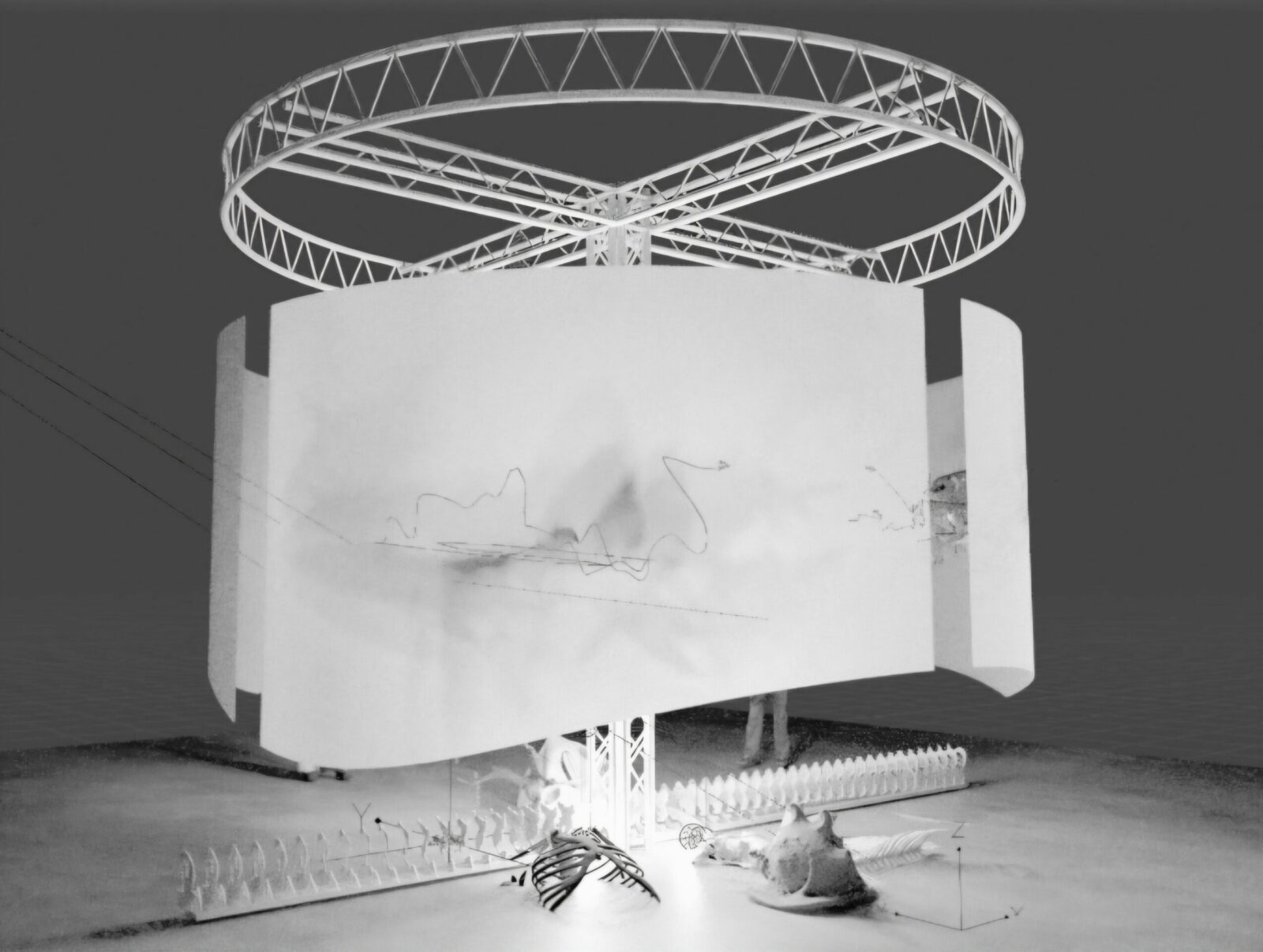
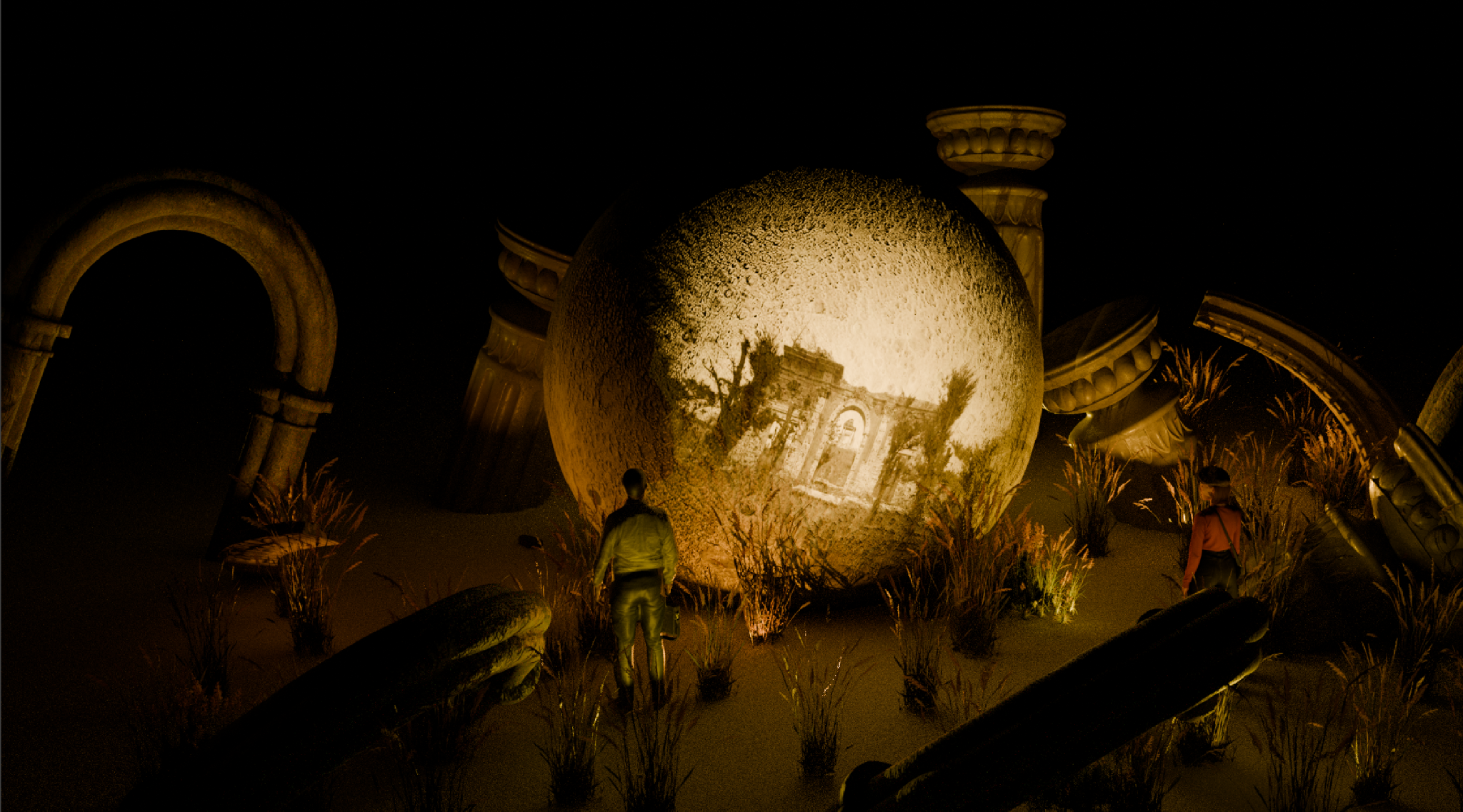
RC: It was the strangest and most complete thing I’ve done. Ellen Pau is genuinely a pioneer, the godmother of Hong Kong video art. She hired me directly, and we developed the show’s only newly created work together over about a year: Where Have All the Flowers Gone, which runs the length of the main corridor in SculptureCenter’s lower galleries. That corridor is a famously difficult space: a tunnel, one path in and back out, and we leaned into it: the work is structured as a divination apparatus, so every visitor effectively receives a different reading. It moves from generated imagery derived from X-ray diffraction patterns of the genome of the Bauhinia blakeana, the flower on Hong Kong’s flag, through sequences of historical imagery of the city, and culminates in a large Pepper’s ghost hologram where the accumulated images undergo a ceremonial burning. The score is multichannel, composed from the cadences of the Yi Jing and the flower’s genome. My credit is sculptural designer and technical director, but the honest description is that I was responsible for giving the work a body.
ST: And beyond the one work?
RC: I built a 3D model of the whole exhibition, rendered how each element would be staged, and then spent two weeks on site installing Where Have All the Flowers Gone with the museum’s crew and the sound and video specialists. How do you give a time-based practice from 1990s Hong Kong a new physical body in Long Island City without embalming it? An artist whose entire subject is transformation deserves better than preservation.
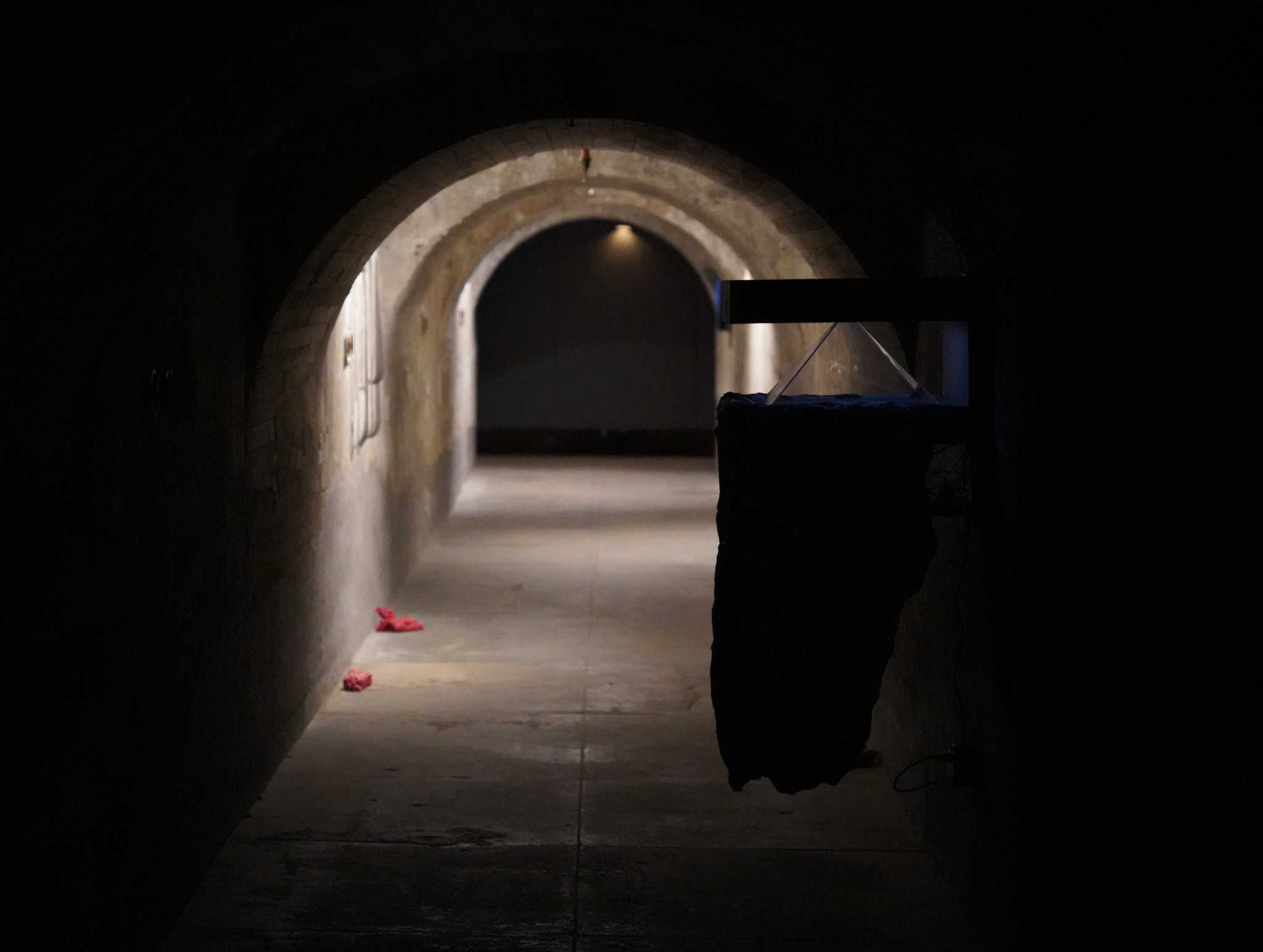
ST: It’s also a homecoming of sorts — a foundational Hong Kong practice getting its first American institutional survey, built by a Hong Kong architect in New York.
RC: That’s the part I don’t have irony about. The show closes August 16. People should go.
ST: That double vision seems about to become very literal for you. The Palace Museum commission — from what you’ve described, it sounds like the category problem again, in mythological form.
RC: Almost embarrassingly directly. The Hong Kong Palace Museum invited work drawing on the Palace Museum’s artifact collection, using technology to give those pieces new meaning, and I proposed Boundary Beasts — which was then designated the centerpiece of the exhibition. It starts from this idea in Chinese folklore that creatures transform when they cross boundaries. A fish becomes a dragon when it passes the dragon’s gate. A boulder becomes the Monkey King by crossing the boundary of time. The mythical animal is what appears at the moment a category fails — it’s the “Other” field of the natural world. The piece is a monumental lantern that works as a shadow-puppetry theatre: suspended sculptures built from 3D-printed animal bones that read, at most angles, as exactly that — a pile of bones — but at certain angles, with light through the screen, cohere into the silhouettes of the mythical fish, the dragon, the phoenix. There’s a zoetrope that runs the transformation from fish to bird as a continuous sequence, which is a very Darwinian thing to do to a set of myths. My actual theory is that myths evolve the way species do, through transmission and misinterpretation, until they become the stories we inherit. We’re deep in it now; I’ve assembled the fabrication team and a full mock-up is underway ahead of the opening next year.
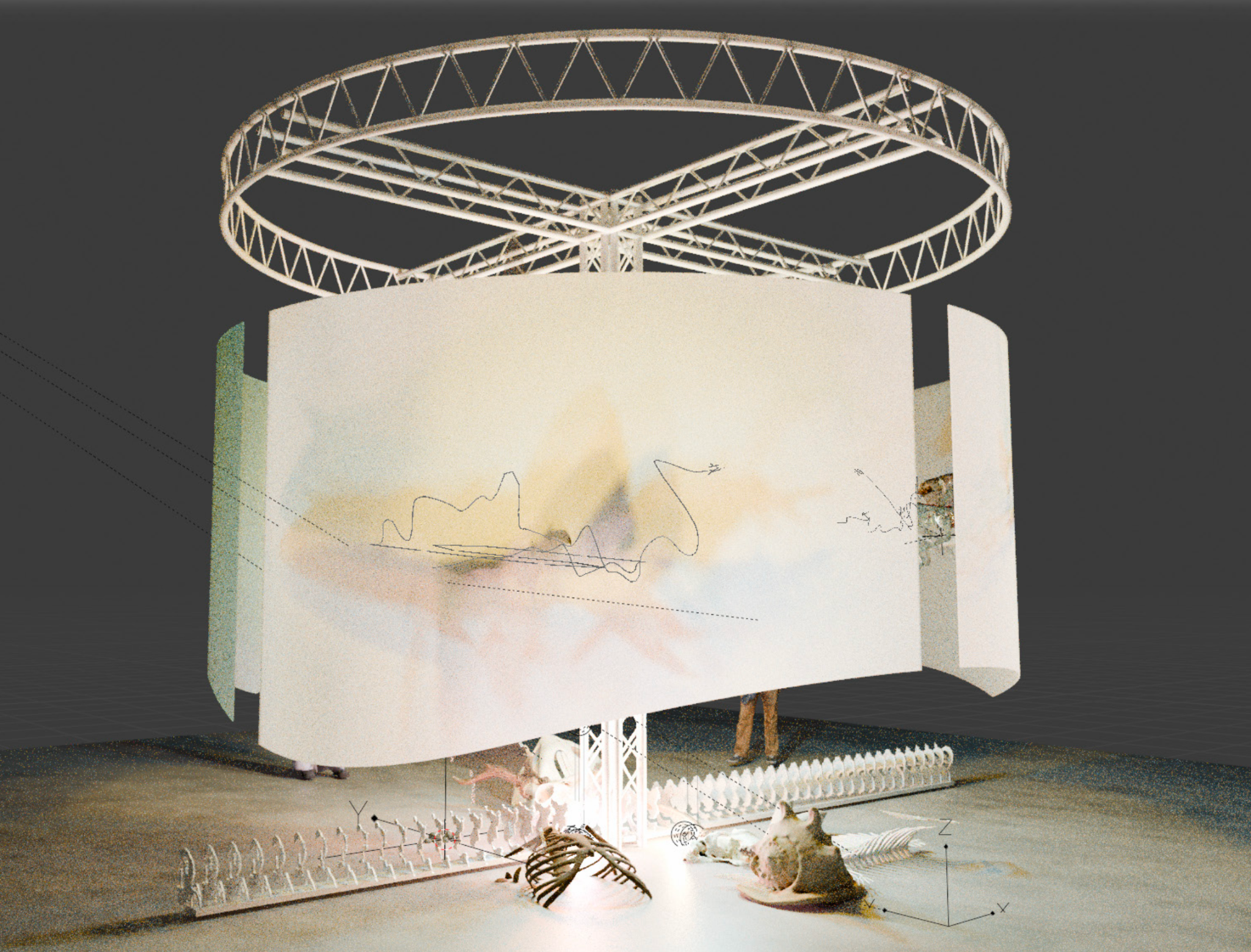
ST: So the visitor is standing at the dragon’s gate.
RC: The visitor is the thing the lantern can’t categorize. [laughs] But yes, the whole apparatus is about that instant of crossing, where the material stops being one thing and hasn’t finished becoming the next. It’s the kind of commission I couldn’t have made at any earlier point: it needs the exhibition designer and the fabricator and the architect and the person who’s been staring at broken taxonomies for years to all be the same person.
ST: And September, the anthology you worked on for a year, is doing the same thing, just with three different hands.
RC: September came from the same instinct, even before it was formalized. It started with a conversation — about the images we accumulate on our phones without quite meaning to. Chairs in impossible situations. Craigslist spoon listings where you can see the seller’s distorted reflection in the bowl of the spoon. Things caught outside their positions. We weren’t making art about archiving. We were just archiving, the way everyone archives, compulsively and without a clear sense of why. And then we started asking what that accumulation was actually doing. What it was saying about how we hold onto the world.
ST: And now the first issue has Francis Alÿs and Dayanita Singh and Christian Marclay in it. Did the contributors change what the question was?
RC: They confirmed it, mostly. We opened the question outward to forty people — artists whose work I’d admired for years, critics like Vince Aletti who have spent five decades looking harder than anyone — and found that everyone was doing a version of the same thing. Everyone has an accumulation they haven’t fully explained to themselves. The editorial work was really just building a room where forty private archives could be public at the same time. Forty people in September noticed the accumulation. Most people don’t. That’s not a judgment. It’s just a different relationship to the material that’s already there.
The mousse arrives. All hell breaks loose. Then, Clean Plate Club.
ST: I keep thinking about something you said earlier about preferring to be confused by something rather than owning it. Do you think that’s what keeps the work open? The not-knowing?
RC: I think the moment I feel like I’ve fully understood something is usually the moment it stops generating anything new. The projects I’m most interested in are the ones where I genuinely don’t know what the accumulation means yet. I know the IRS “Other” document is something. I know the recursive Gossamer index is something. I know the presidential portrait gallery is something. I know a lantern full of bones that becomes a dragon at one angle is something. But what exactly? I’m still finding out. And I think that’s the right relationship to be in with your own work — genuinely curious about it, still a little surprised by it.
ST: That’s rare, honestly. A lot of work I see knows exactly what it is before it’s made.
RC: That’s when it stops being interesting to me. When systems break is when the real information appears. And the work should probably do the same thing — be willing to break open, to not contain itself too tidily. The IRS form confesses when it produces “Other.” Maybe the work should do the same.
This conversation was edited for clarity by Sofia Thiệu D’Amico.
Ellen Pau: She Moves, for which Rain Chan served as sculptural designer and technical director, is on view at SculptureCenter, Long Island City, through August 16, 2026.
You Might Also Like
Architectural Designer and Artist Paul Mok: Bringing Life to Intention
Purva Kundaje’s Project ‘Bound’ Cultivates Creative Community as Programmatic Art
What's Your Reaction?
