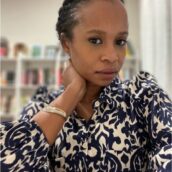
Naima Mora Speaks to her grandmother Elizabeth Catlett’s Revolutionary Spirit

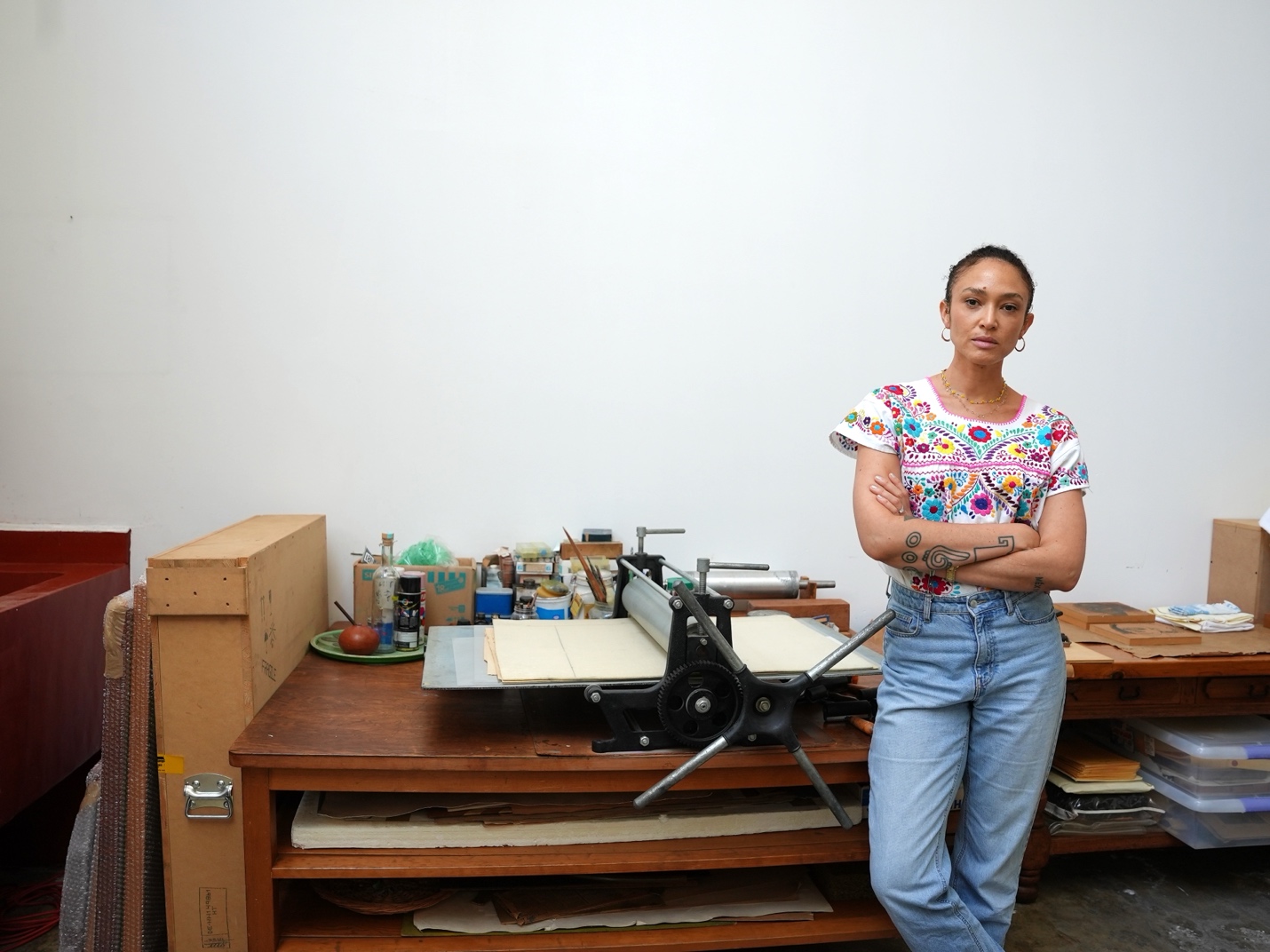

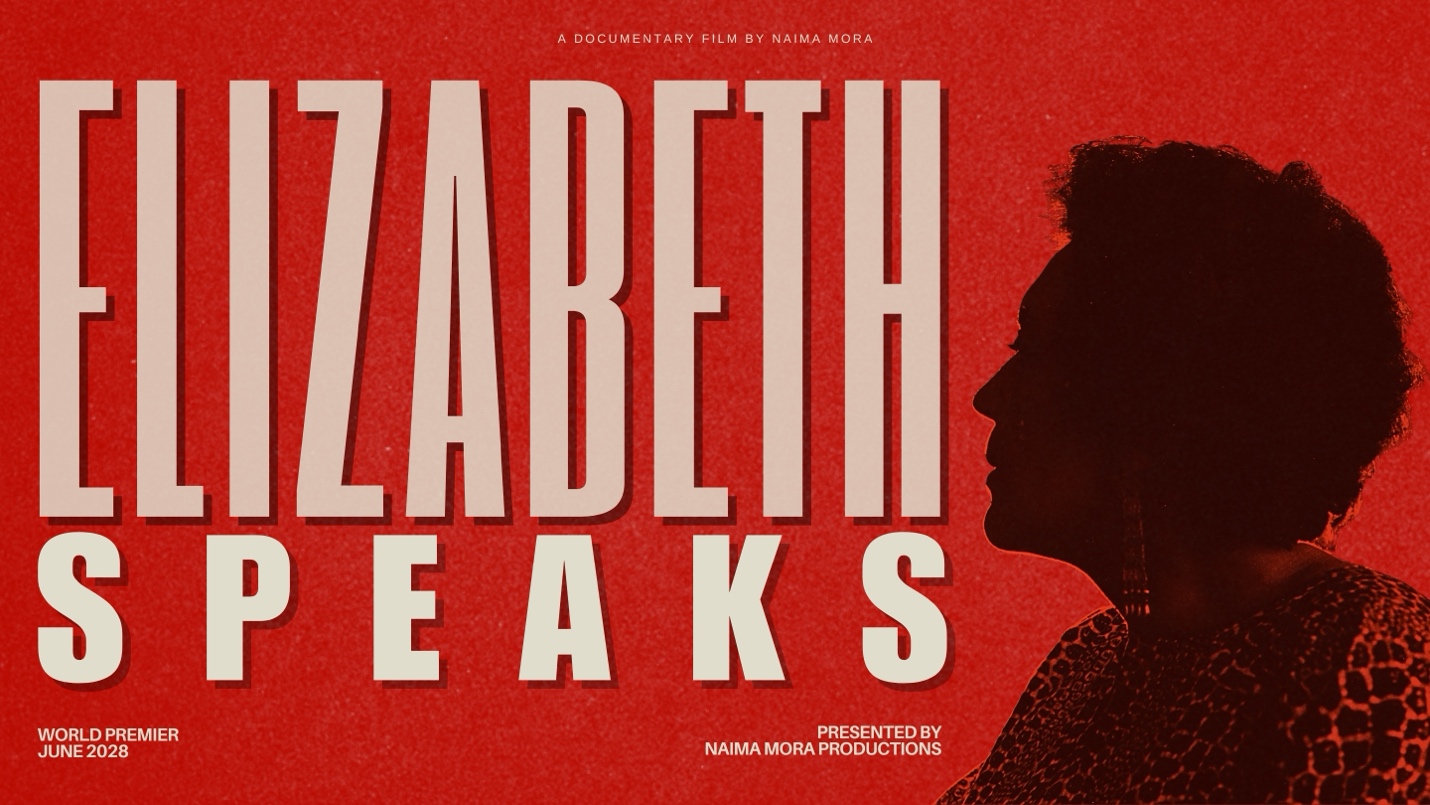
Naima Mora is now behind the camera for her directorial debut ELIZABETH SPEAKS. She is charting a new course born out of her deep love and reverence for her late grandmother, Elizabeth Catlett. Catlett was a black revolutionary artist and activist who built a prolific career as a printmaker and sculptor. After leaving her home in Washington D.C. for Mexico City in 1946, she was increasingly harassed by the U.S. government for her leftist activism and political art, which led to her being barred from re-entry. The documentary—in collaboration with producer Melanie N. Clark and Dr. Kheli Willetts, an African American arts scholar—chronicles the insurgent art and everlasting legacy of Catlett. The impetus behind the film is one of empowerment, “as I’m stepping into this role as a documentarian and filmmaker, with my grandmother’s story, which I am now stewarding, I still feel a responsibility to inspire people and empower people,” Mora explains.
Empowerment has been at the core of Mora’s artistic practice since she began dancing for Dance Theater of Harlem and later working in fashion as a model, receiving much of her training as the 2005 winner of America’s Next Top Model. As she learned how to express herself, she started taking roles behind the camera: creative direction, styling, and photography. When Mora struggled with getting sober and mental health issues, an in-person visit, and dreams of her grandmother guided her to a better path, with herself, and Catlett’s unpublished memoir detailing FBI surveillance and following the paper trail in archives around the U.S. helped her find her grandmother’s true voice for the film. ELIZABETH SPEAKS is slated for release in June 2028.
I had to the opportunity to speak with Mora about this iteration of her creative life—her, in her grandmother’s house in Mexico, me, in New York—and what it means to build a “legacy in motion.”
BP: Can you talk about the series of events that brought you to this work, to Elizabeth Speaks and the desire to capture the legacy of your grandmother, Elizabeth Catlett, who was uncompromising in her positionality and the type of work that she wanted to make.
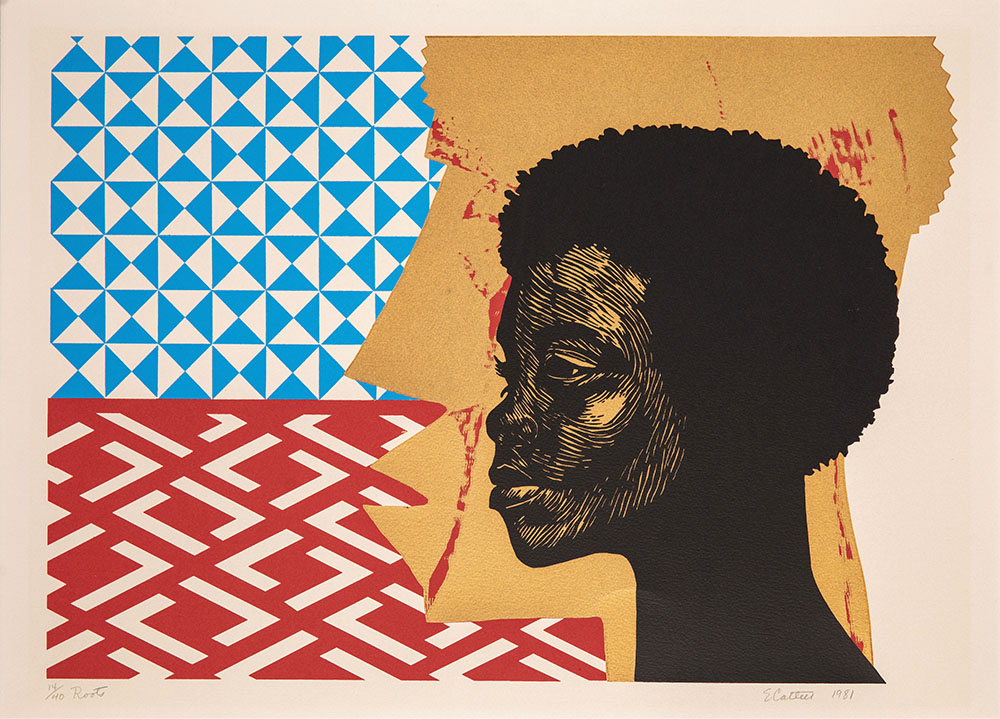
NM: She was very uncompromising; it was all or nothing. That’s what makes her work so powerful and revolutionary. She found a way to bridge a modern aesthetic that was accessible with traditional indigenous art forms. Her peoples were both black people and Mexican people, simultaneously. Her message was very clear: to empower and dignify people. “Uncompromising” is the exact word that I would use.
When I was 21, shortly after I won America’s Next Top Model, I ended up having to go to the Psychiatric ward. I was living this double life of a supermodel in the public eye: I had a public persona, and on the other side, battling this very deep secret I felt like I had to hide. My grandmother, in her wheelchair, came to visit me, with my dad. This was four years before she passed away. I don’t remember exactly what she said, but it was one of the last memories that I have of her. Twenty years later, I suffered from the same thing again. It was life or death. Choose. Some people can’t make that choice. Some people lose their lives to it. It was the memory of her coming to save my life the first time that pulled me out of it. It was the one thing that I could hold on to, and it felt like a miracle.
Suddenly, in 2022, I was sober. Days passed, months passed. A year later, I was very clear and experiencing life, as if for the first time. I started having dreams of my grandmother. In one of those dreams, she called me on the phone. She said, “Naima, it’s time for you to come back to Mexico. I’m waiting for you. You have to come back.” She was in the house that I’m in right now: there is an old green rotary phone by the desk that’s in the room over there. She called me from it. I still see it so clear. There was so much I had known about her that I took for granted. This wonderful, prolific artist—my grandmother. I was filled with shame, but it gave me purpose and a mission. I started researching. I started documenting her touring retrospective with only a handheld camera; my cell phone, ambition, and the guts to start over in life. I hope and intend to verbalize this transformation in a visual aesthetic deserving of my grandmother and the work I’m making.
BP: We used the word “uncompromising” to describe her emotional resilience as her ongoing leftist political activism—support for workers’ rights, black liberation, and women’s emancipation—and art challenging these inequities caused U.S. officials to label her a “threat to the well-being of the United States.” During the McCarthy era, her involvement in Taller de Gráfica Popular (TGP) in Mexico eventually led to her status as an “undesirable alien” and forced exile. She was barred from re-entering the U.S. in 1959, only to return in 1971, as a Mexican citizen having given up her U.S. citizenship, for an exhibition of her work after a campaign on her behalf. She was surveilled by both the U.S. and Mexican governments, all while rearing three sons with her second husband, Francisco Mora. Now she is receiving much deserved attention through, as you just mentioned, the retrospective, Elizabeth Catlett: “A Black Revolutionary Artist and All That It Implies” that, in 2025-26, traveled to the National Gallery of Art, Brooklyn Museum, and Art Institute of Chicago. What does it mean to meet your grandmother in doing this work? Not necessarily as your grandmother, but meet her as an artist and an activist; meet her as a woman?
NM: Absolutely. This is how I came up with the title of the film: Elizabeth Speaks. I’ve been telling visual stories for twenty years, using still photography and some moving images, but not as a filmmaker. I had imposter syndrome. Oh my God, can I do this? But, meeting her courage and understanding more deeply with every day that passes that I work on this film, the sacrifice that she made for us to feel seen; to feel heard, to feel attuned with. To create something so monumental that reflected us and continues to reflect us more accurately. If she can do that, I can make this film. I’ve been frustrated for so long as most people do not say her name in the same breath as her contemporaries, because she was black, because she was a woman, because she was exiled for her artistic politics.
In my dreams, she was telling me, you haven’t found it yet. Keep looking, keep looking, keep looking. I get to Mexico from the retrospective opening in Chicago and my uncle David Mora is here at the Mora Catlett family estate and I was telling him about the project. He was her assistant and he worked as her hands for nearly fifty years. He’s an amazing artist in his own right. He told me, “Oh my gosh, Naima, she was writing something a couple of years before she passed away.” I said, “What?” “He’s like, I don’t know. It’s in the studio. Let’s go.” We were digging through old paper and he pulled out her memoir that she was writing the year that she visited me at the psychiatric ward.
As soon as he pulled it out, I was like, this is it. This is what she’s been asking me to find this entire time. The whole documentary changed. I uncovered her story. In reading the memoir, I understood very clearly that there were some things that she could not share while she was alive because of her political stance and the degree to which she was surveilled pursued for much longer than I had ever known. I compiled archival materials that I found in archives around the United States. Part of what I found was 800-plus pages of mostly redacted FBI files on my grandmother, where she’s been surveilled for decades.
BP: In doing this work, do you can speak to the points of connection between your art practice and the art practice of your grandmother?
NM: Aesthetically, I’ve created work to provoke feeling and emotion from a viewer. That’s been my career and I found it very natural to move into filmmaking. When it came to deciding how to visually tell the story, I asked my grandmother to show me what she wants me to do. I also pick up cues from how she thinks artwork should be seen and captured. For example, in a lot of her interviews, she talks about how sculpture should be seen in a 360-degree view—you should be able to walk all the way around the piece. She creates work in a way that pulls the eye around the sculpture; you want to see more. What’s beautiful about this perspective is she believed her subjects and subject matter deserved a full perspective. I wanted to bring that to the film, even as a motif for her life. My grandmother’s biographer, Melanie Herzog, has been wonderful in offering me audio recordings that I’ve never heard of my grandmother’s voice. Most of what we see of Catlett is an academic interpretation. People don’t know who she was as a woman and a mother. They know that she loves creating works about motherhood and femininity, but what does it mean to access that in her own words and her own voice?
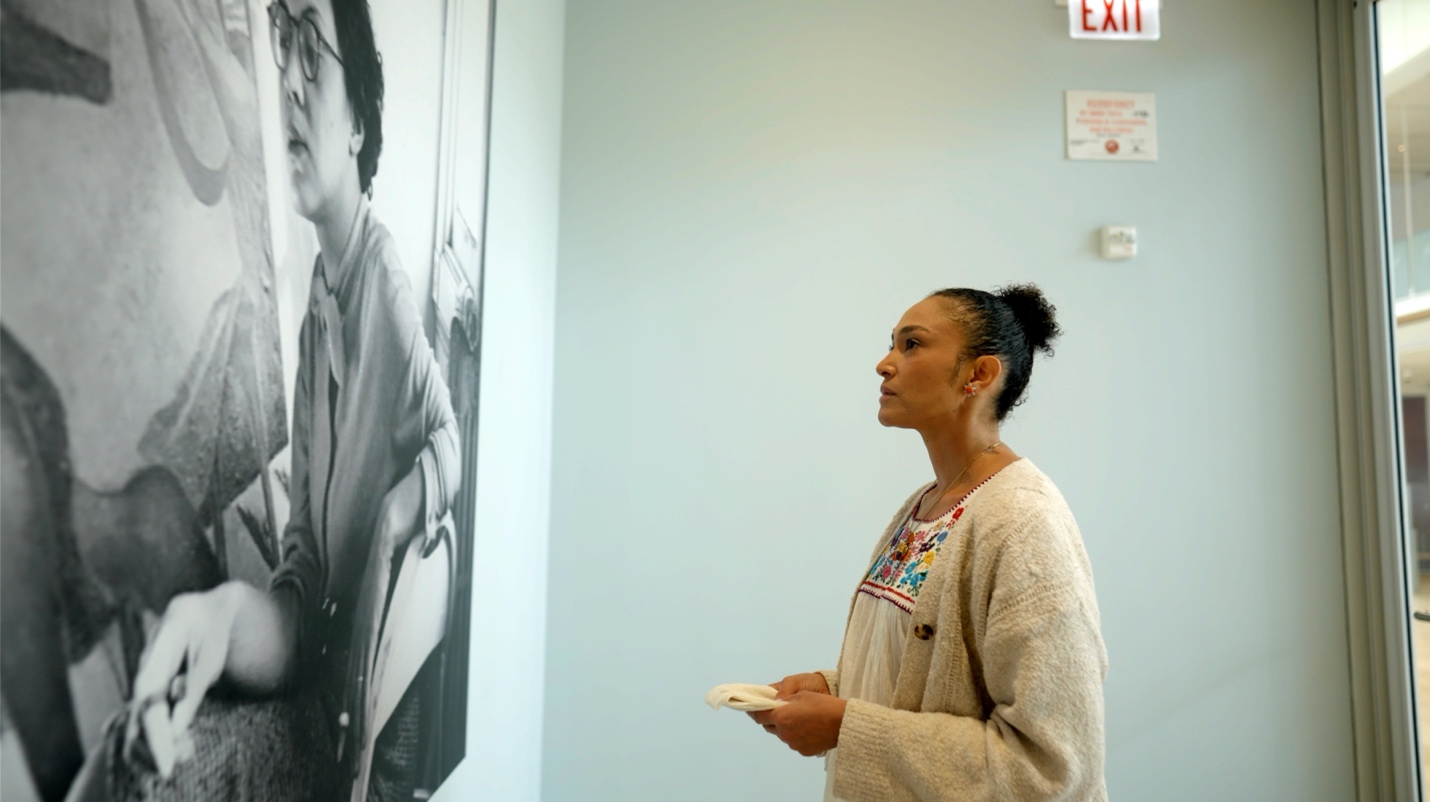
BP: In a conversation with LaToya Hobbs at Art Institute of Chicago for the retrospective, Elizabeth Catlett: “A Black Revolutionary Artist and All That It Implies” (October 11, 2025), you make the following observation about your role as a visual storyteller: “In being examined, I feel it’s my responsibility to examine myself.” What is the importance of reflexivity/being reflexive to your art practice or for anyone engaging in an artistic or creative practice?
NM: Honesty. Being as honest as possible. When I decided that I wanted to inspire people with my image, with my work as a creative person, I chose to pursue a life that informed my culture as a black woman, who’s also Mexican.
When pursuing ballet at the Dance Theater of Harlem—where I began my creative career—Arthur Mitchell would always remind us when he would come into the studio, we represent something more than ourselves and that’s heavy to carry. His point remains true and it sparked a curiosity in me. If we are to earn the trust of those who are interested enough in receiving our art, I think we have to be honest with ourselves so that we can give our audiences something that they can hold on to. There’s just so much more to learn. There’s so much more to be. My identity is constantly growing and expanding because I challenged myself to be honest—honest almost to a fault.
I’m always trying to get to the essence of a thing. What is it that I’m trying to say and how do I say it in the most precise, succinct, and elegant way that an audience can grasp? How do you make something accessible to people?
BP: In the same conversation, you say, “Elizabeth is calling us to do something.” In these times what do you think your grandmother is calling you to do? Obviously, you have the film ELIZABETH SPEAKS, but is there something that you find that your grandmother is calling you to do in these times?
NM: I am literally being called to share her unpublished memoirs and intend to publish them as a book. What I’m finding is that we are in a time where we’re seeing history repeat itself. People are feeling defeated. And there’s something about seeing Elizabeth go through so much and there’s still this revolutionary spirit she had. But she wasn’t the only one going through that.
I am missing the revolutionary spirit in our generation. I think Elizabeth created art that was timeless; art that we could have as a touchstone of what to find within ourselves in these times. And in a time when we were coming into a new understanding of human physiology and the ideas of ‘freezing’ and what it means to hold epigenetic trauma.
I think she’s calling people to more curious about their magic in a time where so many people feel defeated and frozen. That touchstone, that portal to ourselves, will reveal a lot of the answers that people are looking for right now. This is why art is very, very dangerous to the political structures that we are living through.
This interview has been condensed for length and clarity.
In honor of Elizabeth Catlett’s life and support the completion of the film, artist Delita Martin has partnered with Naima Mora Productions to create a limited-edition print series, created from Catlett’s original press in her Cuernavaca studio. Preorders are available through March 7, 2026. Learn more at www.blackboxpressstudio.com.
You Might Also Like
William Kentridge is a Star Among Many at Powerhouse Arts’ Artists Celebration
What's Your Reaction?