
Pleasure Engineered (Mostly) Captures the Joy of A.I.


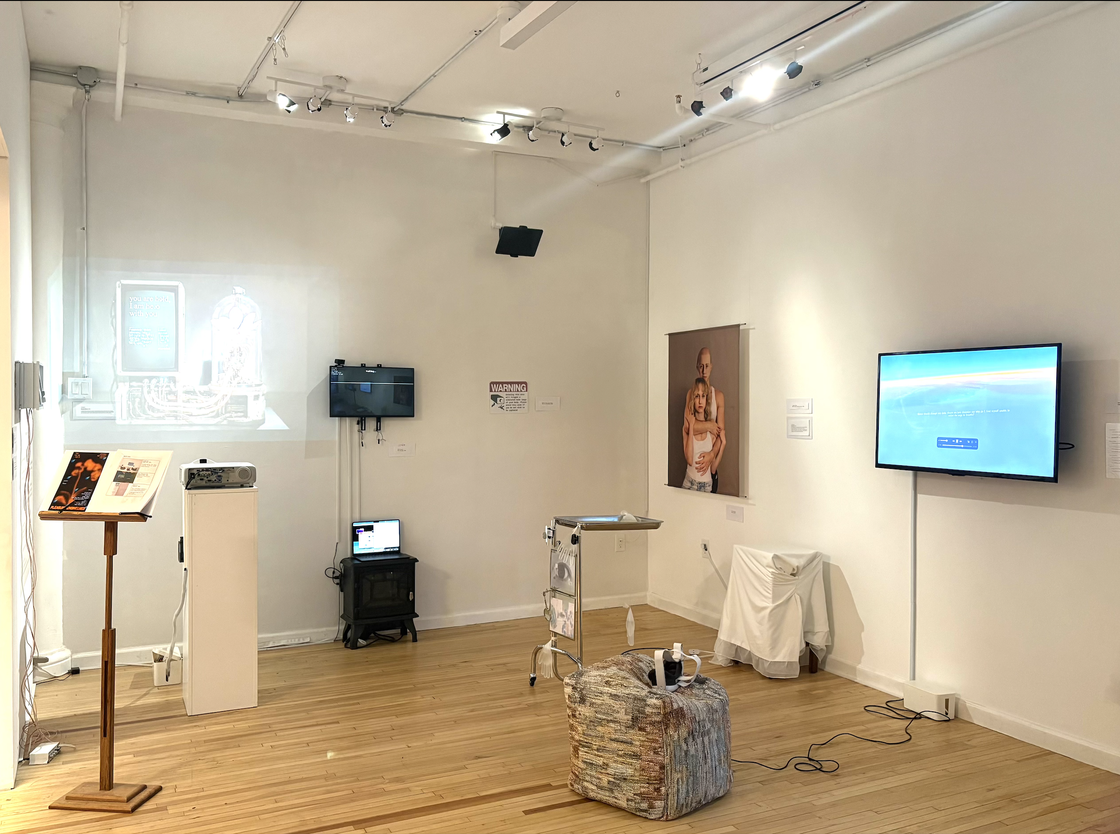
The role of AI and technology in society has become extremely contentious in both the news and the art world. Fears of AI slowly replacing human workers, connections, and essential institutions like education are exacerbated by company leaders who seem to have blatant disregard for human welfare. Yet, there is much AI technology that brings us joy. At Accent Sisters, for instance, Pleasure Engineered is an exhibition of ten works spanning XR, video games, photography, speculative design, and installation that, in curator Hongru’s words, seeks to “shed light on how we have come to coexist with AI and technology—and how we will continue to negotiate that coexistence in the futures ahead.” Within a current of cultural attention on technological advancement, this exhibition attempts to swim upstream by centering interactivity and touch while mediating relationships between worlds.
New Humans, which marked the re-opening and renovation of the New Museum, illustrates both the historical and contemporary bodily and existential anxiety that it creates. Versions of the grotesque and uncanny cyborg/robot figures that populated New Humans are not found in Pleasure Engineered, which, as its title suggests, focuses on the more pleasurable and potentially optimistic aspects of technological change. One way in which the optimistic side of technology is explored is through the interactive nature of many of the works on view. Rather than passive objects caught in the tides of technological change, viewers in the exhibit are agents actively engaged with many of the works, shaping both the outcome and their experiences of it.
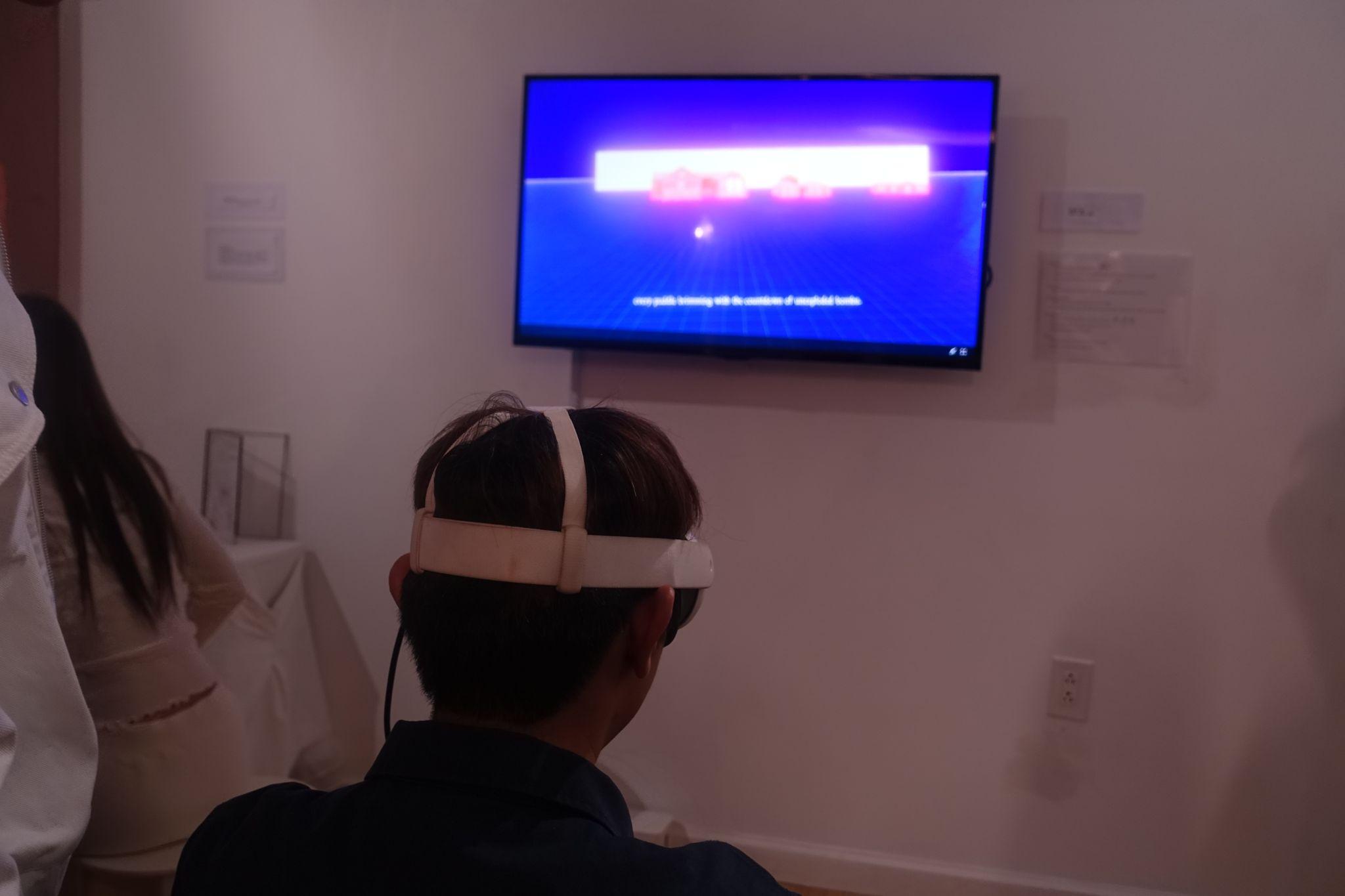
ShanMu Sun’s Ideal Home (2026) is an XR piece that follows a multicolored, part-human, part-animal-esque avatar navigating various liminal spaces. We project our own experiences onto the avatar as we follow it through atmospheres containing undulating digital oceans, computer-gradient sunsets, and flickers of intimate memories, such as an orange being passed between family members. Text from immigrants meditating on memories of home and displacement appears against these immersive atmospheres and feels both existential and inexplicably universal, a testament to the ability of XR to literally put ourselves in another’s shoes.
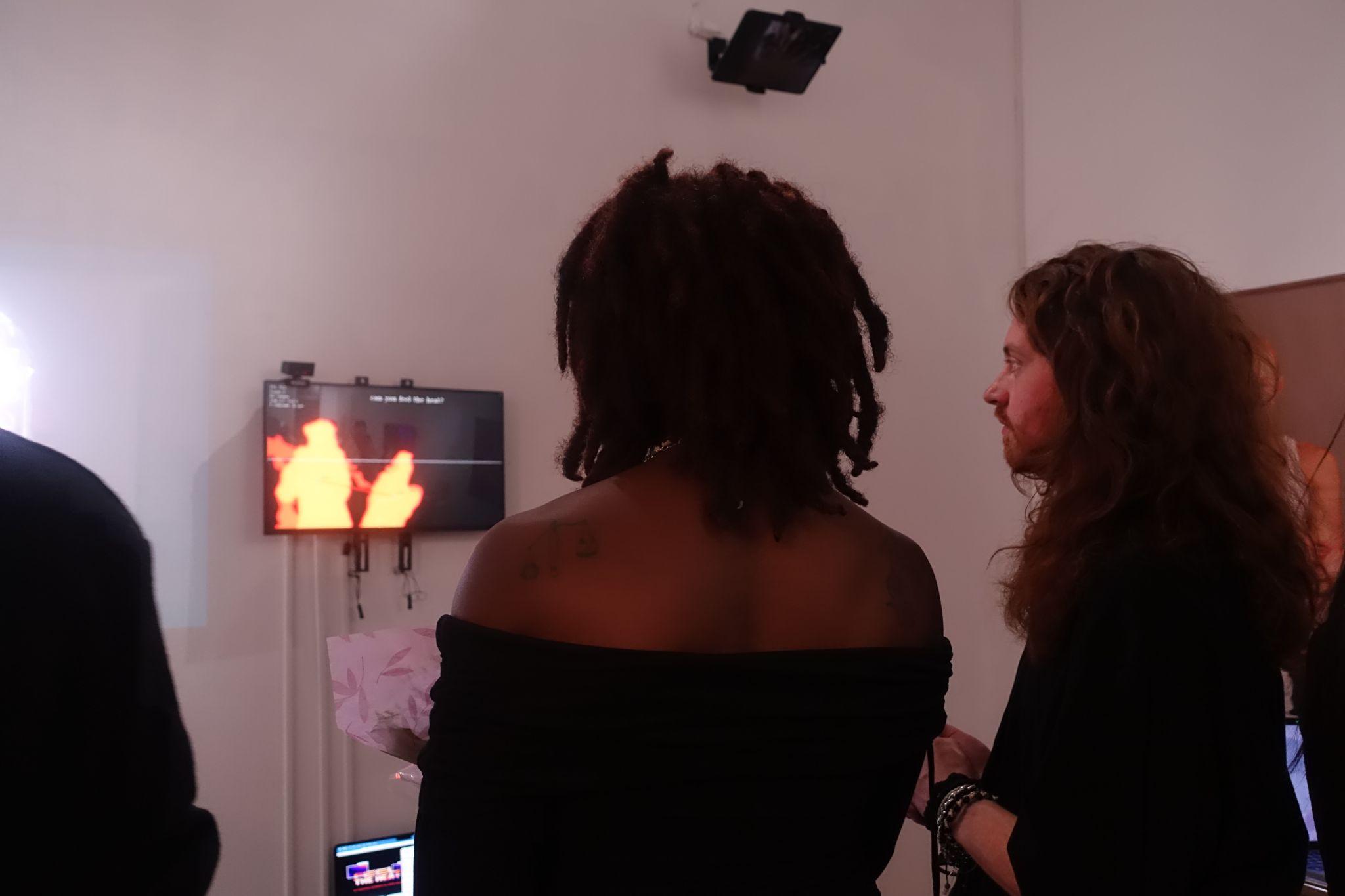
Connecting with others in the same room through technology–specifically pulsating heatmap imagery and Python code–is what Feel the Heat (2026) highlights. Udoka Nwansi’s piece draws our attention to our physical relationships with each other in real time. Yameng Li’s Pleasure Loom (2026), also highlights physical touch, and is a projection of a speculative design prototype that responds to human hands through AI-programmed responses.
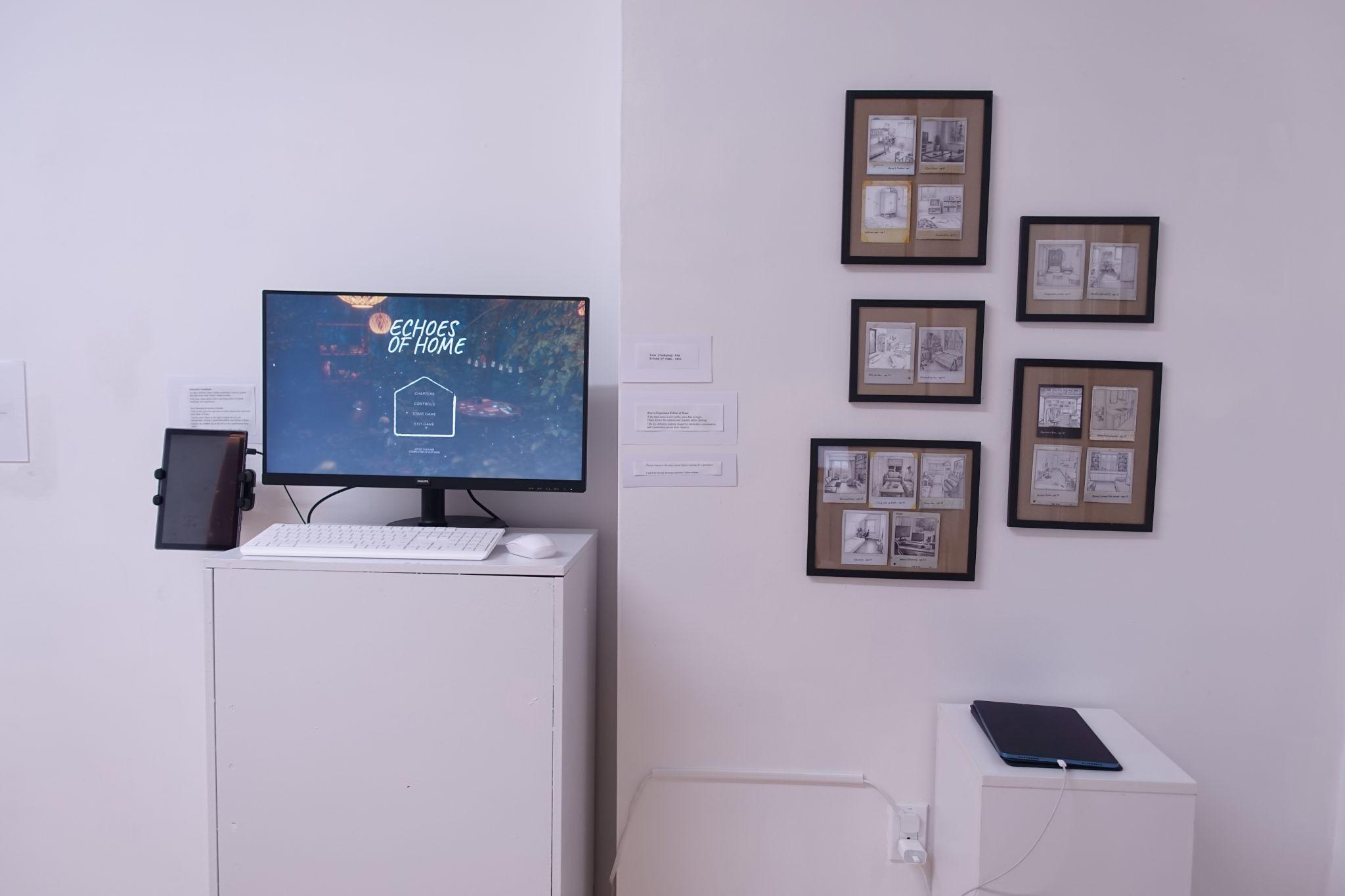
If memories are created not merely through the event of lived experience, but through the continual reflection and reconstruction of them, then Yuna Kim’s Echoes of Home (2026) proposes that humans can use technology as a tool to revisit and reconstruct memories of home when the reality of home is unstable. This is what the artist, who moved frequently growing up, used this project to do. By digitally archiving the many places in which they lived and inviting users to interact with objects from their childhood, as well as reflect on their own experiences of home, Kim creates a touching outlet for nostalgia.
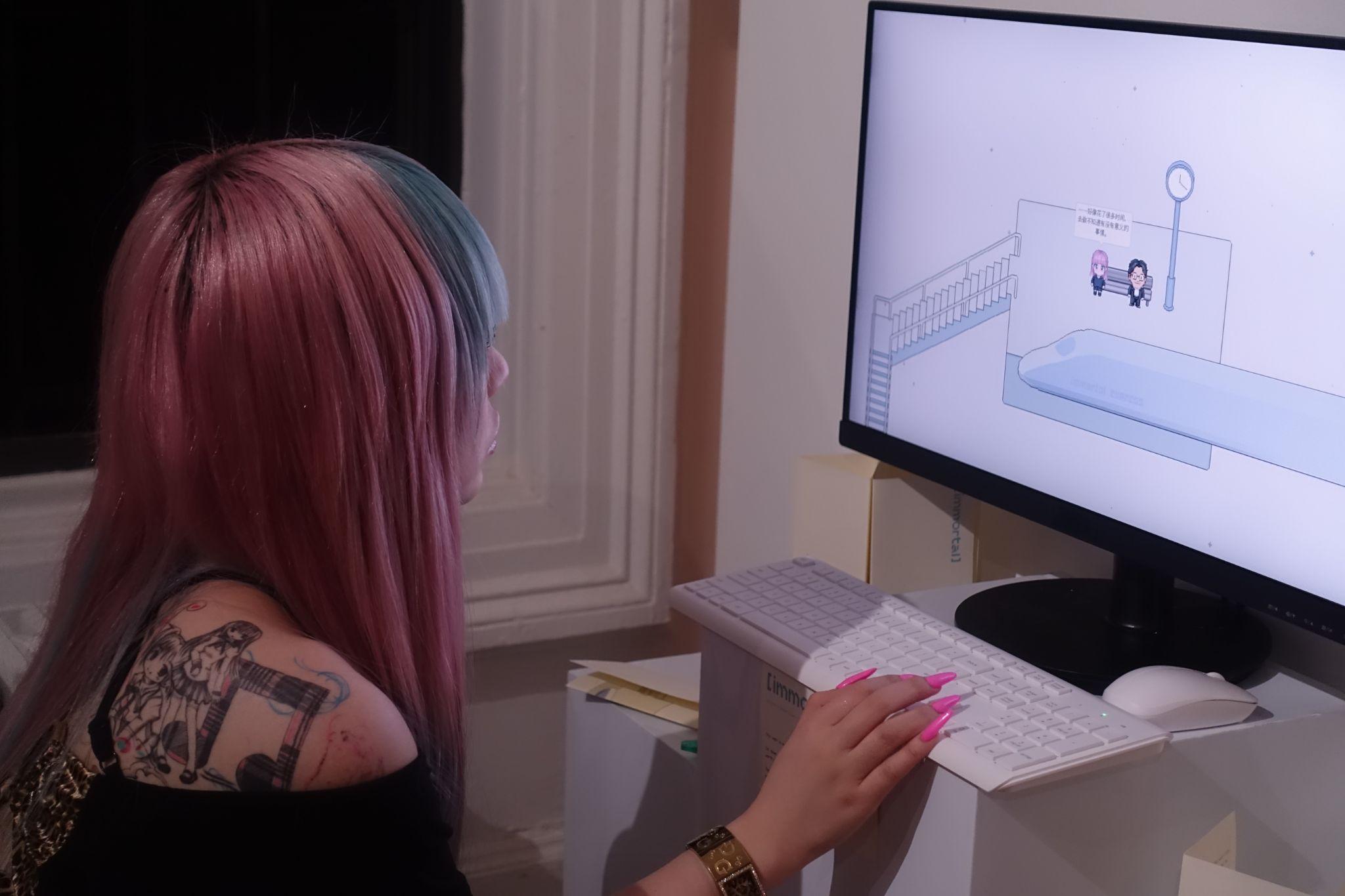
The previous works mentioned, many of which are interactive, maintain a relatively optimistic view of technology and AI as a tool to mediate, reflect, and enhance existing relationships. A large part of the cultural anxiety around AI revolves around reduced human agency which three, more critical, works in the show explore and question. Aurora Mititelu’s Gen/esis (2026) is unsettling on multiple levels. The initial disorienting experience caused by the intimate embrace of what appear to be two related people is further confounded upon closer examination at the point of contact between their fingers, which merge into one another. The subtle computer-generated edit, as well as the figures’ guarded gazes, creates a sense of distrust between the viewer, who doesn’t totally understand what is going on, toward the artist. K0j0’s (Koi Ren & Joey Verbeke’s) Thank You for Watching! (2026) similarly raises questions as to how technology can distort our sense of reality and sow distrust among people.
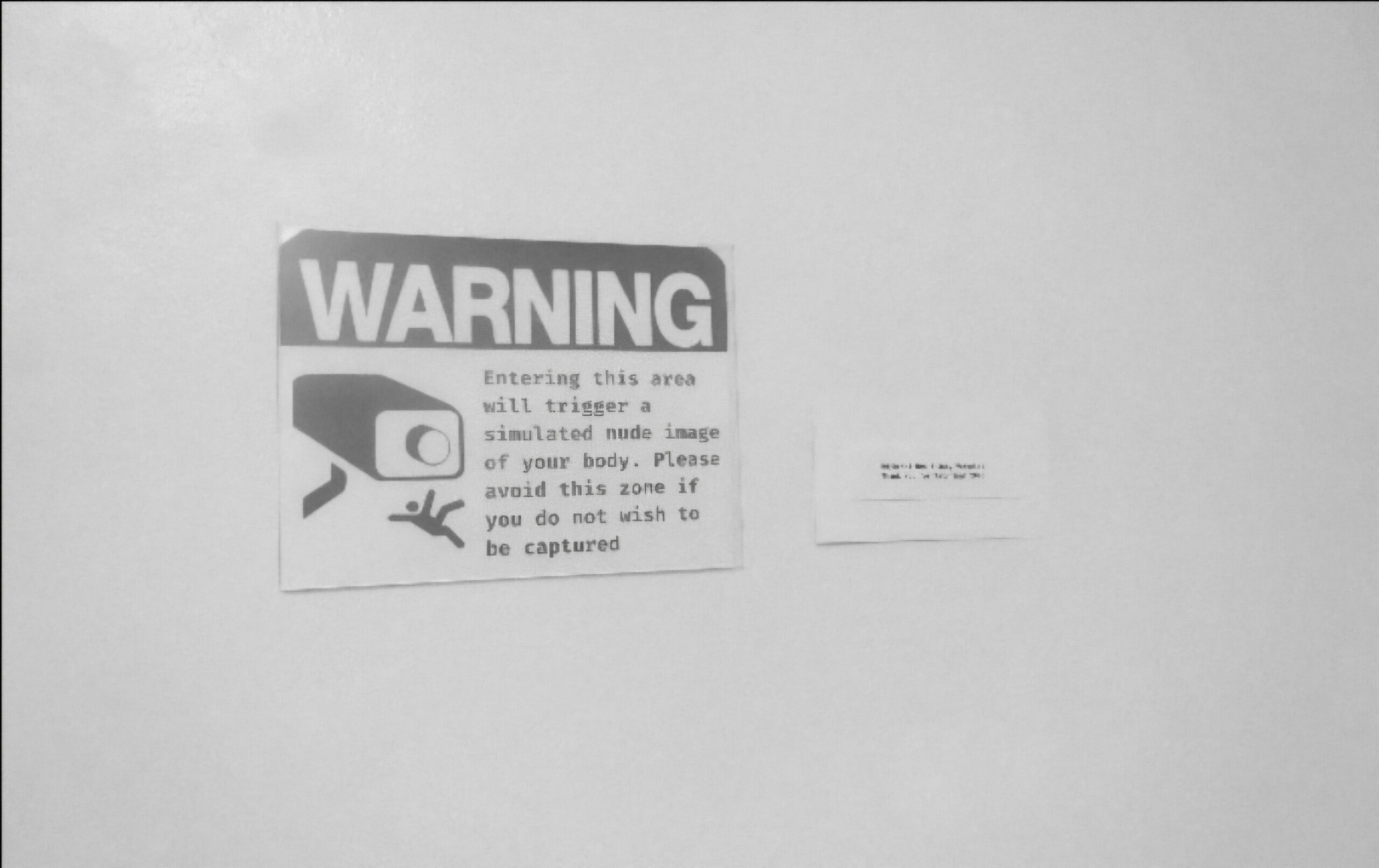
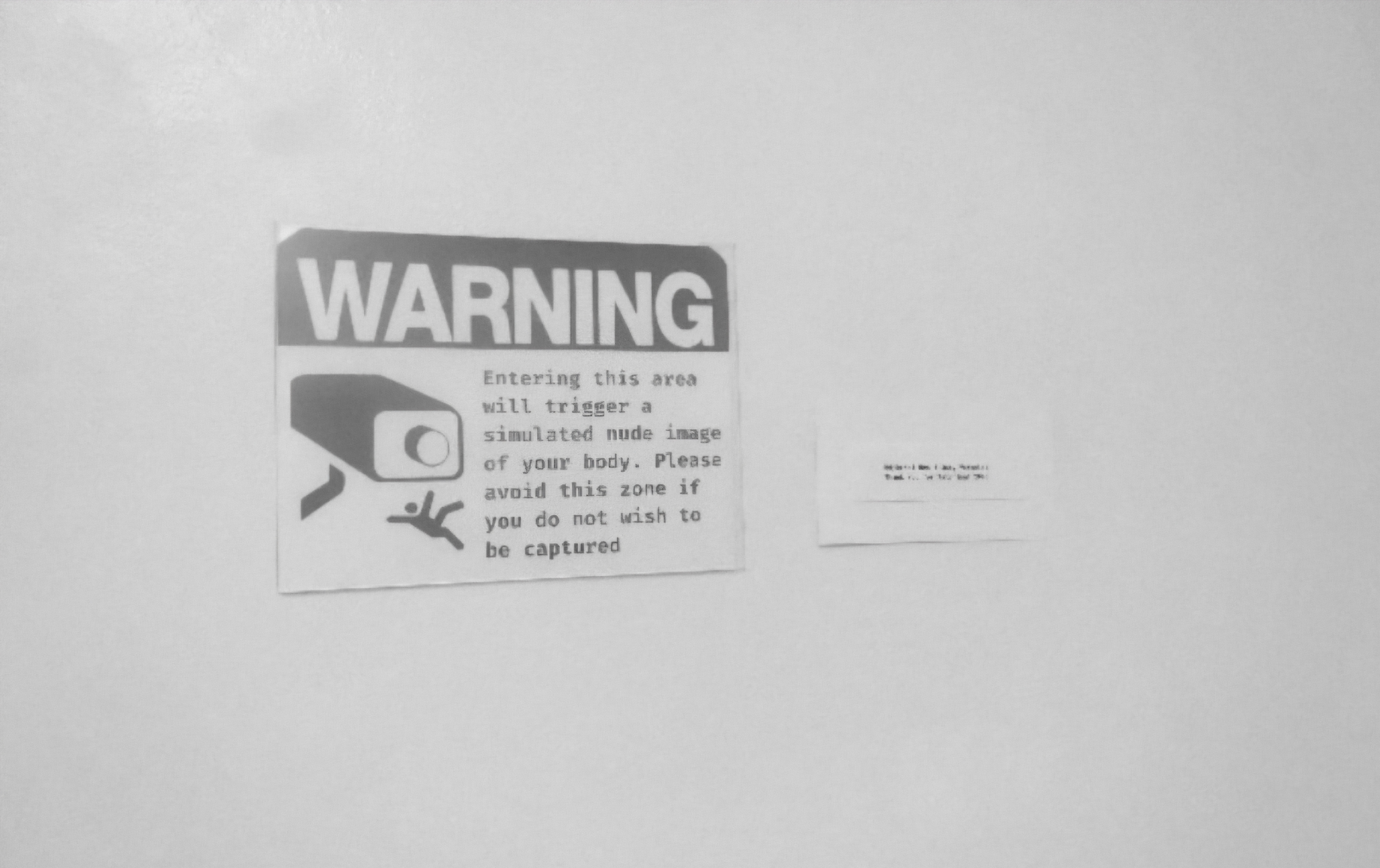
Thank You for Watching! is a computer program connected to a camera that automatically renders anyone not looking at the camera as nude, while viewers who look directly at the camera remain both clothed and shocked, but also warned from a sign under the camera. Questions of agency and who or what maintains ownership over how we are represented are also raised in Alison Long’s Learning exactly how crappy AI vision is (2026). Long’s piece presents different AI vision models in an interactive, taxonomical way to illustrate the biases and preferences of the organizing systems. A few of the vision models skew toward perversion, with multiple categories based on “boob” size of the figures in the vintage comic book cover dataset that the artist filtered.
While these three critical works raise questions about the ethical implications of AI and technology–questions about truth, ownership, and bias–the majority of the works in this show maintain a relatively optimistic, speculative view on the role that technology can play in human lives and the way that it can extend and potentially transform our forms of communication. Although explaining exactly why the artists adopt these attitudes would also be speculative, my conversation with Hongru, who, in addition to being a poet and curator, is also a PhD candidate in Educational Science, reflected that perhaps it could be a result of many of the artists’ educational backgrounds in media arts, technology and similar fields. Possessing a technical fluency predisposes someone to be more open to imagining the ways in which technologies could be used for human connection.
Shanghai-based writer Jacob Dreyer argues that tighter governmental regulation over AI creates a culturally specific relationship toward new technology that is existentially less threatening. Perhaps more akin to the optimism Hongru presents. The Chinese government aim to make A.I. more practical and embedded in society, “more carefully selecting how it is deployed and used by the population,” Dreyer writes in a New York Times op-ed aptly titled Why China is Much Less Scared of A.I. While in the quest for superintelligence “the U.S. government is encouraging private firms to move full speed ahead, regulation be damned,” he continues. Although the connection between government attitudes towards AI and artists’ attitudes is tenuous, especially considering that not all the artists in the show are Chinese, the new types of connections proposed in Pleasure Engineered were anything but.
Pleasure Engineered curated by Hongru was on view May 2—May 17, 2026, at Accent Sisters, 89 5th Ave #702, New York, NY 10002.
You Might Also Like
1+1=3 When an Artist Curates at Sweet Lorraine Gallery
Maya Yameng Li Shows it is Difficult to Remain Outside Algorithmic Systems, But Not Impossible
What's Your Reaction?