

Purva Kundaje’s Project ‘Bound’ Cultivates Creative Community as Programmatic Art


In art-speak, the word community holds a lot of social currency. And while for some the term may conjure scenes of shared studio spaces, group shows, potlucks, or secluded residencies where communal dining is as important as group critiques, in reality, community is ill-defined and often more difficult to encounter than we believe.
The factors are innumerable, but the barriers range from financial precarity to personal identity to lack of institutional access. And while there may be countless books to be written on this latter point, I find it nonetheless concerning that the recent emphasis on artist self-branding as a way to supplement institutional support has actually had a negative effect on the fostering of creative communities and artist development. The every-person-for-themselves mentality of the neoliberal order filtered through the algorithmic bloodbath of social media has produced a Hunger Games-esque scenario in which the luster of one artist comes with the dint of another. In other words, the conditions that make community happen are sometimes as fraught as the concept itself. New York-based American artist-curator Josh Kline seems to agree; he recently wrote in October, in an essay lamenting the ruin of artistic life in New York: “meaningful art, relevant for our society and our time, may not be sustainable under the current conditions.” Despite all this, the desire for community is very much alive.
Recently, I got a chance to talk to the London-based architect and designer Purva Kundaje on her ongoing community-oriented project “Bound,” which was included in the London Design Festival in 2023, and in “Conceptual Erasure” at Blank Canvas Fulham Gallery in 2025. Originally from Mangalore, India, Kundaje graduated from the Royal College of Art in 2021, and has been practicing her craft with community building as the goal.
In 2022, Kundaje began organizing artist workshops with her friend and colleague Blake Carlson Joshua, a London-based product designer originally from Minneapolis, Minnesota and fellow RCA alum. The idea was simple: run small workshops where anyone who is interested can have a chance to make something with their hands–with guidance, of course. What started as a fun side project to include other people in art making quickly grew into an ongoing project and an artist community.
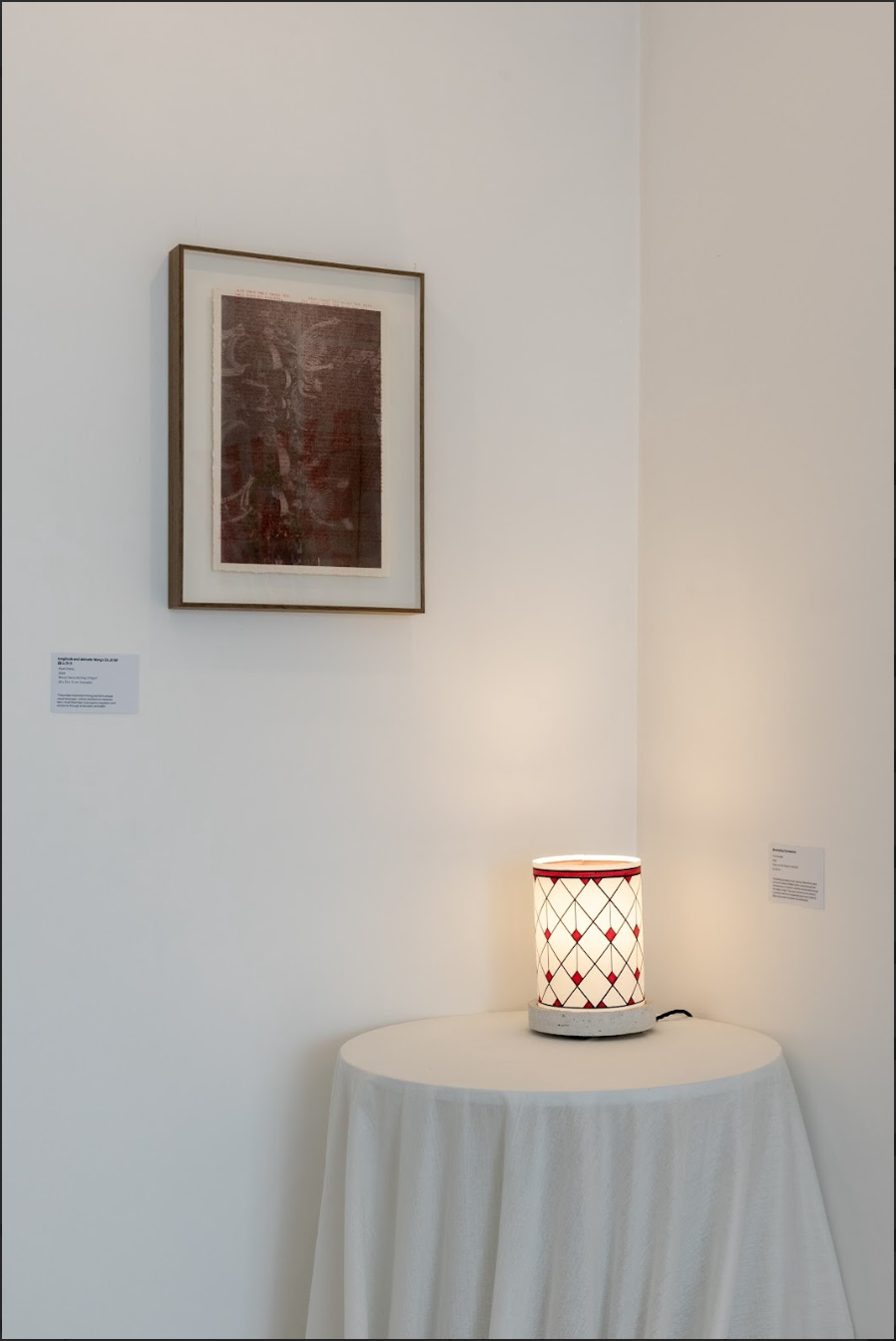
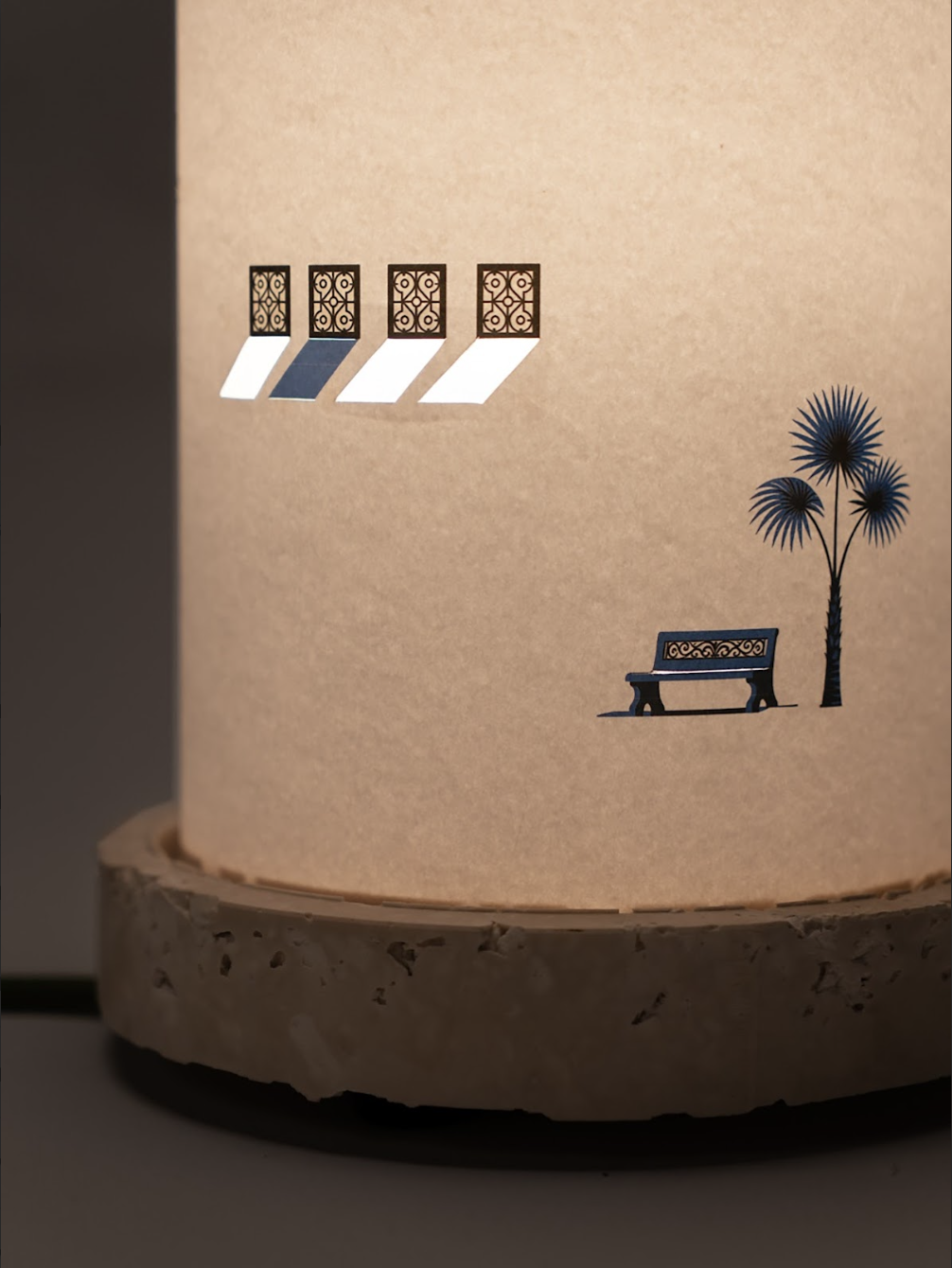
Entitled Bound, Kundaje’s vision includes the collaborative effort of other creatives, and uses recycled newspaper and plasterboard from her studio to create lamp bases and blank shades. The shades, which are hand-dyed, act essentially as blank canvases, which are then shared with other artists to do as they may, with minimal instructions. The result is a product whose existence is dependent on multiple actors, blurring the lines between maker and collaborator.
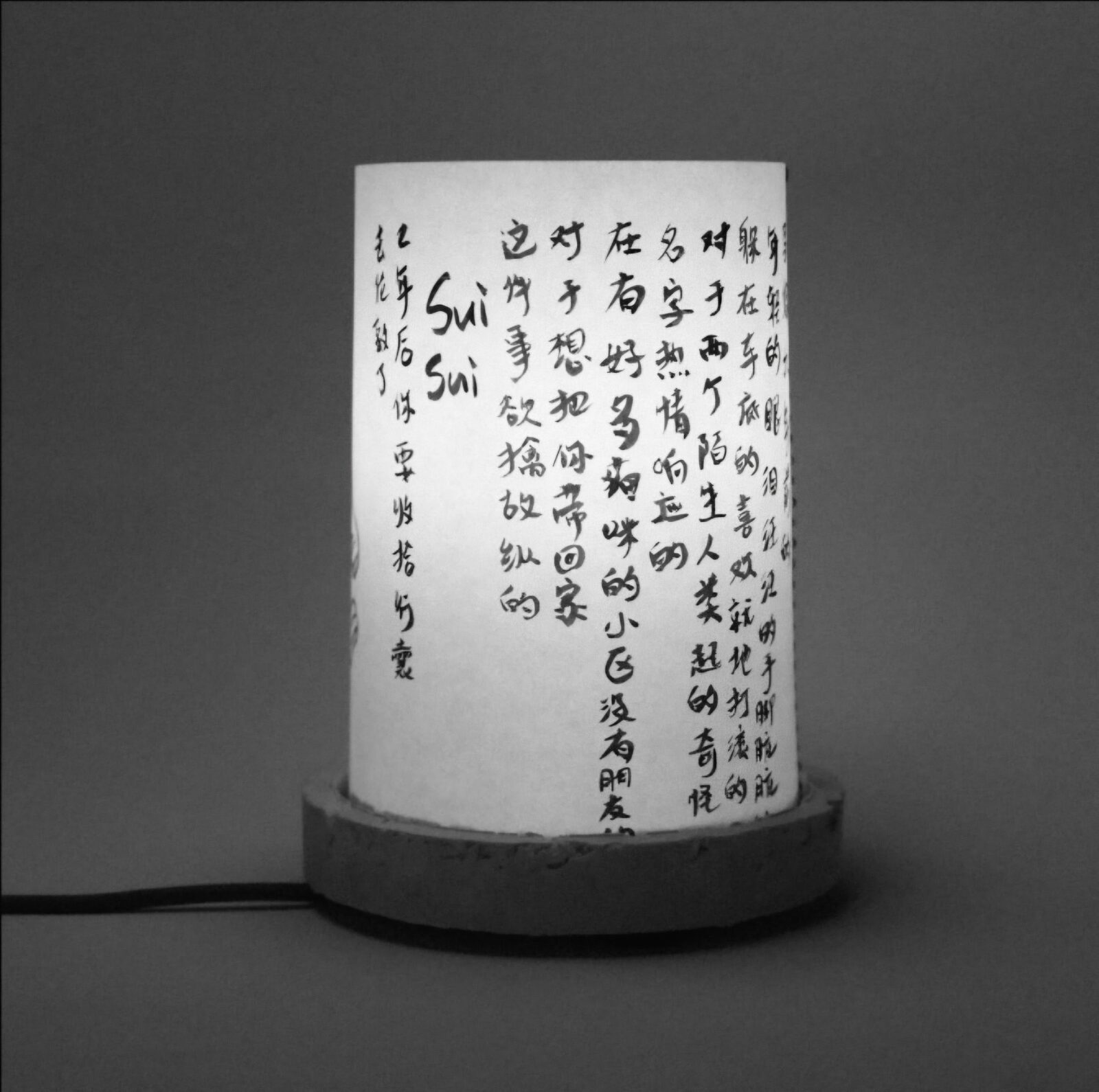
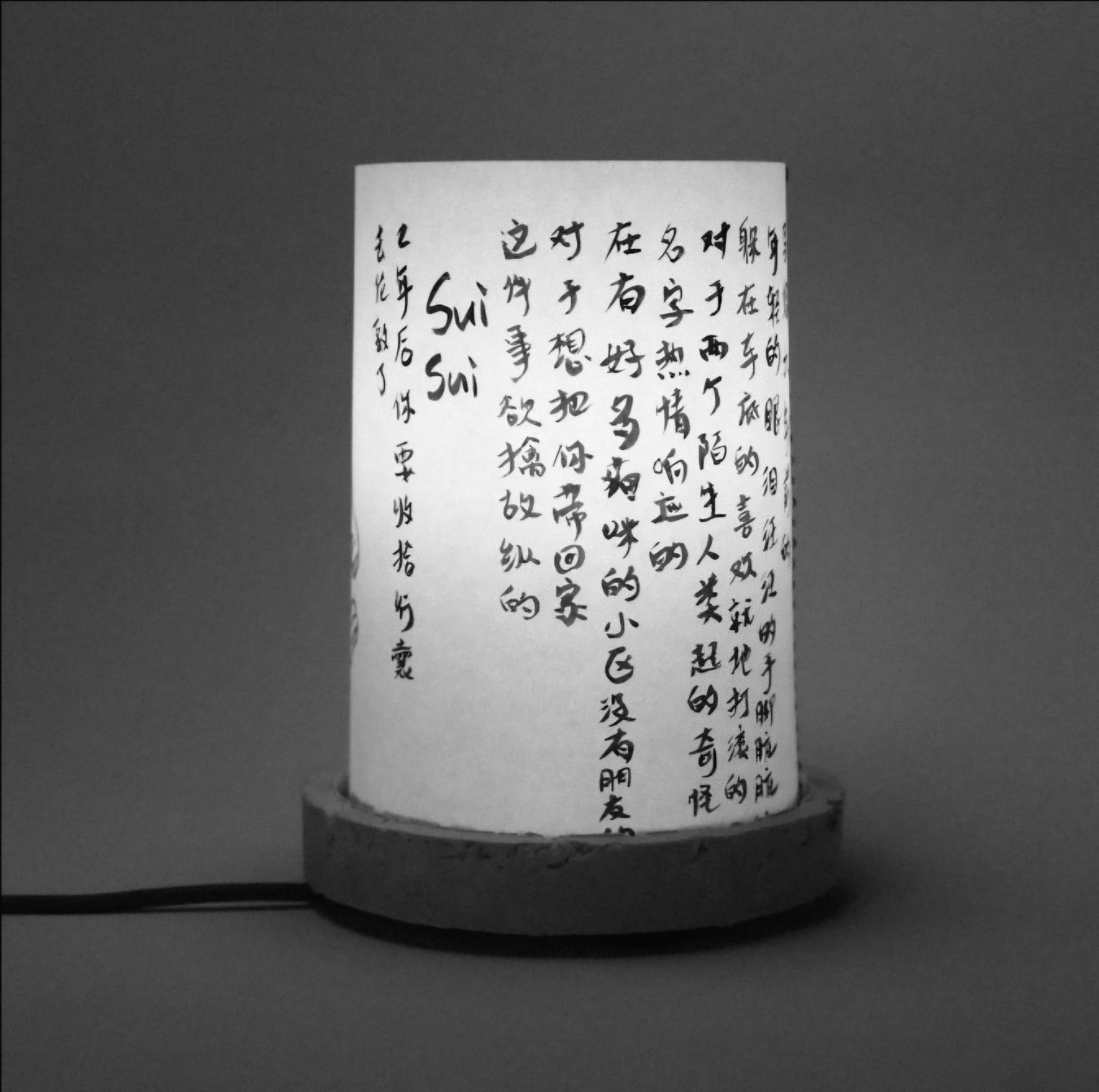
For The Adventures of an Ugly Cat, Kundaje worked with Boer Zhu, who immediately thought of Chinese lanterns and produced a calligraphy-based piece combining poetry and painting. Because of its cylindrical form, the storytelling here is almost reel-like, where beginning and end merges into a narrative continuity.
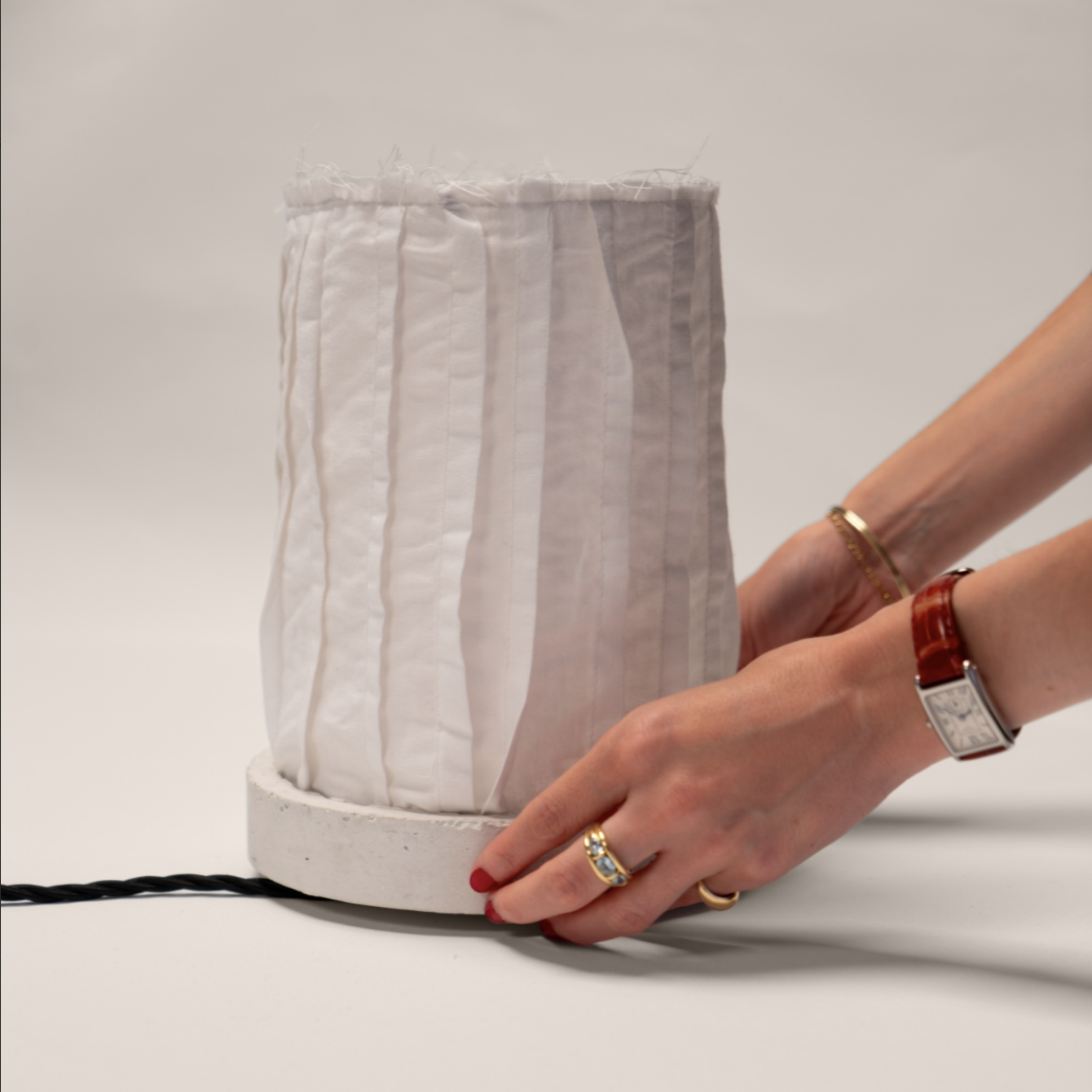
In Nunc effectus, Kundaje worked with Laure-Amelie Guy, who thought in terms of layers, and created a lamp replete with ragged edges and woven lace. The result is a textural covering, where each angle affects the lamp’s radiance differently.
Here, there is a common purpose. The lamp, after all, must still function as the lamp, and in this regard, utility and function still operates as a guiding principle. At the same time, pliability remains central to the concept, as whatever personal or aesthetic decisions that occur are not, in fact, limited in scope. The collaborators still “think of them as lamps,” Kundaje affirms, but lamps don’t ultimately have to be cylindrical.
In our conversation, Kundaje informs me that in her engagement with other creatives, she reminds them to “do what you do,” emphasizing that a common cause need not arrive a replication, and that functionality need not preclude creative agency. I remarked how her practice is not so dissimilar from architects drawing up plans and having engineers and builders take care of the rest. And while Kundaje herself acknowledges the similarities, we also agreed that the movement from blueprint to built structure has always been a communal endeavor.
In NYC, the artist and architect Diego Salazar, who is based between Brooklyn and Oaxaca, Mexico has been working in a similar fashion. Salazar, who conceived Studio Rombo in 2020, has been boldly collaborating with artists and artisans throughout Mexico. Similar to Kundaje’s vision, community and sustainability has remained core to the project of Studio Rombo, where authenticity is predicated on expanding the notion of the artist as sole producer. The end result of these cross-border collaborations is an outlet for those who might not otherwise have the opportunity to exhibit their work. Since its inception, the project has had several showings in NYC, and now a physical exhibition space in Oaxaca.
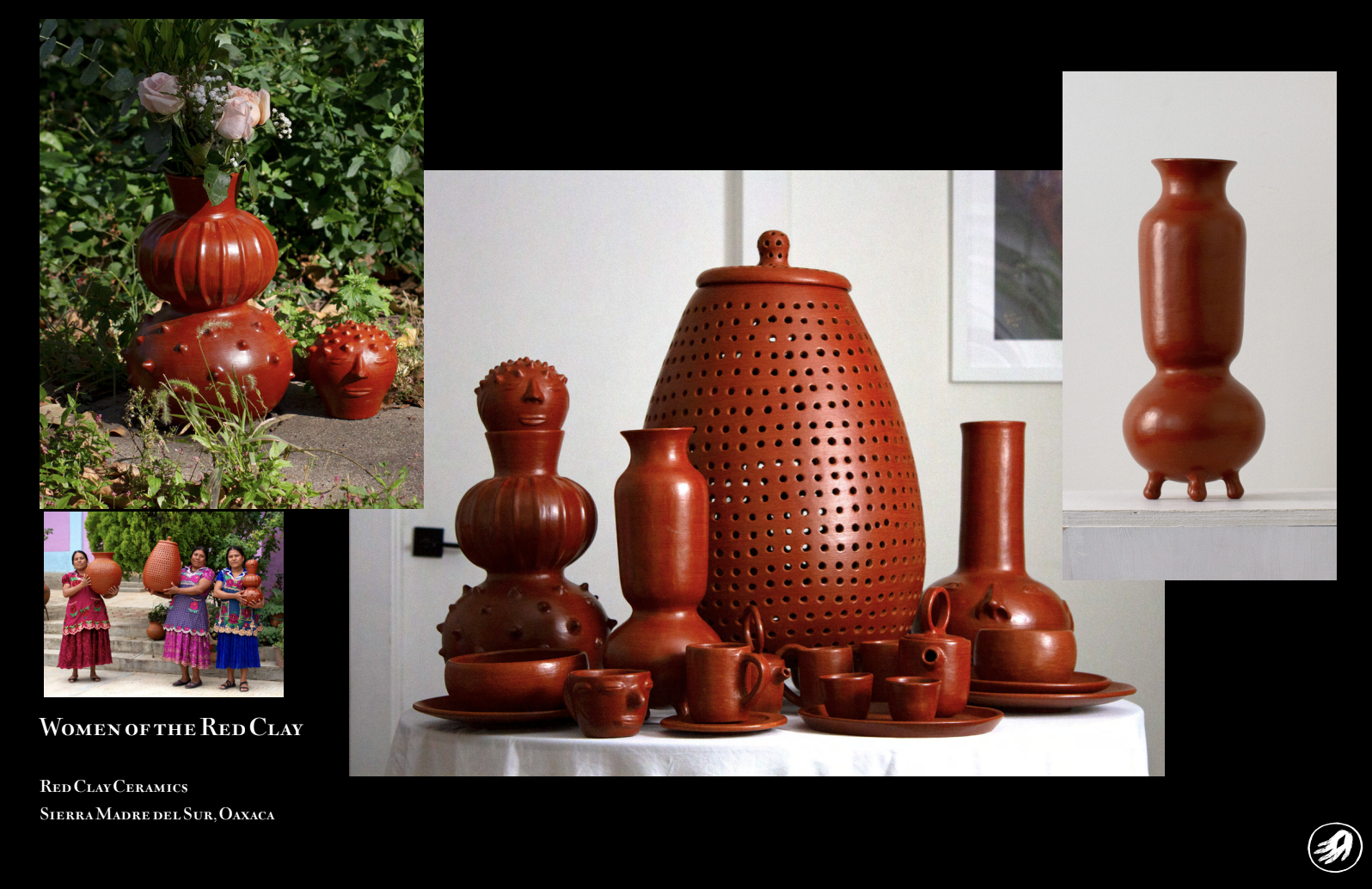
Maybe it’s their shared grounding in design and architecture, but in my assessment, the similarities between Kundaje and Salazar’s work suggests a programmatic logic–one less concerned with encoding a fixed reality than staging a field of possibility. By design, these are unfinished works from the standpoint of an individual artist; however, they reach new potential when brought into the orbit of the wider artistic community. To that end, it may be more useful to think of community and collaborative creative engagement not as some natural coalescing of synergies, but as the result of deliberate and sustained initiatives by individual actors.
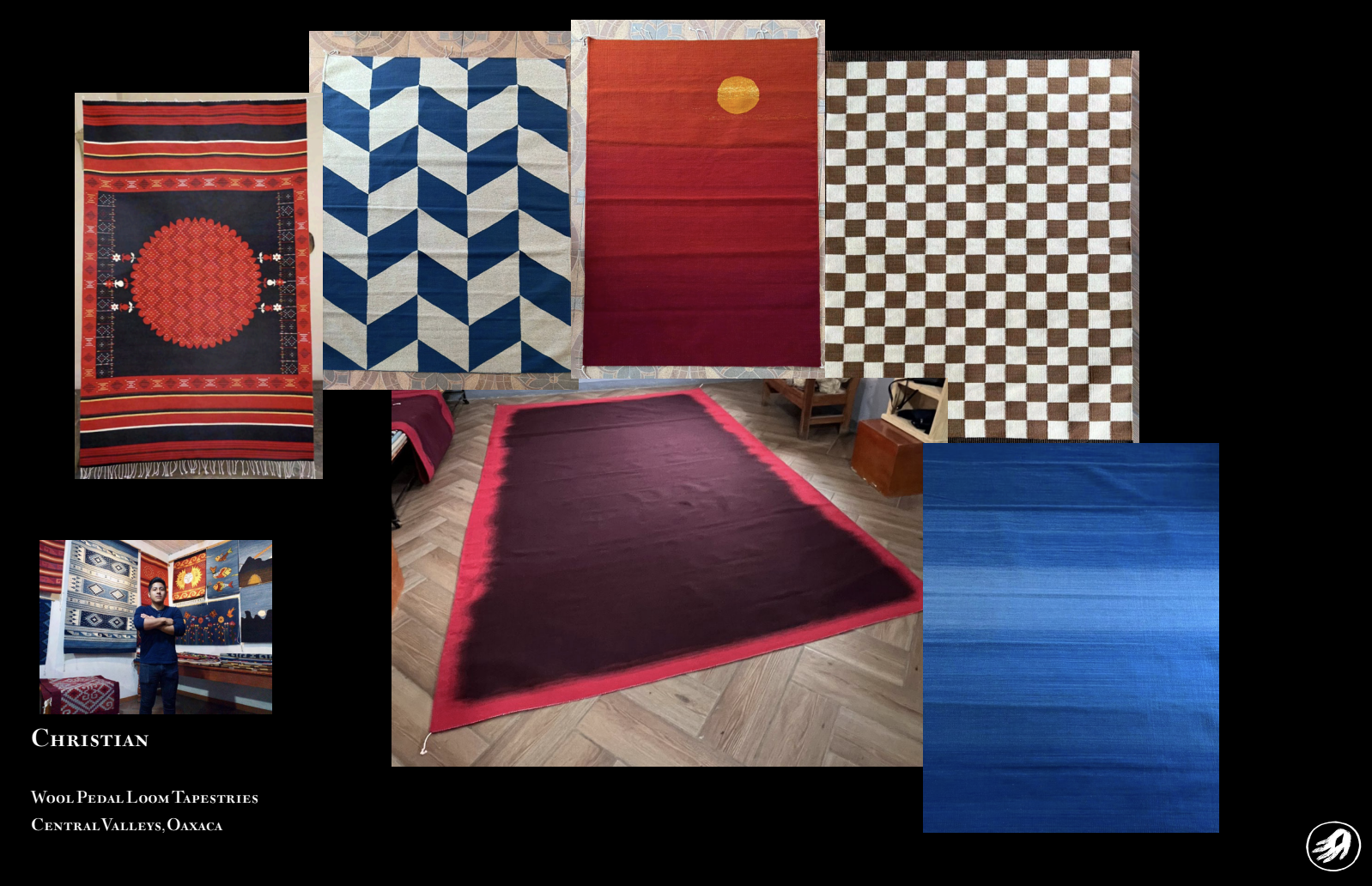
Like many critics–and perhaps cynics–I am deeply skeptical of our trigger-happy reflect to overly romanticize the communal. Not all communities yield the kind of paradisiacal deliverance that would drive us to some creative providence, nor do they guarantee that grant money and institutional support would fall from the sky.
And yet, there is something to be said about Kundaje’s and Salazar’s practice, which is not the direct claim of community, but a recognition of its incompleteness. In my assessment, these projects do not presume community; rather, it is through their programmatic execution that the conditions are allowed to emerge. Whether it is the concept of a lamp or the outlines of dynamic ceramics, such gestures function less as finished works than as propositions. In this sense, community and shared practice require not only participation but also exemplarity.
My earnest question to the larger art world, in the face of our shared challenges, is this; what if, rather than waiting for this putative community to materialize from the ether, we took it upon ourselves to engage others? What if we understood the incompleteness of our work not as a defect, but as its very condition of possibility? In this formulation, we risk relinquishing a degree of control and inevitably the possibility of failure. But it may be precisely through such risk that we begin to invite back what community, in its radical and generative promise, can be.
You Might Also Like
Maya Yameng Li Shows it is Difficult to Remain Outside Algorithmic Systems, But Not Impossible
What's Your Reaction?
