
Between Flesh and Possibility: Felipe Baeza’s Anima at Print Center New York

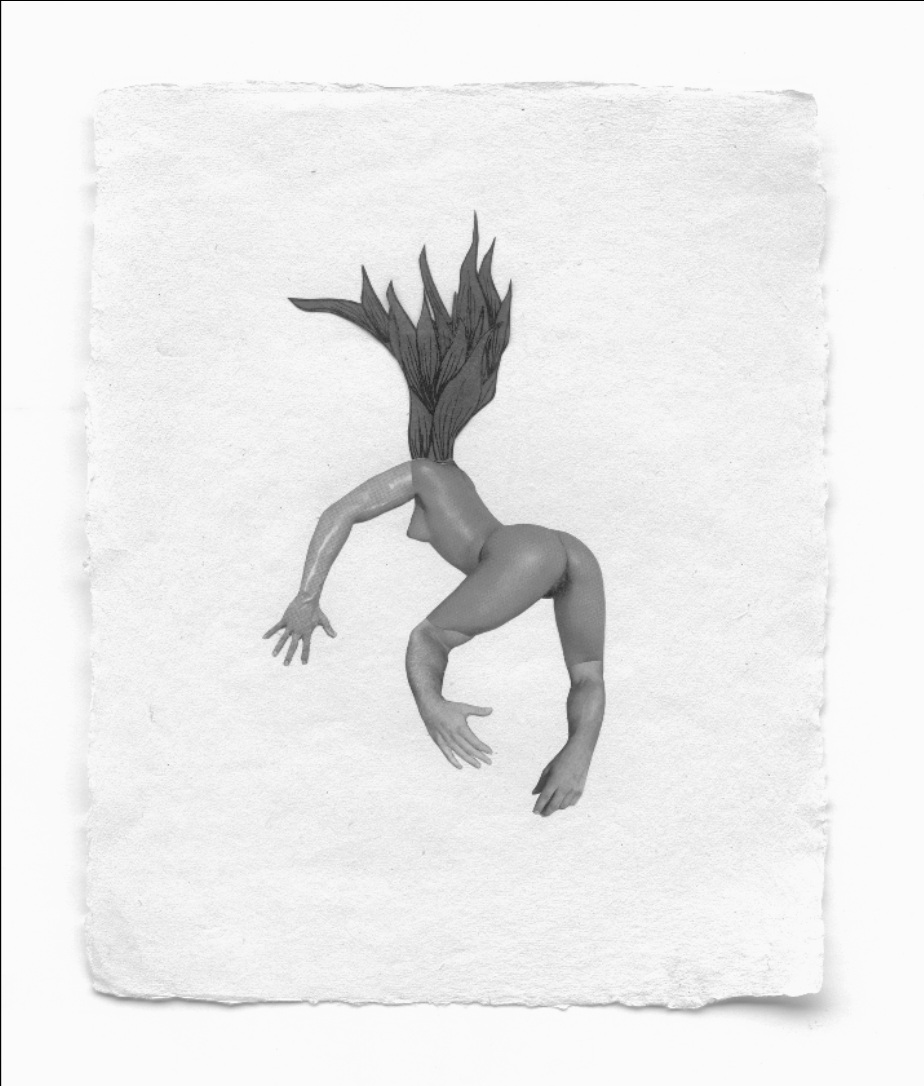

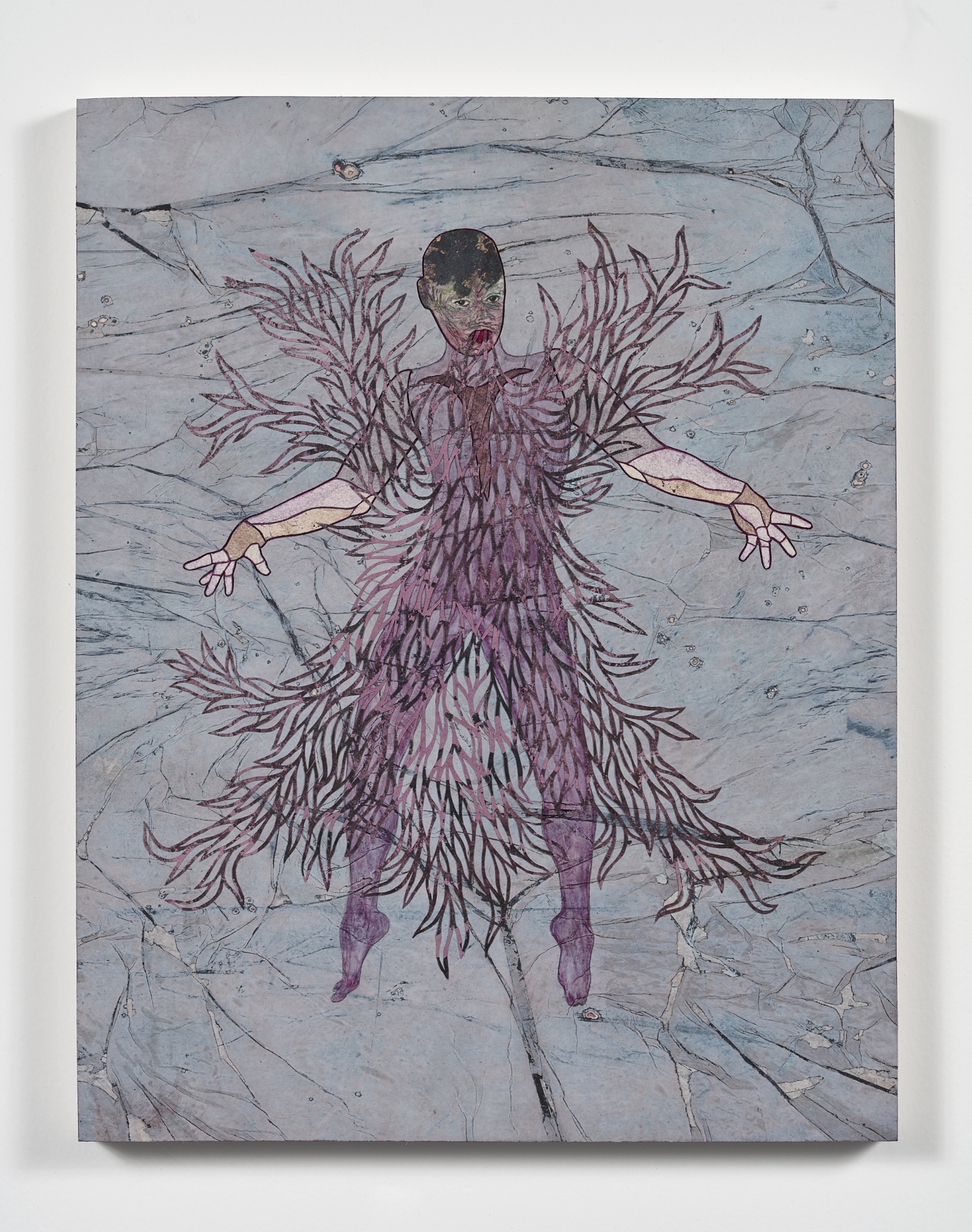
In Print Center New York’s major solo exhibition Anima, Mexican-born, Brooklyn-based artist Felipe Baeza receives his first institutional exhibition in New York, a significant survey spanning fifteen years of practice. Curated by Jenn Bratovich, the Center’s Chief Curator, alongside Associate Curator Alex Santana, the exhibition brings together more than forty works across collage, drawing, painting, printmaking, and mixed media assemblage.
At its core, Anima is a sustained meditation on the body, specifically what Baeza has described as “unruly,” those that resist containment, categorization, and imposed definitions. Queer, migrant, racialized, hybrid bodies. Bodies suspended, bodies in flux. Bodies that transcend the limitations of the identity projected onto them.
As a fellow keyholder at Lower East Side Printshop, I visited the exhibition twice, first through the lens of technique, interested in Baeza’s printmaking methodologies, and again as a critic. Both visits remain with me as a series of lasting imprints: color, texture, materiality, experimentation, fragmentation, expansion, pleasure, empathy, and bravery.
What strikes immediately upon seeing the exhibition is Baeza’s extraordinary command of material. Layers of cut paper, monotype, collagraph, varnish, watercolor, ink, glitter, thread, and collage interact with tense sensitivity. The surfaces are intricate without feeling overworked. Baeza’s mastery lies in how material becomes metaphor. Bodies emerge through and between these surface manipulations: ghostly, porous, partially obscured, present, intentional, transcending, some degendered. They remain deliberately unstable, resisting legibility while asserting their existence.
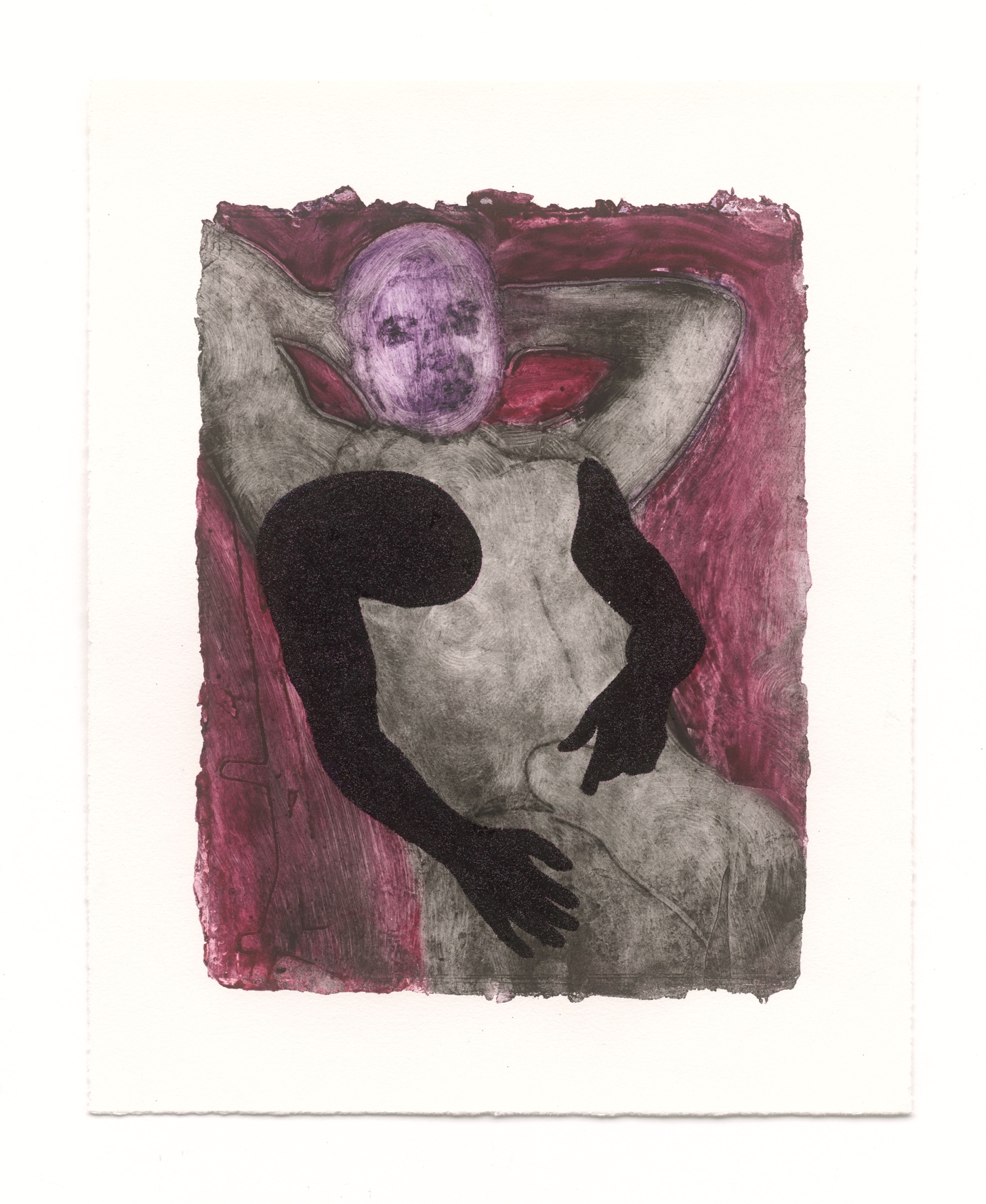
There is something deeply visceral within the viewing experience. Moving through the exhibition, I find myself physically responding to shifts in scale, transparency, intimacy, and density. Baeza’s works ask to be approached closely, then stepped away from. They seduce through meticulous attention to detail while holding histories of exclusion, violence, and erasure just at the intersection of our peripheral vision, right beneath the surface.
Printmaking is foundational to Baeza’s background and practice, and this becomes especially evident in works from Los Otros (2017–ongoing), where collagraph processes, layered printing, and material experimentation produce images of male pleasure, ecstasy, release, connection, and becoming. What is compelling here is how the language of printmaking expands beyond convention. Delay, interference, imperfection: the very mechanics of print become conceptual devices.
In some instances, collagraph plates are exhibited next to the prints. It is a curatorial gesture that simultaneously offers visitors the opportunity to better understand the printmaking process while highlighting Baeza’s playful approach to the medium. The roughness of transfer sits beside moments of surgical precision—glitter meets abrasion and controlled detail encounters the ambiguity and surprise of chance. The construction and reveal of the artist’s printmaking mirror the construction of identity itself: complex, interrupted, pressured, imposed.
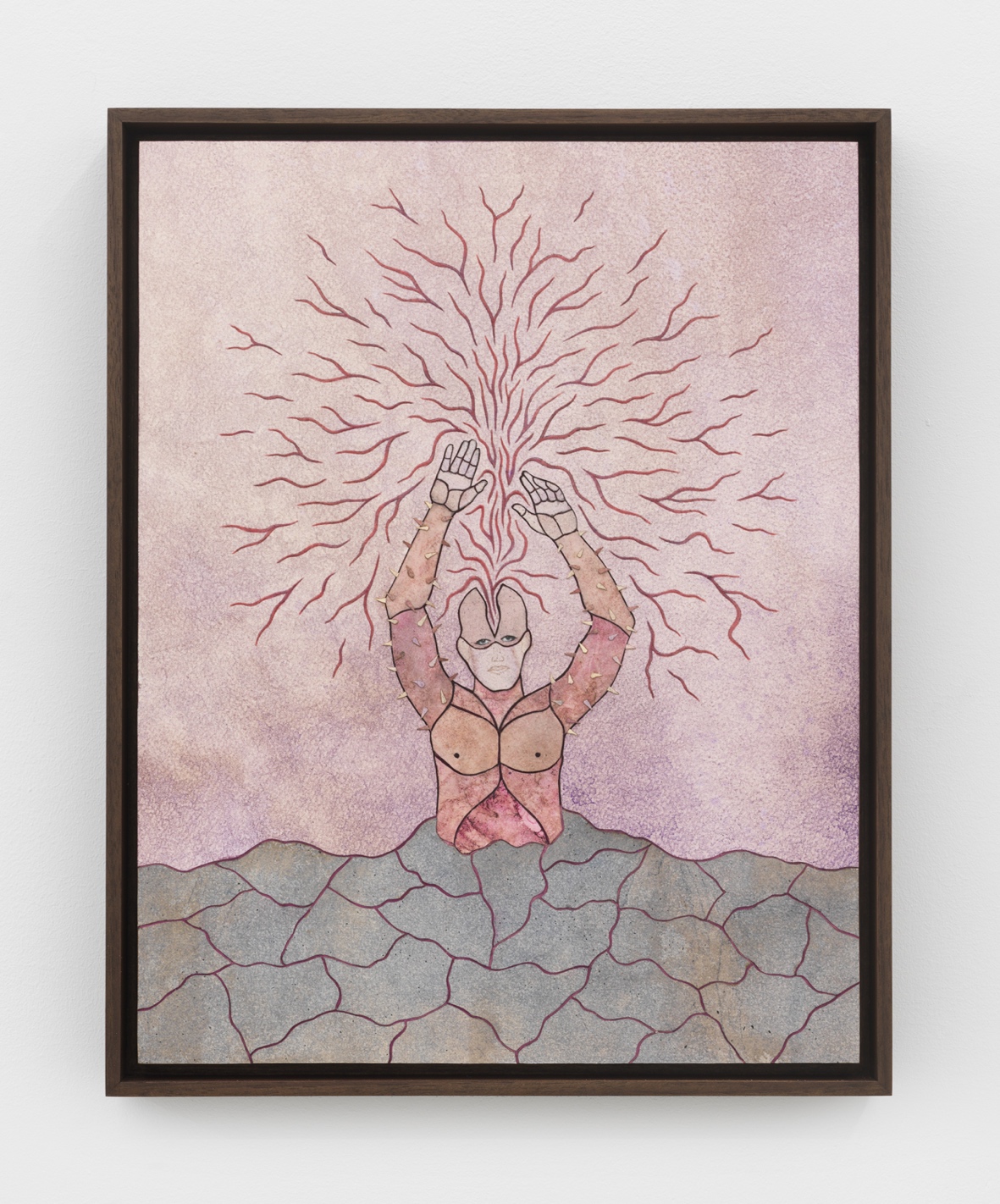
In To Be Flesh and Possibility (2024) I am reminded of the multidimensional present we inhabit, where bodies are constantly mediated, consumed, dissected, and reconstructed. Baeza combines varnish, ink, watercolor, glitter, twine, and cut paper into a luminous mixed-media composition to create a hybrid, humanoid figure that rises from cracked terrain, a body both vulnerable and generative. Through the torso and outstretched arms, vegetal forms or perhaps rays, roots, fireworks, or branches, seem to grow outward. With them Baeza insists on something elemental. We are all but just flesh. Earth. Growth. Survival. Possibility. Renewal. The work feels tender, even hopeful.
Elsewhere, Baeza’s Sonder series (2024–ongoing) shifts attention toward portraiture of influence. Here, he depicts the eyes of figures who have inspired him: James Baldwin, José Esteban Muñoz, Sylvia Rivera, among others. Their gazes become portals. Layers of cut paper, varnish, twine, and acrylic radiate outward from the eye, creating a never-ending ripple effect. Who shapes us? Who do we carry with us? Whose vision becomes part of our own? I find myself reflecting on my own lineage of influence: artists, writers, mentors, ancestors. People known personally and people known only through texts or time.
The exhibition’s title, Anima, referencing the soul, feels particularly resonant here. Placed near the entrance, next to the exhibition’s title and text, one of the earliest intimate collage works seems to quietly ask us to loosen our grip, to allow the body and soul to breathe.
Throughout the exhibition, the atmosphere oscillates between lightness and gravity. The gallery glows with accents of soft pink colored walls, next to delicate shimmering translucencies of colors, and their dreamlike mixed incandescence, yet beneath this atmospheric beauty lies the weight of displacement and systemic oppression.
Baeza never offers a fixed resolution. Instead, he invites contemplation: of bodies between worlds, between migration and language, between flesh and spirit.
And despite it all, the soul, these works suggest, insists on living.
Felipe Baeza: Anima is on view through May 23, 2026 at Print Center New York, 535 W 24th St, New York, NY 10011.
You Might Also Like
Fine Art Print Collecting — A Tell-All Guide of Do’s and Don’ts
What's Your Reaction?