
The Curious Case of Kokoschka’s Fetish Doll


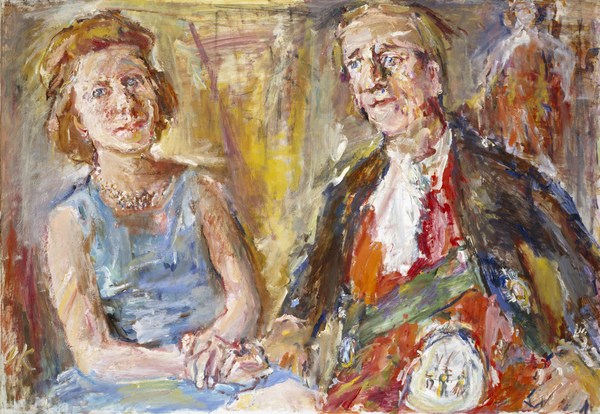
My first encounter with Oskar Kokoschka came through an elderly friend who showed me a photo of a portrait of his parents painted by the famous expressionist artist. He said they were delighted with the result and that his only regret was not having photographed the artistic process every day. I remember thinking the resemblance was not exactly what I would call convincing. I had imagined the celebrated artist as a rather predictable figure: another serious, wrinkly man from the early twentieth century, living a sepia-toned life of portraits, cigarettes, and intellectual anguish.
How wrong I was.
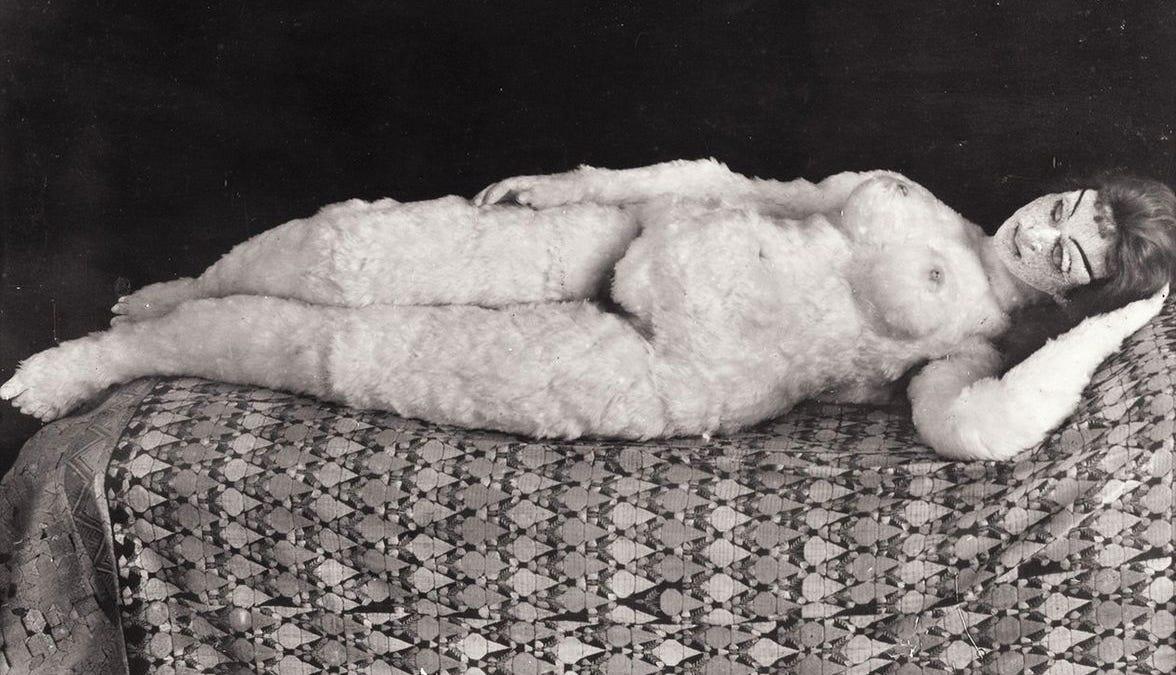
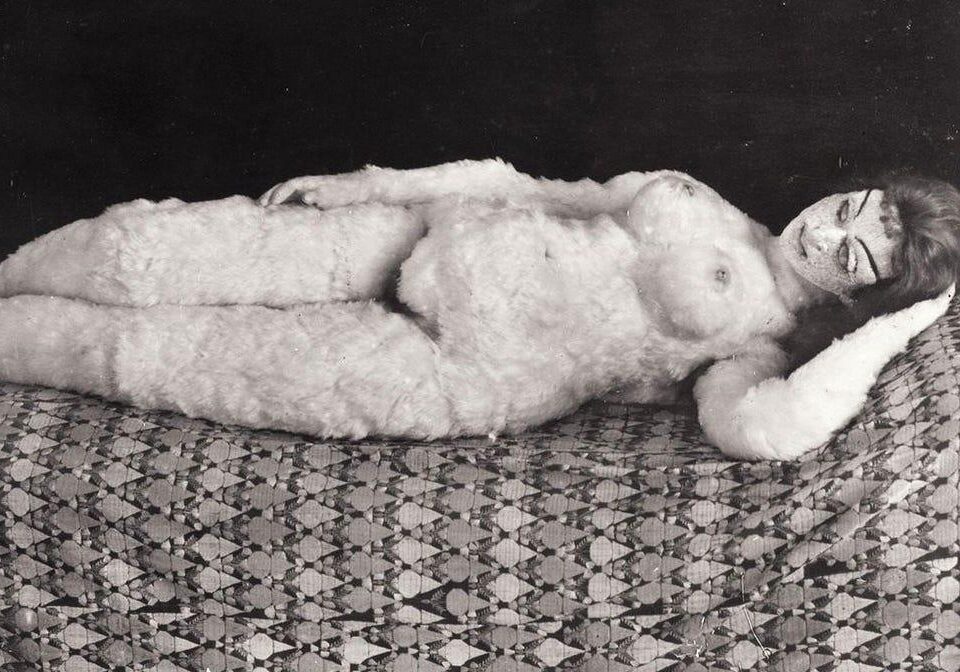
While wandering through VIENNA 1900. The Birth of Modernism, curated by Hans-Peter Wipplinger, a permanent, comprehensive presentation occupying an entire wing of the Leopold Museum exploring turn-of-the-century Austria, I came upon a strange, feathery, lumpy doll. It resembled less a human replica than a child’s drawing of a taxidermied, human-sized woman. Tucked away at the side of the room, the doll was easy to overlook; had a friend not pointed it out to me, I would have walked past it entirely.
Surrounded by paintings from the period, it was not an object to be admired, but one that seemed to call for correction or improvement. Beside it hung a monochrome photograph of an identical ‘original’ creature: Alma, also known as the “Hulda” or “Russerl” doll. The physical doll was commissioned in 2021 by the Leopold Museum and created by the design studio Atelier Coleur & Co. The commission took place during the period of COVID restrictions, when museums in Vienna were rethinking how to engage audiences and reconsidering which objects, stories, and absences shaped their collections. The photograph depicts the “deceased” original doll—a haunting object Kokoschka commissioned in the likeness of his former lover Alma Mahler in 1918. The museum’s reconstruction does not simply recreate an artifact, but raises questions about memory, ownership, obsession, and the transformation of a real woman into an artistic object.
Mahler and Kokoschka met when he was commissioned to paint her portrait, and became instantly obsessed. After more than 400 love letters from the artist, they began a passionate but tumultuous affair. Kokoschka’s devotion quickly took on an operatic quality. He was known to whistle loudly outside Mahler’s windows at night, hoping to discourage potential suitors, keep her from dwelling on her late husband, the famed composer Gustav Mahler, and to keep her awake.
The relationship eventually collapsed in early 1913, when Mahler decided to terminate her pregnancy. Kokoschka kept the bloodied cotton pad from the procedure as a grotesque keepsake, writing: “This is my only child and always will be.” Mahler left him. Kokoschka volunteered in World War I, on the Eastern front, was heavily wounded and upon his return, rather unstable, in 1915, he could still not accept the loss. In an attempt to replace the impossible, the heartbroken artist commissioned the dollmaker Hermine Moos, who had been Mahler’s dressmaker, to create a replica of his beloved in 1918. In hope that Moss knew Alma’s measurements intimately, he sent her twelve letters detailing precisely what he wanted.
Kokoschka was especially particular about her appearance and texture, even specifying the most intimate details:
Please permit my sense of touch to take pleasure in those places where layers of fat or muscle suddenly give way to a sinewy covering of skin. For the first layer (inside) please use fine, curly horsehair; you must buy an old sofa or something similar; have the horsehair disinfected. Then, over that, a layer of pouches stuffed with down, cotton wool for the seat and breasts. The point of all this for me is an experience which I must be able to embrace!
The final product was Alma the Doll: a strange, uncanny object somewhere between a portrait, a lover, and a monument to obsession. When the doll was delivered, Kokoschka was, understandably, horrified. Moos had constructed her from swan skin and feathers sewn into sawdust-stuffed limbs. There is nothing that indicates that Moos deviated from Kokoschka’s precise specifications to avoid being complicit in his fetishistic aims, nor is there any material that negates it.
“The outer shell is a polar-bear pelt,” the artist complained, “suitable for a shaggy imitation bedside rug rather than the soft and pliable skin of a woman.” He also lamented that the texture of the doll made it impossible to dress: “The result is that I cannot even dress the doll, which you knew was my intention, let alone array her in delicate and precious robes. Even attempting to pull on one stocking would be like asking a French dancing-master to waltz with a polar bear.”
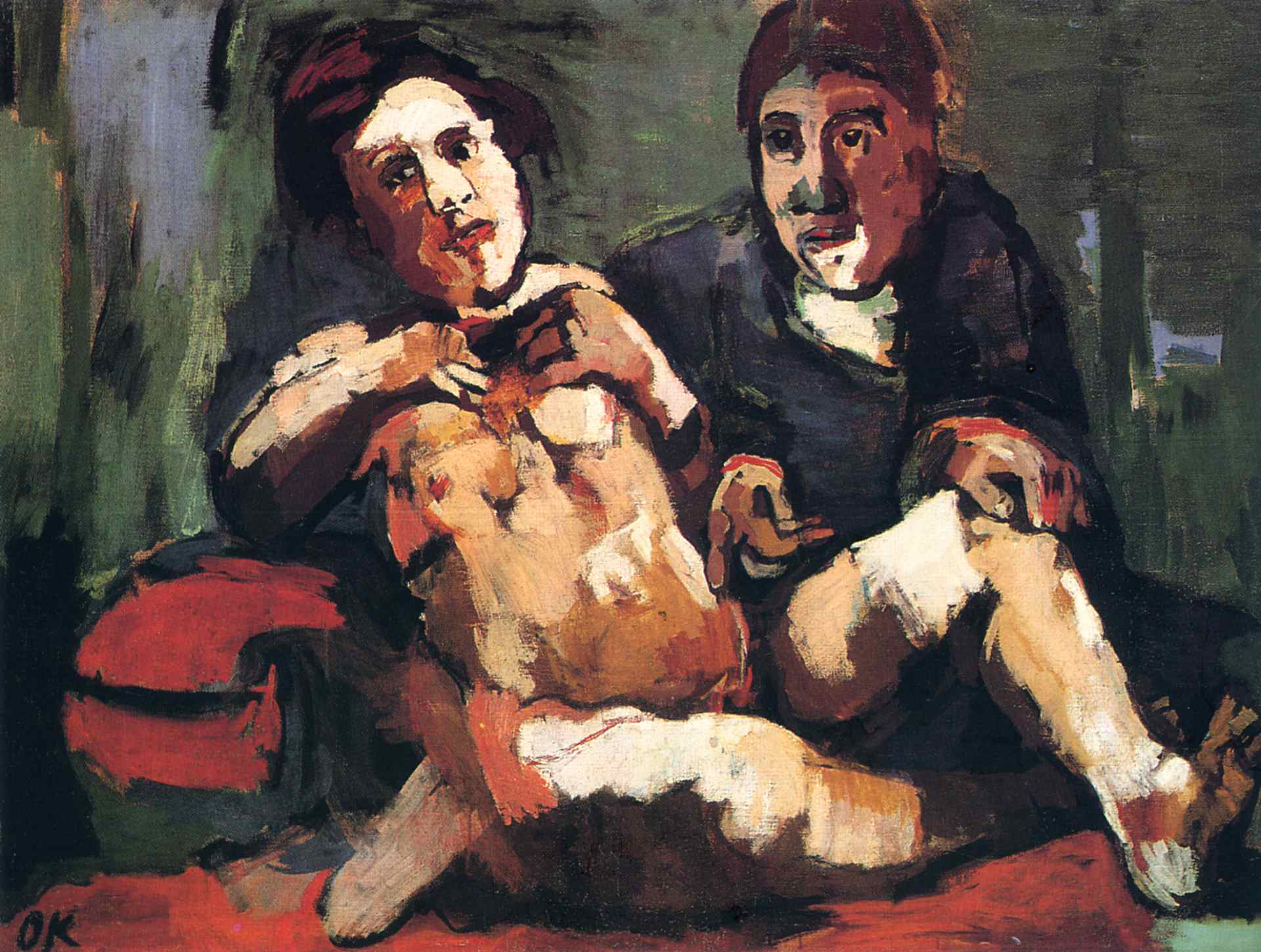
Despite his disappointment, Kokoschka took the doll everywhere: to dinner parties, to the opera, and even to cafés. In 1919, a neighbour spotted what appeared to be a corpse in Kokoschka’s back garden. When the police came knocking at the artist’s door investigating what they thought was a murder it turned out to be Alma, the now decapitated doll, which the artist had doused in wine during a botched burial attempt. Kokoschka claimed the doll:”had managed to cure me completely of my Passion.” She became the subject of three paintings: Woman in Blue (1919), Self portrait near the Easel (1922), and, on view in the show Self-Portrait with Doll (1921) in addition to around thirty drawings. Considering that Kokoschka’s most famous paintings connected to the “doll” period were made after its supposed “funeral,” I remain doubtful about the idea of it representing a simple cure.
Decades after the ordeal the real Mahler received a letter from Kokoschka that read: “If I ever find the time, then I’ll make you a life-size wooden figure of myself… so you can remember me better and, through practice, also acquire a lust for the real thing again. We will get together again sometime.”
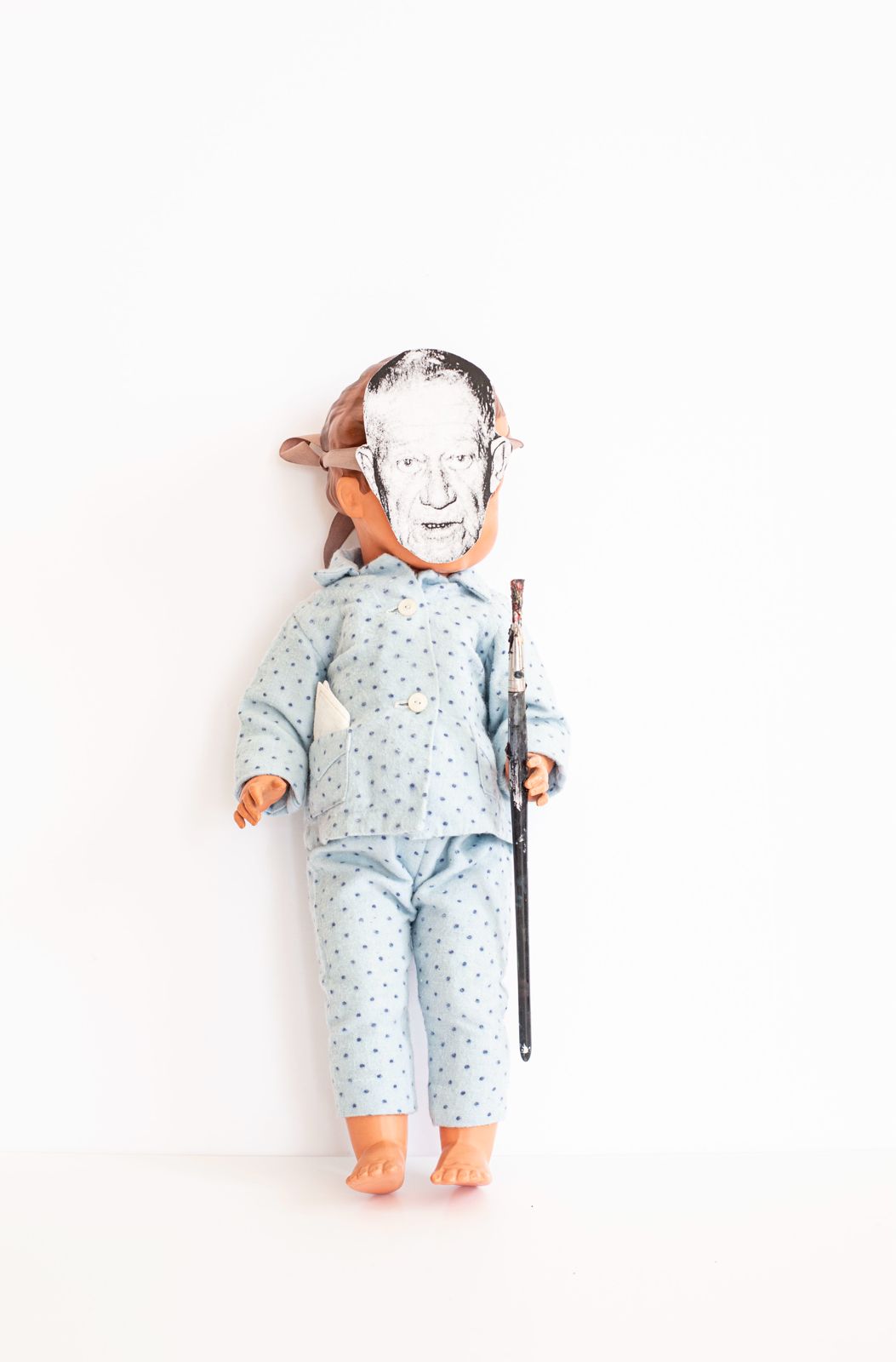
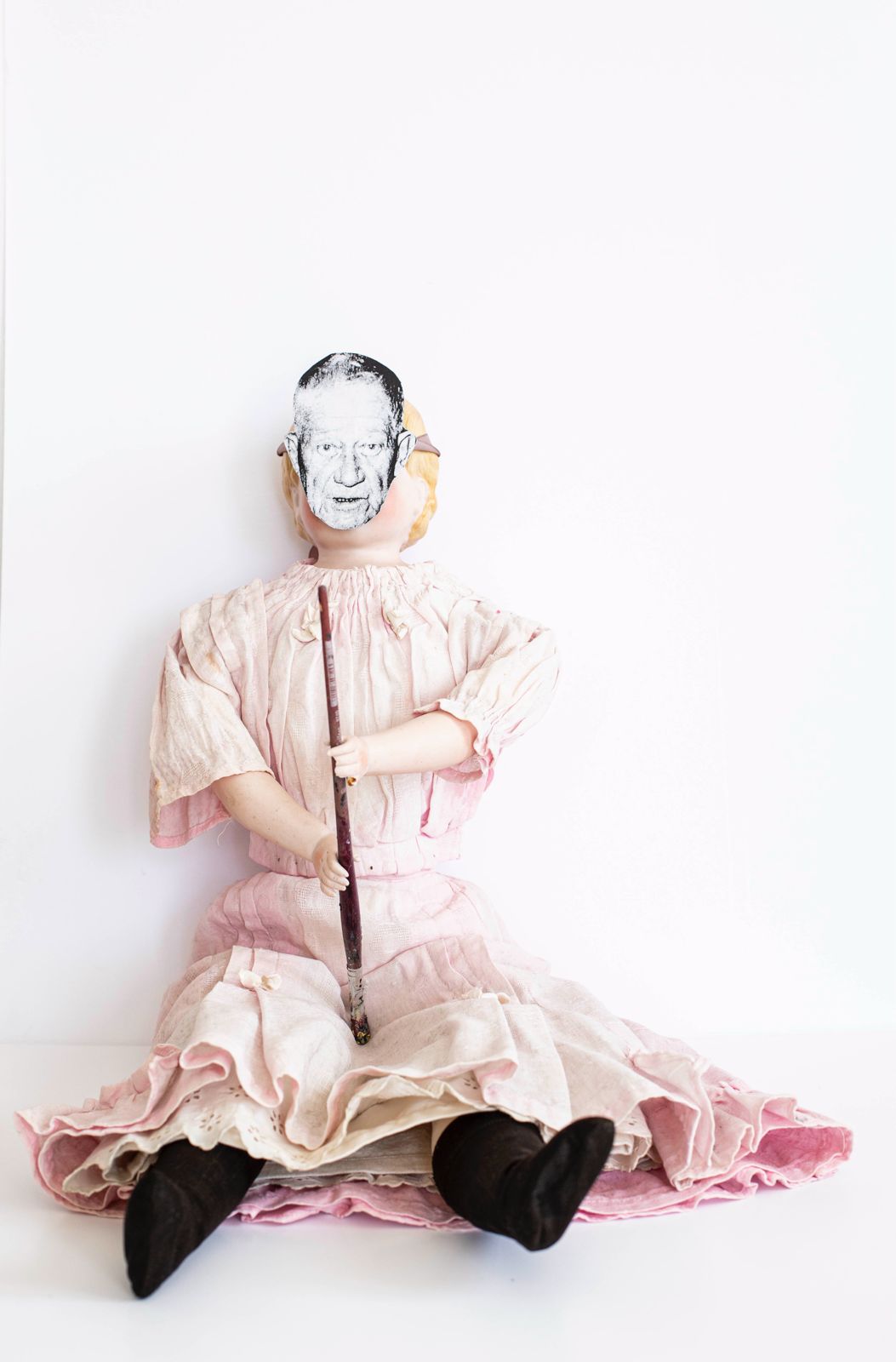
In Vienna, the story is well-known. When artist Nives Widauer first saw the original photograph in a book, shortly after moving to Vienna, her overwhelming reaction was anger at how infantile Kokoschka’s actions appeared. She had grown up admiring Die Windbraut (1913-14) at her local museum in Basel. Then she did not know the dramatic painting featured Mahler, nor how unfairly she was treated by both Kokoschka and society for her numerous romantic relationships. At a flea market, Widauer discovered two dolls from the same period, one dressed in blue pajamas and the other in a pink dress, and remembered Kokoschka’s doll. She bought them both and transformed them by adding a paintbrush and placing Kokoschka’s face onto each doll as a mask. Unlike Kokoschka’s own vision of a masculine wooden doll that represented himself, Widauer’s versions are hollow and made of Bakelite, an early form of plastic. By diminishing the scale, her dolls portray the artist as diminished, almost childlike, vulnerable, and exposed. By transforming the figure in this way, Widauer shifts the focus away from Mahler’s objectification and toward Kokoschka’s own emotional fragility, grief, and obsessive attachment.
Not only was Kokoschka left by Mahler, but the war also bookended the golden age of Viennese Modernism, one which saw the rise of the Jugendstil and much intellectual and artistic innovation. Yet, as I agreed on the phone with Widauer, creating a voodoo-like version of a former lover is not the answer; it reads as a desperate attempt to hold onto attention, presence, and control in the face of loss. Heartbreak is an unavoidable part of life. At the same time, the way each one of us processes a broken heart, just like falling in love, is something deeply individual and often irrational.
The exhibition, however, does not dwell on the object to any great extent. Aside from Self-Portrait with Doll, which is not always on view at the Leopold due to its private ownership, the other, albeit magnificent, works have little or nothing to do with Alma the woman or with the doll itself. The wall text that accompanies the doll is written in a dry way, so unless the viewer is really paying attention the bonkersness of the object could be overlooked. I found this to be a missed opportunity, as for me it is precisely these moments of eccentricity and obsession that make an artist come alive.
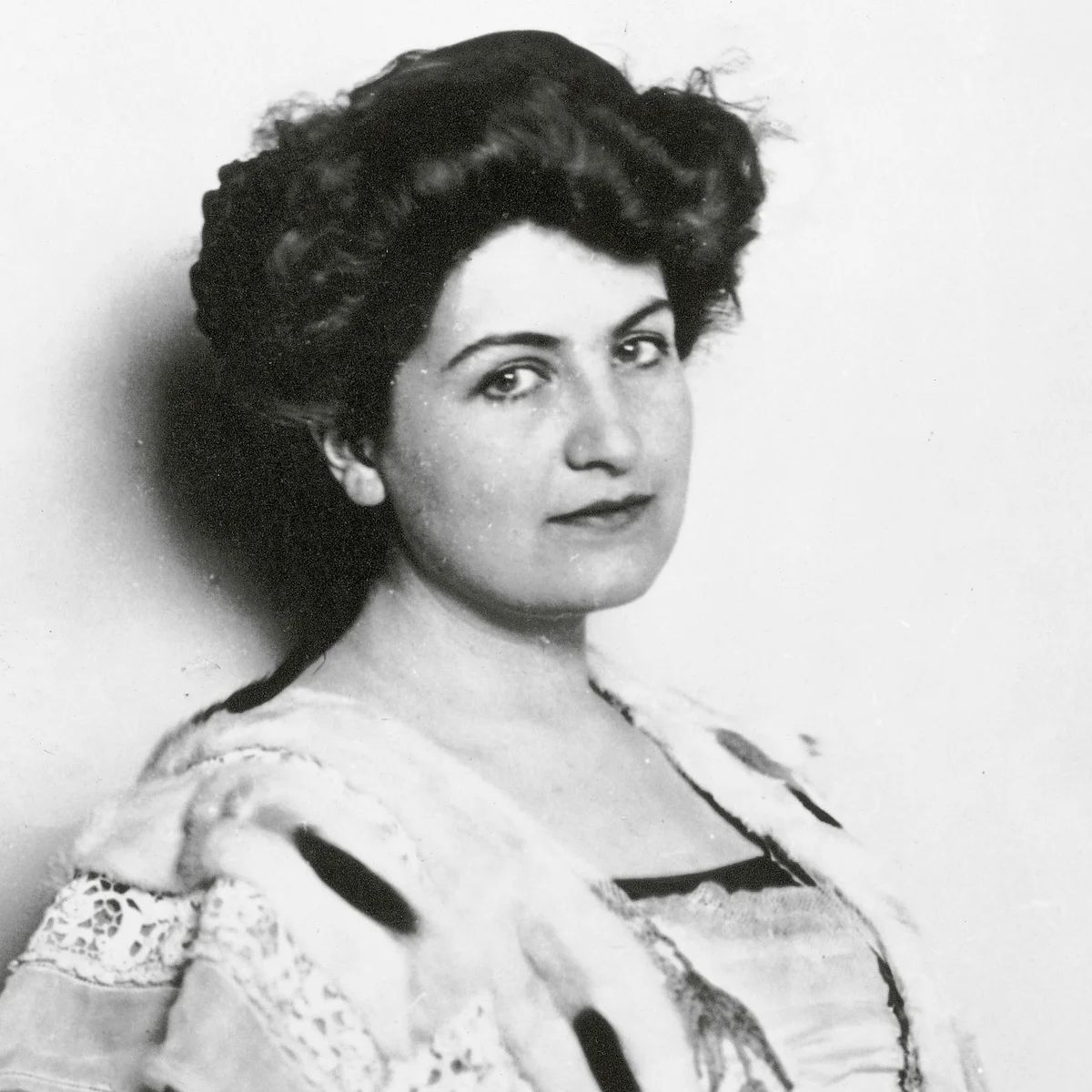
By contrast, Mahler, the human-woman, emerges as a strikingly self-possessed figure: intelligent, composed, and socially agile, someone who continued to move forward while her former lover remained caught in fixation. In October 2021, the Leopold Museum presented ALMA WHO? – Maxi Blaha plays Alma Mahler by the Austrian actress Maxi Blaha, a performance that sought to re-examine Mahler beyond her traditional role as a “muse” to the male artists of Viennese Modernism. The project placed her back at the center of her own story, rather than only as an inspiration for figures such as Gustav Mahler and Walter Gropius, her husbands, or Kokoschka, her lover. It is only right that she is being more recognised today.
It is certain that learning about this strange dollhouse-like love story changes how one encounters Kokoschka’s paintings; they can no longer be seen purely as formal or expressive works, but are inevitably shadowed by Kokoschka’s intensity, fixation, and emotional collapse. I wonder if the Duke and Duchess knew?
The doll will remain on view in Leopeold Museum’s permanent collection VIENNA 1900. The Birth of Modernism until they rehang the collection, or take it down.
You Might Also Like
Artist Nives Widauer’s Apartment Where Democracy Dreams and Trees Swim
What's Your Reaction?