
“Painting Makes Space for What is Absent:” Malin Gabriella Nordin

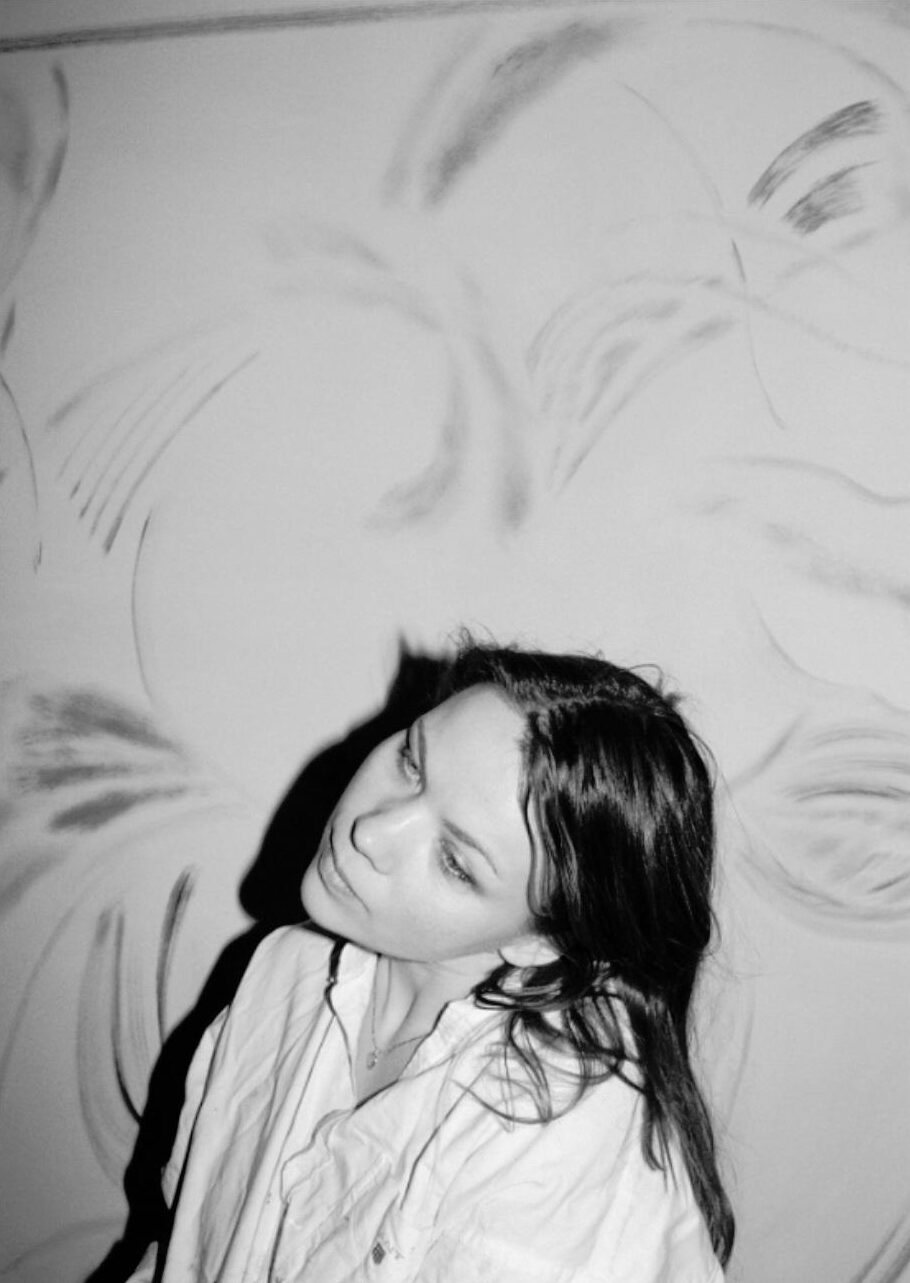

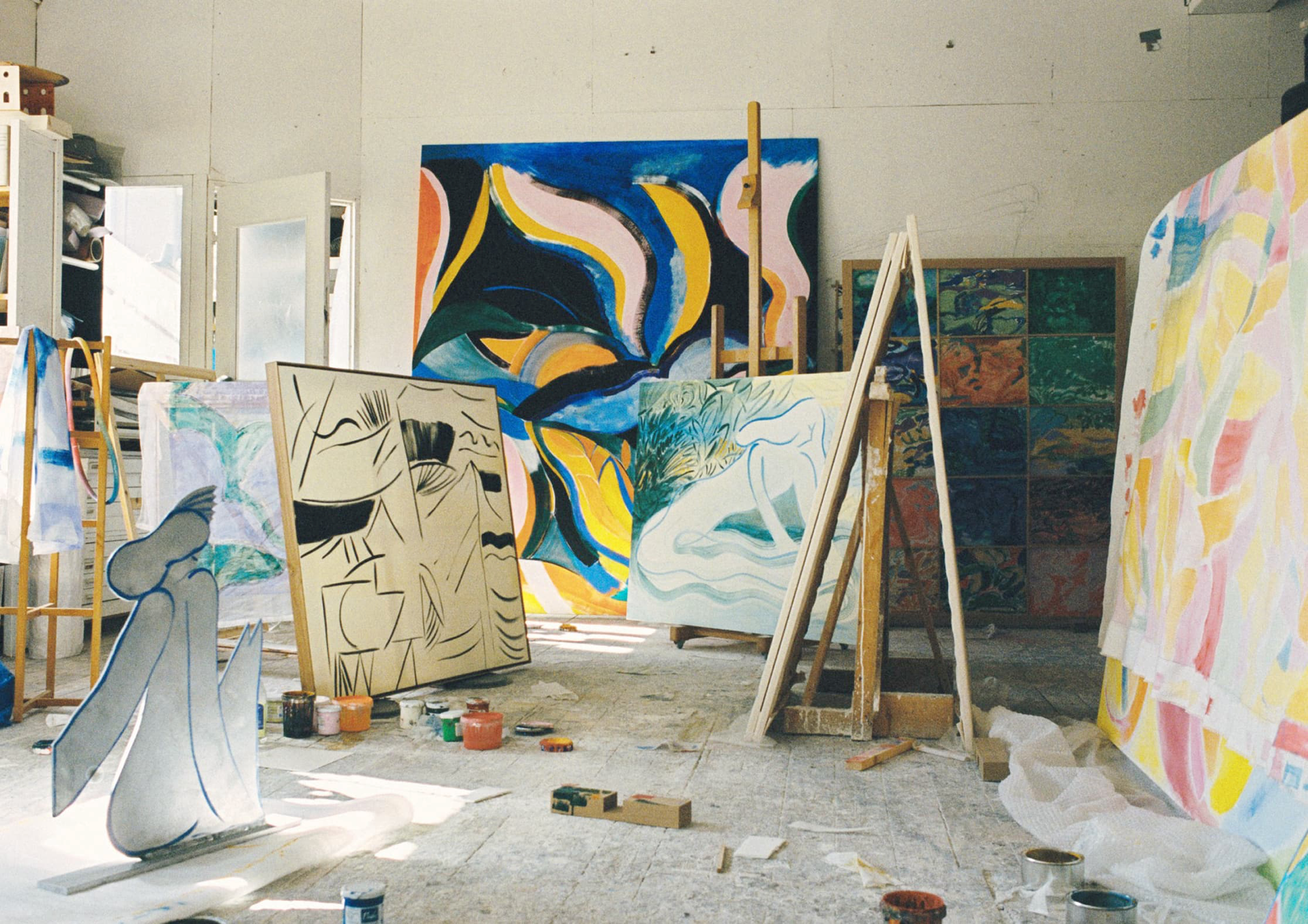
In Stockholm, in the studio of Swedish painter Malin Gabriella Nordin, late spring sprouts in light green outside her large windows. I visit the studio ahead of Nordin’s upcoming residency at the Mack Art Foundation in New York City. Nordin belongs to those who see, reaching in fearless surrender to trace the shape of an invisible threshold. She lets her mental space cascade onto her paintings, spread across the floor, leaning against the walls. The surfaces breathe. Stained, repainted, suspended. Intuition guides her painting practice, which traverses canvas, textile, paper, often collaged, books, records, videos, murals, and sculpture.
For Nordin, the summer residency is a return to the city as much as a new chapter. In 2015, she was included in No Matter, New Matter a group show at Ed Varie, the curatorially driven LES gallery and bookshop, alongside Michelle Blade and Fiona Curran, with a thesis to explore perceptions of nature. The same year she also showed a book at Fabiola Alondra’s Salon Society, the Mexico City-born curator’s series of private salons. Returning to New York, Nordin has been selected for art collector-turned-artist incubator and fellow Swede Christine Mack’s namesake residency, where she will receive a studio and professional and housing support. Mack has spent over two decades in New York and has sat on boards at several institutions including the Guggenheim Museum, Studio Museum in Harlem, and Moderna Museet Stockholm. Since founding her residency, Mack has hosted some sixteen artists from around the world. A trained graphic designer, perhaps it was Nordin’s graphic sensibilities that drew Mack in.
In Sweden, Nordin’s work reached critical acclaim through her 2024 interventionist exhibition at the turn-of-the-last-century sculptor Carl Eldh’s studio museum which contemporary art program is both well regarded and a launching pad for invited artists. And, shows with Gallery Steinsland Berliner. Some more experimental than others, like when she created 455 art works while listening to Swedish DJ Axel Boman’s single Eyes Of My Mind, animated it into a music video, and expanded visuals into a limited-edition magazine and print presented by the gallery. She has also created cover art for Kornél Kovács and Baba Stiltz, musicians under Boman’s label Studio Barnhus. It is within this assemblage of significant collaborators, visible and invisible, that I sit down with Nordin for an interview.
You traverse different scales, from drawings on napkins to large-scale site-specific installations. Can you speak about this pull between the small and the large?
There is something that happens in the translation. When I turn a collage into a sculpture, taking something small and making it three meters tall, there is a shift as I move across registers, or dimensions, a kind of slip in transposition. That is why I named my exhibition at the Carl Eldhs Ateljémuseum Begynnelser [Beginnings], because every work is a new beginning, while at the same time it takes from what was there before. Just like everything in history. There is a mutation each time, even in repetition, which I find intriguing.
When I sketch or draw on napkins, it is because my hands are restless. I am always painting or drawing on something, without any expectation of a result. It is both an outlet and a practice for my hands. It puts movement into the memory of the hand and carries me forward. The work exists in my body.
Is there a form of resistance in this act of bodily presence?
I believe it is absurd how alienated we are from our bodies and nature. It is important to find a way back. I am very interested in the interior and exterior body and what is in-between, where the threshold is. If there even is such a border. That is where my painting becomes a form of resistance, against the alienation. It is a room for hope, perhaps, where knowledge is in the air, or space, or the universe, and within ourselves. Bodily presence is always there, and it always will be. It is all about how to reach it. Not to find answers, but to remain curious enough to keep going deeper. And when I do, it truly feels universal and as something that everyone is part of. It is impossible to describe with words. There is something that pushes through and reaches you. It is in that moment that I feel a painting carries something meaningful beyond words that reaches and resonates with others.
How do you work with this search, or friction, between the physical world and what you transmit when painting?
While there is a constant curiosity, I am not thinking about anything in particular when I paint, it is more about being present and open. I believe the work emerges through trust and a constant willingness to enter the unknown. Yet, I often dream about my paintings. We spend years of our lives in dreams, which we often overlook. For me, dreams are very significant, they act as apprehensions, and I usually spend one or two hours in the mornings processing them.
In your dreams, do you see both figures and colors?
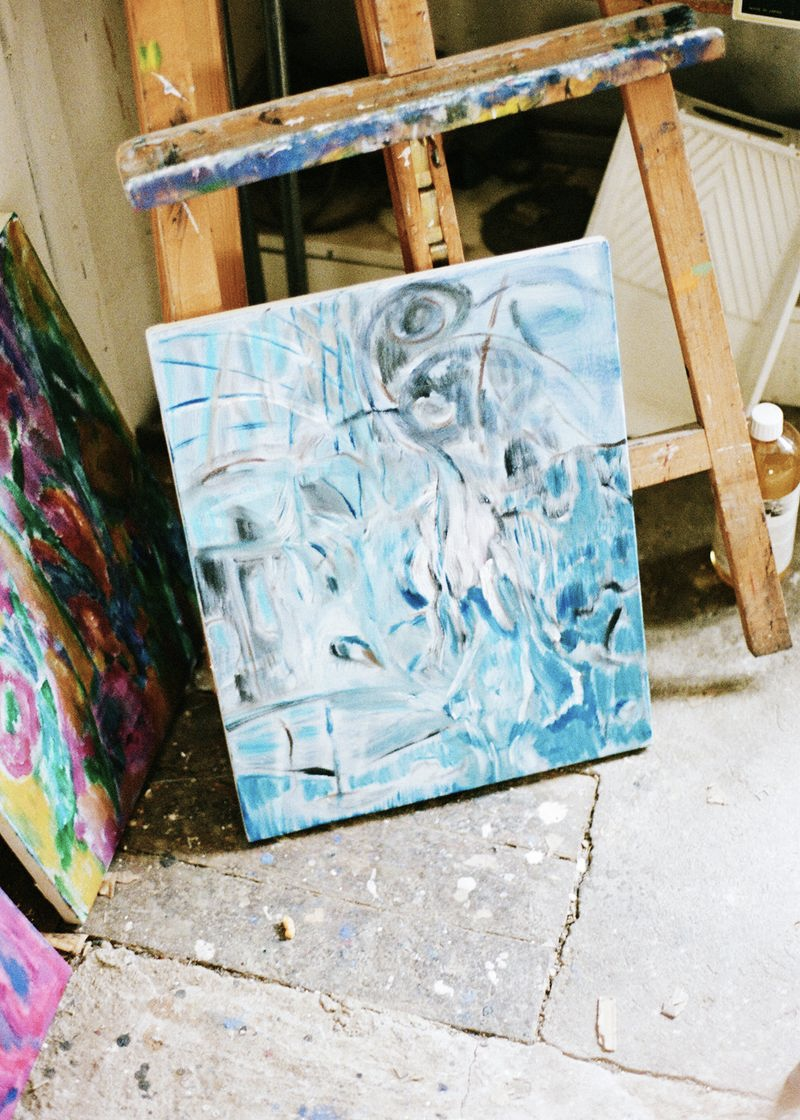
Yes, but sometimes they are obscured. It is incredibly hard to transmit and translate, because in dreams there are possibilities and dimensions that are beyond the capacities of our material world. It is as if I have the memory of a painting that has not been created yet. And then it becomes very clear when I reach it, or don’t. Either it has a presence or not, something not yet known yet still familiar, as if the painting makes space for what is absent. I am trying to depict impressions or emotions that I cannot see quite clearly.
What else helps shape your intuitive process?
I often paint to music, and during the creation of a specific work, it can be the same songs playing. It becomes like a capsule, almost like entering a particular atmosphere. Music can help me move forward and shift the energy of a painting. When I made the stop motion video for Axel Boman’s song Eyes of My Mind, I was thinking a lot about how inner images move through sound, rhythm, and color.
How have you developed your ability to listen and engage in this conversation when painting?
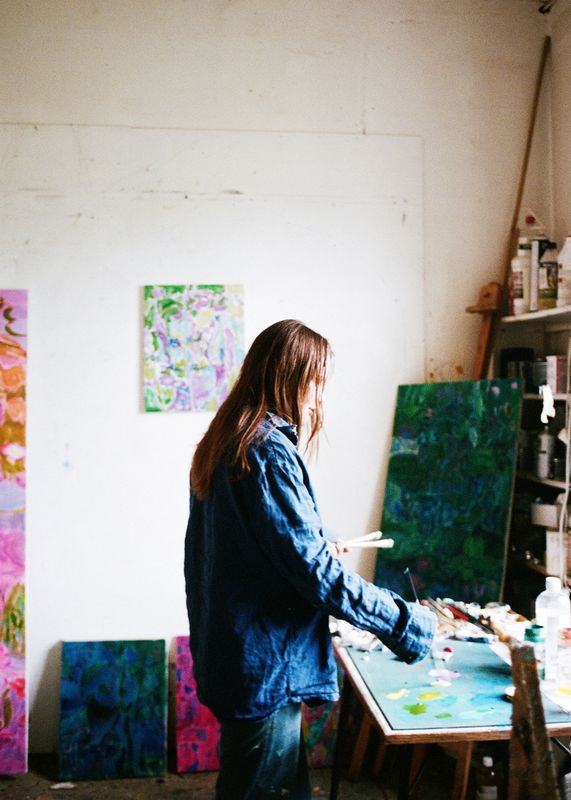
My dialogue with the painting is about composition and understanding which forms demand which colors. I may start with a vague idea of color, or a sense of composition. After that, the colors start to unfold and oscillate, react to and play with each other, changing the gestures and shapes to create a rhythm, which makes the work come alive. As the form changes, perhaps the colors need to change too. Like a puzzle, everything has its place.
You Might Also Like
What's Your Reaction?