
Nudes and Other Taboos

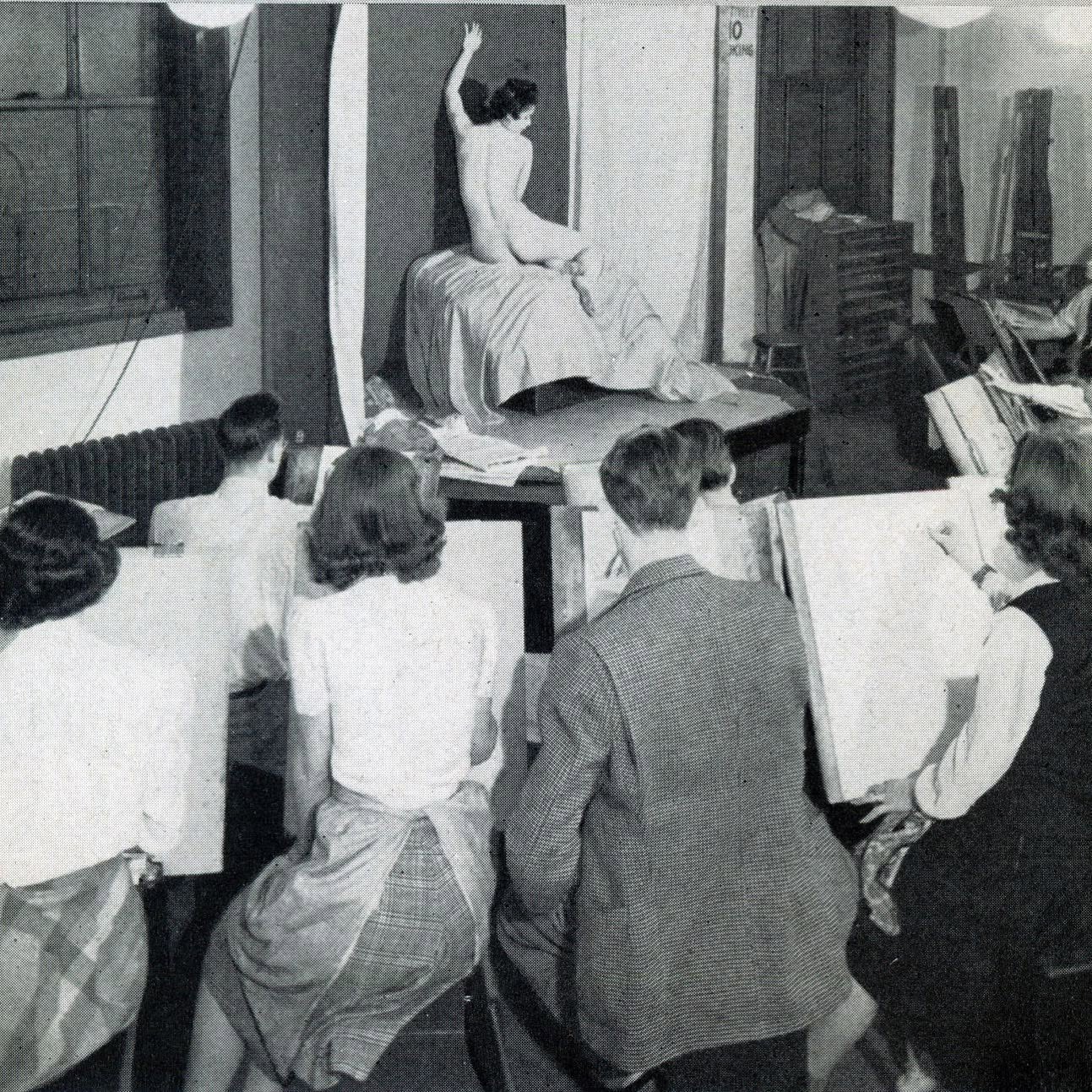

Naked bodies. Nudes. Throughout their training, every artist spends countless hours looking at, observing, and depicting unclothed figures of every conceivable shape and size. Entire afternoons can disappear while one painstakingly renders the shadow around a nipple, or the precise anatomy of the cleft between the buttocks. The idea being that if you can draw the human body, the hardest shape of all, you can draw everything. At first, the experience is undeniably awkward; little giggles ripple through the classroom as a model shrugs off their dressing gown and stands in triumphant nudity before pencil‑at‑the‑ready teenagers. Repetition strips away any sense of voyeurism; eventually, it becomes an exercise in observational precision rather than intimacy.
Until the early twentieth century, women were not admitted to life‑drawing classes on account of their supposedly impressionable natures. Secluded to drawing still lives (conveniently, still life as a subject matter was and to some extent is still, not viewed as highflying as a nude). After much battle, female students in Europe and North America were eventually invited into life drawing classes around the time they got the ability to vote. The argument being; How else can you convincingly draw a clothed figure if you do not understand the body beneath the clothes?
Since then for most artists, nudity is less a provocation than a foundation. To depict the human body truthfully, it must first be understood as a shape and form: Its weight, proportion and structure before it is seen as a person. In that sense, artists learn to objectify the body, not in the moral sense of reducing a person to an object, but in the literal sense of treating it as an object of study. The body becomes a landscape to be understood rather than a spectacle to be consumed, even fetishized.
For much of the rest of the world, encountering naked humans is in a private setting; therefore, public appearances of flesh are still capable of provoking surprise, embarrassment, or outright outrage.
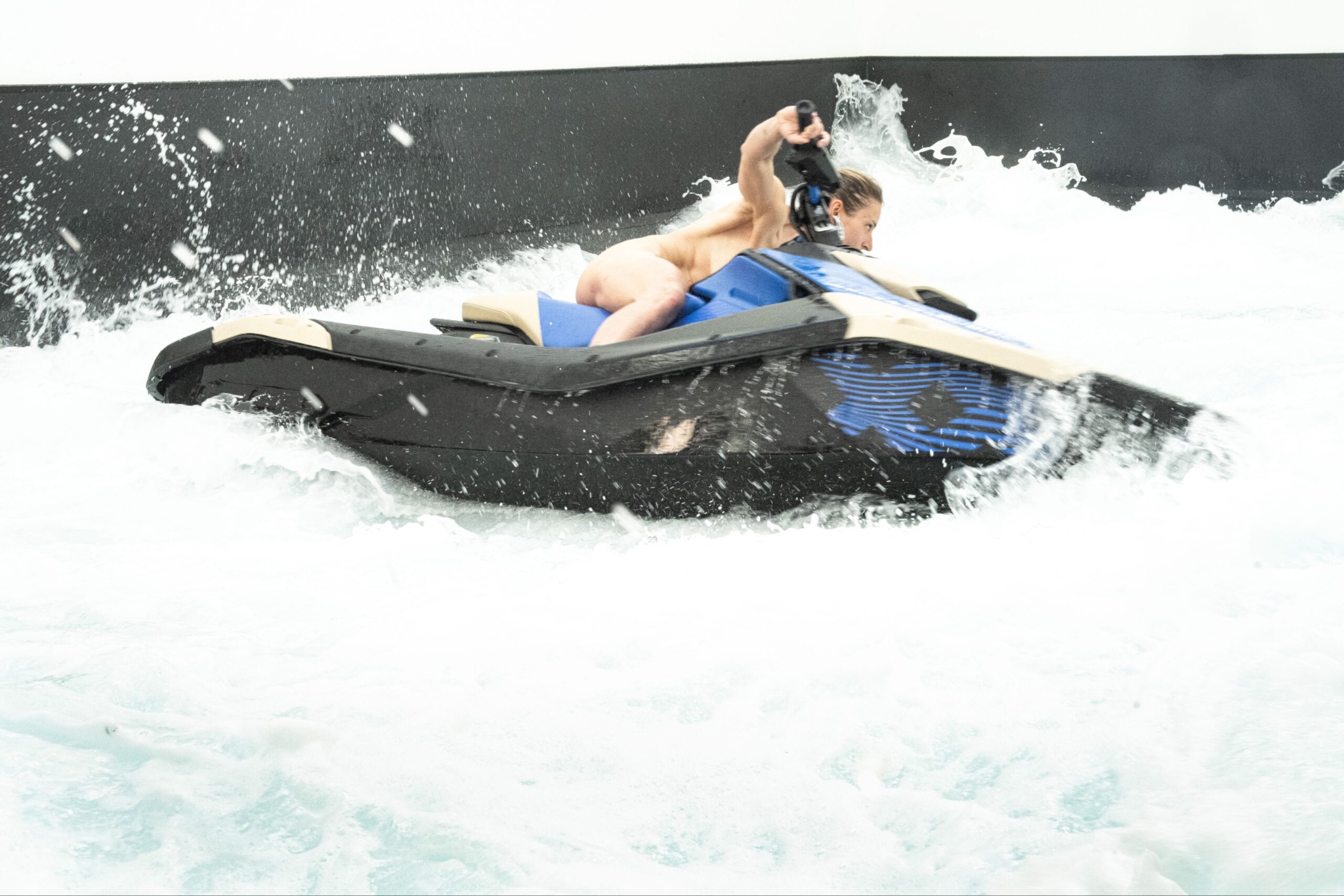
Now that the dust has settled on the opening weekend of this year’s Venice Biennale, where naked, predominantly female‑identifying bodies appeared throughout national pavilions—including Florentina Holzinger’s Austrian Pavilion, curated by Nora‑Swantje Almes; Maja Malou Lyse’s Danish Pavilion, curated by Chus Martinez; and Andreas Angelidakis’s Greek Pavilion, curated by George Bekirakis—I have begun to ponder this controversial divide. On one hand are artists, many of whom would scarcely blink at the sight of a penis or a vulva after years spent in life‑drawing studios. On the other is the general public, for whom nudity remains, even in 2026, something transgressive. All three pavilions ride on the shock value of the women participating in the artworks showing more than a bare ankle.
The tension is fascinating because the body itself has not changed. We all have one. Artists are trained to see anatomy technically before sexuality, structure before symbolism. Most people, by contrast, encounter nakedness in more intimate settings, colored by modesty, desire, religion, or censorship. The result is that two groups can stand in front of the same naked body and experience entirely different things.
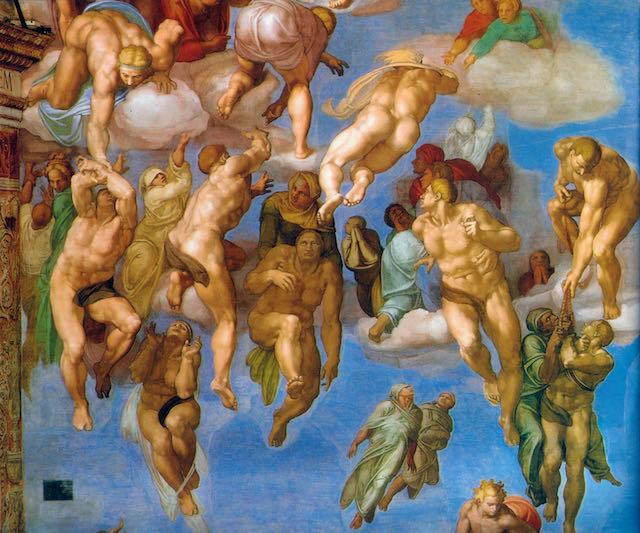
True, we have come a long way since Michelangelo was instructed to paint draperies over the genitalia in the Sistine Chapel (1508-1512). Today, at least, it is very much the viewer’s choice to wander into a national pavilion and unexpectedly find themselves confronted by a naked Austrian lady riding a jetski. There were no “18+” signs hanging above the entrance to the Giardini, no trigger warnings alerting visitors that a particular pavilion did not leave much to the imagination. It is simply part of the exhibition, to be encountered in much the same way as any other painting, sculpture, or video installation. Whether that felt liberating, amusing, uncomfortable, or deeply offensive depends almost entirely on the baggage each visitor drifted in with them through the lagoon.
This is what makes the Biennale, where every country on the globe gathered under one umbrella, is such a compelling place to consider nudity. The naked body itself is not the provocation; rather, it is the history, culture, and expectation we bring to it that determines our response. The work often reveals less about the exposed figure than it does about the viewer doing the looking.
We often exaggerate just how different our bodies really are. Strip away clothing, hairstyles, and all the cultural signals we use to identify one another, and the human body is remarkably repetitive. Aside from the more obvious distinctions and the changes that accompany puberty and later life, we are all built from the same components: skin, muscle, bone, and fat. I challenge anyone to identify, with absolute accuracy, the sex of every infant in a collection of Victorian baptism photographs. One cannot. So much of what we think we see in a body comes not from anatomy itself, but from the cues that surround it.

This is why artists become so comfortable with nudity. After drawing hundreds of naked bodies, the figure ceases to be a provocation and becomes a technical problem: an arrangement of proportion, light, anatomy, and form. The body ceases to be a symbol of sex and instead becomes what it has always been: another variation on a familiar form. For artists, the naked body is rarely the most interesting thing in the room. We are usually too busy wondering whether the foreshortening works, whether the composition is any good. I, for one, stood in the Austrian Pavilion wondering how comfortable it is to ride a jetski without any clothes on. If the Venice Biennale proved anything this year, it is that the body itself has lost very little of its power to provoke. But perhaps the real question is not why artists keep showing naked people, but why the rest of us are still so surprised to see them.
You Might Also Like
Who Holds the Gaze? Lesley Bodzy’s “Hand of Venus”
No Shame in the Slutverse, Please
What's Your Reaction?