
The Many Lives of Pink: Astrid Kajsa Nylander on her Upcoming Show “Set” at Belenius in Stockholm

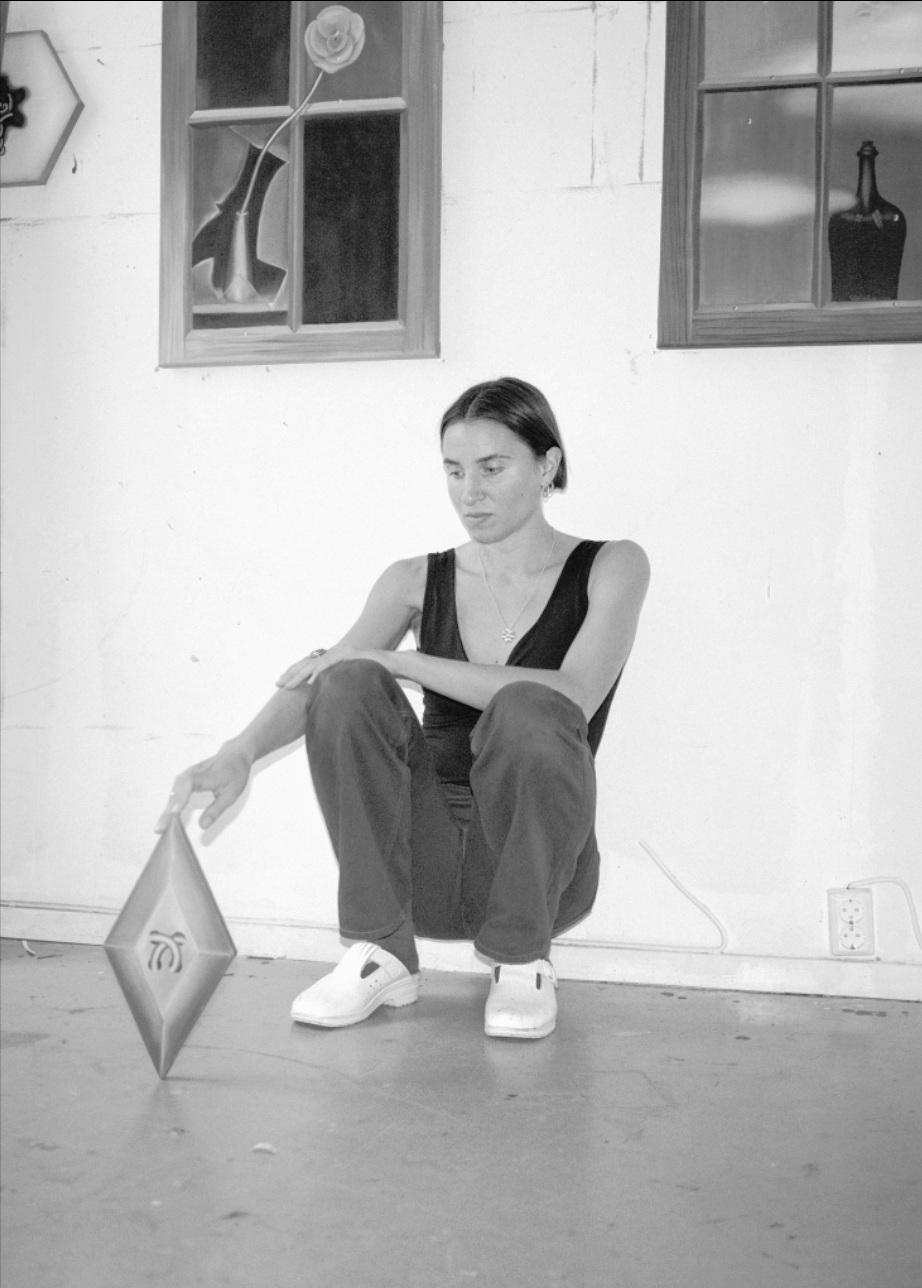

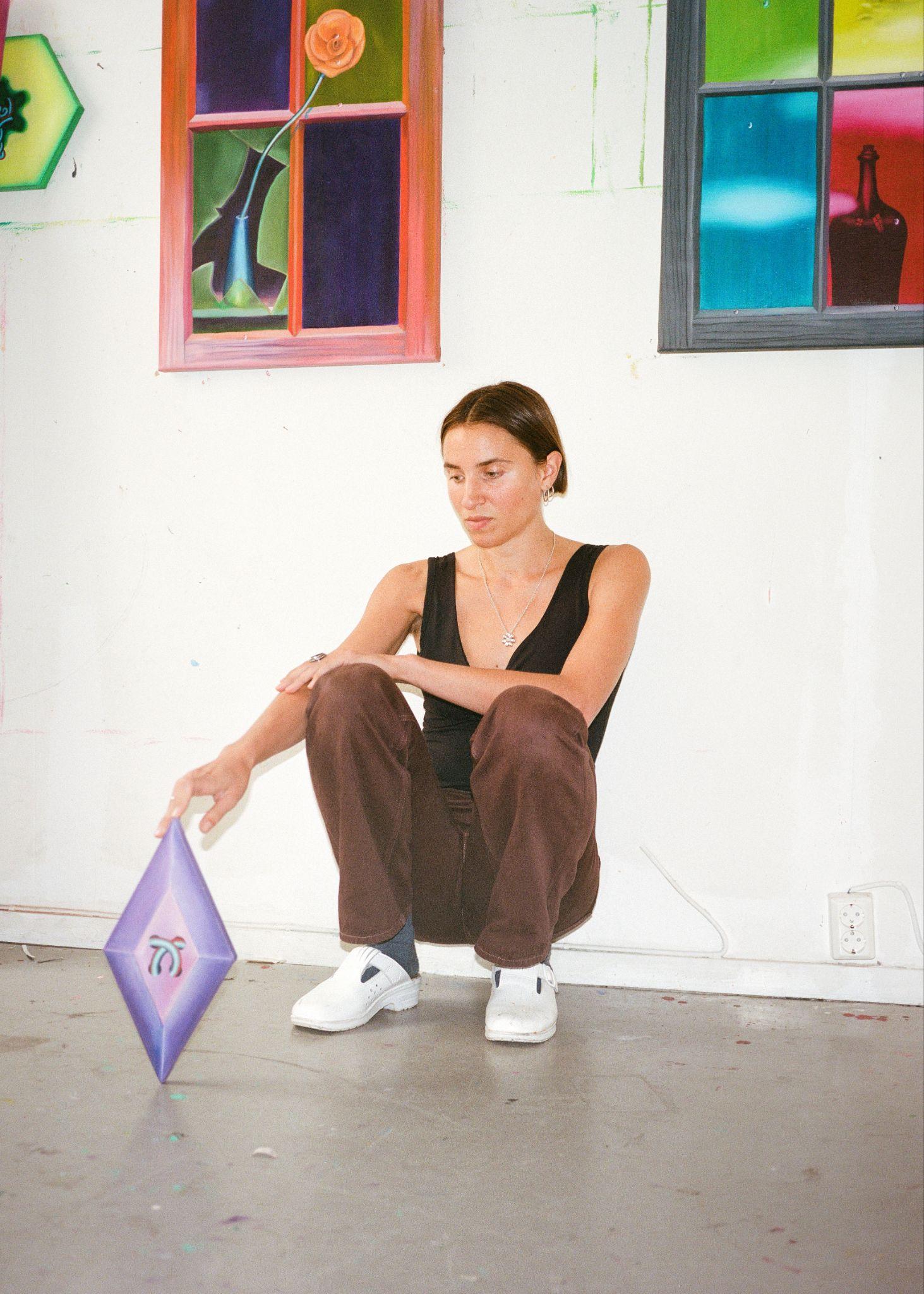
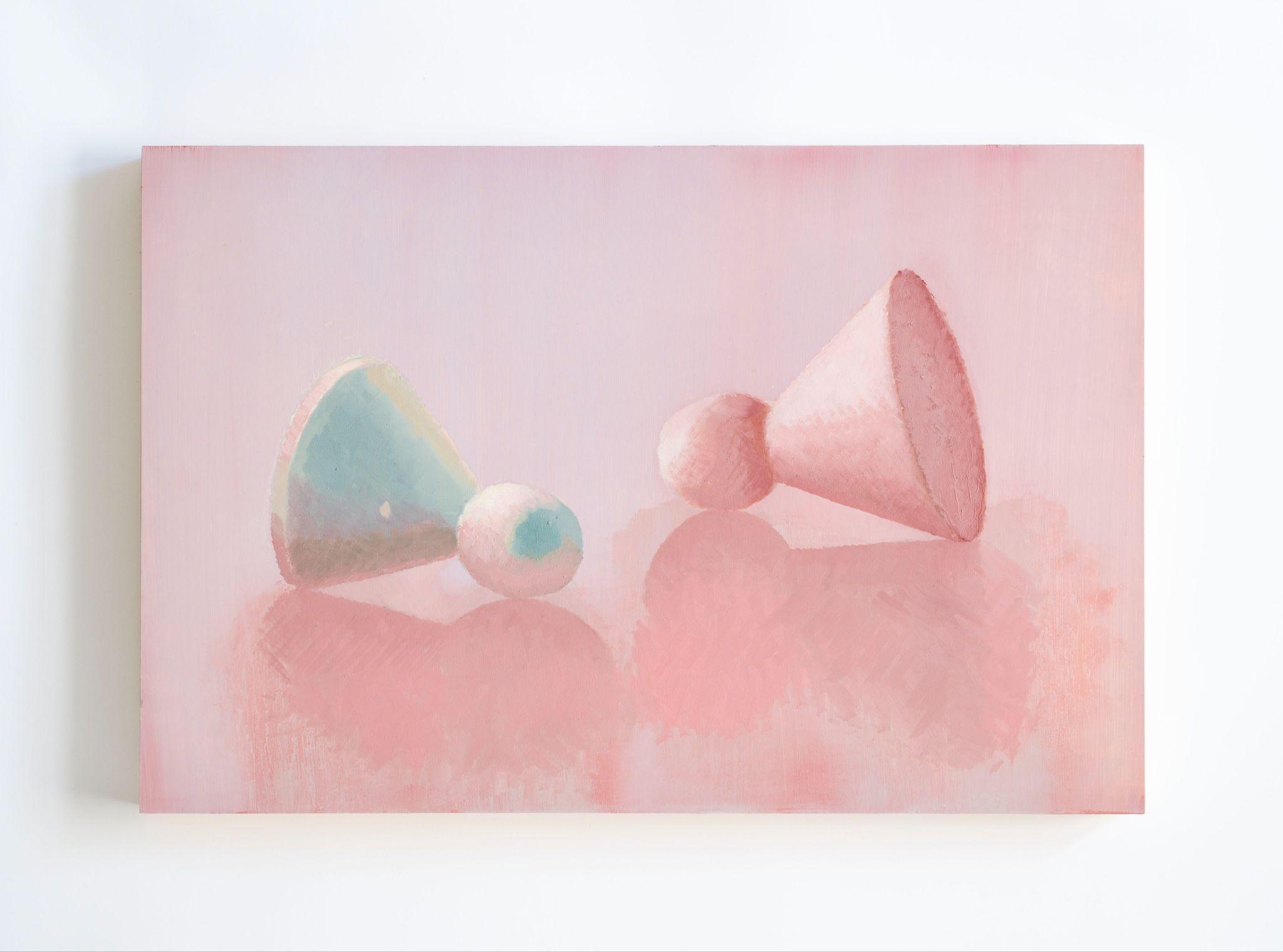
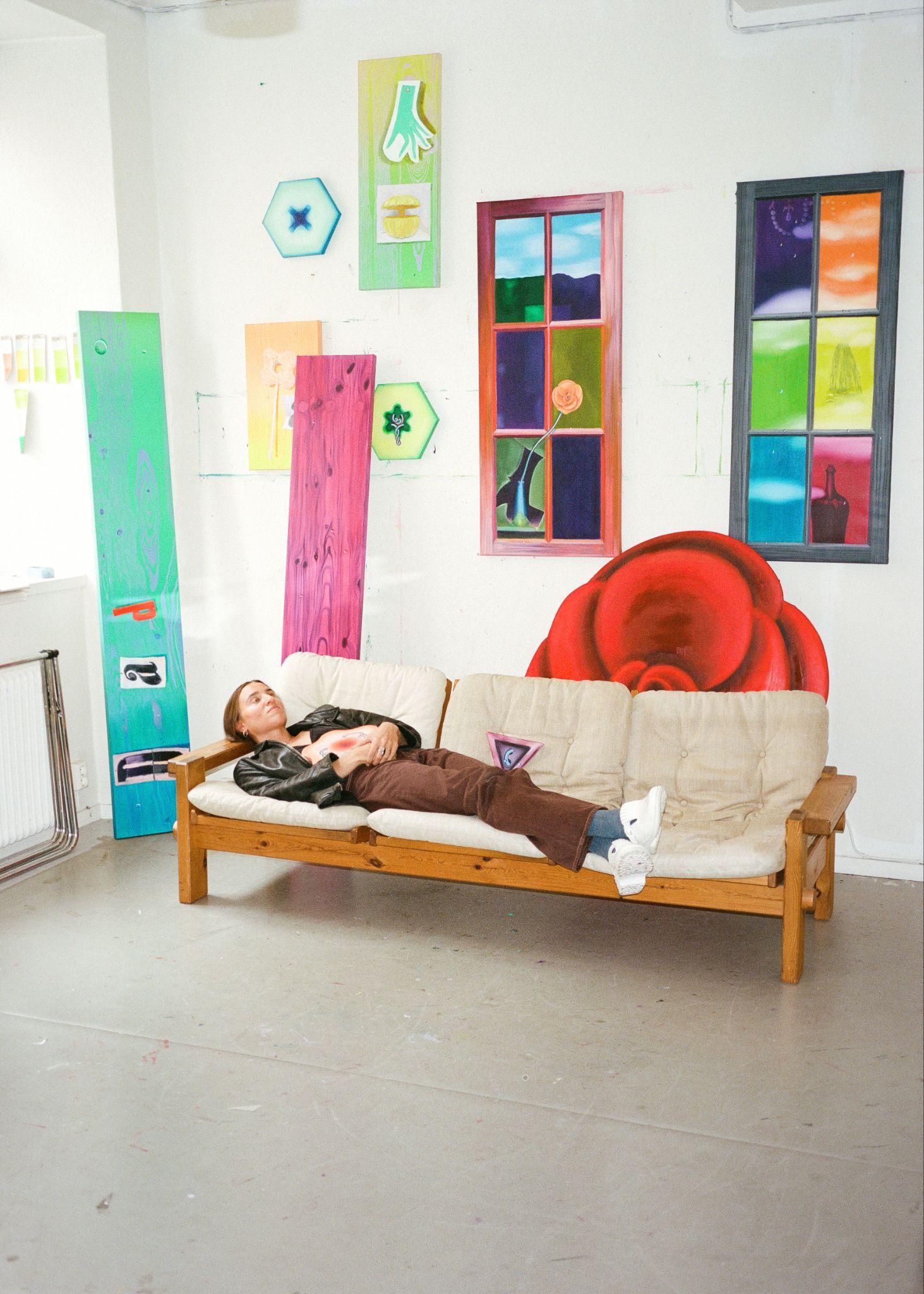
Imagine the most delicious shade of pink: somewhere between chewing gum and pale coral. It runs through Astrid Kajsa Nylander’s Set, appearing in works such as Fris, Runda, Set#1, and Raumtrenner. The colour feels both immediate and in flux, and if one were to take a bite of it, it would taste like cotton candy.
In Set, painting becomes a space where games, probability, and everyday perception overlap. Game pieces, interior details, and dividers (that seem to be a part of a theatre set) appear as familiar objects that also feel slightly displaced, caught in shifting systems of chance, choice, and consequence. The conversation below opens some of the thinking behind the work, tracing how color, influence, and material decisions feed into a practice where painting is not only image-making, but also a way of testing how meaning takes shape—and slips away.
Vivid color seems to be an essential part of your expression. How did your infatuation with colour begin?
I grew up in the 1990s, when popular culture was saturated with bright colors, simple forms, and psychedelic patterns used as markers of identity and as a way of manifesting personal expression. It was extremely attractive and easy to lose oneself in that world. It is like discovering makeup and having the fantasy that you can transform yourself and become someone else. It probably felt especially powerful because my father despised the Spice Girls.
I read that the Gothenburg colourists have been influencing your color palette. I love Ragnar Sandberg and Inge Schiöler myself. Is there any work by this group that has made a particular strong impression on you?
I was born and raised in Gothenburg, and artists from the region influenced me from an early age. When you’re young, it’s important to hear about artist groups and collectives and to have something to fantasise about. It doesn’t really matter whether all the myths surrounding them are true, I mean, were the Colourists even a group, or is that just convenient historical storytelling? As a young person, I dreamed about the possibility of one day meeting peers.
There is a series of very luminous paintings by Åke Göransson in which the motif seems to be dissolving into fields of colour, and I keep returning to them. Because he lacked money and therefore materials, he painted over several earlier works, and traces of the previous painting remain visible beneath the new one, so that multiple layers of imagery dissolve into one another. This idea of reducing and dissolving the motif while still retaining it is something that has increasingly interested me.
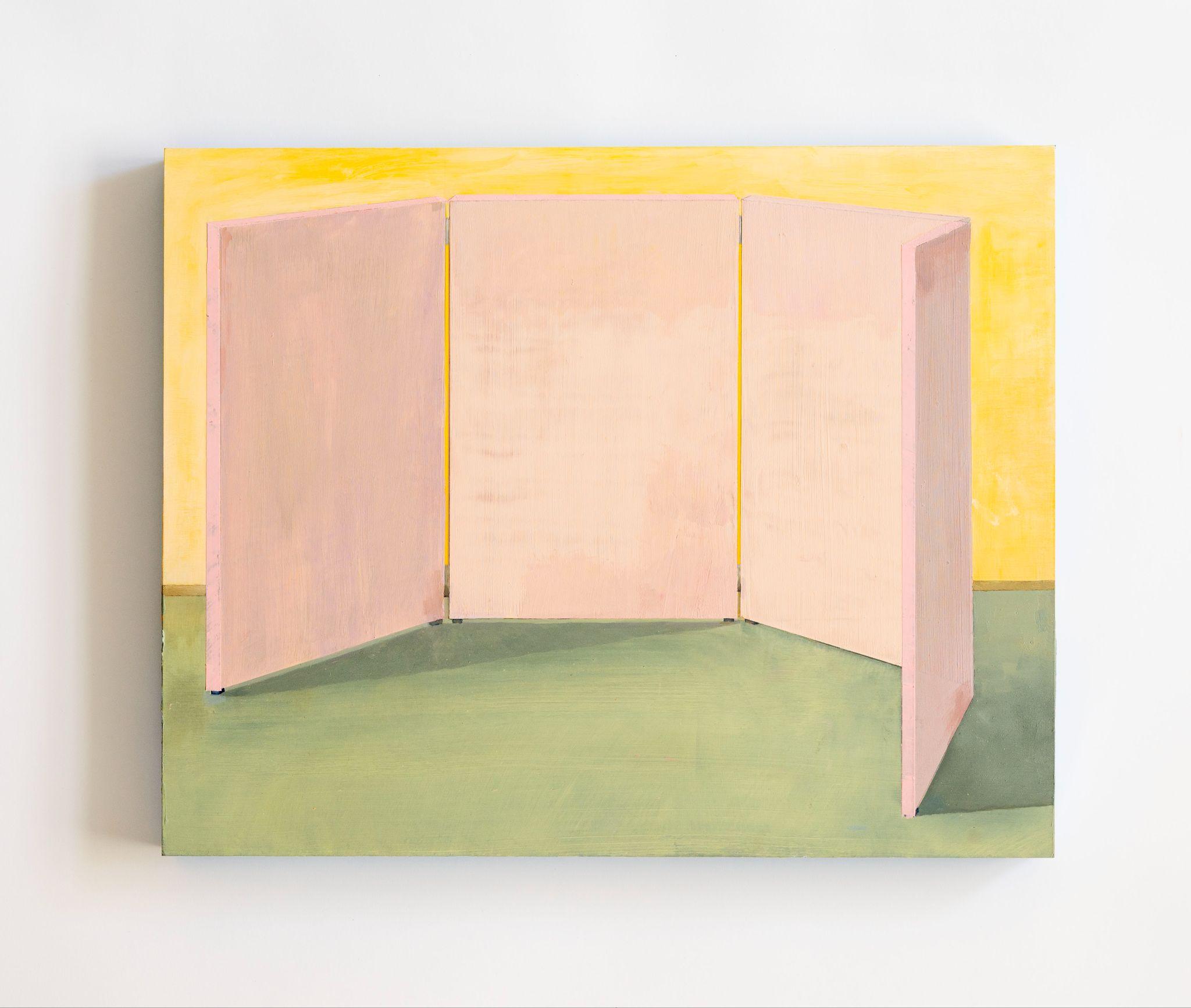
Yes, I can definitely recognise the same lyrical sensitivity to color found in Göransson’s paintings. Your shared use of pale color fields and visible brushstrokes evokes a strikingly dreamlike effect. Tell me a bit about your upcoming exhibition Set at Belenius.
Set is about the game, probability, and the place where life unfolds. It began with the game piece as a proxy for the person involved in the game – the player – as in the painting Blue Piece. At the end of 2025, I lost a major competition for a public commission for an intensive care unit to another artist. When I received the news, it genuinely felt as if I had fallen off the board. I put everything into it, but I was eliminated. Shortly thereafter, I began a new and intense artistic collaboration that explored the romanticised self-sacrifice of the soldier.
When it comes to your subjects, how do you choose them? And how did you create this marvellous hue of pink that is reappearing in several of the works in Set and most explicitly in Fris?
I mixed lime paint to paint a pink wall in my house, using white and a little English Red. After finishing the wall, I wanted to learn how to make a traditional oil ground using chalk, rabbit-skin glue, pigments of English Red and zinc white, and linseed oil. That is where the pink colour in Fris comes from.
My point of departure is the experience of life unfolding and the sensation of existing in a body here and now, in relation to everything that came before me. I try to create spaces within myself where I can respond to impulse, intuition, and desire. In compositions of everyday objects such as windows, buttons, and instruments, I reflect my personal microcosm within a global macrocosm, where the different states of objects intertwine with the process of painting.
Speaking of process, what does a day in the studio look like?
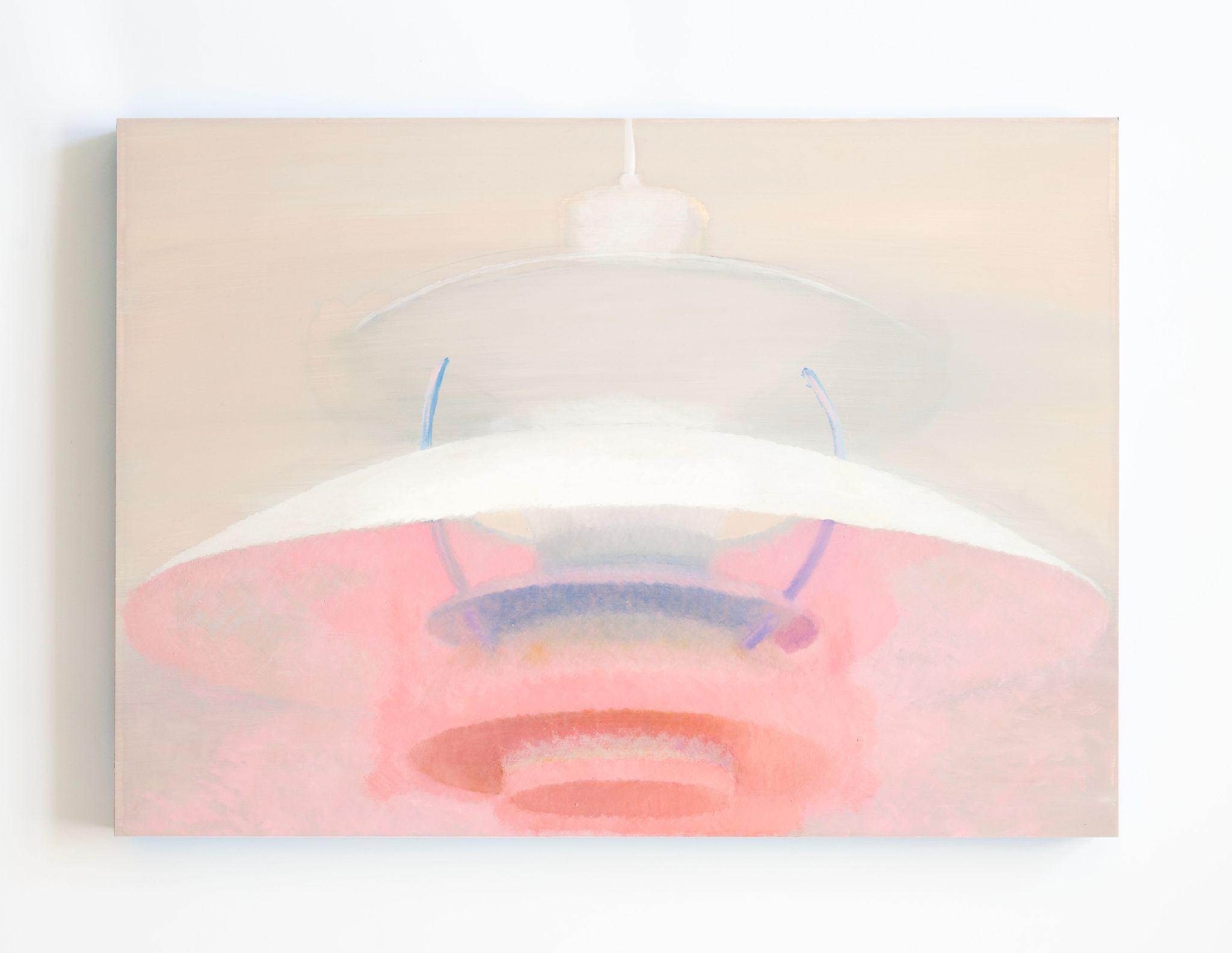
A day in the studio usually begins with me opening the window and turning on the radio. I work on several paintings in parallel. A great deal of time is spent painting, then painting over the same thing, and sitting and staring, trying to understand what isn’t working. I keep several books in the studio that I return to for inspiration and guidance on how to resolve different painterly problems. My inner state often swings between excitement and despair. That may sound dramatic, and at times it even feels somewhat pathetic that I can be so troubled by painting, because there is nowhere else, I would rather be than in the studio. But the creative process is a kind of inner journey: questioning values, exploring them, and at the same time remaining anchored to a broader sense of what can function as an image.
I used to live in Berlin; did those years influence the way you work?
I made friends and colleagues from all over the world who continue to influence me. In Germany, the idea of the artist as an eccentric is very much present. Humour, satire, and commentary on other artists’ work are common components of one’s own practice. I also lived in California for a while, where many people live very freely and express themselves in highly aesthetic ways. It’s fun! Life is short, so why try to fit in and be like everyone else? That is probably what I took away from those experiences, and the anguish of realising how difficult it is to put that idea into practice in one’s own life.
When it comes to serendipity, is there an encounter with any other artist that has influenced your own expression?
I have been thinking a great deal over the past few months about Henrike Naumann, who is representing Germany at this year’s Venice Biennale and who tragically passed away earlier this year. She attended the same postgraduate program in Berlin that I later attended, a few years before me, and I had the opportunity to meet her during that time.
She was highly ambitious, yet also warm-hearted, funny, and generous. She sent invitations to her first major exhibition to every important person she could think of, using special stationery from her upbringing in East Germany, which she had perfumed and marked with lipstick kisses.
She inspired others through the way she presented herself as an artist, both in portraits and through her aesthetic choices. She demonstrated how an artistic practice can be profoundly serious—almost like serving as an ambassador for one’s own work—while at the same time remaining deeply personal and driven by curiosity and pleasure. She dared to play, and she gave a great deal of herself in her encounters with others.
Astrid Kajsa Nylander: Set on view August 21 through September 19, 2026, at Belenius, Ulrikagatan 13, 115 23 Stockholm, Sweden.
You Might Also Like
In Stockholm, Karim Boumjimar’s Insistence on Mutability is Defiant
What's Your Reaction?