

Tanja Ostojić’s Institutional Gendered Critique Through a Sculptural Lens


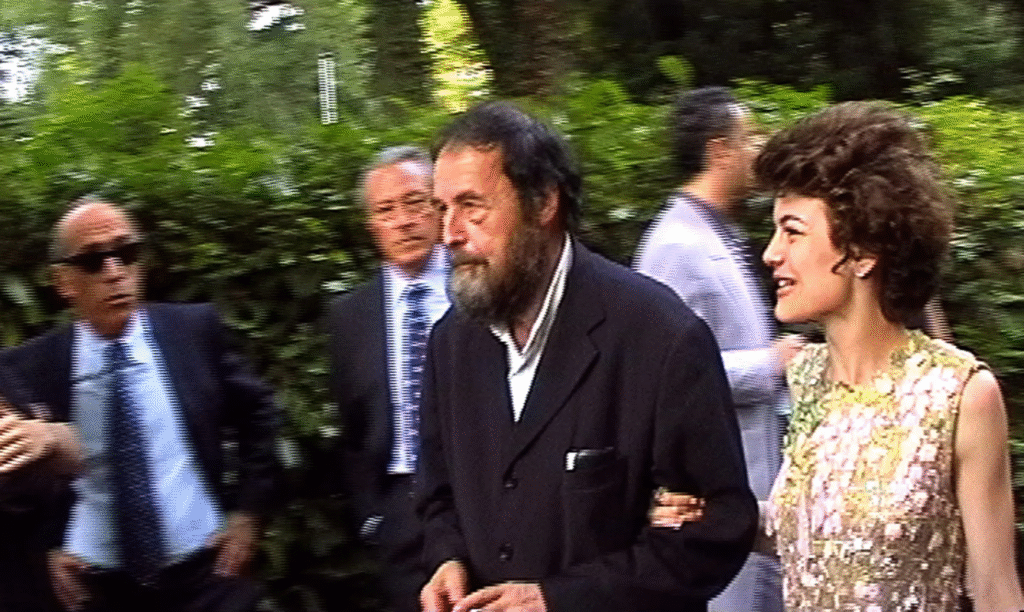
On the second floor, Tanja Ostojić is beaming on screen, dressed in a glitzy gown. I glimpse a large column, greenery, and gravel and can tell that she is in Venice in the Giardini, the main site of the world’s oldest art biennial. The video work is I’ll Be Your Angel (2001) in which Ostojić joins curator Harald Szeeman during the preview days of the 49th Venice Biennial, which he curated. In addition, she shaved a square onto her Venus Hill, Black Square on White (2001)—a piece of body art that stayed intact throughout the performance which only Szeeman had the right to see. A bold and stunning piece that started to untangle relationships and what might happen behind closed doors in the art world that were not yet as widely discussed as they are today.
In 2001, the Venice Biennale had not yet been curated by a female; the institutional art world was still largely populated by male artists, and the concept of the curator as a cultural broker, above an administrator, was rising. The perception of Serbian, or Eastern European women overall,was that they held a second-class role in Europe—burdened with difficulties to attain work visas, they were often stereotyped as subservient, traditional women seeking Western partners, or hyper-glamorized models and entertainers. Positioning herself beside Szeeman at this important event plays with tropes of (Eastern European) femininity while also subverting the power dynamic between artist and curator. The camera follows her—standing beside him, getting him coffee, patiently waiting for him to finish speaking—and follows him. Through the camera angle, each backgrounds the other, sometimes awkwardly, leading the viewer to questions who holds the power; a trademark for Ostojić who is widely seen as a pioneer in institutionally gendered critique.
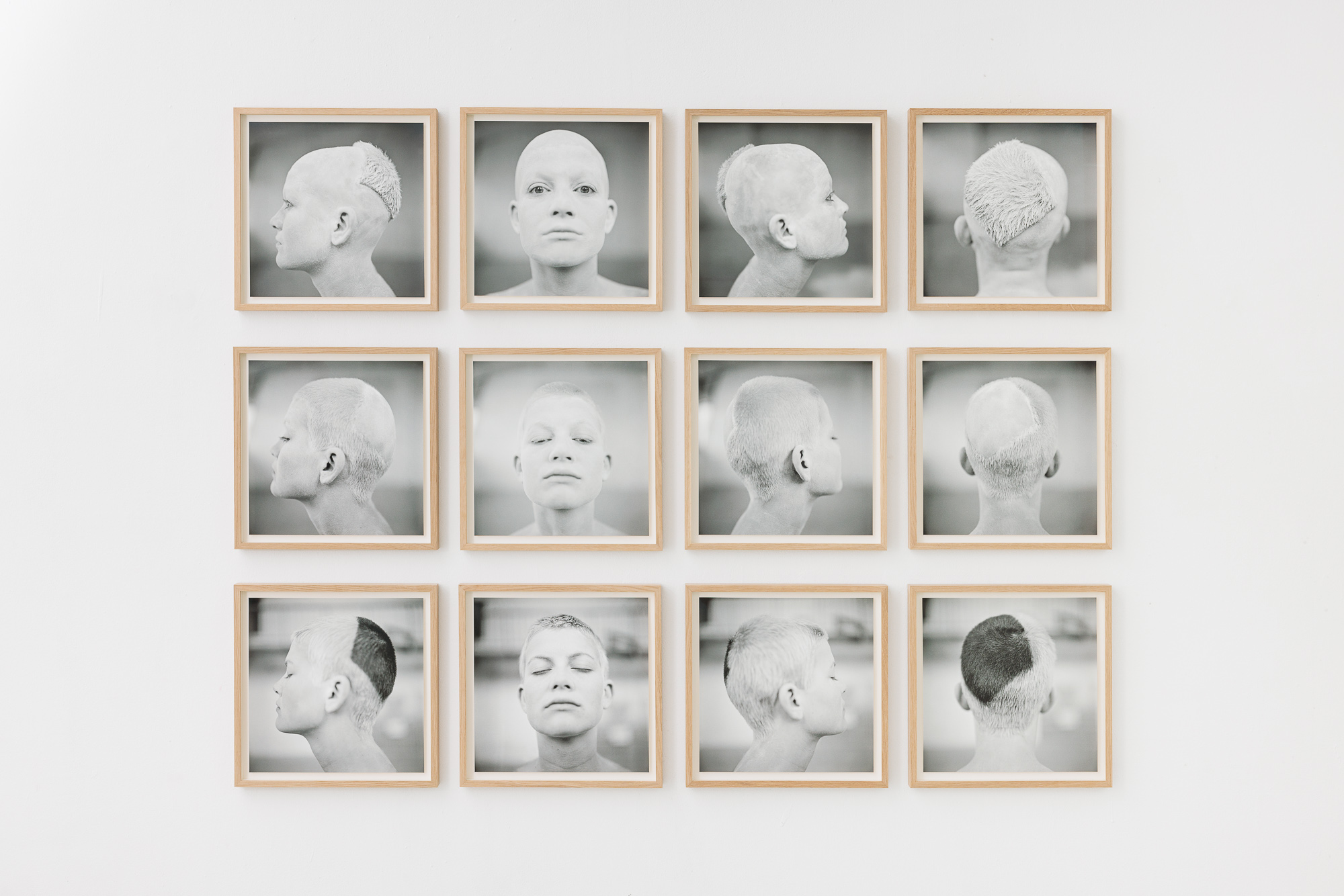
Ostojić’s retrospective, How Much Strength it Takes… at the Museum of Contemporary Art, in Belgrade in her native Serbia, opens with black-and-white photographs from the durational year long performance piece, Personal Space (1995-96). She shaved a square onto her head, an ode to Malevich, which people would often approach her to speak about or want to touch. Something people active in the art world in Belgrade at the time would remember. Extended to include Black Square on White (2001), on view here as well. A marble block with marble dust sits in front of them. On the right, video documentation from her first Documenta commission where she embodied a marble statue. The behemoth multidisciplinary feminist artist hails from Užice, former Yugoslavia, and currently resides in Berlin, Germany. The exhibition follows a thesis of the sculptural and material (body and across mediums) threads, rather than centering the thematics of migration, all too familiar for a local public. It’s a generative take by curator Miroslav Karic. This corner marks a physical and conceptual entry point to the exhibition, triangulating an inquiry into body as sculpture and the materiality of the body, as well as a point of rupture, her entrance onto the global art stage.
In the 1990s, several exhibitions attempted to integrate Eastern European art into European contexts, while also carving out a category of Eastern European contemporary art. Europa, Europa (1994) in Bonn, Germany, Interpol 2 (1996), in Stockholm, which was marred in controversy, and Manifesta 2, among them. Coming from outside of the EU shaped the conditions for Eastern European artists movement and life in and between West and East. Ostojić is an artist participating in the global art scene and an immigrant artist—the widely known durational project which culminated in Ostojić acquiring residency in Germany Looking for a Husband with EU Passport (2000–05), is not included—this exhibition focuses more strongly on the former. And, showcases her shift between materials and modes: performance, social practice, video, sculpture, drawing, and painting.
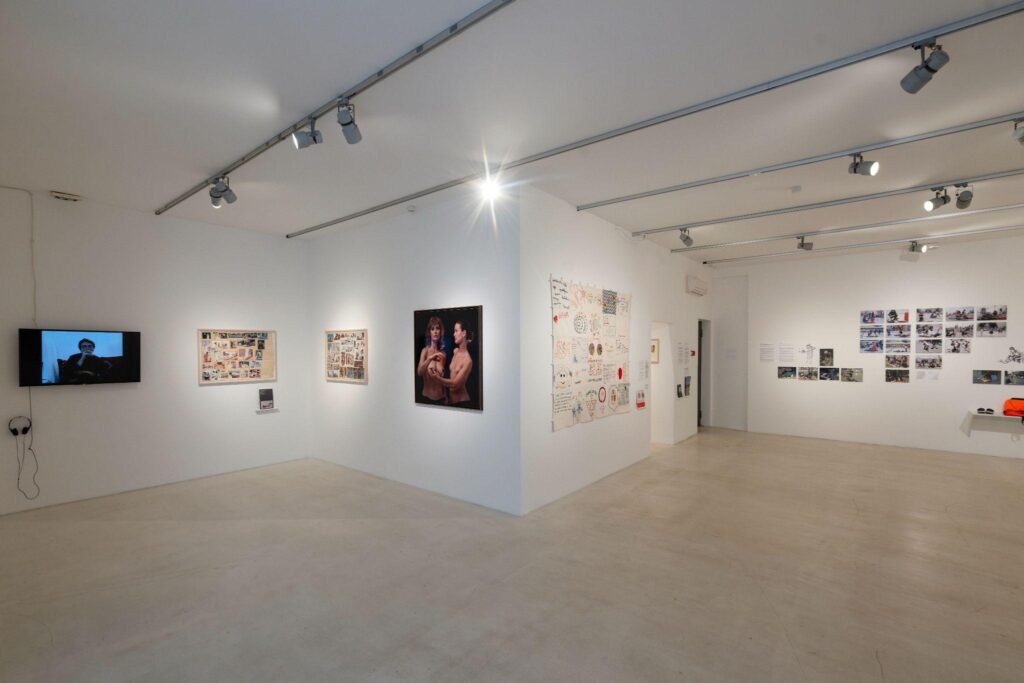
I’ll Be Your Angel, as I mentioned earlier, where she shadowed curator Szeeman for four days at the opening of his biennale, Plateau of Humankind, is part of a seminal series where Ostojić inverts the responsibilities of care, support, and hospitality that curators [are expected to] pay artists, while exploiting the boundaries of intimacy within these relationships. What strikes me is the level of care Ostojić offers to her subjects, curators are invited formally in a letter detailing what will happen during the performance. In Be My Guest, curator Bartolomeo Pietromarchi and art critic Ludovico Pratesi join Ostojić for dinner, drinks, and bathe together in the jacuzzi at the opening of Gravita 0, a group show, at the Palazzo delle Esposizioni in Rome. Ostojić states in the letter: “I promise, not to push you to do anything you do not wish to do. You are free to come and be my guest, and of course, free as well to take leave.” The performance took place in front of an audience and the mood was flirtatious. A booklet and collage of paparazzi style photographs taken of the artist and curator Eddy Muchan on the beach from Vacation with a Curator are also on view. Fittingly, the series is named Strategies of Success/Curator Series (2001–2003) and stages the encounters that merge personal and private encounters many artists find themselves navigating in order to succeed. These works ruffled feathers; Szeeman, who earlier prided himself in “discovering” the artist, never worked with Ostojić again and did not let her publish her diary from I’ll be Your Angel. A reminder that collaboration might end when one party says: “no,” which puts artists pandering to curators at a disadvantage.
Strategies of Success/Curator Series is part of a larger body of institutional critique emerging at the time, akin to Andrea Fraser’s speech series’ Inaugural Speech and Official Welcome where she parodied the role of museum director, curator, artist, giving a thank you speech. Where Fraser’s work unmasks, Ostojić, adds a layer of destabilization, by placing the curator in the most vulnerable position otherwise inhabited by the artist.
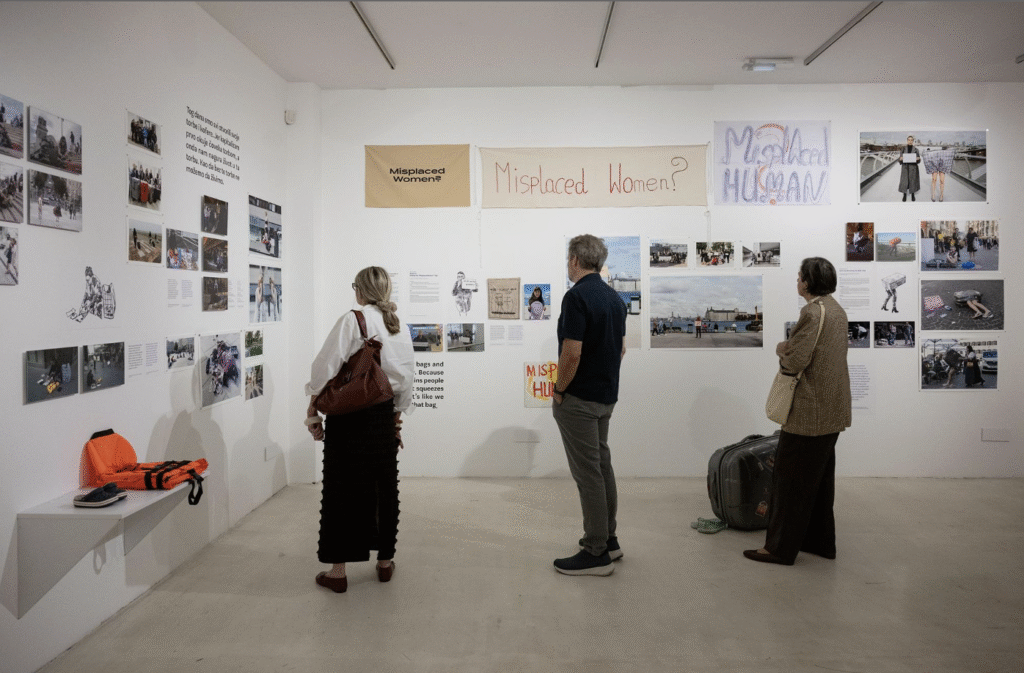
Ostojić as a social practice artist mobilizing large groups is represented by Misplaced Women?. The workinvites participants, through a written score, to unpack a bag and take their shoes off in “a migrant specific place that resonates with you.” The score is designed to be generative: “Reflect upon how it felt to do this in public. Does it make you feel exposed? How does it resonate with your life experience, and does it bring you closer to people on the move, people on the street.” The instructions include simple prompts and what to note and to pay attention to, such as security guards who may ask participants to move, or curious passers by. It is a project where participants are made to become performers in public space and embody those who for are experiencing homelessness or transience that inhabit them.
Press footage and photographs of men, women, groups in parks, ferry terminals, and on streets with various open bags ranging from large suitcases to small are shown on two walls. A child’s life vest and a small pair of shoes on a shelf bring gravity to the showcase as items that in migration contexts represent vulnerabilities and human loss or risk. It is hard to grasp how wideranging this project was, for participants, passers by, and law enforcement who encountered them. And, for locals, a two day workshop, Changed by Water: Menopausal Tea Party with Embroidery and Swimming, that was held on May 10, shapes her recent engagement with creating community around menopause. Her institutional critique and highlighting the plight of migratory bodies is deeply present, but with the sculptural focus images of the wave and various iterations of the female body link works How Much Strength it Takes… both poetically and meaningfully.
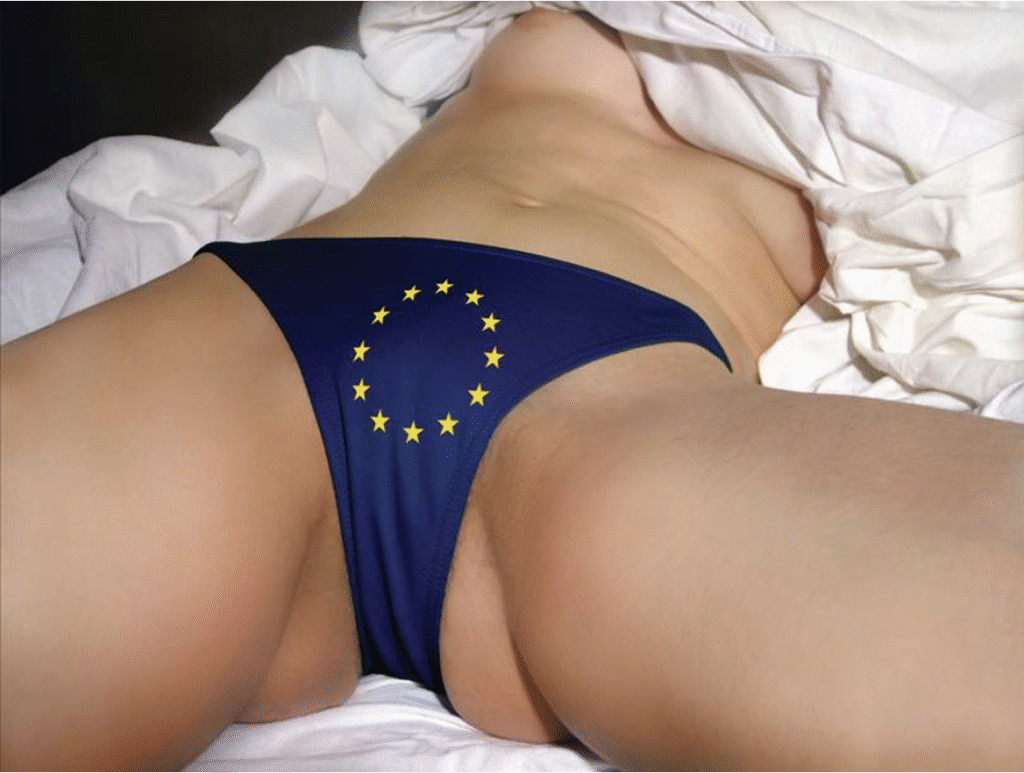
A small room on the second floor, continues to showcase her material inquiry, early drawings from art school of a crotch; a suite of photographs that are rarely on public view show the artist lying on the ground, feet up, masturbating with what looks like a vibrator; imprints of her bum and vagina; a pillow stitched closed, with a vaginal like element in a vitrine, are all works that shape a commentary on what different forms pleasure can take, be communicated through, and its repression. On June 4, a stone throw away, at Museum of Yugoslavia, cultural theorist Elke Krasny discussed posters centering L’origine de monde (1966) in her talk “Unworlding the Museum and Rematriating Cultures” as part of the symposia Zones of Care, Courbet’s depiction of the female sex. Reproductions of the image have been plastered on street billboards all around Vienna to advertise the artist’s retrospective Gustave Courbet. Realist and Rebel which opened at Leopold Museum in Vienna in February. “Why should women, or anyone need to see this?,” she asked the audience, finding the image offensive. She recalled, in 2005, a photograph by Ostojić After Courbet (2004), in a similar stance, but wearing underwear emblazoned with the EU-logo that acted as a barrier for the gaze to enter the sex that was on view on rotating billboards across Vienna part of the EuroPart exhibition. Media outcry ensued as the male gaze was subverted by this, what many called, “pornographic” image, embedded with EU critique, and the billboards were removed early, only two days after they went up.
Black Square on White is on on view on the first floor, with no disclaimer, while the room with Ostojić’s masturbation series is marked, I notice “18+.” Considering these placements leads to a conversation about musicological practice, it seems that when art is considered pornographic or adult it is usually women depicting themselves, or when pleasure is involved, while men depicting women is usually not. Something that merits further exploration.
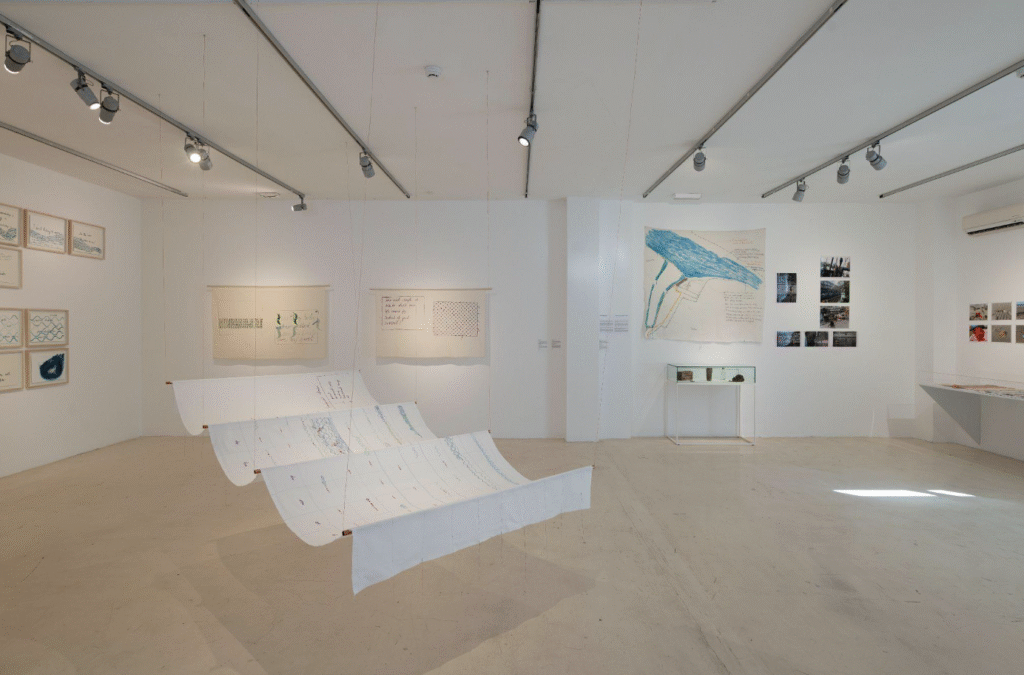
The tempo of the exhibition is varied—it flows—from the first floor’s black-and-white monochromatic minimal scheme to the second floors colorful and auditory, busy on the verge of chaotic, performance and social practice documentation. On the third floor, a newer series unfolds text-based drawings centering menopause that also incorporate suggestions to Ostojić’s swimming practice. The wave appears throughout in an earlier metal sculpture, in the drawings, and a textile-based work. Heraclitus argued that everything flows. And with Ostojić’s work and through the shows insightful curatorial framing we see that her body moves to the rhythm of her work, or vice versa, traversing materials and flowing with current trends with insight and care while remaining deeply thought-provoking.
Tanja Ostojić: How Much Strength it Takes... through September 7, 2026 is on view at the Museum of Contemporary Art, Belgrade.
You Might Also Like
‘Beauty Can Be Immaterial:’ Bianca Abdi-Boragi on Her Sculptures That Investigate Time
TERMS OF ENGAGEMENT: “Performance Art(ists) and Language(s)”
What's Your Reaction?
