Uncanny Creatures: A Conversation with Julia Bondesson Ahead of ‘Stay’ at Belenius

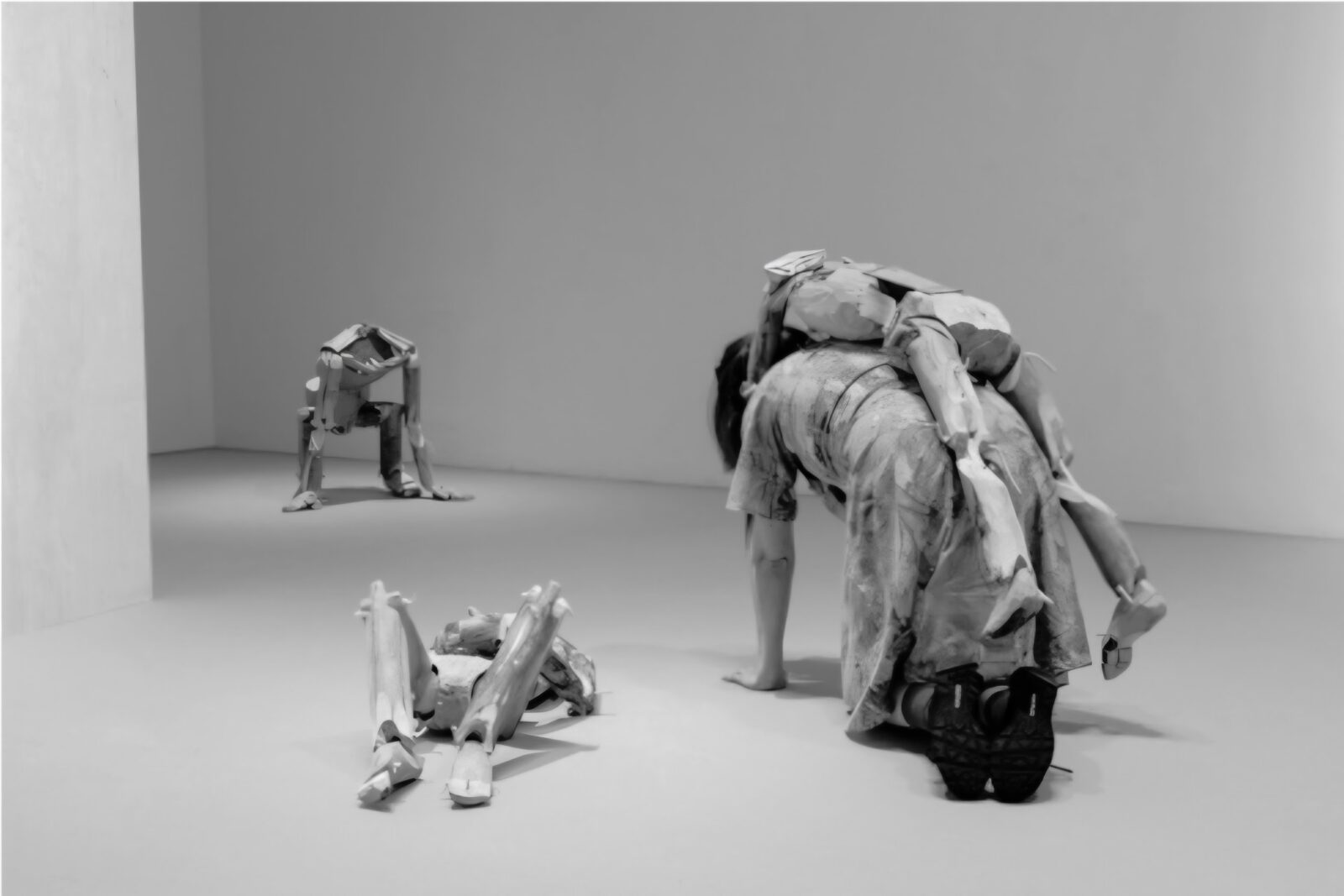

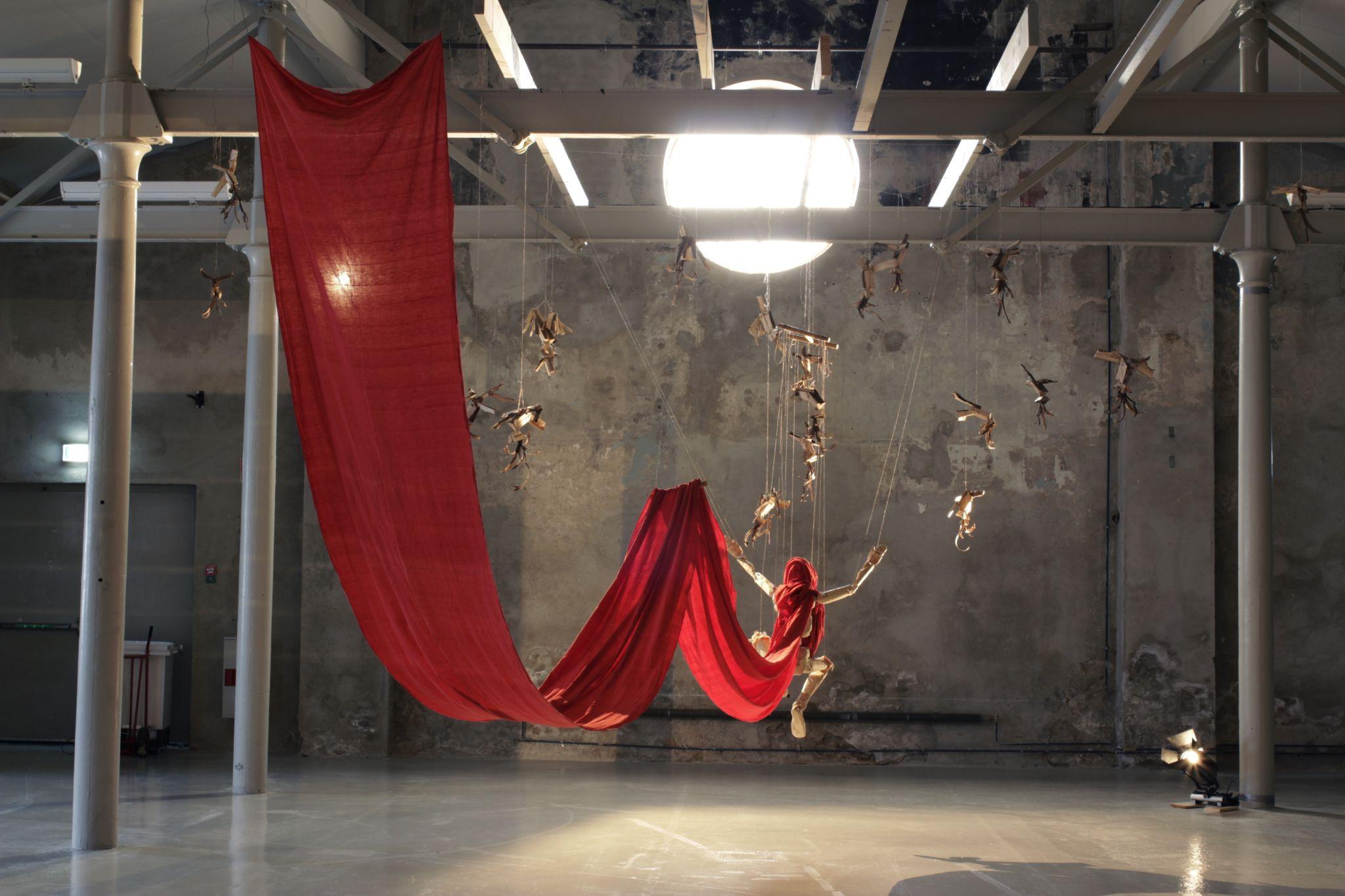
The sensation that Julia Bondesson’s universe evokes could be described as a prelude, or a threshold where the morbid meets the sublime. One might detect the same sense of multi-layered ambiguity as the puppet theater in The Double Life of Véronique by Krzysztof Kieślowski or Louise Bourgeois’s later sculptural works in textile (like High Heel) in Bondesson’s installations. In her practice, Bondesson has combined her fascination with puppet theater and her infatuation with wood.
Her current atelier is situated in a former carpenter’s workshop. “I feel like I’m in a blocky phase right now, where everything is big, voluminous, and lovely,” Bondesson says with a laugh when I speak to her over a video call from her studio in the countryside in Halland, ahead of the opening in Stockholm.
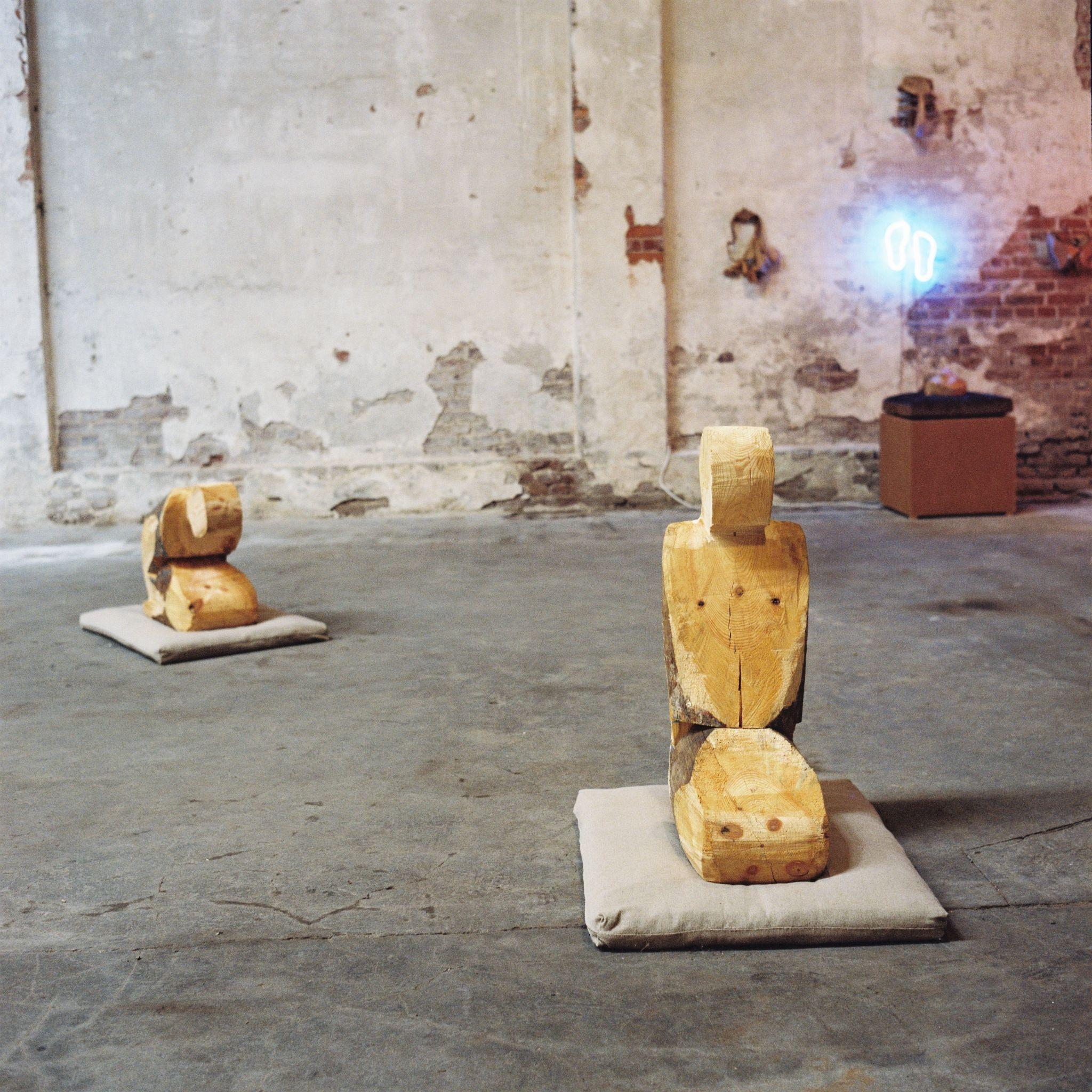
“Pine is my material, I like the smell and the density, it has just the right level of hardness and weight,” Bondesson answers when I ask her if she has a favorite wood type. For the upcoming exhibition Stay at Belenius Gallery, Bondesson’s expression has become noticeably more abstract—allowing the more haunting qualities of her earlier work to recede, though not without leaving a trace of their quiet allure. “For this show, I worked exclusively with the electric saw and focused on developing that technique. The result is a more stripped-down expression,” she explains.
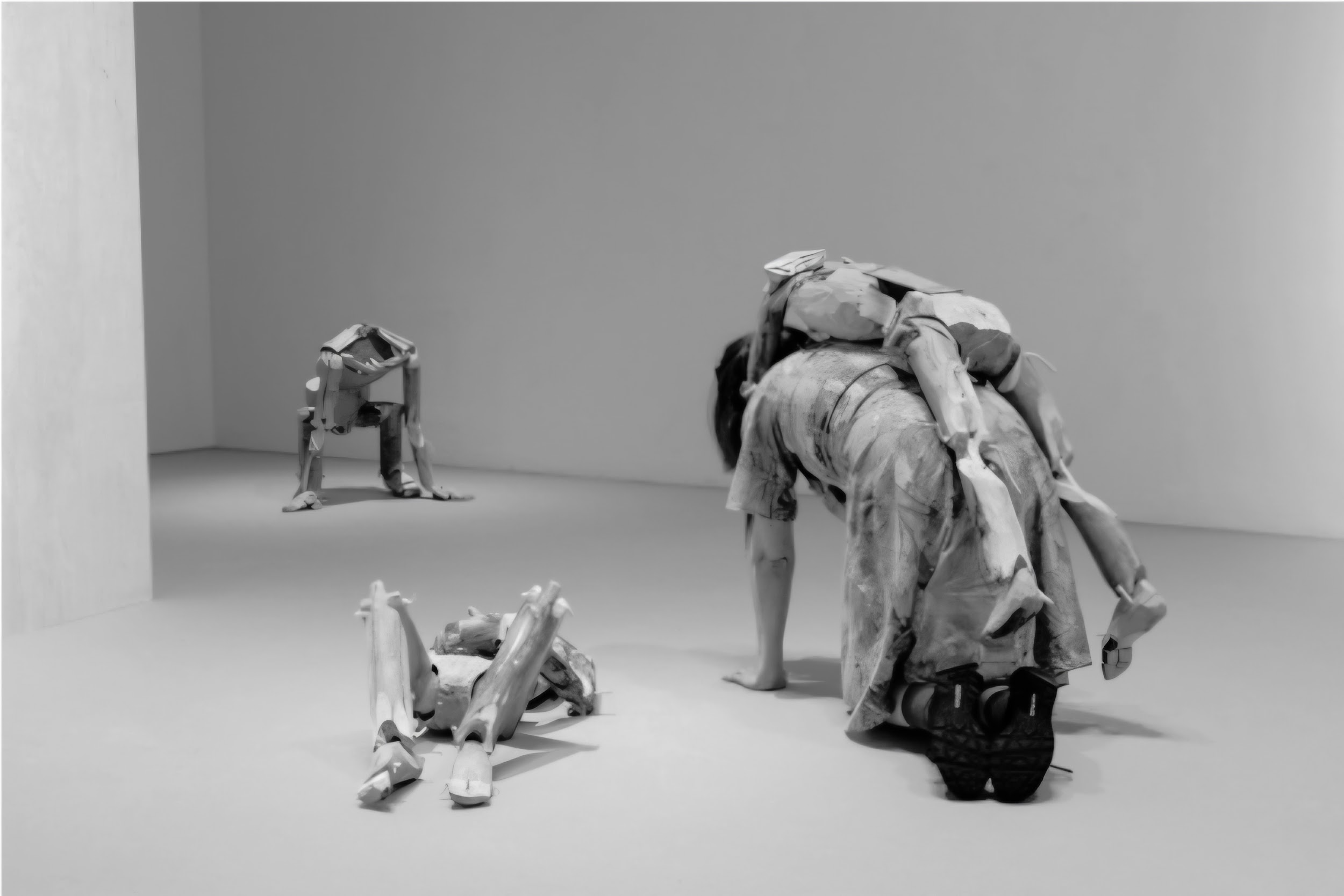
She shows me around the studio, and we linger in front of a series of new works, with working titles such as Nest and Tulip: “These pieces are on a different track than before. They are more about working quickly and almost letting chance determine what the final form becomes.” Some of these works have shapes in neon added to them, another signature trademark of Bondesson. It was in the search for dynamics and energy that she began incorporating neon in her sculpture. “Neon evokes the lightness of drawing and feels vibrant alongside the solid wooden shapes,” she explains, continuing, “the strength of the wood meets the fragility of the glass.”
What’s the backstory to the exhibition title Stay?
Stay is about being still, but also about the fact that it takes effort to be or remain in one place—that Stay becomes an active passivity. And I feel that several of the works are in a meditative phase, yet still in motion.
Do you have a repertoire of characters that tend to reappear in your work?
Yes, there are a few: for instance, The Child, which is a character that first appeared in a video work that I made when I attended Mejan (The Royal Institute of Art in Stockholm). Mother is another one, and lastly, The Guardian, a sculpture that was initially part of the Beckers Art Award Exhibition at Färgfabriken [for which Bondesson was a recipient in 2015]. Supposedly, a lot of the visitors got really spooked by him, due to his strong expression.
When do you know when a piece is ready?
What determines whether a work is finished is usually that I no longer see what I can add to the material. The dialogue between us is complete – up to this point. Then there often comes an exhibition where the space and perhaps more works want to join in the conversation.
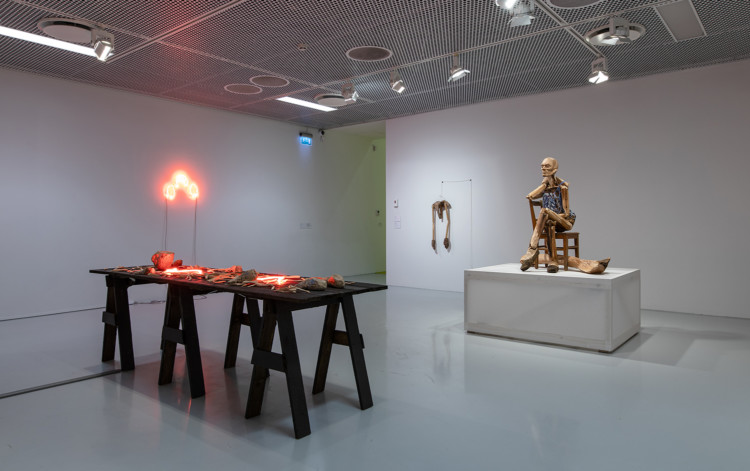
In a review of your solo show Cradle my bone (2021) at Moderna Museet in Malmö, the following was stated: “It’s hard to tell if I’m in a carpenter’s workshop or autopsy room.” On that note, what kind of feelings do you want to invoke in the spectator? And, where does your interest in the morbid come from?
I prefer not to read my reviews, so it is fun to get that insight into how the work was perceived. But the answer to where my interest in the morbid comes from is that I don’t have such an interest. My interest lies in the internal structures of the body, that is, the bones. The table with the sprinkled small bones and body parts (which in my world were highly in motion) stood as contrasts to each other–the living and the dead. That work, just like the exhibition, was very process-oriented and changed quite a bit while I was working it out. The table contained more objects, but they were scaled away until it was only about the body, energy, and movement.
I often work intuitively from a loose visual idea and have not decided in advance how the work should land with the viewer, or with me. Sometimes it can evoke difficult feelings if you are at such a place in life, but hopefully it also makes you excited and feels strengthening. In every work, I am looking to discover something, and in combination with my figurative language and my open process, the interpretations of the work can become many. The body is a very grateful subject because it is so easy to relate to, and for me, art is a way to get in touch with emotions, both the heavy and the light ones, like exercise.
How would you describe your artistic expression? In my favorite work, the installation Eternal gestures (which is part of Moderna Museet’s collection), a composition of sculptures in wood and abstract paintings in light pink creates a theatrical sensation in the setting of coulisse-like painted objects and a gigantic wall-to-wall carpet in lime green – it made me wonder if it’s in the combination and vibrancy of these different elements where the most accurate reflection of your artistry occur?
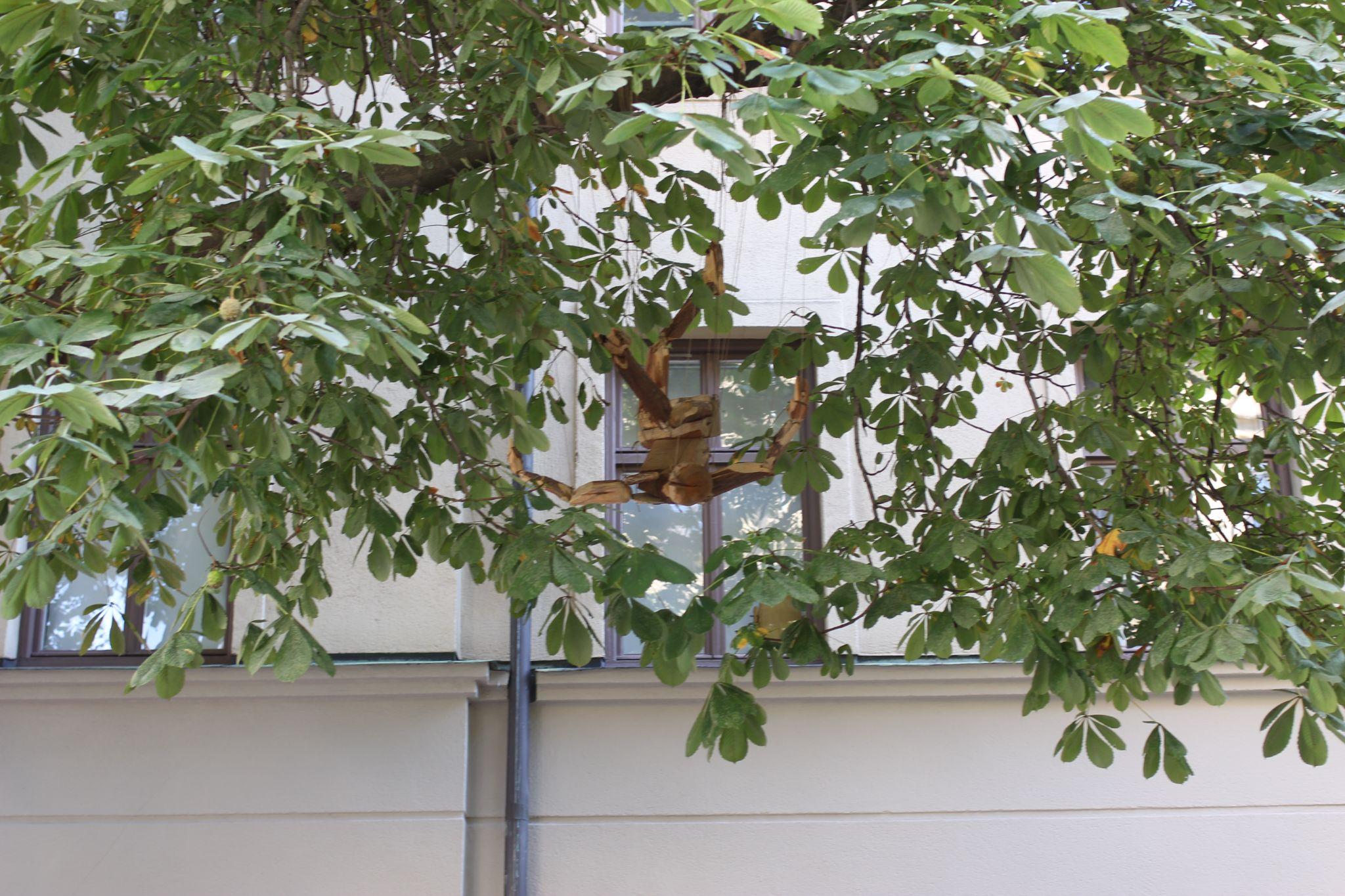
I have always identified strongly with the craft and the material. Perhaps I have felt a little anachronistic in that way, but I find it incredibly satisfying to work like that, and it is in the dialogue between hand, tool, and material that expression arises. It is an intuitive process, certainly much influenced by life circumstances. My works are mostly not meditative but lean toward something. And yes, the combination of different elements is a part of this preference for motion and dynamics when I create installations. The dynamics created between the living body and the articulated sculpture that carries potential movements and the potential for life. It is thrilling.
The hardest and maybe therefore most fun part is working directly with the body through performance. It is also what takes the longest time and requires the most energy, while simultaneously existing only in the moment. Combining the performative with the sculptural work makes a very interesting field to work within.
What is your relationship with your sculptures? Do you see them as creatures, or are they simply means to express an idea?
When I have released the works from the studio, I have very little or no control over what they communicate. I then must trust that the works have an inherent meaning that stands firm.
It is interesting to revisit sculptures that I have worked on intensively for a period and then let go of. I really perceive them as beings in their own right, and maybe it is only then, when there is a distance to the work, that I can see what it communicates.
Julia Bondesson: Stay on view May 8 through June 4, 2026, at Belenius, Ulrikagatan 13, 115 23 Stockholm, Sweden.
You Might Also Like
Lesley Bodzy’s Sculptures Unleash, Unfurl, and Embrace
State of Becoming: Katya Grokhovsky in Conversation with Leeza Meksin at Ortega y Gasset Projects
What's Your Reaction?